
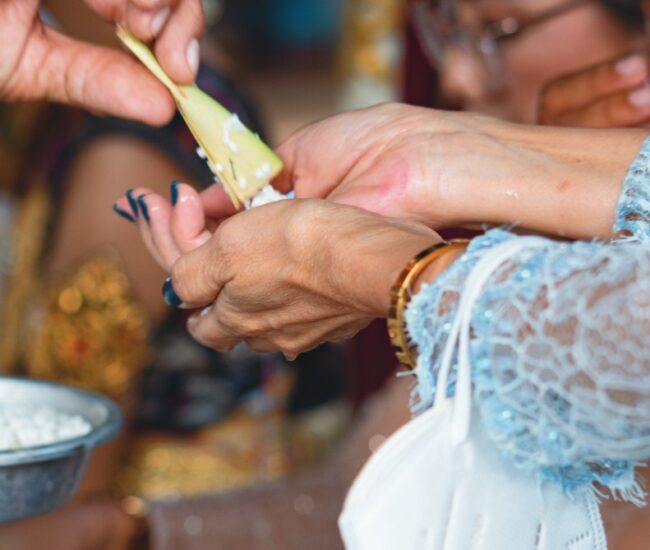
Bija: Blessed Grains of Rice
Upon leaving the temple, grains of rice are often seen stuck to the forehead and necks of worshippers, both on women and men. This particular rice is called bija, and signifies being in a state of holiness. During worship ceremonies, Balinese Hindus not only receive tirta (holy water, referred to as nunas tirta), but also bija (referred
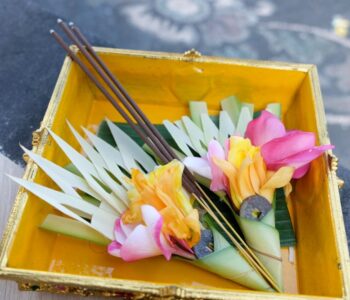
Kwangen: Bali’s Fragrant Offering
Balinese people are known for their meticulous attention to detail in their worship practices. There is a ceremony for so many aspects of life in Bali, and each ceremony will have very specific requirements. This is particularly true when it comes to certain rites and offerings, all must be executed with precision, all items present!
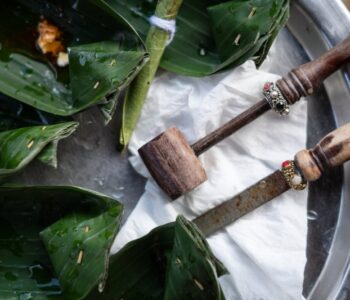
Piranti Mepandes: Tools of the Tooth Filing
One of the most significant rites of passage for any Balinese Hindu is the tooth filing ceremony, known as metatah, mesangih and for higher castes, mepandes. The ceremony involves the filing down of the top two canines and four incisors, the ‘fang-like’ teeth which are symbolic of the animalistic tendencies, as people enter the adult
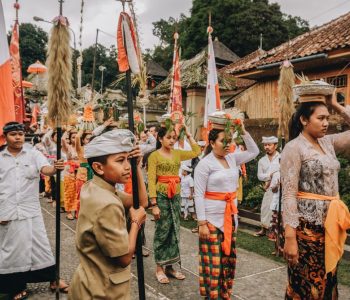
Guide to Traditional Balinese Clothing: Symbolism, Meaning and What to Wear
Bali is known for its vibrant and visual living culture, and traditional attire is certainly part of this tapestry. Whether making their way to temples, hosting grand ceremonies, from weddings to blessings, there is very specific traditional Balinese clothing that must be worn, each different for men and women, and indeed depending on the type
Kulkul: A Traditional Balinese Slit Drum
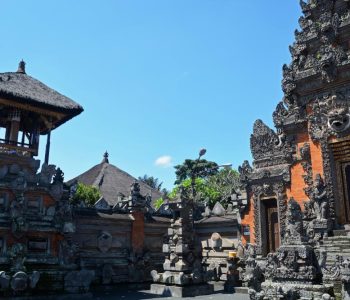
One of the most remarkable aspects of the Balinese culture and traditions is the fact that, despite the ever-changing times and technology-driven world, many of them are still kept alive even today. An example of this is the “kulkul” or Balinese Slit Drum, an age-old traditional percussive device constructed out of wood or bamboo used
Genta: The Balinese Priest’s Sacred Bell
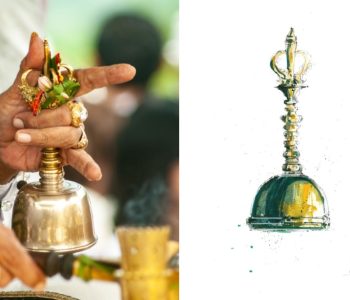
The piercing rings of the genta are heard at every ceremony, big or small. They are a ubiquitous sound in Bali, ringing in temples, roadsides, homes and even over the radio in Bali’s Puja Tri Sandhya, call to prayer. Held in the left hand of the Balinese Hindu priests, and accompanying the chants and mantras,
Lamak: Sacred Palm-Leaf Decorations
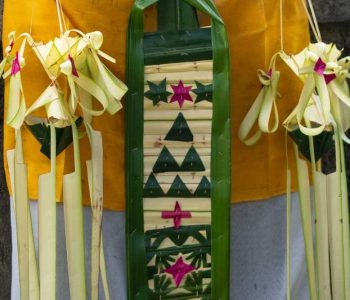
Often overshadowed by the piles of colourful offerings piled on top of them, it can be easy to miss the impressive palm leaf “tapestries” that decorate shrines, altars and even people during auspicious days and ceremonies. These colourful hanging accoutrements are called lamak, and serve as a foundation for offerings to attract deities and revered
Tipat and Bantal: Symbols of the Feminine and Masculine
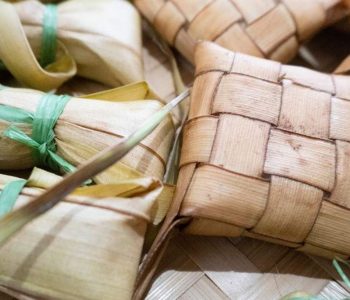
Tipat and bantal are two elements that hold profound symbolic meaning within the context of Balinese Hindu beliefs and culture. If you are familiar with the unique ceremonies of Aci Tabuh Rah Pengangon (or Siat Tipat Bantal) and Mejauman (or Mepamit), you will know that these ceremonies all share a common trait: the inclusion of tipat and bantal. These
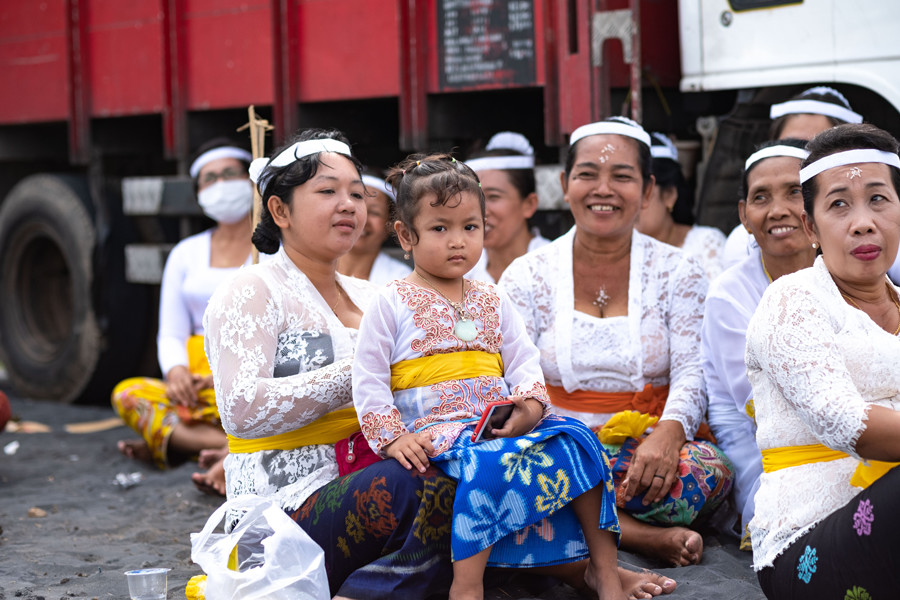
Kebaya: The Traditional Attire of Balinese Women
Adorned in an elegant lace blouse and batik sarong called kamben, you might notice the Balinese women wearing this attire on their way to the temple for prayers and religious ceremonies. This is the kebaya: the traditional attire of the Balinese women. The kebaya has been the traditional attire of Balinese women since the Dutch
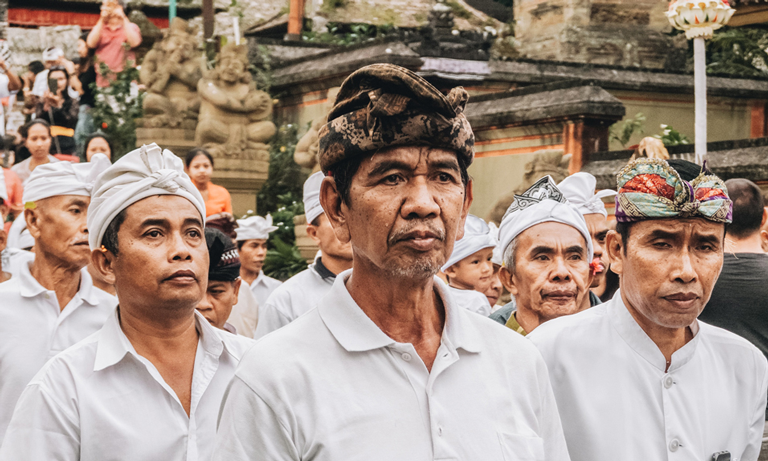
Udeng : The Traditional Headdress of Balinese Men
Whether in white, black, red or in batik motif, the traditional headdress worn by Balinese men, known as udeng, has a unique philosophy and meaning behind it that plays an important role in the everyday life of Balinese men. The Balinese Hindu people are a community that holds their rich culture and strong beliefs very
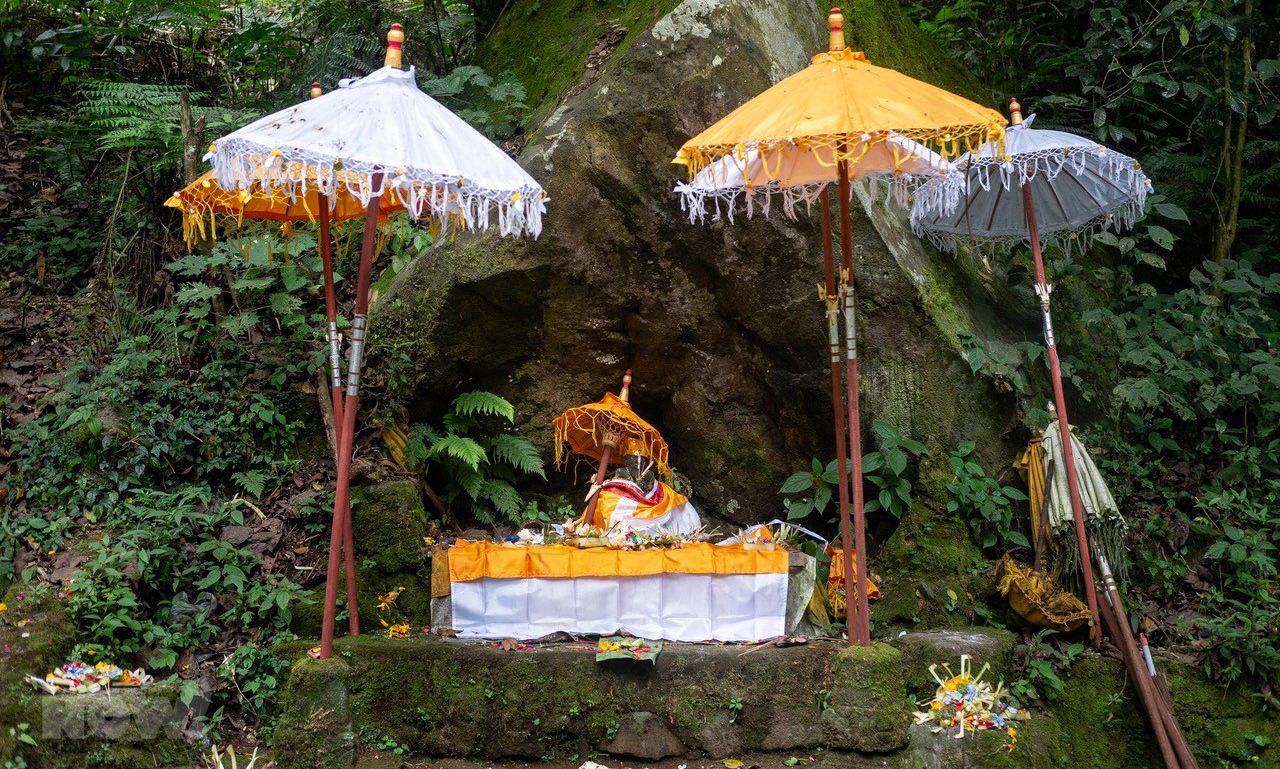
Tedung : Bali’s Ceremonial Umbrella
Shining in white, yellow, or even at times embellished with the golden prada print, the Balinese umbrella, known as a tedung, is an essential feature in Balinese Hindu worship. As decorative as they are – often used to culturally adorn entrance ways of restaurants and hotels – tedung are most at home when standing tall
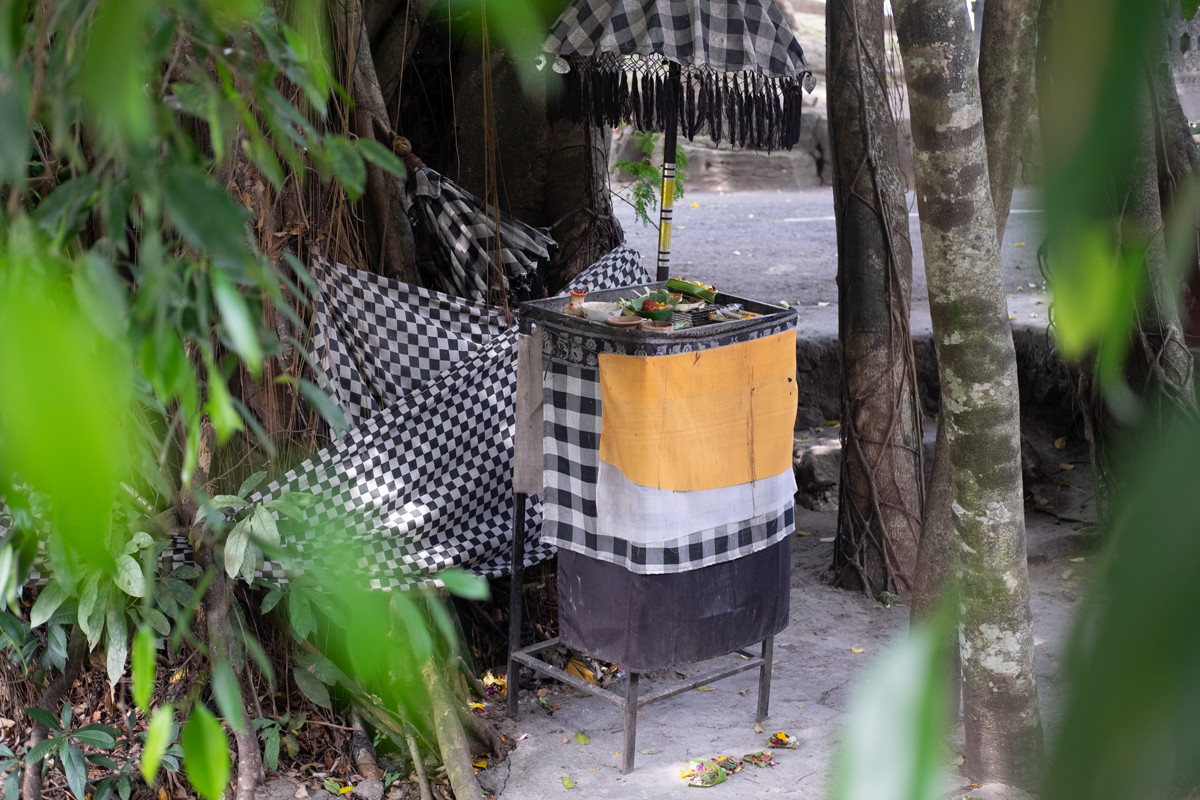
Kain Poleng : Bali’s Chequered Cloth of Balance
Wrapped around trees, skirting shrines and bedecking temples, or worn by the Balinese themselves as a sarong (or saput), the kain poleng, or poleng cloth, is symbolic of one of Bali’s most important philosophies. In its most common form, the kain poleng is a black and white chequered cloth, but other versions exist which incorporate
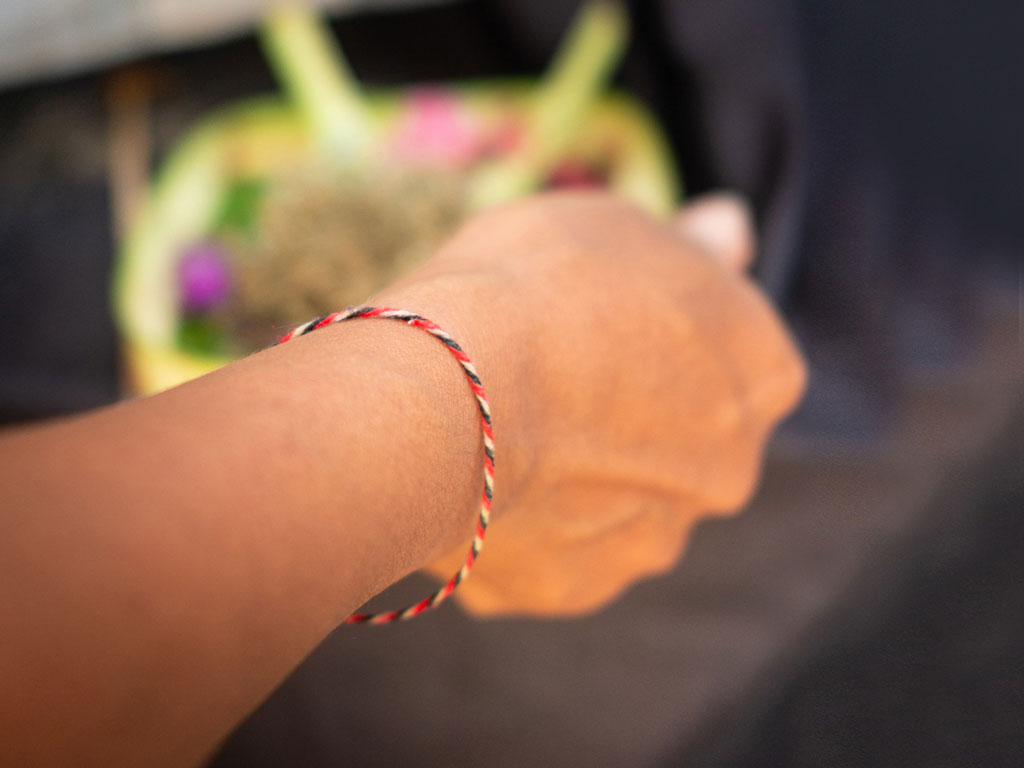
Tridatu: The Colours of Bali’s Holy Trinity
Engraved onto pillars of houses and temples, donned by stone sculptures, and worn around people’s right wrists; the colours white, red, and black are omnipresent in Bali. It’s evident in many different forms, with the tri-coloured bracelets attached to the arm being the most common we see today. The simple yet significant philosophy behind this