


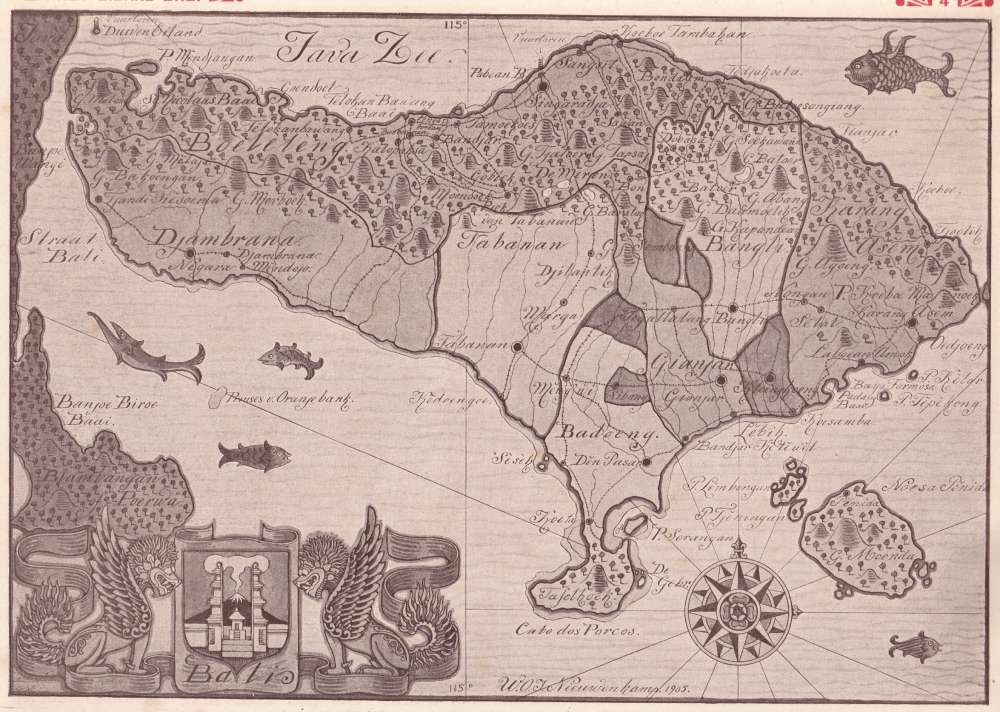
In the early decades of the 20th century, a small wave of European artists began visiting Bali, drawn by its natural beauty, rich Hindu culture, and vibrant artistic traditions. Dutch artist W.O.J. Nieuwenkamp, regarded as the first European artist to extensively document the island starting in 1904, paved the way with his sensitive drawings, etchings, and books that portrayed Balinese temples, rituals, and daily life with an artist’s eye. He was followed in the 1920s-30s by Walter Spies, Rudolf Bonnet, Adrien-Jean Le Mayeur, and Willem Hofker.
Through their art and writings, they romanticised and popularised the island as an unspoiled “paradise” — an image that captivated Western audiences and helped spark international tourism and interest in Balinese culture long before mass travel existed. In this article, Sake Santema from Indies Gallery shares Nieuwenkamp’s art and a brief story of the pioneering artist who fell in love with Bali.
Wijnand Otto Jan Nieuwenkamp (1874–1950) was a Dutch painter, woodcarver, graphic artist, illustrator, and avid art collector whose restless spirit led him across continents—from Egypt to British India. His personal Latin motto, Vagando Acquiro—“While wandering, I acquire”—perfectly encapsulated his life’s philosophy. Between 1898 and 1937, Nieuwenkamp visited the Netherlands Indies six times, though it was the island of Bali that captured his heart most completely. He produced a body of work that remains valuable artistic and historical records of early 20th-century Bali.
Nieuwenkamp’s love affair with Bali began during his first visit in 1904, and he wrote with enthusiasm: “There are so many beautiful things to see and to portray, which have not yet been noticed as beautiful, let alone discussed.” Inspired, he resolved to create an album devoted entirely to the island he called “the loveliest land I know.” The result was the book Bali en Lombok, with its first volume appearing in early 1906.
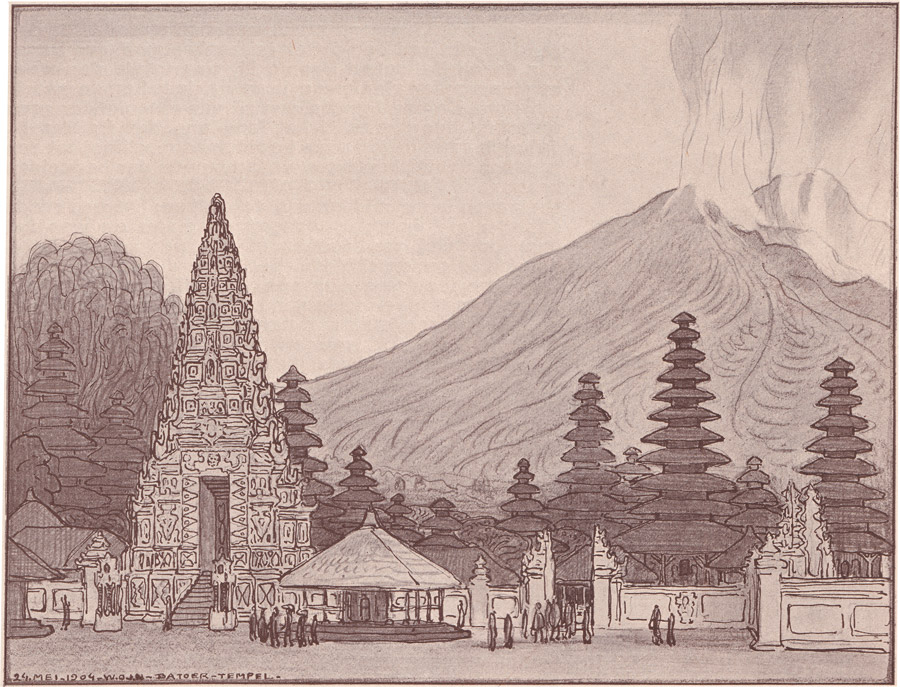
He visited Bali a total of 5 times, often spending extended periods immersed in Balinese life and culture. His second visit coincided with the dramatic 1906 Dutch military expedition to Badung and Tabanan. Though he sailed with the troops, Nieuwenkamp quickly struck out on his own toward North Bali. He later witnessed the tragic events in Denpasar and wrote sharp criticism of the destruction of palaces and the puputan—the mass ritual suicides.
Unlike colonial administrators or academic researchers of his time, Nieuwenkamp observed Bali with an artist’s eye and thoroughly prepared by immersing himself in every available text on Balinese culture, religion, and history before his travels. He travelled lightly—by bicycle, on foot, or horseback—staying in official residences, royal palaces, rest houses or makeshift tents. His arrival in Kubutambahan, Buleleng caused a sensation: locals had never seen a bicycle before, and they were so captivated by the moustached Dutchman that they carved his likeness into a temple relief at Pura Madue Karang.
Throughout his travels, Nieuwenkamp collected drawings, woodcarvings, doors, textiles, and other artifacts, many of which found homes in Dutch museums as well as his own private collection. His diaries and publications recorded the origins, makers, and production techniques of each piece, lending his collections lasting scholarly importance.
He rescued finely carved wooden gamelan parts that were about to be burned as firewood. In October 1906, he became the first to document the monumental bronze “Moon of Pejeng” kettledrum through detailed sketches and rubbings, later transforming them into woodcarvings. In 1925, he was again a pioneer, producing the earliest drawings of the rediscovered rock carvings at Goa Gajah near Bedulu.
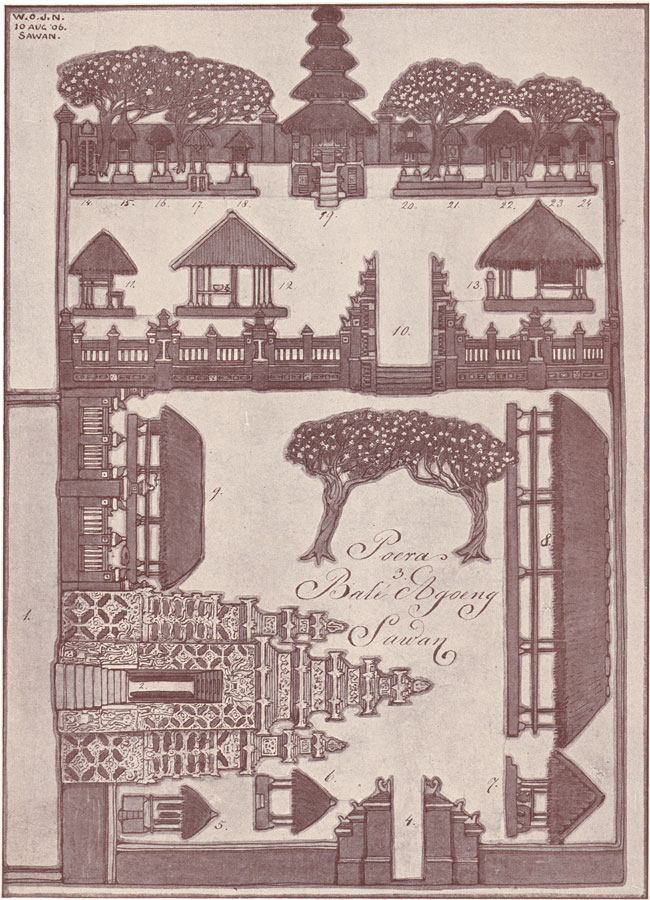
A Hindu temple located in the village of Sawan, North Bali. The image, titled “Overzicht van een Tempel te Sawan” (Overview of a temple in Sawan), provides a detailed architectural layout dated August 10, 1906. The inscription in the center reads “Poera Bali Agoeng Sawan,” identifying it as a Great Temple (Pura Agung) of the region. It shows the traditional Balinese temple structure with the various pavilions (Bale), shrines, and numbered gates (1–24), serving as a map for the complex’s ceremonial functions. (Sake Santema Collection)
Today, Nieuwenkamp’s vivid depictions of North Balinese temples, towering gateways, traditional ships, graceful dancers, and lush landscapes offer an irreplaceable window into Bali on the cusp of profound change. Through his wandering eyes and masterful hands, Nieuwenkamp captured and preserved a vanishing world. His work continues to enchant and inform new generations, reminding us of the enduring power of seeing the world through an artist’s gaze.
The prints in this article are available for purchase through Indies Gallery, while high-quality reprints can be found at Old East Indies.
Indies Gallery & Old East Indies
Jl. Gambuh No.17, Denpasar, Bali
www.indiesgallery.com
www.oldeastindies.com