
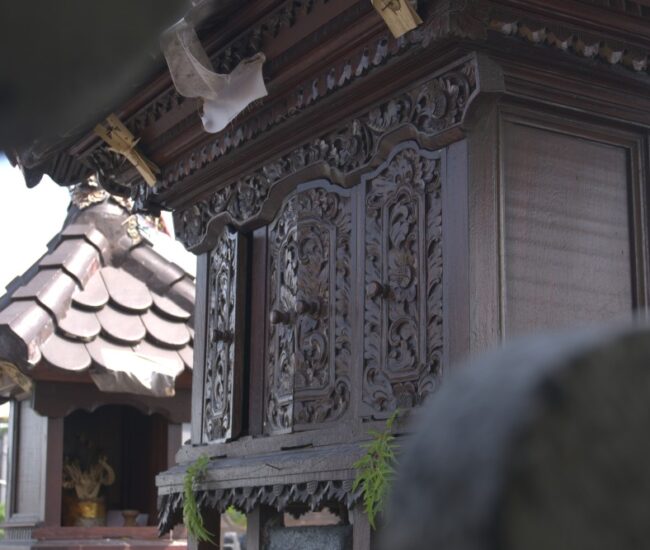
Household Shrines in the Balinese Home
Balinese culture is deeply infused with spirituality, and this is visible in the use of household shrines. Found within every Balinese Hindu housing compound across the island, these sacred spaces act as the spiritual centre of Balinese family life, where they offer daily prayers, lay down offerings, and perform rites and rituals that connect the

Kober Dewata Nawa Sanga: Flags of the Nine Guardians
Flags across the world are symbols of identity or purpose. Be it for countries, cities or organisations, the colours and icons featured on their representative flag will be deliberate, meaningful choices. Here in Bali, there are flags used for ceremonial purposes called kober, which are among the vibrant paraphernalia often seeing during ritual processions. Kober

Bungkak Nyuh Gading: A Vessel of Purity in Balinese Rituals
Coconuts are ubiquitous across Bali, not just as part of the island’s landscapes, but also in everyday life. Known as the ‘Fruit of Life’, the coconut is cherished for its nourishment and versatility, enjoyed as a drink, or shredded and milked into local dishes; but the coconut also plays an important role in Balinese ceremonies.

Pis Bolong: Cultural Ties Between China and Bali
Bali’s relationship with China goes way back; they share long-standing historical ties, which are evident in Bali’s cultural and religious practices. One such example is the use of pis bolong, also known as uang kepeng (flat coins), which are ancient Chinese coins used as a vital component in Balinese ceremonial offerings. These coins have a unique
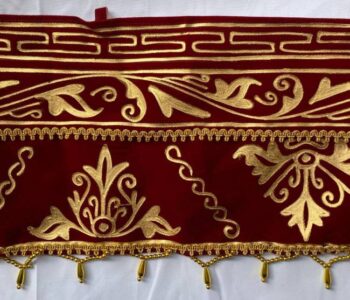
Kain Prada: The Golden Cloth of Bali’s Nobles of the Past
Bali has quite a lot of renowned fabric — songket, endek, and kain poleng to name a few, with each carrying its own unique history, use, and meaning. There is one particular fabric considered one of the most highly regarded among Balinese nobles of the past. It is kain prada, cherished for the use of real

Segehan: Offerings for the Bhuta Kala
The Balinese people, most of whom follow the Hindu religion, are never separated from yadnya ceremonies in their daily lives, which occur continuously for various purposes and functions. Each yadnya requires a specific banten or offering, and one of the simplest and smallest offerings—contrary to the misconception that Balinese ceremonies involve excessive use of materials—is segehan, which

Gayah: Bali’s Intricate Meat Offerings
Simultaneously unsightly and visually impressive, gayah are intricately-prepared offerings fashioned out of the meat, skin and parts of butchered pigs. Bali’s humid and tropical heat is certainly not the ideal condition for animal remains to be sweltering under the sun, but during major ceremonies, like funerals or odalan temple anniversaries, these gayah are necessary among the eclectic

Ulap-Ulap: The Protector of Balinese Buildings
Found hanging at the front of almost every Balinese building is a rerajahan (a form of religious art) known as an ulap-ulap. These ink drawings on white cloth serve to ward off misfortune from Balinese buildings. Ulap-ulap derives from the word ‘ulap’, meaning to wave or beckon. This refers to calling a particular positive force from
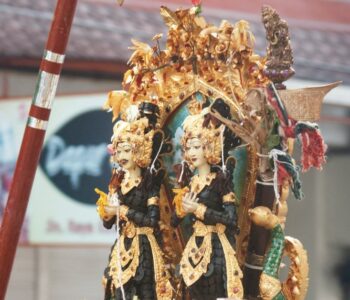
Pratima and Pralingga: Effigies of the Gods
Every year, the island of Bali comes alive with a profound and deeply spiritual tradition known as melasti. It is a ritual of purification, during which worshippers travel to the beach in procession. Carried upon their heads are special objects, often wrapped in sacred textiles. These are the pratima and pralingga, effigies symbolising gods and
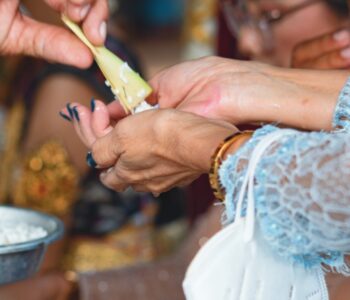
Bija: Blessed Grains of Rice
Upon leaving the temple, grains of rice are often seen stuck to the forehead and necks of worshippers, both on women and men. This particular rice is called bija, and signifies being in a state of holiness. During worship ceremonies, Balinese Hindus not only receive tirta (holy water, referred to as nunas tirta), but also bija (referred
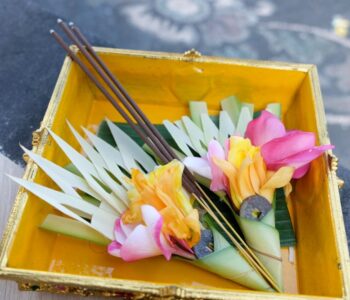
Kwangen: Bali’s Fragrant Offering
Balinese people are known for their meticulous attention to detail in their worship practices. There is a ceremony for so many aspects of life in Bali, and each ceremony will have very specific requirements. This is particularly true when it comes to certain rites and offerings, all must be executed with precision, all items present!
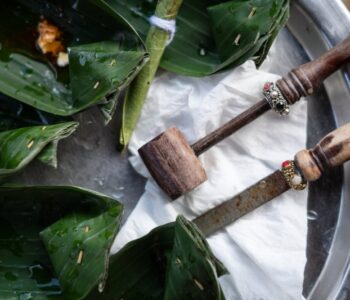
Piranti Mepandes: Tools of the Tooth Filing
One of the most significant rites of passage for any Balinese Hindu is the tooth filing ceremony, known as metatah, mesangih and for higher castes, mepandes. The ceremony involves the filing down of the top two canines and four incisors, the ‘fang-like’ teeth which are symbolic of the animalistic tendencies, as people enter the adult
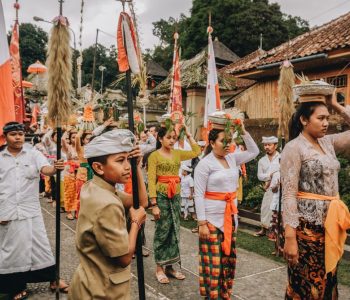
Guide to Traditional Balinese Clothing: Symbolism, Meaning and What to Wear
Bali is known for its vibrant and visual living culture, and traditional attire is certainly part of this tapestry. Whether making their way to temples, hosting grand ceremonies, from weddings to blessings, there is very specific traditional Balinese clothing that must be worn, each different for men and women, and indeed depending on the type