


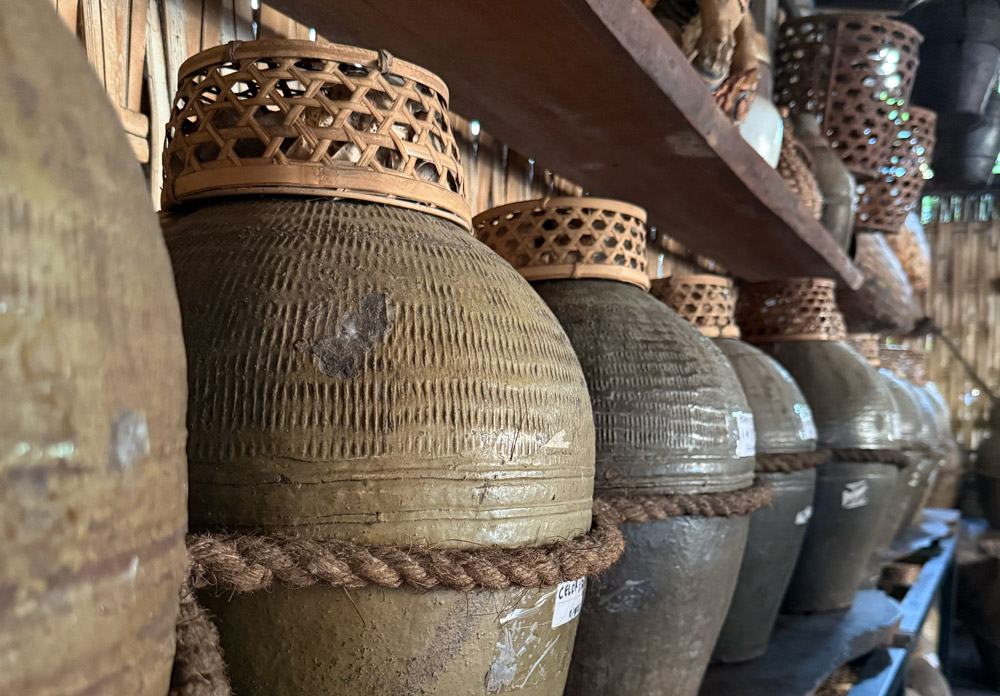
Bar owner and arak enthusiast Daniel Schwizer, along with his wife Elissa Gjertson, go on a research trip across Bali to visit the different arak producers on the island, discovering not only distinct flavours but the unique destinations where arak can be explored.
Let’s start with the basics – what exactly is Arak?
The original Balinese name for arak is actually “Sajeng Rateng,” which literally translates to “cooked palm wine.” As the name suggests, Sajeng Rateng is made by distilling fermented palm sap, from three kinds of palm: lontar palm, coconut palm and sugar palm. But there’s more.
Over time, the term “arak” in Indonesia has broadened to include a variety of raw materials, such as rice, sweet potatoes, snake fruit, or even oranges, with many creative and passionate makers excitedly experimenting with new materials, infusions and flavours. In fact, some estimates put the number of arak producers in Bali at over one thousand — with as many flavours to match.
The Magic of Real Arak
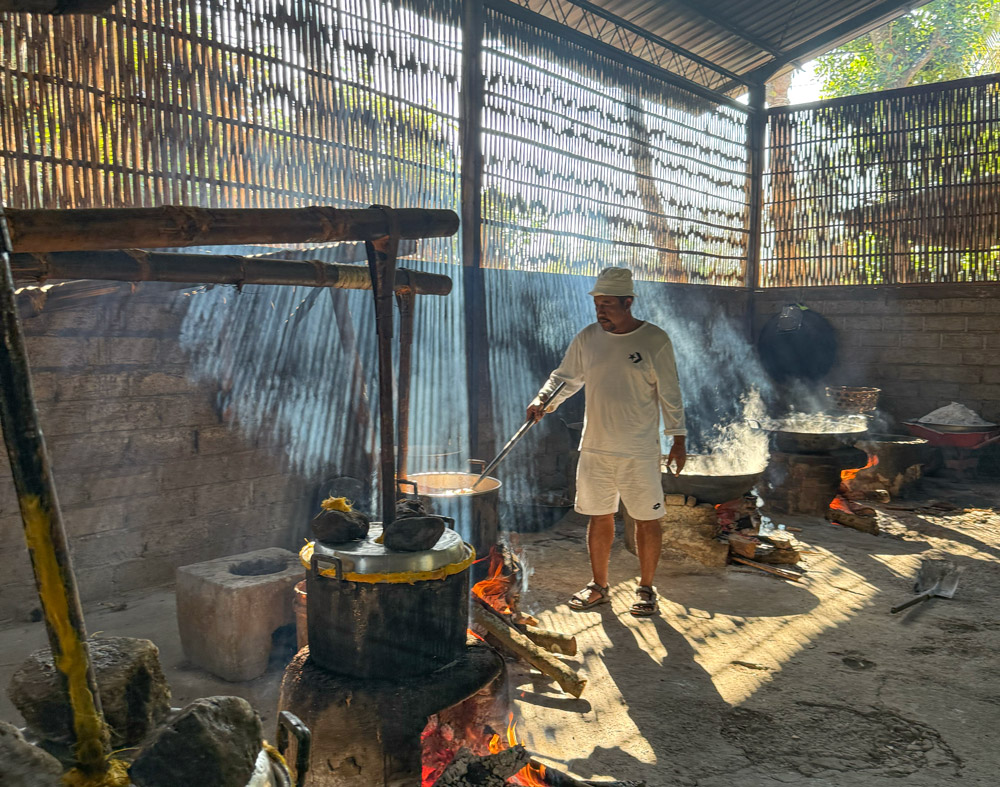
Nestled in the small village of Desa Les, the morning sun streams through the cracks of a weathered barn. Inside, several small fires crackle, filling the room with aromatic smoke from moringa and mango wood. Large metal pots sit atop these flames, each containing “tuak tajam” — fermented palm wine — closed tight with waxy, coconut fibers, a single tube rising to a labyrinth of 10-metre-long bamboo poles.
The steaming liquid condenses inside these stalks, leading the potion to its final destination — drip, drip, dripping into recycled glass bottles below. This is the daily ritual at Dapur Bali Mula, one of North Bali’s now iconic arak distilleries, where Chef Yudi crafts the traditional spirit every day to serve alongside his mouthwatering Balinese menu.
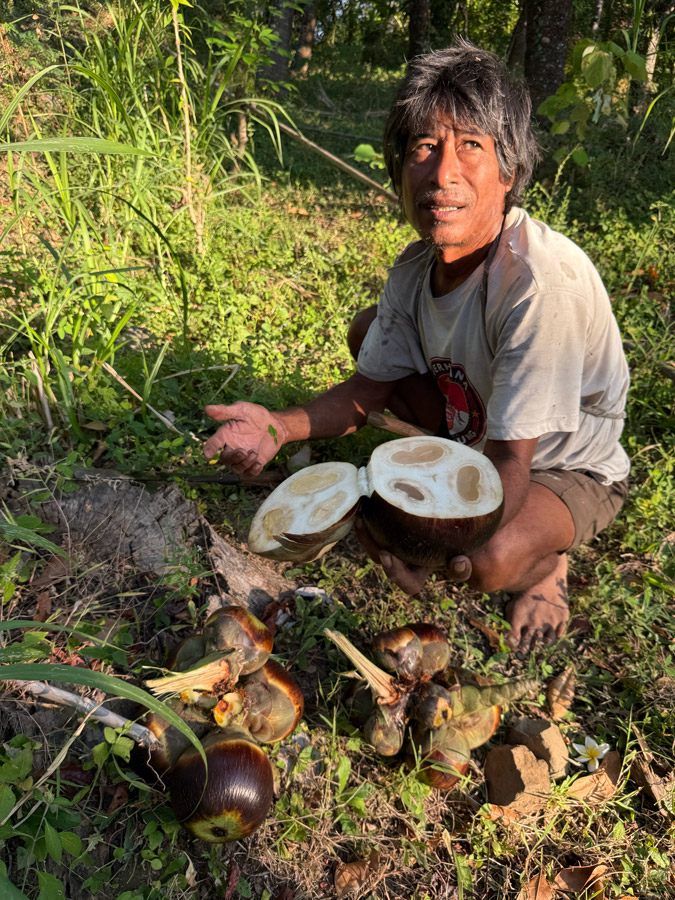
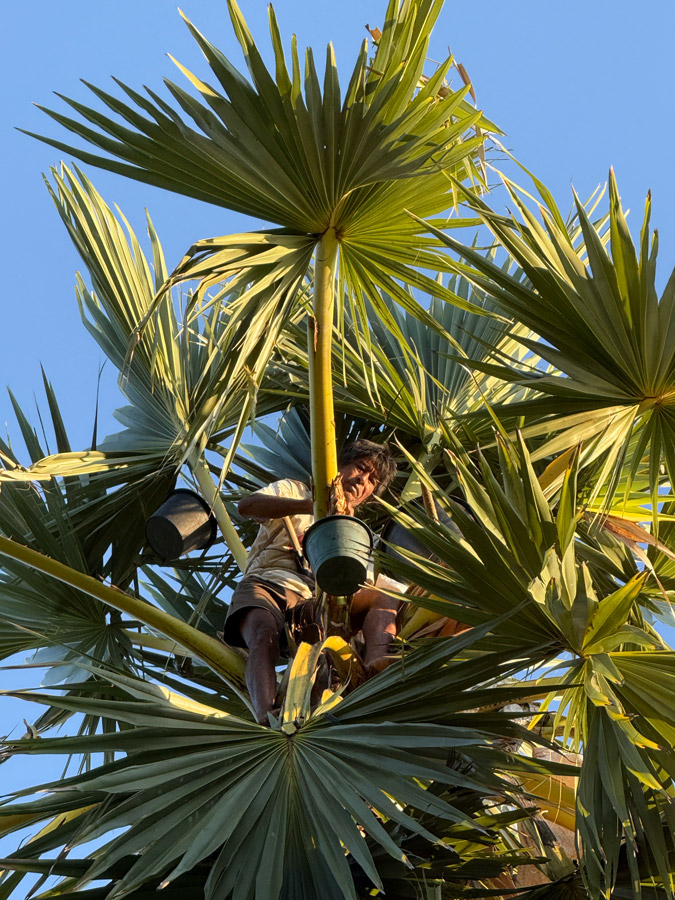
Earlier that day, Yudi took my wife and I on a journey to where arak begins. There, in the lontar palm grove, we met Panji, one of the farmers who climbs ten to fifteen trees twice a day to harvest the sap from the palms’ flower stems. Panji is already 55 years old but still climbs easily. During one of his trips, he brought down some of the collected sap to try and then climbed back up to gather some of the fruit. Both were sweet and delicious and Panji revealed that the lontar fruit is not only tasty but also a superfood with a long list of medicinal properties. (Perhaps this explains why he can still climb a 20-metre tree in a matter of minutes.)
Back on solid ground, we walked back to Chef Yudi’s charming “neighborhood” — which includes his distillery, a restaurant, several quaint rooms and his photo-worthy antique collection. He explained that the yeast for fermentation comes from dried coconut husks and, after two to three days, the palm sap transforms into palm wine and is then ready for its final distillation into arak. This, of course, involves starting up the fires, pouring the tuak into the metal pots and patiently completing the process once again. (IG: @dapurbalimula)
We enjoyed this slow rhythm and after a few days, we’d bonded with Yudi and his wife, feeling so much like family that we didn’t want to leave. But, then again, our Balinese arak journey had only just begun…
Karusotju
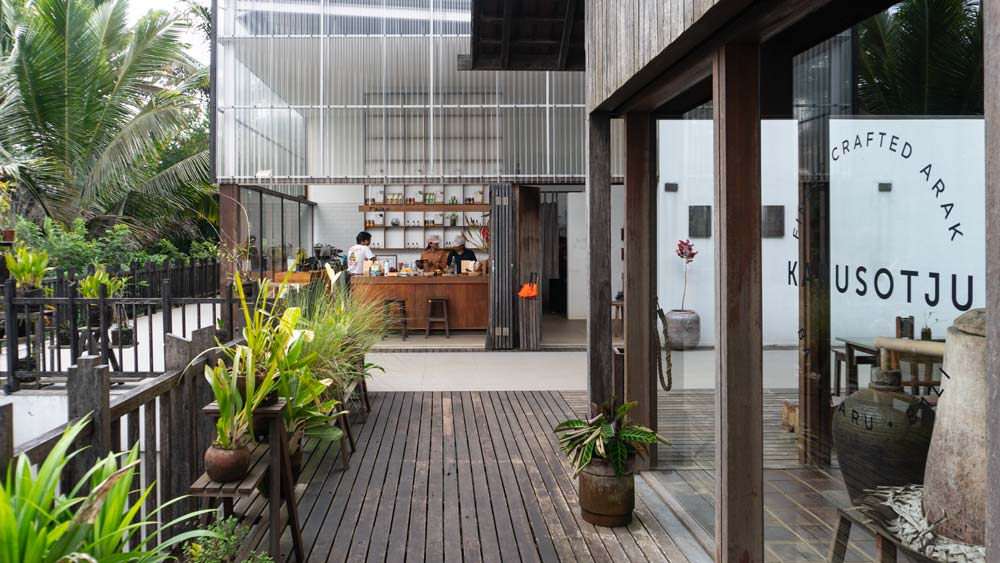
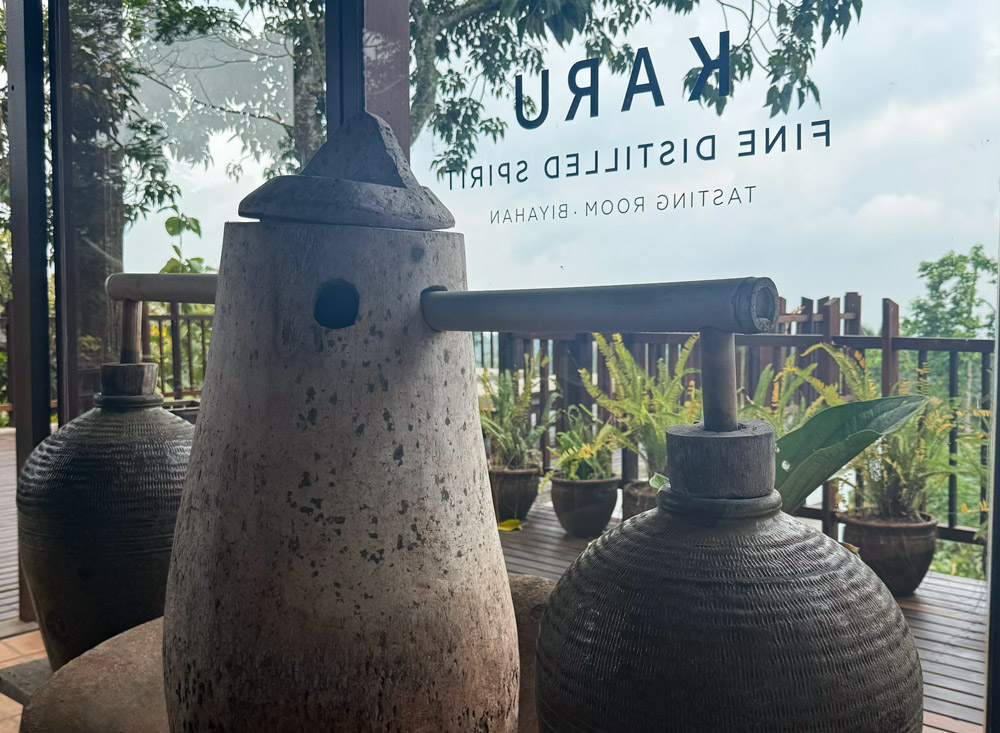
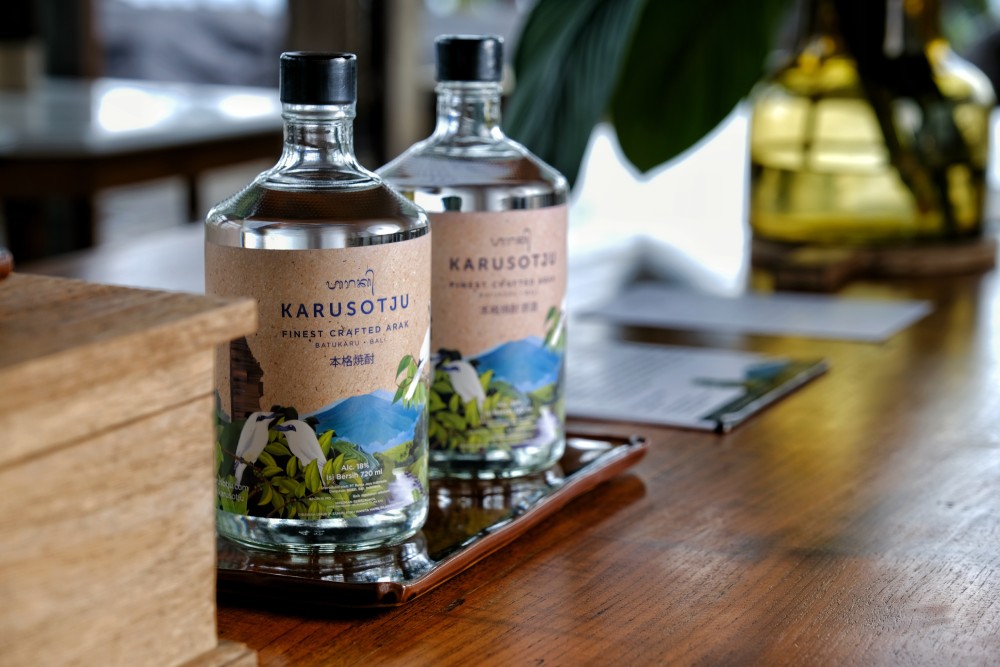
Tucked amidst a lush jungle of palm, fruit, and coffee trees near Mount Batukaru, Karusotju is a Japanese-inspired distillery that feels more like a tea house than a small-scale factory. It’s here they craft their arak in the tradition of Japanese shochu, made from sweet potatoes and created with modern distillation equipment from the Land of the Rising Sun.
Our friendly guide Wiwin led the ceremonial tasting — exploring Karu 18 and Karu 38 araks — first at room temperature, then warm, and lastly, ice cold, encouraging us to find a single favorite. Complemented by carefully chosen appetizers, it was a memorable experience and a lovely respite from the afternoon heat. (thekaru.com)
Exploration tip: Hike to the mountain spring that feeds the distillery with crisp, clean water, or stop at their neighboring sister restaurant for a tasty meal from sustainably grown produce … and more delicious arak cocktails.
Samsara Living Museum
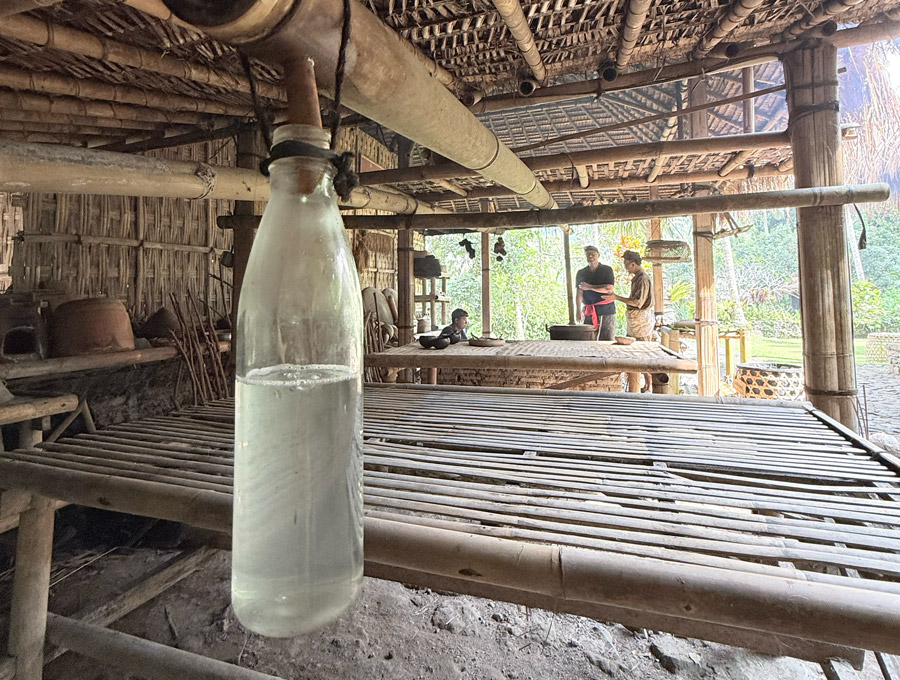
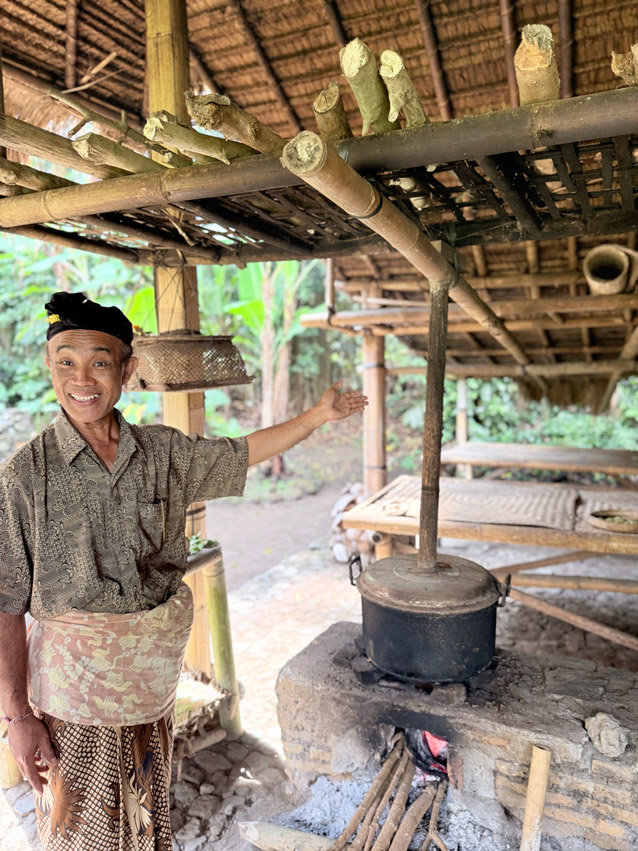
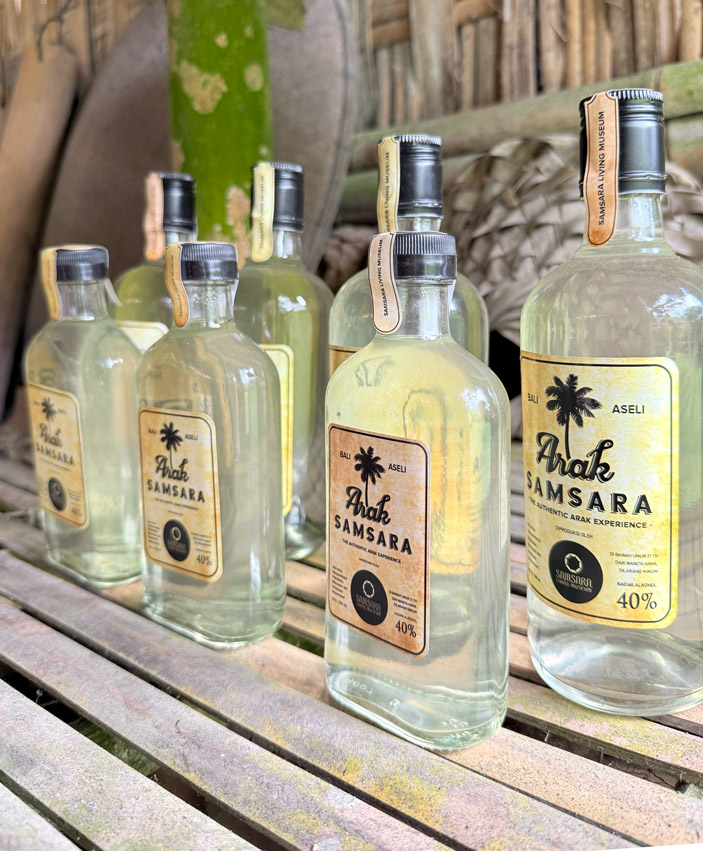
The residents of Desa Jungutan in Karangasem conceived the Samsara Living Museum, an immersive journey through Balinese customs, heritage, and traditions. An experience that intentionally slows you down, we were greeted with our own offerings and dressed in sarongs before our private guide, Wayan, took us through the stations and rituals of Balinese life.
At their traditional arak distillery, Wayan and team were proud to share their knowledge about different yeasts kickstarting fermentation, or how the long bamboo culms are opened to become distillation tubes. Only after we were sufficiently inducted in the art of arak making — and smelling like a campfire — were we allowed to taste Samsara’s coconut sap arak. It’s a bit more sour than lontar sap arak, but very pleasant with a dash of water to open the flavors and mellow the strength of the spirit. (samsarabali.com)
Traveler tip: Be sure to take a bottle of arak home as a souvenir to remember — and to support — this amazing place.
Desa Tri Eka Buana
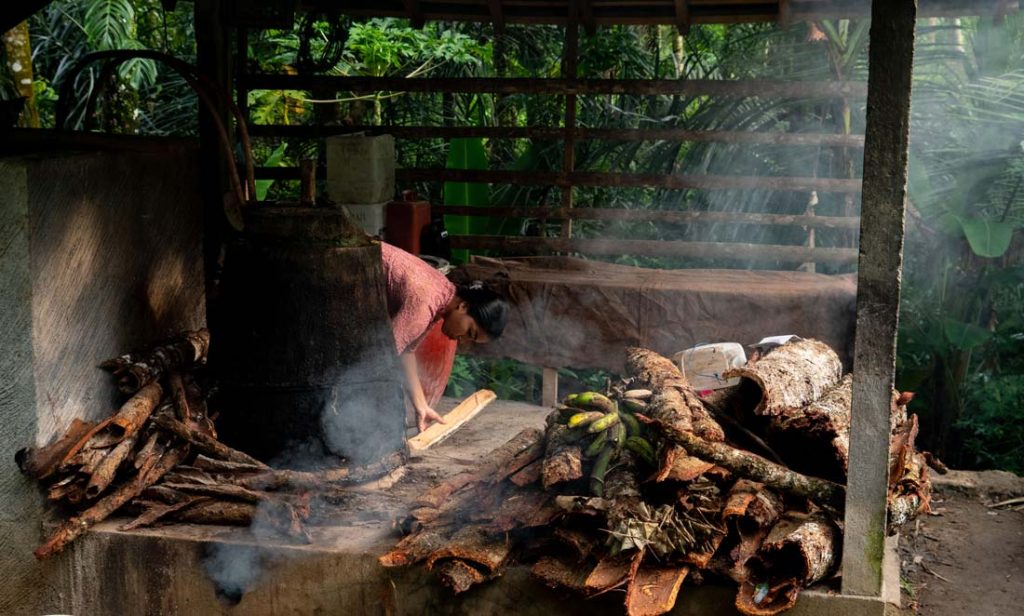
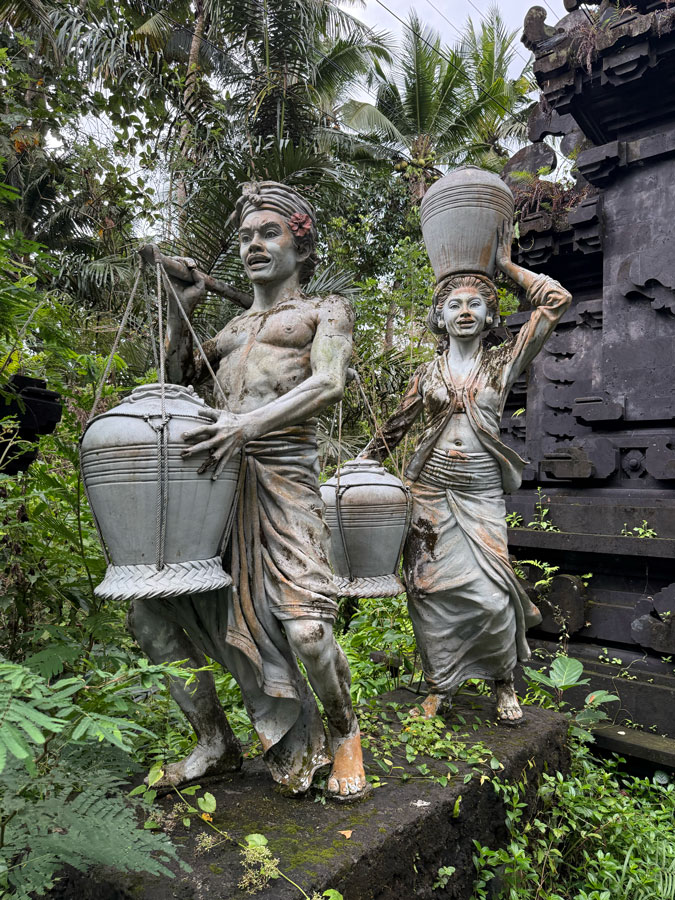
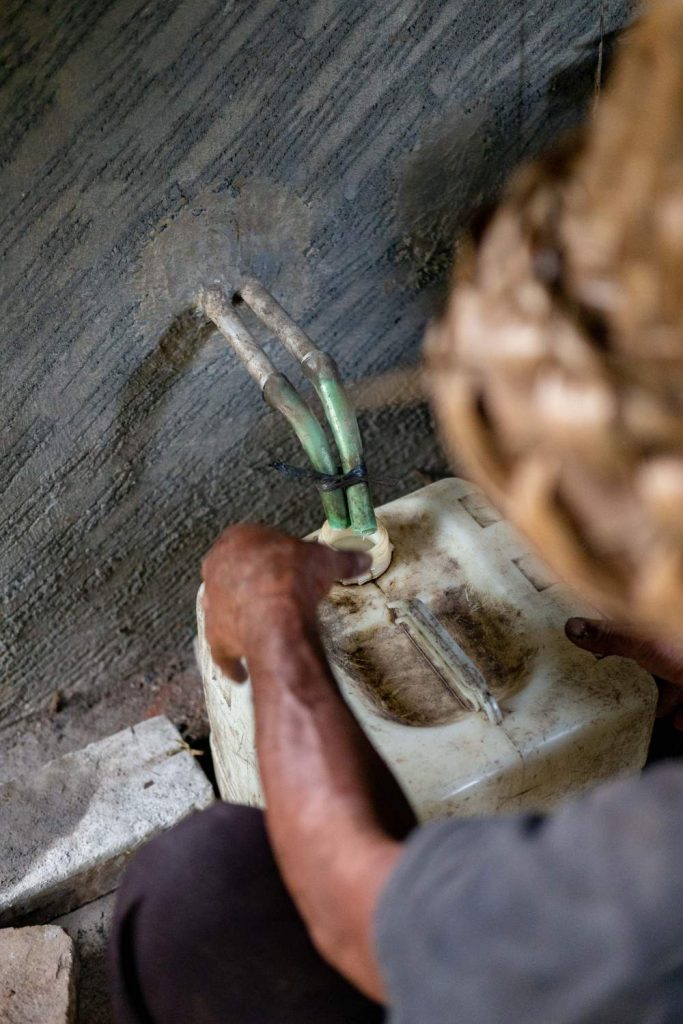
When you enter Desa Tri Eka Buana, just outside Sidemen, you immediately notice the statues in homage to coconut arak production, and you realise this place is serious. Gede, one of the village elders, says, “If you want to live in Tri Eka Buana, you have to make arak.” He explained that every house has a dedicated arak distillery; even the local mini mart sells most of what you need to start your own home distillery. As he showed us, most of the facilities and equipment are basic, from hollowed-out palm stumps to heat the fermented tuak, to blue industrial barrels for safe storage, but the pride in their village and arak production is immense.
Exploration tip: Here Gede taught us that these traditional distillers know how to make an alcohol that is safe to drink. Gede explained that in the past, “Kakek” would taste the arak and decide about its quality. Today, they use alcoholometer and other, more modern methods. He explained that the first output of the distillation is not safe for drinking; it is used for topical medicine called “boreh” or to make hand sanitiser. The next two to three outputs are safe to drink and are what we all know as arak. At the end, the final part is used for offerings. Gede was emphatic about how most of the arak they make in the village is for local ceremonies or used as daily a medicinal tonic. “We don’t like when arak is used just to get drunk,” he says with a caring smile. “It’s more important to us than that.”
Iwak Arumery
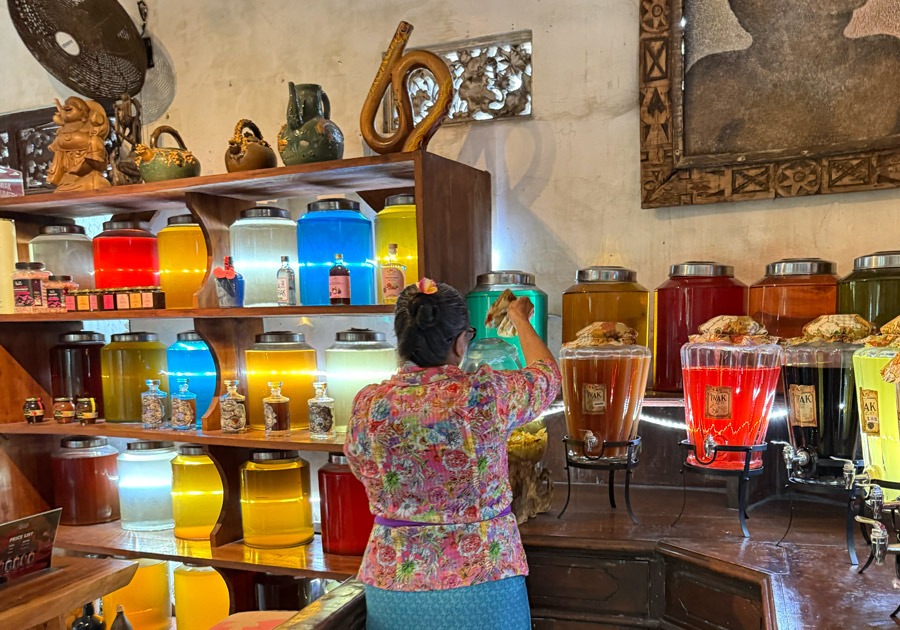
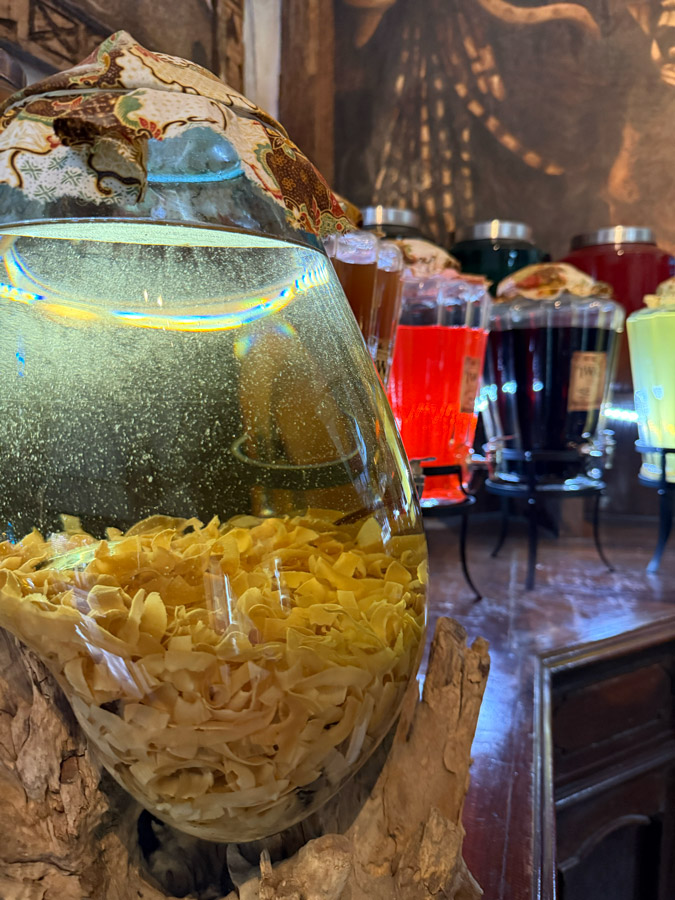
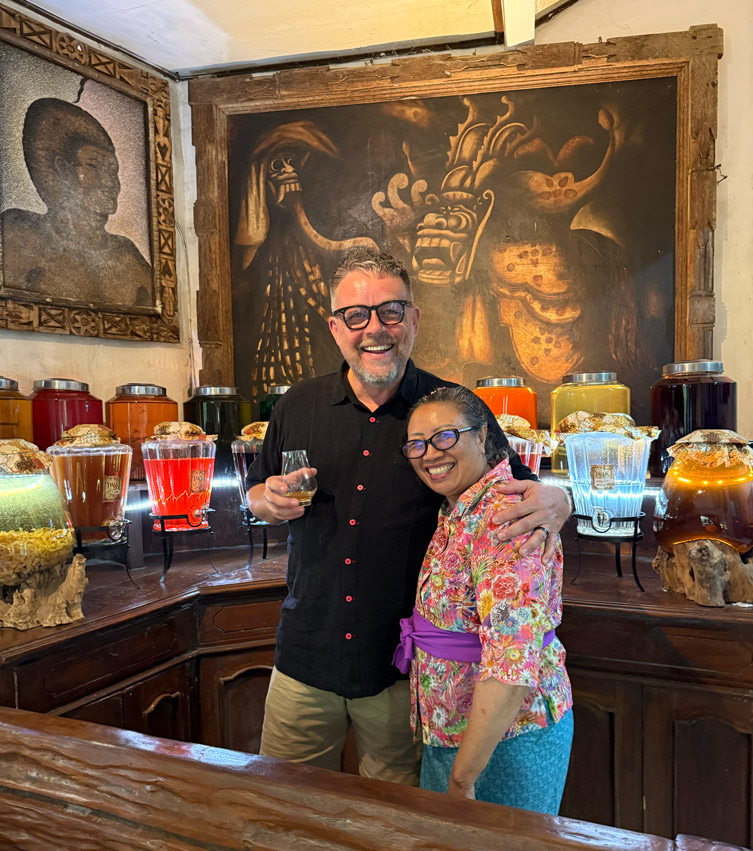
Finally, just outside Denpasar sits Iwak Arumery, where we were honoured to meet Ibu Dayu, the only woman to run an arak company in Bali — and somewhat of a legend in the industry. Growing up as one of 21 children of a Brahman family with a predetermined, traditional life path, she dared to break the mould. We spent two amazing hours with her, listening to her candid wisdom, the importance of following your dreams and living a happy life, before even getting to the arak. But once we did, what a treat. Her home currently doubles as her R&D lab where she infuses a blend of three palm saps with different fruits and spices to create her flavors. Glass jars all around, the place looks like a mad scientist lab crossed with a deconstructed lava lamp of amazing aromas and tastes. (drinkiwak.com)
Future tip: Ibu Dayu explained she is building a larger arak factory nearby which will be open soon. Keep an eye out for this exciting next chapter!
About the Author: Daniel Schwizer is the owner of Klub Kembali, an Indonesian-focused craft cocktail bar and Arak Library, which boasts the world’s largest Indonesian arak collection with nearly 70 bottles. Visit Klub Kembali in Selong Belanak, Lombok. Head to @klubkembali or klubkembali.com