To the casual observer, Bali is a paradise of Hindu temples, Sanskrit mantras, and colorful rituals dedicated to the classical gods of India. But beneath this postcard image lies a much older reality.
Long before the arrival of early Indic influences 1,500 years ago – and the profound structural reorganisation brought by the Javanese conquest in 1343 alongside the arrival of a Hindu-Buddhist priesthood two centuries later – an indigenous Austronesian culture prospered, characterised by the dominance of nature and the mountain in its dialogue with the sea. Understanding modern Bali thus requires looking past this Indic layer to uncover the old Balinese heart that still beats underneath. The text below explores this Austronesian stratum and the way it was subsequently reframed by an Indic superstructure to become today a structured and official faith.
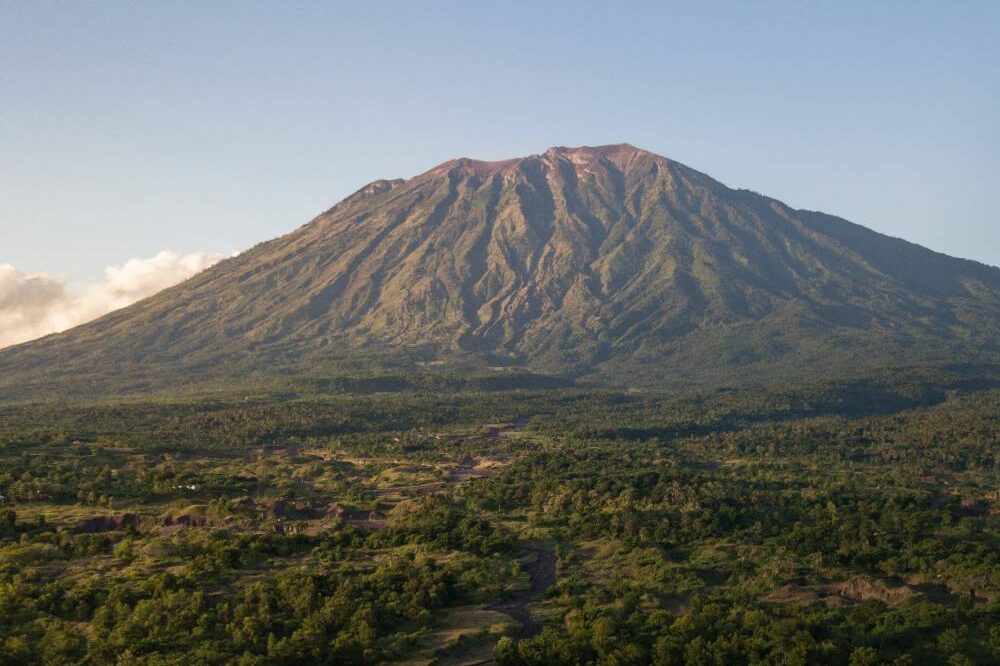
The indigenous tradition of Bali is anchored in the dominance of the mountain, as the abode of the ancestors. On account of its geological features, the mountain is the ultimate generator of meaning: in its sometimes terrifying volcanic presence, it embodies death in nature; yet, in the food its waters produce, it is also the provider of life; and last but not least, it stands in permanent opposition to the chaotic, unknown forces of the sea.
Bali’s basic geographic reality translates directly into the island’s symbolic and architectural foundation. The high mountain and lake zones – along with key points of contact with the sea – are crowned with large cosmic sanctuaries. Each is accompanied by a dedicated water temple designed to fetch water destined to become holy.
From these primary heights, a nested sub-system of shrines blankets the landscape, anchoring every tier of human organisation:
- The subak (productive agricultural rice fields)
- The banjar (inhabited village hamlets)
- The dadia (extended kinship networks)
Each tier remains ritually tethered back to its primary local source of holy water. This interconnected hydrological network dictates the Balinese perception of the cosmos and the divine. For major temple ceremonies anywhere on the island, holy water from the mountain sanctuaries above is required to complete the rites. Consequently, the totality of the holy waters collected – in pekuluh vessels containing the gods gathered within them – constitutes the totality of an unnamed “God,” whose merged essence is sprinkled over the faithful. At the pinnacle of this sacred geography, residing upon the volcanic majesty of Mount Agung, stands the ancient deity long known as To Langkir: the Man from the Mountain.
Human Life and the Ancestral Return
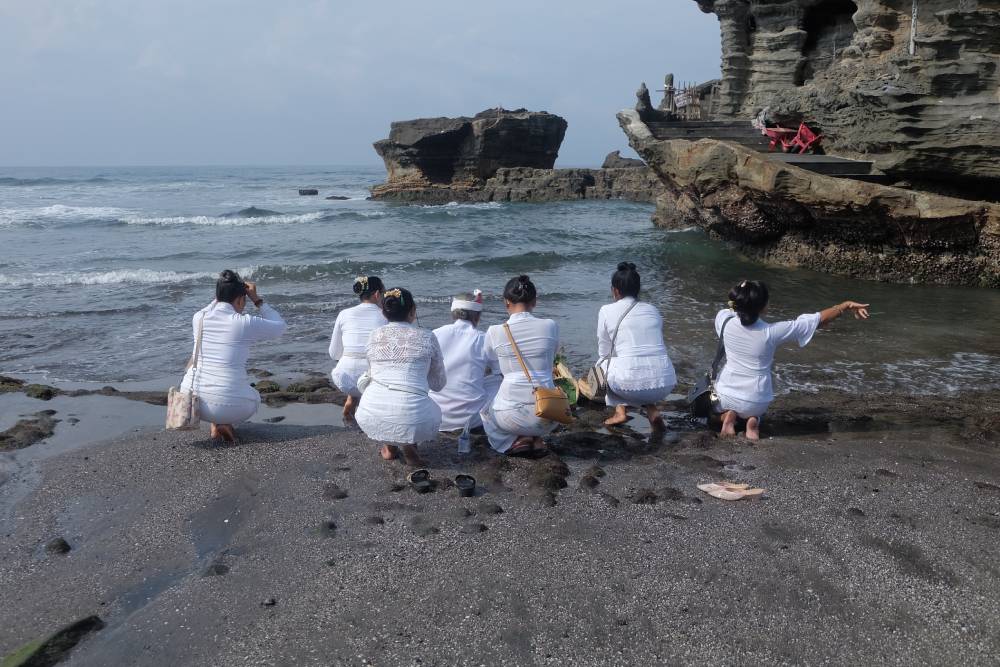
In this indigenous system, human life begins at conception when an ancestral incarnating soul – “eager to eat rice,” people say – combines with natural forces to come down from its mountain ancestral abode to create a jabang bayi (an incarnating infant), often viewed after birth as a living “god” and a warih (literally ancestral progeny or “dew” of an ancestor). This incarnating soul or titisan water drop is part of an ongoing cyclical flow: if properly guided and managed through the ethical and ritual phases of life, it will upon death, after purification, return to its ancestral fold in the “old country” (gumi sane wayah) above the mountain, where it will become water again (dadi yeh).
Throughout this journey, the individual does not navigate existence in isolation, but moves guided by temple-harnessed kinship, territorial, and functional networks. Life then becomes a vigilant navigation across the phases of existence, avoiding the unseen traps, snares, and volatile imbalances of the niskala netherworld. By respecting ritual calendar boundaries, making the right offerings, honouring local taboos, and maintaining proper relations with both living kin and ancestral forces, the person strives to stay on a steady path of equilibrium that safely leads back to the post-death mountain.
The trajectory of this soul relies entirely on ritual navigation. A few days after birth, a family visits a balian tetakson to check and identify which specific ancestor has returned, locating the incarnating soul and uncovering its identity or requests. Similarly, when life ends, the balian tetakson is consulted to locate the soul’s destination after death while on its way to the ancestors’ abode, ensuring that rites bridge the gap between living kin and rumbling, unseen forces. The balian similarly helps those seeking counsel identify the roots of a mishap or illness, summoning the unseen cause so its demands may be voiced.
The Seen and Unseen Powers (Sekala and Niskala)
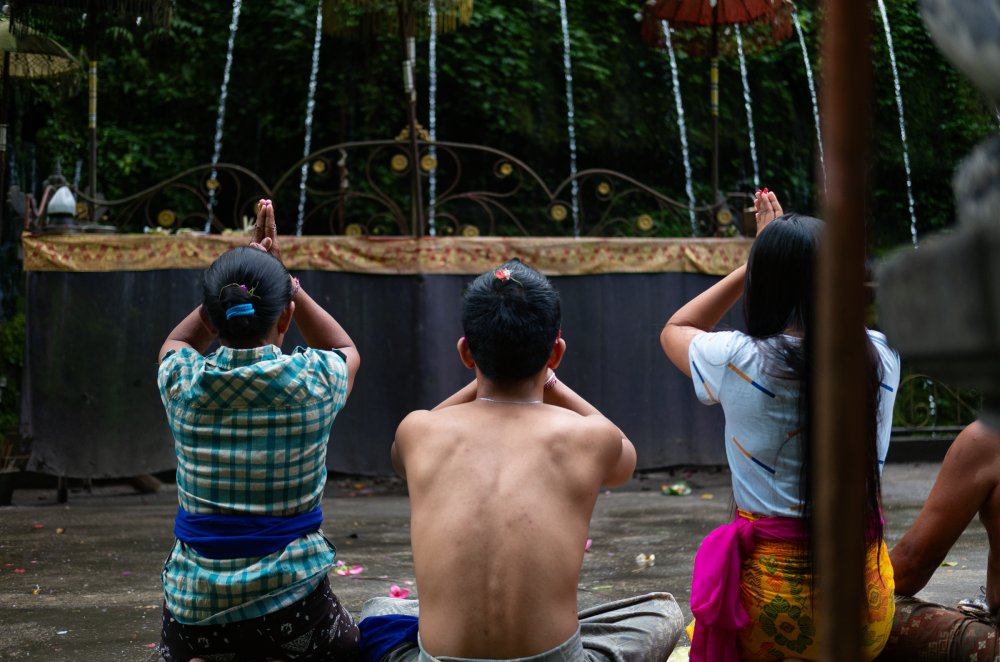
The cosmos is divided into the visible world of daily existence (sekala) and the powerful, unseen realm of the niskala. Within this unseen realm, the gods are fundamentally ancestral lords of the place, locally termed Hyang. Their numbers are infinite, ranging from localised household guardians to grand cosmic titles for the ruling forces of nature.
When speaking of these forces, one must account for the niskala itself – experienced not as abstract theology, but as the sweet or rough rumbling of unknown forces whispering about life, fate, and unseen currents. Because their specific names shift depending on where they “sit” (melinggih), an abstract, singular Oneness of God is neither central nor pondered. However, traditional titles for these forces include:
- Penyekeb Langit: The “Lid of the Sky” or cosmic compressor, representing atmospheric power.
- Bhatara Lingsir: The “Elder” deified ancestors.
- Ratu Gede / Ratu Agung: Great Kings or Lords.
- Sesuhunan: The “Respected Ones,” embodied in sacred mask or Barong figures representing protective forest forces.
- To Langkir & Dewi Danu: The Lord of the Mountain and the Goddess of the Lakes.
Conversely, the negative or volatile forces are untamed elemental energies inhabiting the unseen niskala realm that require constant ritual attention:
- Bhuta Kala: Elemental forces of matter, chaos (Bhuta), and time (Kala), leading to sickness or accidents if unappeased.
- Gamang, Duwe Buta, Melayah / Buta Luwu, etc.: Formless earth and directional spirits dwelling in crossroads, ravines, and uncultivated boundaries.
- Jero Gede / Atma Kesasar: Discontented or wandering hungry souls (pitra) of those who died improperly without rites, causing disruption until purified by community ritual.
These niskala forces remain in active communication with humans. Ancestors visit during temple festivals and the Galungan celebration; after their physical effigies (pratima) are cleansed, they are welcomed (tedun) onto their pelinggih seats with food, dance, and music to bestow blessings (pica).
Ritual Specialists
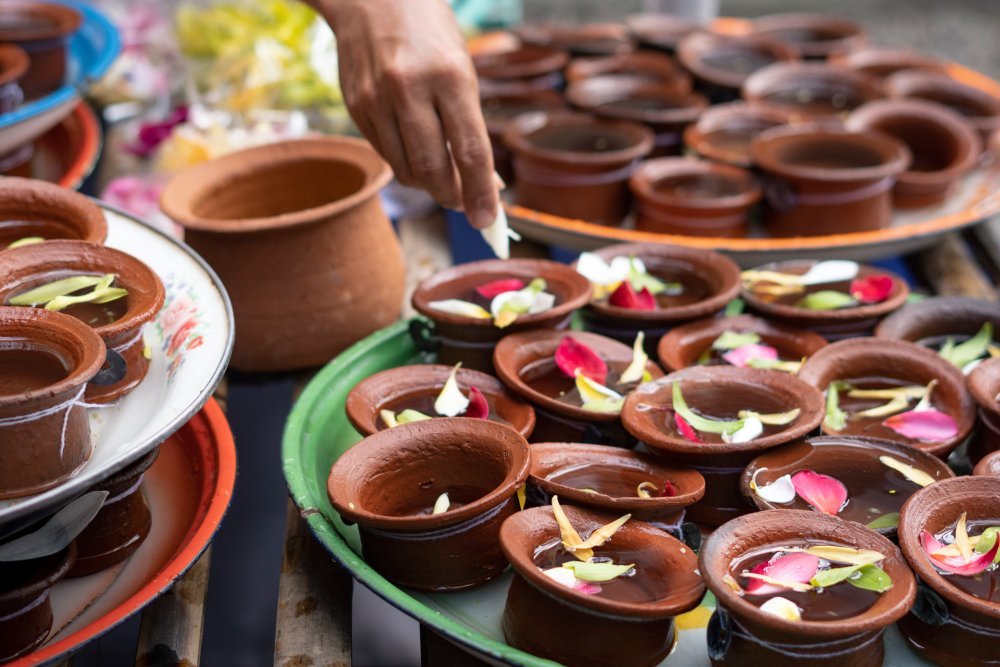
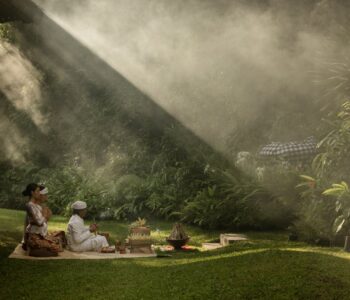
The human bridge is maintained through distinct ritual roles. Most common on the daily level are temple custodians (pemangku), ordinary community members chosen not as elite theologians, but to manage altars, invite deities to descend (tedun), direct worship protocols, and distribute holy water (tirtha) to maintain respectful etiquette with the local lords of the place.
Yet no less important are those who “serve” (ngayah) the forces from the invisible niskala realm. As human vessels (jero tapakan, jero dasaran), they enable deities, ancestors, or chthonic entities to manifest their demands from the invisible world – either by descending to “sit” upon them (nglinggihin) if coming from the upper world, or by “penetrating” them (ngrangsukin) from below if coming from the netherworld. Interpreting these messages is often a delicate task.
Operating in a related yet distinct sphere is the balian shaman, who on demand consults the unseen after birth to trace an incarnating soul back to its ancestor, locate the path of the recently deceased, or diagnose the cosmic and personal imbalances behind illness and misfortune.
Communities, priests, and ordinary people maintain balance among these cosmic forces through offerings (banten), which serve as an ode to the island’s natural wealth and agricultural surplus:
- Saiban (Yatna Nitya): Small, daily post-cooking portions placed at doorways and household shrines to feed immediate elemental forces (bhuta kala) before human consumption.
- Banten Segehan: Simple ground offerings of colored rice, salt, and water placed at crossroads and gateways for quick appeasement of lower forces.
- Banten Upakara: Structured, handcrafted palm-frond, fruit, and flower arrangements tailored for lifecycle rites and temple ceremonies, serving as food and gifts to visiting gods and ancestors.
The Indic Overlay, Pantheon, and Brahmin Domination
While this pure indigenous framework provides a vital baseline, historical layers have imbricated Indic aspects so deeply that attempting to completely separate the two is often impossible. Indic influence began being felt more than 1,500 years ago, arriving in successive waves; culminating in the Majapahit conquest (1343) and the subsequent arrival of a Hindu-Buddhist priesthood. Thus were introduced a rationalised, structured worldview alongside profound theological, liturgical, and literary additions:
- The Hindu Pantheon: The Indic layer brought in the classical Hindu cosmogony and pantheon (such as Brahma, Vishnu, Shiva, and various manifestations of supreme deities). However, a fundamental functional difference remains: while indigenous Balinese gods and ancestors actively descend, possess mediums, and walk among the community in physical forms, the classical Hindu gods of the panoply remain transcendent, never truly coming down in that same visceral, immanent way.
- A Universal Abstract Moral Ledger: Misfortune shifted from immediate rite-related breaches to the broader lens of karma and cosmic samsara cause-and-effect. Yet, even now, daily life remains rooted in orthopraxy (doing the correct rites).
- The Closed Ancestral Loop vs. Transcendent Escape: Despite classical concepts like moksha and universal reincarnation, the core Balinese desire remains tied to the local land—ensuring proper death rites so the soul returns to its mountain origin rather than dissolving into the undefined infinite of moksa.
- The Sociological Peculiarities: Unlike the rigid Indian caste systems, Balinese caste (tri wangsa—Brahmana, Satria, Wesia, plus the majority sudra groups) has always been more fluid in everyday village life. There has never been a purity-related caste separation. A high-caste pedanda (Brahmin priest) may hold supreme ritual purity, but in the village banjar, a commoner who is wealthy or politically skilled often holds immense secular and social power.
- Literature, Mythology, Language: The Indic layer brought a vast written tradition, introducing the Indian epics (like the Ramayana and Mahabharata) and complex philosophical treatises, thus grafting a textual mythology over the older oral systems. Furthermore, local geography was mapped onto grander universal Hindu geographies, the cosmic mountains of Java and Bali being identified as chunks of the Indian Mahameru, thus anchoring pan-Asian mythology directly into Balinese soil. Finally, many indigenous aspects of religion were, as visible a few times in the present text, reinterpreted and renamed in a new Indic idiom.
- Priesthoods and Social Stratification: Armed with literacy, Sanskrit texts, and royal patronage, the Brahmin priestly class asserted intellectual and ritual superiority over traditional rite purveyors.
This duality is nowhere more evident than in the very water that graces the altar. On one hand stands the local yeh/toya requested from neighborhood temples and drawn by the indigenous pemangku, tethered directly to the local earth and ancestral lords. On the other stands the refined tirta consecrated by high priests through intricate Sanskrit mantras and mudras, invoking the transcendent Indic pantheon. Yet, whether drawn from a village spring or conjured through high liturgy, both waters must ultimately flow from the same hydrological and spiritual source: the mountain.
The Living Synthesis
Today, this lettered Indic interpretation is the standardised version found throughout most of Bali, even though the Indic component is weaker in mountain areas. On the whole, even under Brahminical domination and institutional education, the indigenous framework does not buckle. A dynamic tension remains: high-caste pedanda oversee grand theological rites from above, while the indigenous pemangku, local shamans (balian), and customary village assemblies (banjar) maintain absolute control over ground-level ritual life.
Ultimately, the pure indigenous system was never substituted. Despite formalised Indic teachings, the old system remains resilient, absorbing classical layers while persisting as the unyielding heartbeat of Balinese kinship, territory, and daily life.
The Modern Hierarchy and Emerging Shifts
Today, the Indic component – reinforced by the formal recognition of Balinese Hindu-Dharma with its standardised credo system (Panca Sradha) – holds the social upper hand, controlling island-wide macro-cleansing ceremonies and key death rituals (pitra yadnya) across most of the island. Yet, a new shift is transforming the landscape. The traditional hereditary wangsa caste system is increasingly criticised, and a new wave of non-Brahmin priests (sulinggih, or initiated holy figures from non-elite lineages) is rising. Armed with Sanskrit mantras and ritual authority, these priests, coming from the reinterpreted depth of tradition, now are authorised to consecrate the most potent holy waters (tirtha) and perform high-level rites, thus increasingly challenging the old Brahmana monopoly and reshaping contemporary Balinese Hinduism.
Yet, even now, whether delivered through the traditional Brahmin pedanda or these newly emerged sulinggih twice-born priests, the production of holy water – and hence the link to the mountain – remains the ultimate spiritual currency. It proves that as the system modernises, the unyielding pulse of Balinese ritual life continues to adapt from within.
How does the old To Langkir adapt, up there, on Mount Agung, and how does he react at being identified as a chunk of the great Hindu and Indian Meru?