


Each year the Ubud Writers and Readers Festival (UWRF) is guided by a theme —an idea drawn from Balinese or Hindu philosophy, myth, or scripture— that shapes the program, inspires the artwork, and sets the tone for dialogue. These themes are carefully selected to resonate with both local wisdom and universal human concerns, ensuring that the festival remains a vibrant space for storytelling, exchange, and reflection.
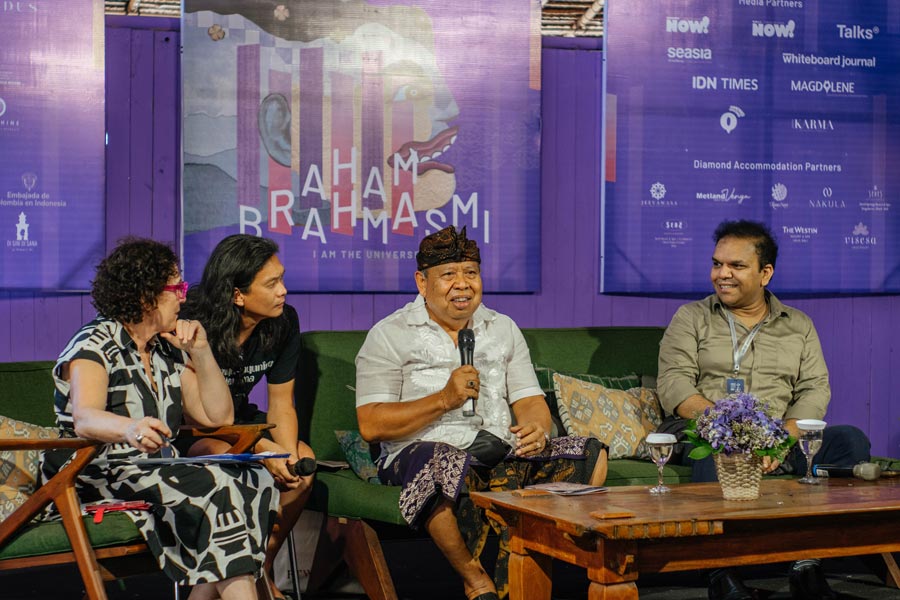
To understand how these themes come to life, I spoke with Dr. I Ketut Suardana, Chairman of the Mudra Swari Saraswati Foundation and co‑founder of UWRF. Pak Ketut has overseen the process since the festival’s inception, and his vision continues to energise each new edition. He explained that he likes to select themes from Balinese Hindu wisdom, though sometimes they reach into broader Hindu philosophy or Javanese lore.
Over the 22 years of the festival’s existence, they have ranged from the Vedas, the Upanishads to Balinese Dharma teachings, and Javanese mysticism, always blending the worldly with the spiritual. The goal, he emphasised, is to reflect on the interconnectedness that binds the human race: our shared origins, our pursuit of harmony and wellbeing, and the interplay between past, present, and future.
Themes are Anchors of Meaning
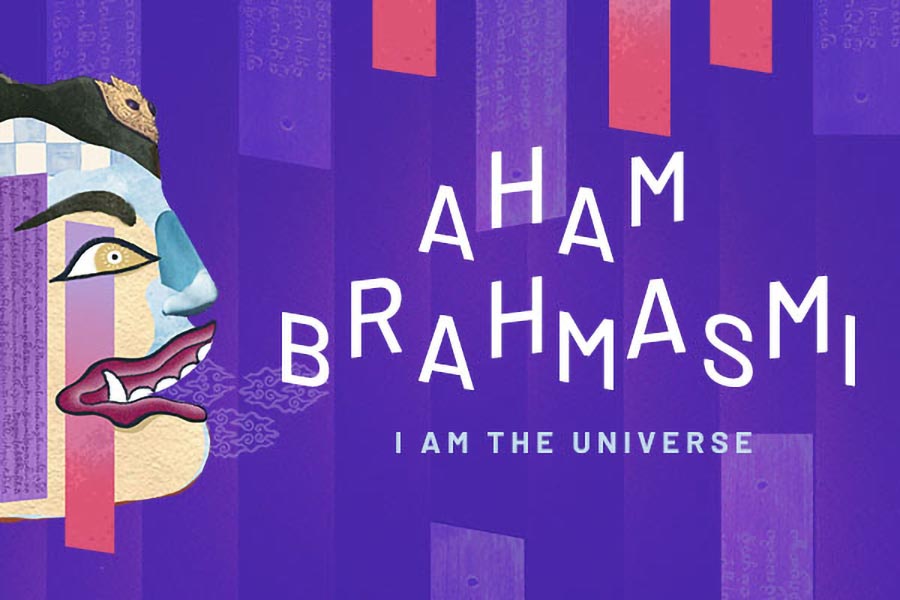
Once a theme is chosen, Festival Founder Janet DeNeefe and her team commission a Balinese or Indonesian artist to interpret it visually. The artwork becomes the festival’s emblem, while the program is curated to echo the theme through the voices of writers, poets, journalists, musicians, artists and activists. This synergy between theme, art, and dialogue ensures that the festival is not only intellectually stimulating but also visually and emotionally resonant.
The themes are not abstract slogans. They are living ideas that ripple through every aspect of the festival. A striking example was last year’s theme, Aham Brahmasmi— “I am the Universe.” Rooted in the Upanishads, it expresses the unity of the individual soul (Atman) with universal consciousness (Brahman). The festival’s programming embodied this profound idea through discussions, performances, and art, weaving together voices that celebrated interconnectedness. It was a reminder that literature and storytelling are not only about words, but about the deeper truths that bind us together.
The 2026 Theme Samarasā: Harmony of Mind, Heart, and Action
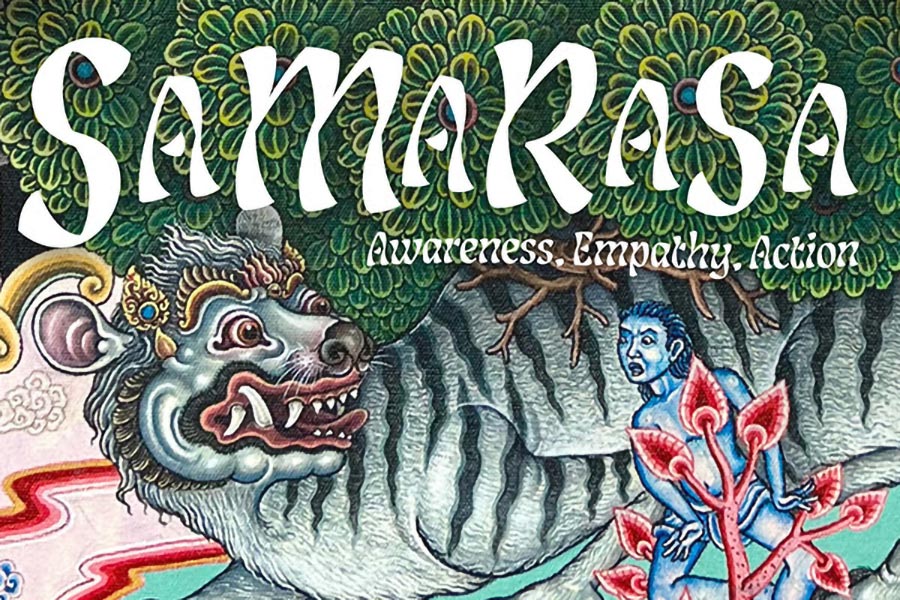
For 2026, the chosen theme is Samarasā: Awareness, Empathy, and Action. Drawn from Sanskrit philosophy, it emphasises harmony between Citta (mind), Rasa (heart), and Karsa (action). This triad invites reflection on how thought, feeling, and action can align—awareness bringing clarity, empathy fostering connection, and action transforming insight into purpose. It is a theme that feels particularly urgent in our times, when the balance between intellect, compassion, and responsibility is often strained.
This year’s program will explore how these forces shape us, tracing cycles of existence from the technological to the spiritual, from the personal to the environmental. The aim is not only to understand where we have been, but to guide humanity toward where we must go: a future defined by compassionate response. In this way, Samarasā is both a philosophical meditation and a practical call to action.
The Artwork: Visualising Harmony
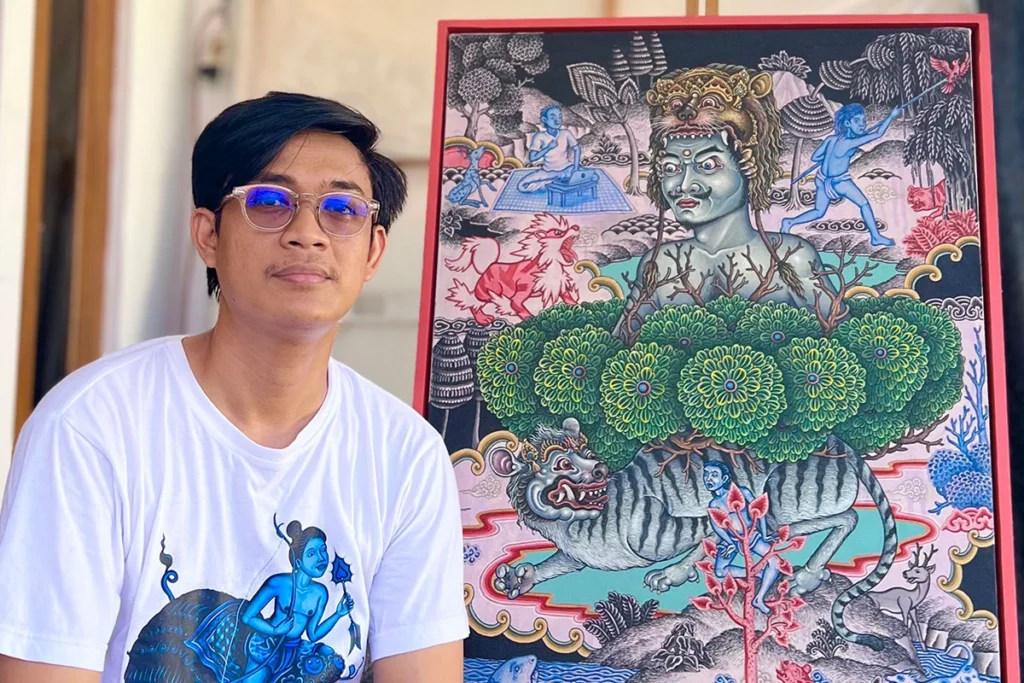
The artwork for Samarasā was created by Balinese artist Wayan Aris Sarmanta, who works in the Batuan painting style. His interpretation unites mind, feeling, and action in a vibrant image where mythical creatures, landscapes, and human figures shimmer with energy. The painting depicts a world where humans – representing thought/awareness, nature – soliciting respect and care, and the Balinese tiger – symbolising action, are interconnected in a vision of balance and unity. As with every year, the artwork is not merely decorative; it is a visual anchor that reminds festival‑goers of the deeper meaning behind the conversations and performances they experience.
A Feast of Storytelling
At its core, UWRF is a feast of storytelling. Each theme anchors a rich program of debates, performances, film screenings, and workshops, while the artwork underscores the vital role of artists in shaping dialogue. The synergy between theme, art, and discussion ensures that every festival is not only a celebration of literature but also a meditation on what it means to be human.
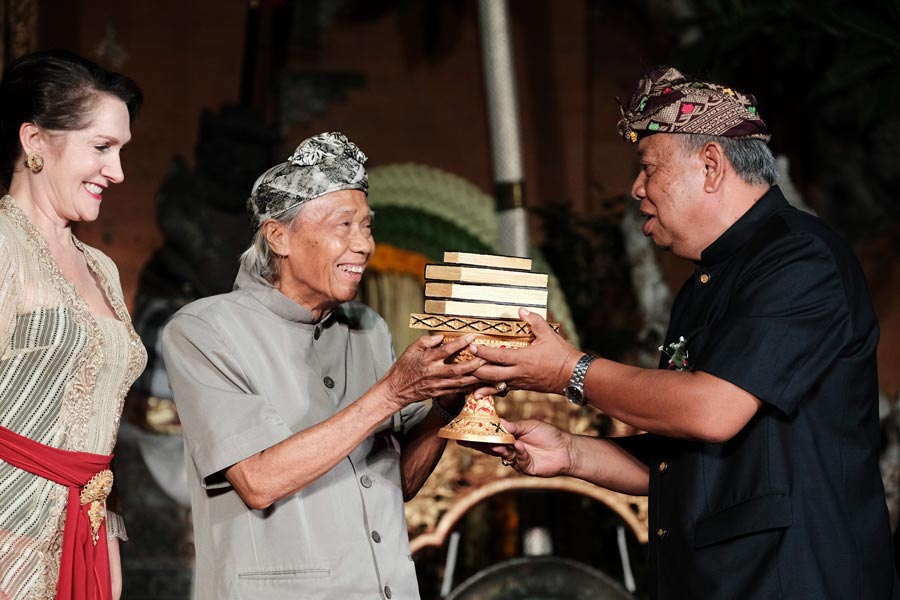
The festival’s panels bring together literary luminaries, emerging writers, journalists, thinkers, and artists from around the world. Conversations hover around the theme, but often expand beyond it, creating unexpected connections and insights. Nightly performances, film screenings, and cultural events add further layers, turning UWRF into a kaleidoscope of voices and perspectives. It is this dynamic interplay—between theme and spontaneity, between planned dialogue and serendipitous exchange—that makes the festival so compelling.
Why Themes Matter
Themes provide coherence. They give the festival a backbone, a guiding principle that shapes not only the program but also the spirit of the event, engendering a unified exploration of ideas, and reflections that remain long after the festival ends.
The UWRF themes resonate beyond the festival itself. They invite readers, writers, and audiences worldwide to consider how ancient wisdom and contemporary challenges intersect. They remind us that storytelling is not only entertainment but also a way of grappling with the big questions: Who are we? Where are we going? How can we live in harmony with one another and with the world around us?
The Ubud Writers and Readers Festival themes bridge philosophy, art, and storytelling, and invite reflection on our shared humanity. As such, they guide the festival’s dynamic program. In 2026, the call to balance awareness, empathy, and action reminds us that literature and dialogue are not only about understanding the world but about shaping it with compassion and purpose.
UWRF remains, at heart, a celebration of storytelling with depth, with vision, and with a commitment to harmony. That is what makes it not just a festival, but a living conversation about the human journey.
Ubud Writers & Readers Festival 2026 will take place from 21 to 25 October 2026. First speakers announcements, line-up and early bird tickets are already available on their website: ubudwritersfestival.com