


For thrill-seekers and nature enthusiasts, this island is the ultimate playground. From volcanoes to river valleys, waterfalls to a sprawling national park, the rugged environment beckons with opportunities for exploration and adventure in Bali.
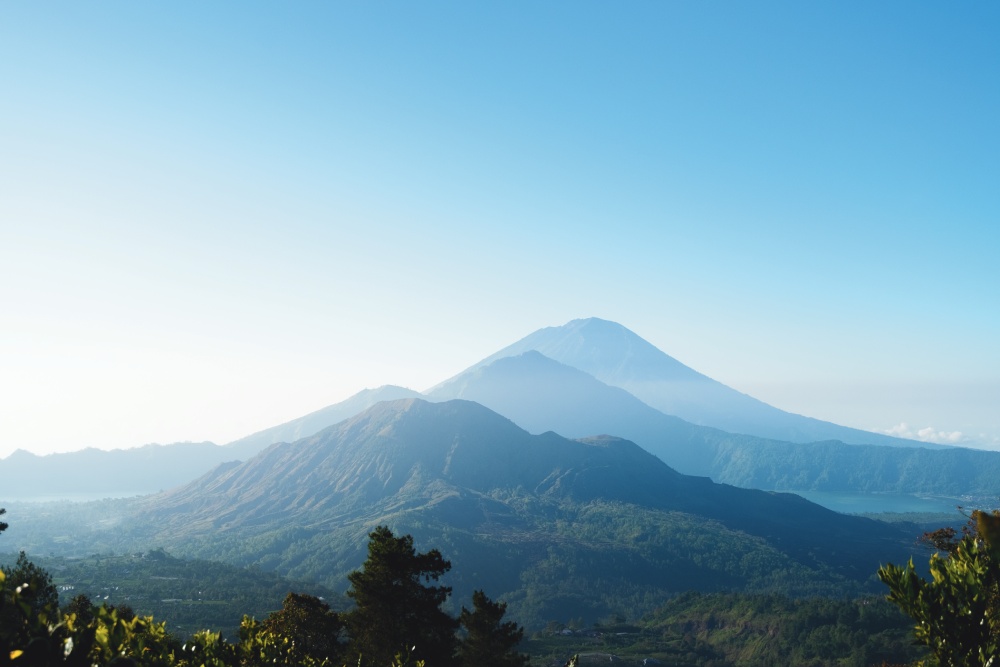
Bali sits on the Pacific Ring of Fire, a hotbed of tectonic activity that has over millennia forged the magnificent landscapes of the island. Four principal volcanic mountains, gaping calderas with towering peaks and ridges, and highland lakes that feed the hundreds of rivers which have carved the dramatic ravines and poured over flood plains – these have all contributed to what can only be described as a truly awesome environment.
Add to that a fertile, tropical climate and the ecology thus thrives with thick forests that to this day blanket much of inland Bali. This is what awaits the hikers and trekkers, mountain cyclists and white water rafters. These enticing environments are an opportunity to ‘get out the south’ and to venture to distant destinations.
What kind of adventure in Bali are you looking for?
Island Summits – Mountain climbing experiences
An Epic Descent – A unique trek from central to north Bali
Chasing Waterfalls – Two highlighted waterfalls to explore
Into the National Park – Exploring the natural landscape of West Bali
Guided Outdoor Adventure – Cycling, rafting and high-speed thrills!
Island Summits
As mentioned, there are four principal mountains on Bali – Mt. Agung, Mt. Batur, Mt. Batukaru and Mt. Abang – but there are more than 20 significant peaks in total on the island. Each of these present their own unique terrain, and a new summit to conquer. Here are two from Bali’s eastern Karangasem Regency that tease what a mountain hike has in store.
Mt. Agung
Bali’s holiest mountain – and therefore the most important mountain on Bali. Home to Pura Besakih, the mother temple that climbs up the southern face of Agung, all Balinese Hindu must make pilgrimage to this great temple complex.
For adventure seekers, the climb to the mountain’s crater rim, battling thick mountain forest and volcanic terrain, is perhaps Bali’s most epic outdoor mission.
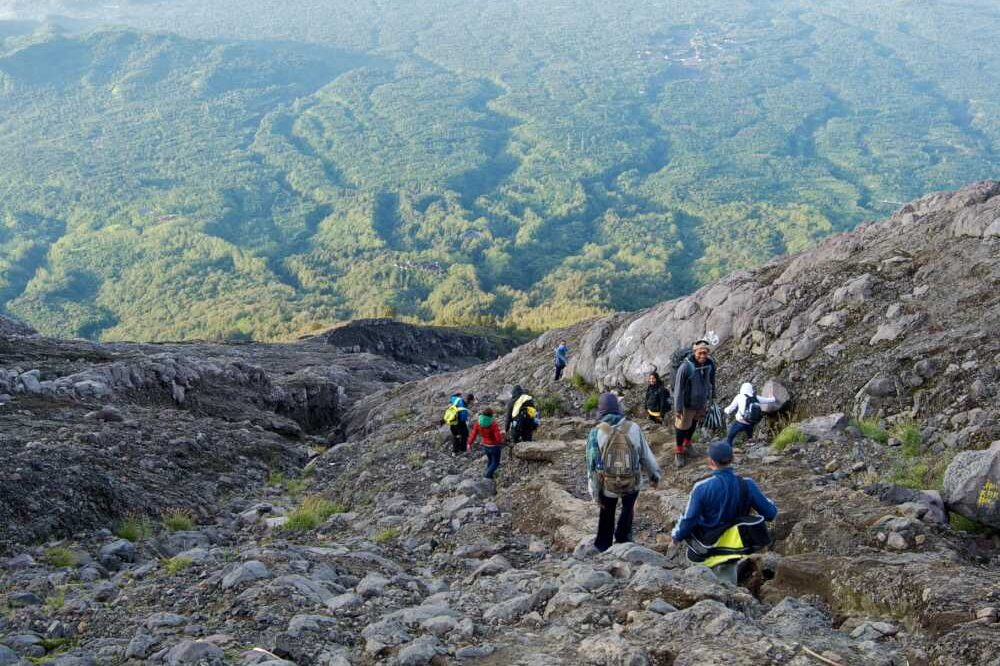
There are two regular routes for hikers, the first from Pura Pasar Agung Temple (1,700m above sea level) takes around 4 to 5 hours to the crater. This is normally the route taken for those doing the sunrise trek to the crater which starts at 2am. This is a direct ascent and is a steep hike up and down the mountain face. Another route, starting closer to Besakih Temple, takes around 5 to 7 hours depending on your level of fitness.
Either way, the trek up Agung is a challenging feat, first through thick mountain forests, and when the tree line ends, the volcano’s craggy crown calls for scrambling upon brush and rock. But at the top, balancing upon the boulders that line the summit edge, the most majestic view of the entire island makes every step worth it – the very contours of the coastline visible from this most epic perch.
Mt. Lempuyang
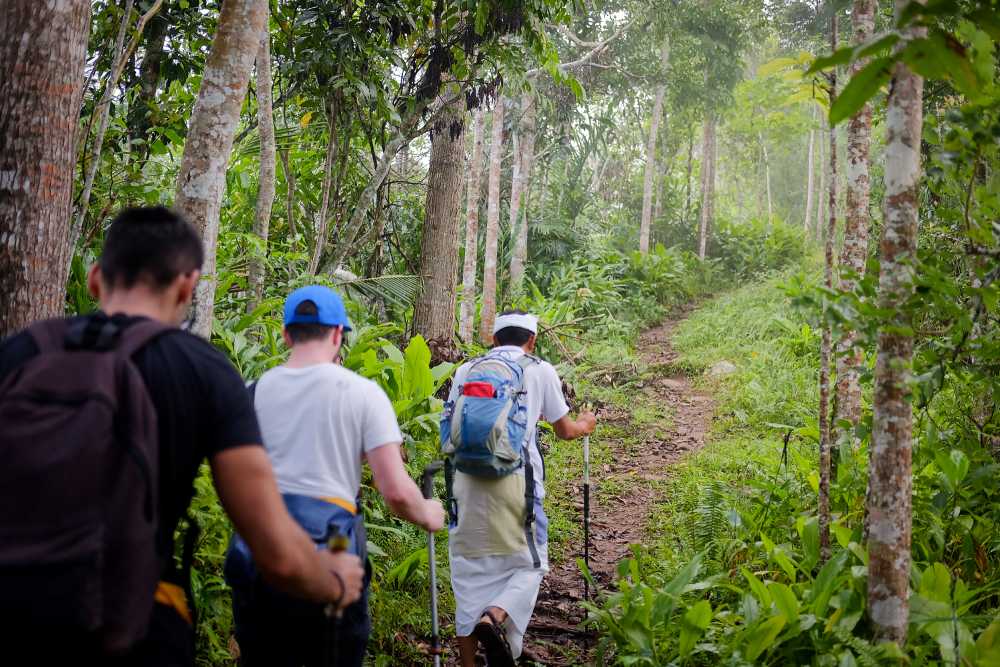
Bali’s most eastern mountain peak, Lempuyang is best known for its Agung-facing temple where the iconic ‘Gates of Heaven’ photo is often taken. Whilst visitors line up for their photos, a more rewarding experience is found on the southeast side of Lempuyang – a forgiving trek through light, lush woodlands with gentle slopes to the top.
There is a clear path through the mountain forest, as this is an important pilgrimage for many Balinese Hindu, who walk with their offerings from the start point at Pura Jumenang towards Pura Penataran Lempuyang Puncak – the temple at the summit. Thus, shrines dot the 2.5 hour ascent, before reaching the peak, which stands at 1,174 metres above sea level.
For any mountain treks, we strongly recommend local mountain guide (and Balinese Priest), Pak Mudi: @mudigoestothemountain | mudigoestothemountain.com
An Epic Descent to North Bali
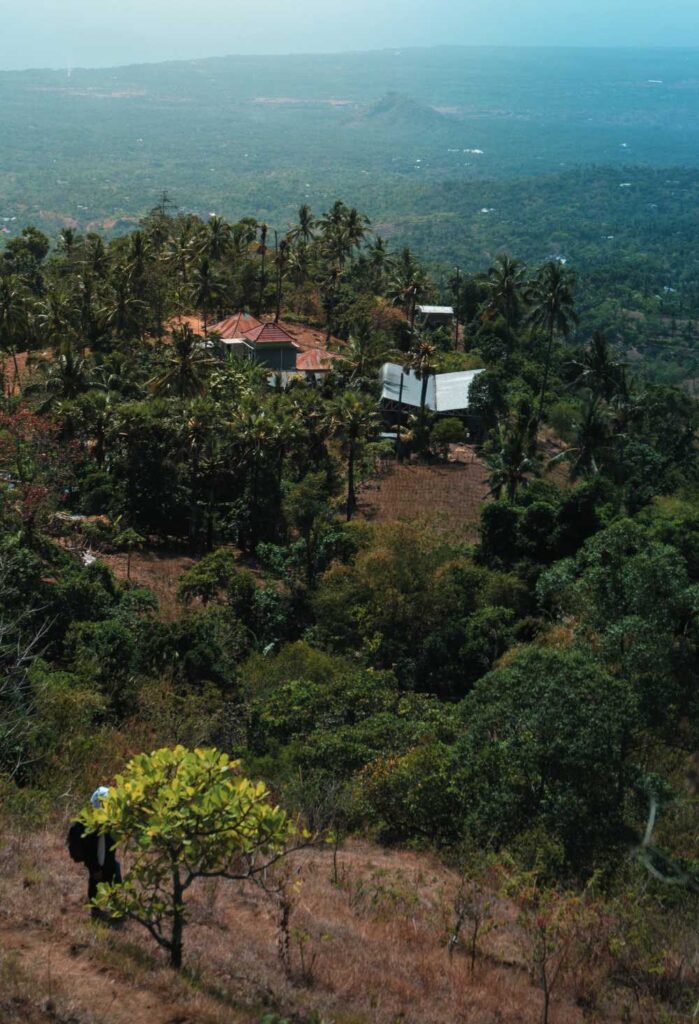
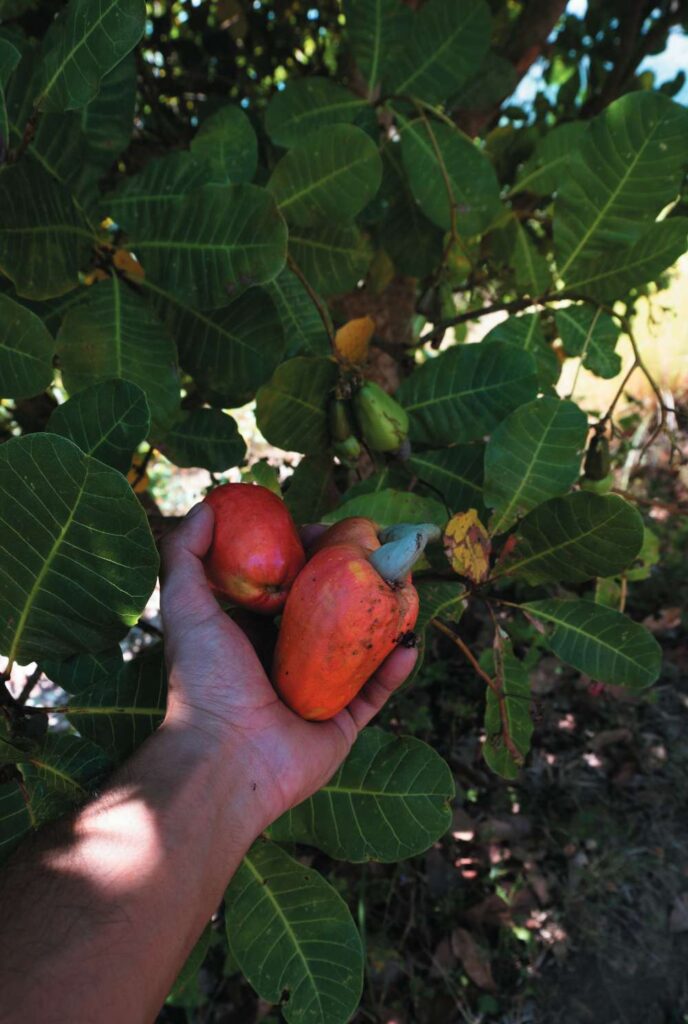
Whilst many mountain trails are a journey to the peak, the trekking experience with the Muntigunung Community Development Program (MCDP) is a dramatic descent down the mountainside towards the island’s northern coastline.
The experience begins early in the morning on the northeast lip of the Batur caldera rim in Kintamani, a stunning lookout point overlooking Mt. Batur and beyond. The journey down to the coast is most certainly the road less travelled – single-path trails that wind narrow ridges; valleys dipping steeply before swelling into the impressive slopes that climb up to Mt.Abang and Mt.Agung, like giant dunes growing against the horizon. The landscape in Muntigunung is a sparse and arid bushland, where resilient cashew orchards and rosella shrubs thrive. The dusty terrain sprawls down the mountainside to the north coast, visible in the horizon.
MCDP is a charitable organisation and social enterprise founded by Daniel Elber in 2003 to empower the community of Muntigunung, a region that once struggled with drought and access to fresh water. MCDP has built 39 rainwater catchment buildings in the area, which not only provide each hamlet their fresh water, but double as community centres and workshops. This downward trail stops at some of these centres to see each community’s handiwork in action. From rosella tea to cashews, rattan weaving and batik making. Go on an adventure in Bali that simultaneously has meaningful impact.
The trek is a means of supporting the organisation, whilst offering a meaningful and eye-opening experience into the depths of this hidden side of Bali. (muntigunung.com | muntigunungtrekking@gmail.com)
Chasing Waterfalls
There are countless waterfalls across the island, but the best are those that invite you to jump straight into their plunge pools and streams, surrounded by the jungle. Go on a splash-worthy adventure in Bali.
Sambangan
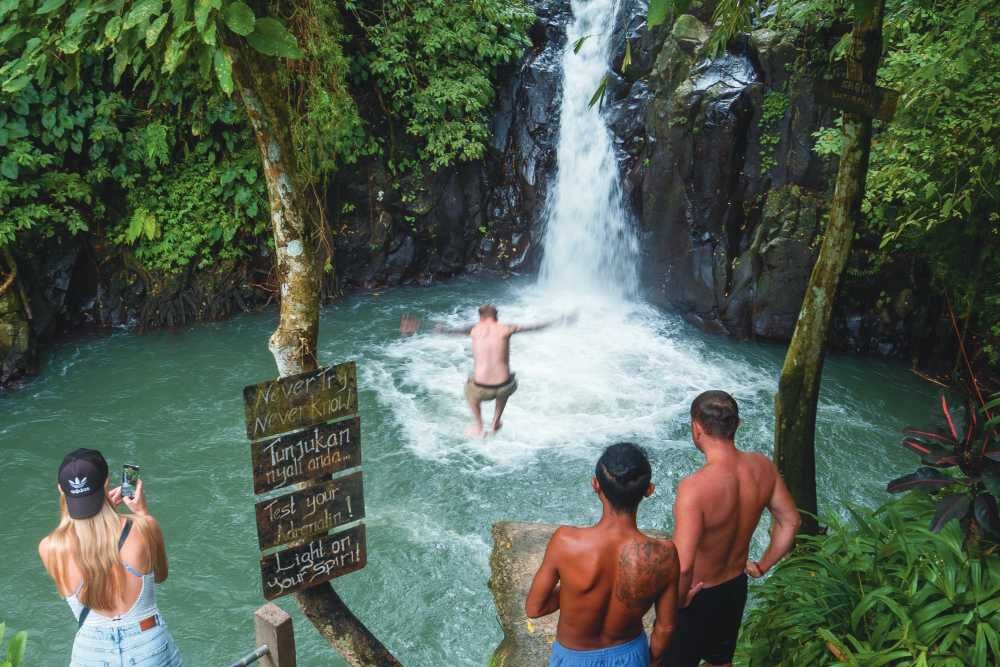
Sambangan, North Bali, is blessed with numerous waterfalls, all cascading from the same river, though many know the location better for the biggest fall of them all: the cascading Aling-Aling.
This area is a little piece of heaven on earth. A little Eden in the river valley, a network of pools and falls connected by forest paths. Now managed very well by the local community, visitors can simply trek in the area, or better yet, take the leap into the various plunge pools, with various heights: 5 metres and a natural slide at Kroya Waterfall, 10 metres at Kembar Waterfall and an epic 15 metre leap at Pucuk Waterfall. All-in-all, this nature and adventure filled area is a must for those visiting north Bali!
Melanting
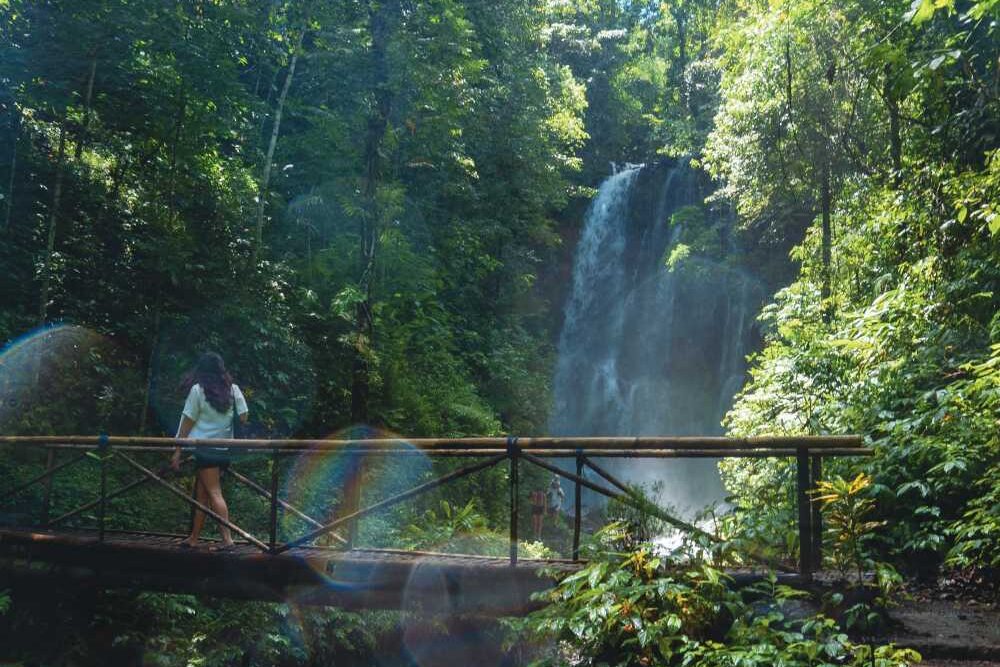
Offering a slightly different atmosphere is Melanting Waterfall in Bali’s central highland region of Munduk. Getting to the waterfall promises a charming walk through the Munduk countryside, with a path that treads gently across the rolling foothills, traversing around the depths of the ravines. The open walkways bring you past locals selling exotic locally-grown produce, bounty of the fertile hillsides: vanilla pods, cacao seeds, cloves, nutmeg and candlenut, sticks of cinnamon and even lumps of wild ‘kopi luwak.’
The waterfall itself is a powerful force, churning out a foaming gush of waters from 30m high into the relatively small plunge pool below, which trickles gently into a peaceful stream that visitors can comfortably scramble up. Its impressive height has created a deep ravine, into which the streaks of sunlight pierce between the tangling canopy above head. The water in the stream is crystal clear, making for a refreshing dip for those willing to brave the chill of a fresh mountain river.
West Bali National Park
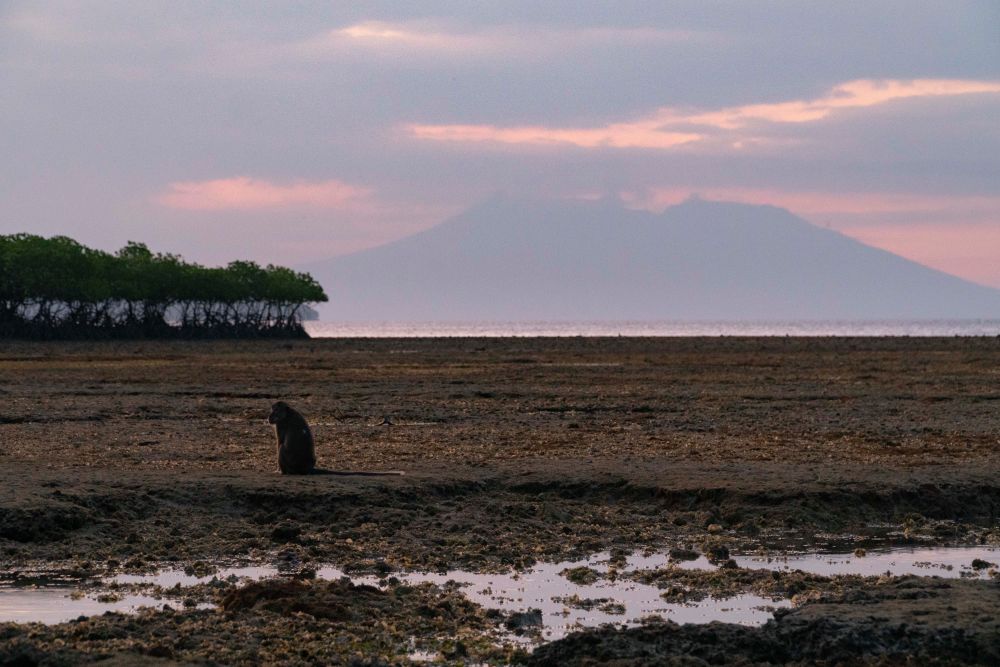
Not many visitors are aware that Bali has its own national park, which sprawls a substantial 190 square kilometres of land and sea. Occupying much of the island’s northwestern corner, West Bali National Park is a destination for birdwatchers, nature lovers and escapists, with a variety of habitats and environments to explore.
The park is dominated mainly by monsoon forest, which sprawls across undulating hills and into valleys; but this transforms into a contrast of rainforest and savannah terrains in different areas, each a host to different vegetation and wildlife. Along the coast, a thick, tangling mangrove forest binds the borders of land and sea; and underwater, thriving coral reefs are a world of their own. This sprawling garden of wilderness is home to 175 species of plants, 110 species of coral and hundreds of species of animals, some of which are found exclusively in this quiet little nook of Bali.
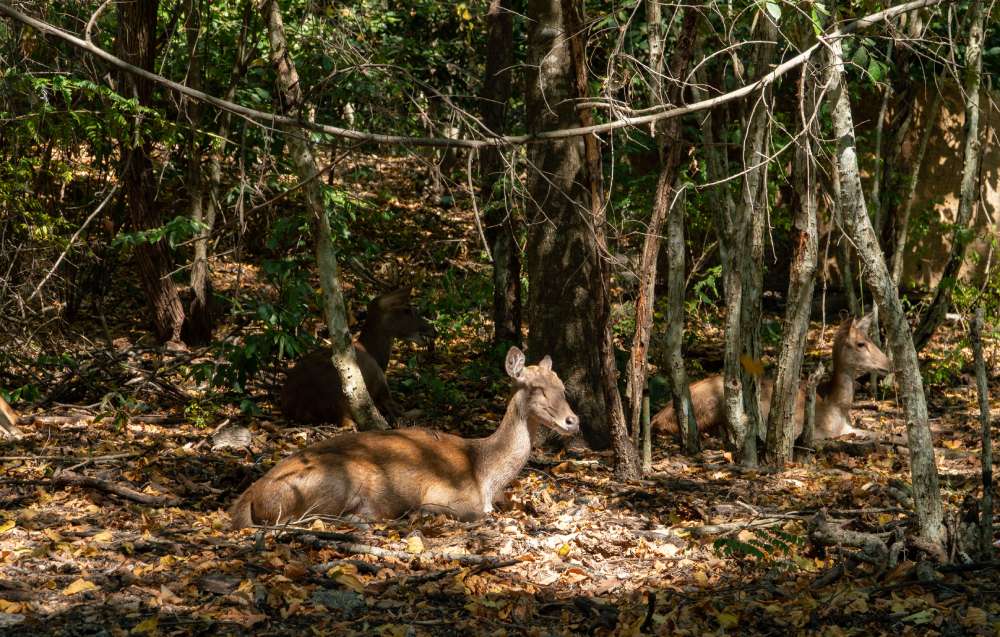
Commonly seen are wild deer that roam and graze the forest floor in groups, as well as long-tail macaques, and another species of monkey too: the endangered Javan Langur (or Ebony Lutung), endemic to Indonesia. Also roaming the park are wild boar, feeding in the lowland scrub by day; wild luwak (civet cats) traipsing from the tangling mangroves; giant tree squirrels to swopping large flying fox; and, deeper in the forest, is the elusive Sunda leopard cats.
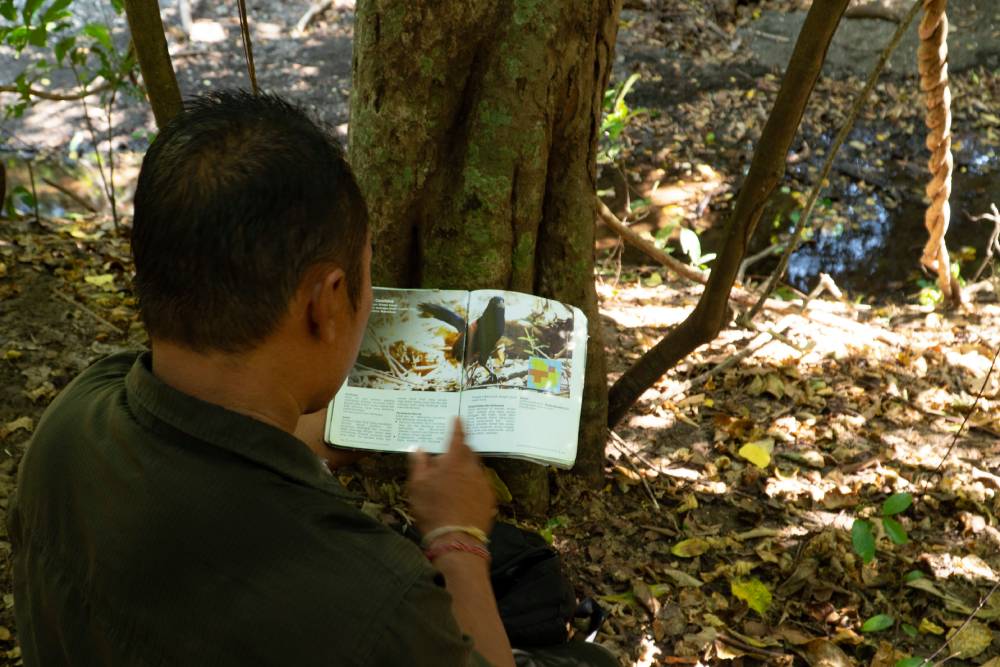
The national park is really a birdwatcher’s paradise, with 160 different species of birds recorded presenting a spectrum of hues and colours: the Green Pigeon, the dazzling Collared Kingfisher, or the Rufous-Backed Kingfisher; less common nowadays are sightings of Crested Serpent-eagle and Javan hawks, who once regularly glided above the tree line in the afternoons.
At West Bali National Park, visitors can kayak and snorkel in the protected Banyuwedang Bay, trek through the monsoon forest in search of birds and boars, go diving around Menjangan Island, or simply enjoy the pristine surroundings of the region – white sands, clear blue waters and mangrove forests. This faraway escape offers an adventure in Bali unlike any other.
Guided Outdoor Adventure
Some outdoor experiences are more exhilarating than others, and Mason Adventures invites guests to immerse themselves in the environment in a way that is both invigorating and stimulating for all ages. Bookings with Mason Adventures are inclusive of lunch, refreshments, transportation and insurance, promising both a safe and comfortable experience.
Mountain Cycling
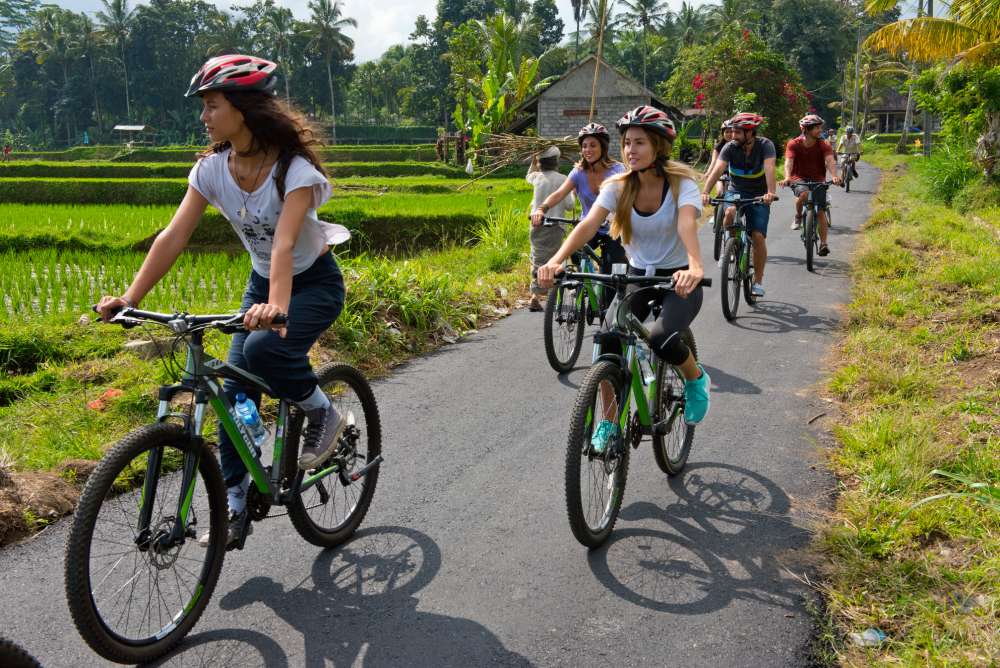
There are some things you can only see when you get off the main road and explore Bali off the beaten track. To do this, we suggest you travel on two wheels. Mason Adventure’s Mountain Cycling Tour starts in Kintamani, which kicks off a 30km downhill cycle through forests, rice fields and plantations. Great for families (with children above the age of 10) who want to get out into the countryside and embrace the elements, fresh air and sunny weather.
White Water Rafting
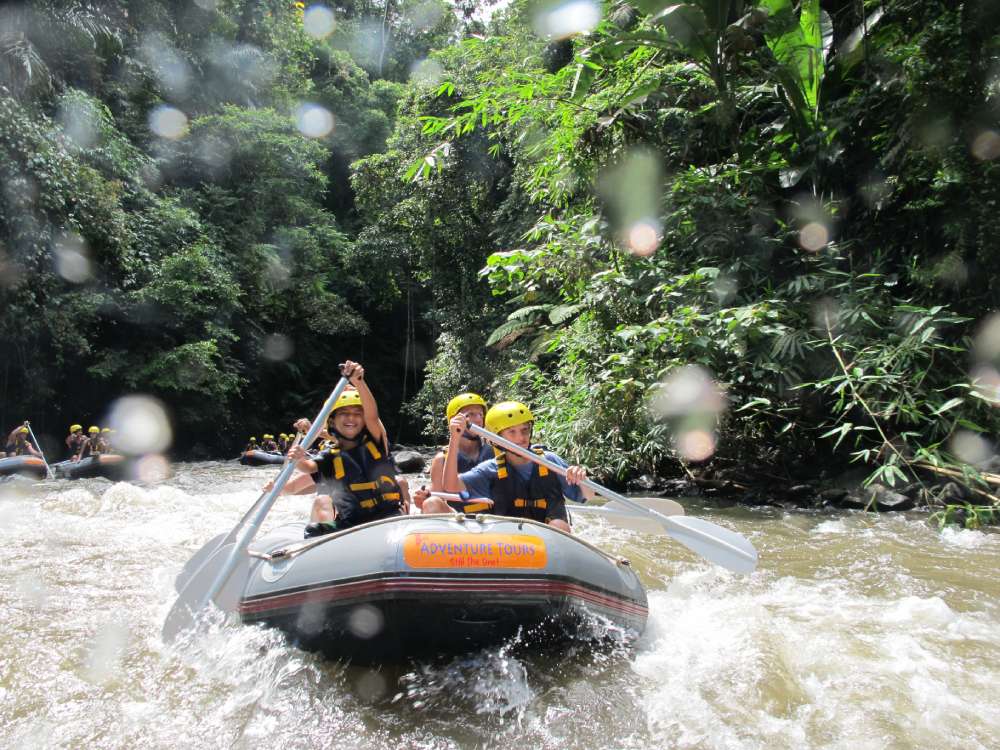
The sacred Ayung River valley is best seen from the waters, and white water rafting is the only way to witness what this environment has in store. Spanning 12 kilometres, this exhilarating journey takes adventurers through rapids, waterfalls, and scenic rainforest landscapes. Ideal for ages 5 to 65 and fully insured, the rafting adventure lasts approximately 3-5 hours, covering 33 rapids of class 2 and class 3. With Mason Adventures, guests are promised high-quality safety gear, and professional guides. Two sessions are available daily: morning (9am to 2pm) and afternoon (12pm to 5pm).
Jungle Buggies

Race through the wilderness of Bali’s highlands with Mason Jungle Buggies. Navigate the twist and turns of a purpose-built 5km track in the Taro countryside, just north of Ubud, buckled comfortably into the fully protected Polaris Buggies – designed for both speed and safety. Whizzing past forested roads and plantations, this one is for the adrenaline junkies keen to get out into the wilderness in an exciting way.
@masonadventuresbali
masonadventures.com