People might be familiar with the kebaya, kamen, and udeng but what about the selendang? While it might not be the first thing visitors notice among the many layers of Balinese traditional clothing, it is an essential part of the full attire that holds just as much cultural and religious significance as its counterparts.
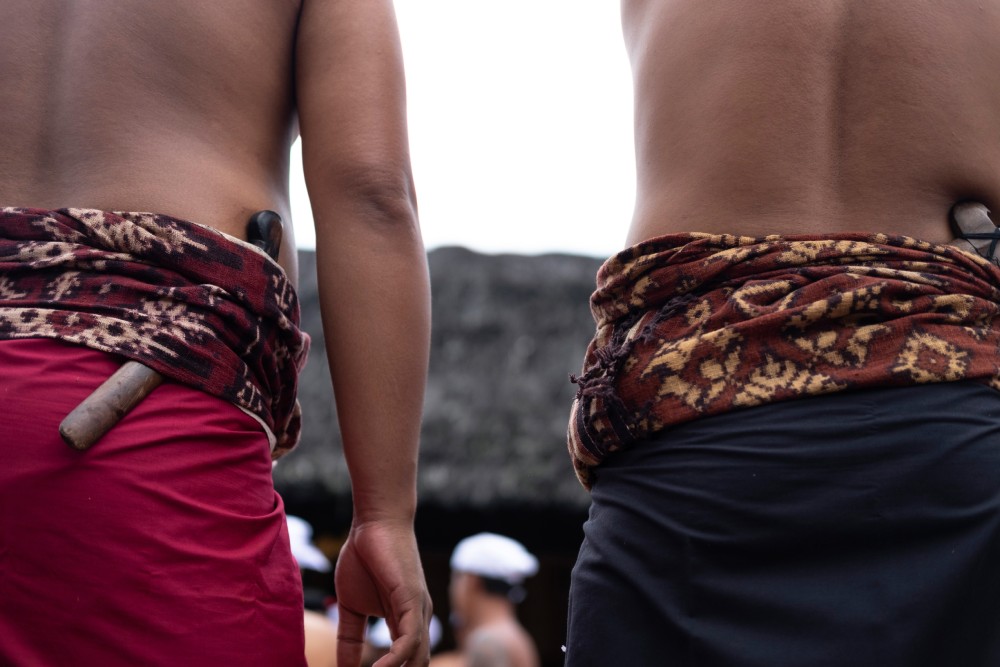
The selendang, also locally known as senteng or selempot, is a sash used to wrap around the waist. Its variations are many, coming in different colours and made from various fabrics. From daily prayers to traditional dances and wedding ceremonies, the selendang is used on many occasions across the island. Regardless of gender, everyone is expected to wear one, even travellers when they enter temples for quick sightseeing, as a form of respect for the sacred grounds.
Rooted in Balinese Hindu teachings, the selendang’s function is symbolic, serving as a boundary that separates the human body into two distinct parts. The more sacred upper half, from navel to the neck, is known as Manusa Angga; whilst the lower body, from waist to feet, is known as the Bhuta Angga, considered the more profane segment.
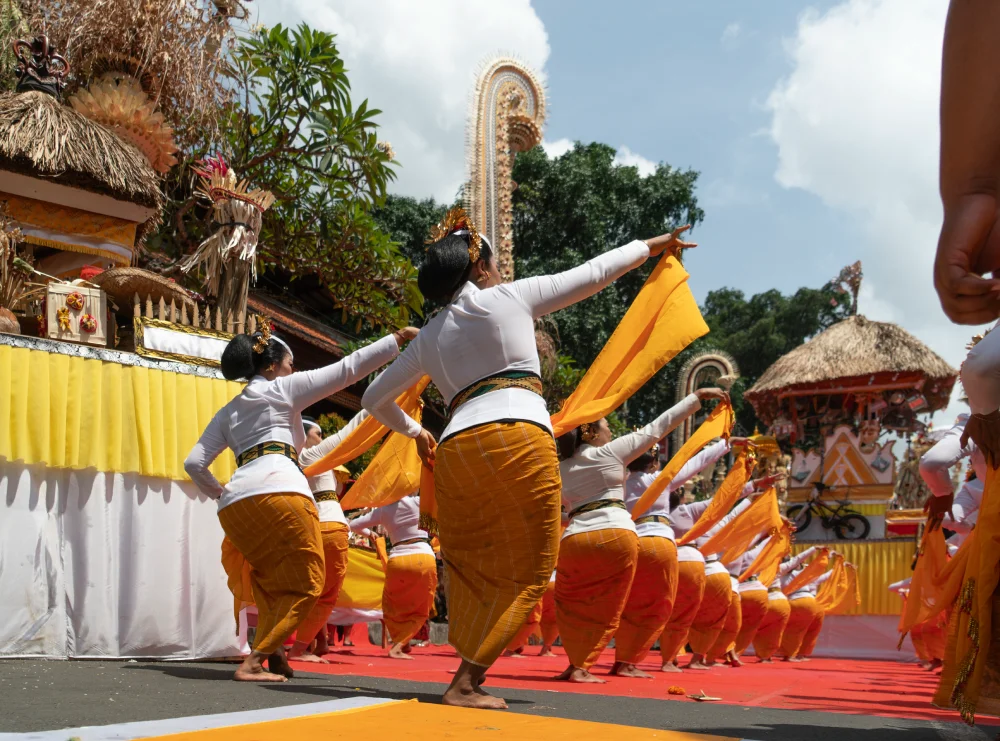
For women, wearing the selendang over their kebaya represents upholding dharma, or good behaviours, and guides the next generation. Of course, it simultaneously has a practical function too, securing the kamen (lower garment that covers the waist and legs), which further symbolises self-control for men. Although mostly tied around the waist, the selendang can also be used to cover the chest, or in some cases used as a head covering.
Among the different types of selendang is a particular one called Selendang Bangsing. This selendang is made from silk and special threads called Banyumas that give a gold or silver sheen. Selendang Bangsing is used for traditional weddings in Karangasem. Meanwhile, there is the distinct Selendang Prada, a heritage textile known for its shimmering gold motifs.
Perhaps the most revered of all selendang are those procured from Desa Adat Tenganan Pegringsingan, where the highly sought-after gringsing cloths are made. These special textiles are produced through an ancient weaving technique called ‘double-ikat’, only practiced in three other places in the world. These are considered sacred, granting its wearer protection, hence its name ‘gring’ (sickness) ‘sing’ (no/without). The cloths are used across a variety of ritual purposes, be it as a sash, around the shoulders – like the women during the Rejang Petemu Kaja dance – or even upon ceremonial beds, where tooth filings to crematory preparations take place.
Despite the few styles and uses of selendang described here, this is only a single thread woven into the whole story of the traditional sash, which continues to hold its place in life on the island for generations to come.