


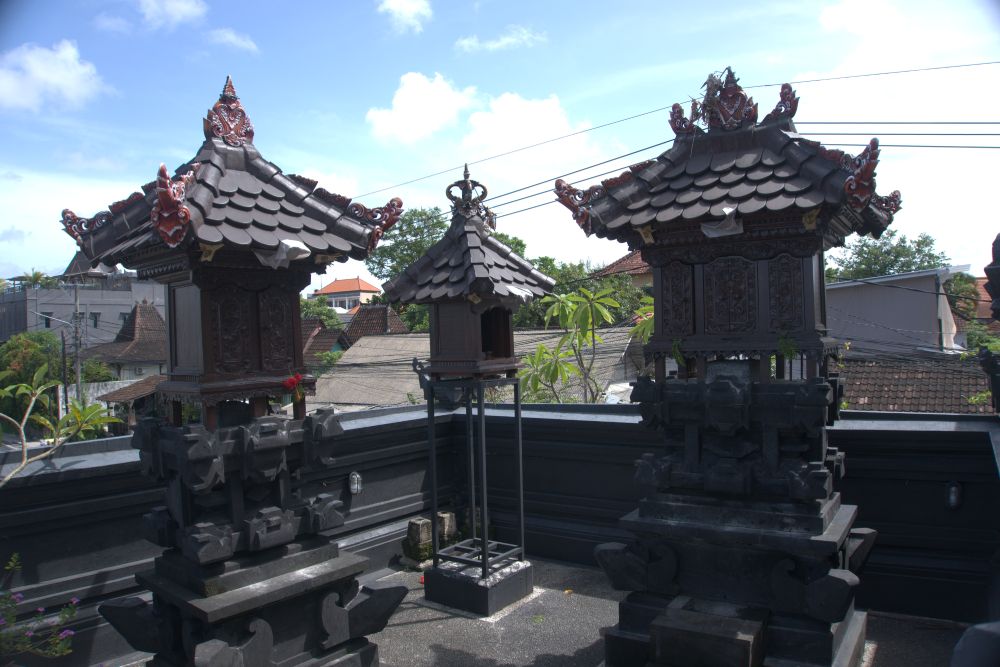
Balinese culture is deeply infused with spirituality, and this is visible in the use of household shrines. Found within every Balinese Hindu housing compound across the island, these sacred spaces act as the spiritual centre of Balinese family life, where they offer daily prayers, lay down offerings, and perform rites and rituals that connect the sekala (the seen) to the niskala (the unseen).
Within the Balinese Hindu belief, these household shrines embody the relationship between the living, their ancestors and the gods. Deified ancestral spirits, known as Dewa Hyang, Pitara Hyang, or Bhatara Hyang, are believed to offer protection, harmony and prosperity when properly honoured, but neglecting their shrines and failing to honour them may lead to misfortune. A typical Balinese family compound therefore contains several obligatory shrines, each dedicated to a distinct spiritual role:
Family Temple (Sanggah/Merajan)
Dedicated primarily for ancestors, the family temple serves as the spiritual centre of daily worship, where families seek protection, guidance, and blessing. Gods may also be honoured here, but ancestral spirits remain central. Varying in size and complexity according to caste, lineage, and means, the family temple is carefully maintained, with offerings placed each day. Moreover, it hosts family rites of birth, marriage, and death.
Sanggah Kemulan (Rong Telu)
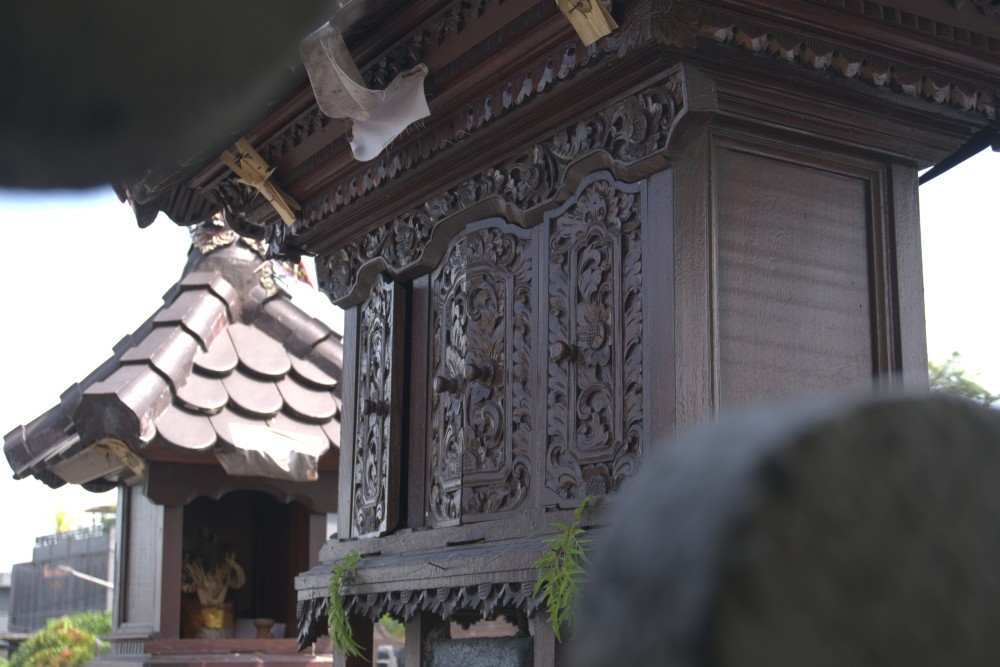
This roofed shrine, consisting of three compartments side-by-side, is dedicated to Ida Sanghyang Widhi Wasa, in His manifestations as the Balinese Hindu Trimurti of Brahma, Wisnu, and Siwa. Sanggah Kemulan is formed from two words: sangga, meaning worship or veneration, and mula, meaning origin, foundation, or beginning. The shrine is positioned facing the rising sun, symbolising the origin of life.
Pelinggih Surya Pengijeng
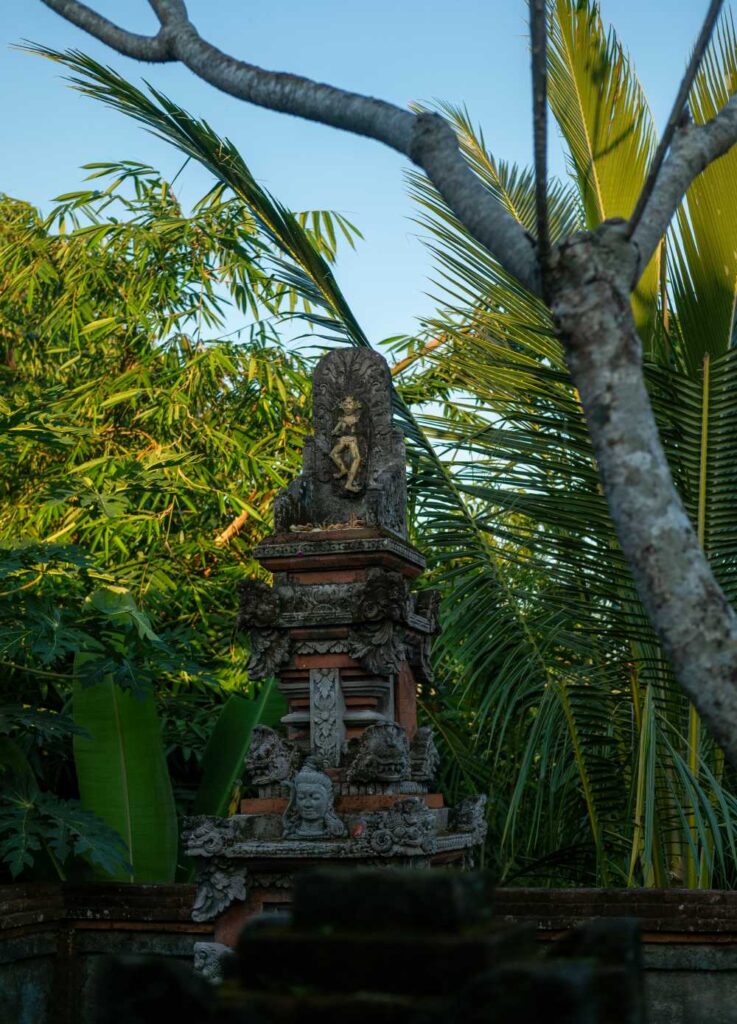
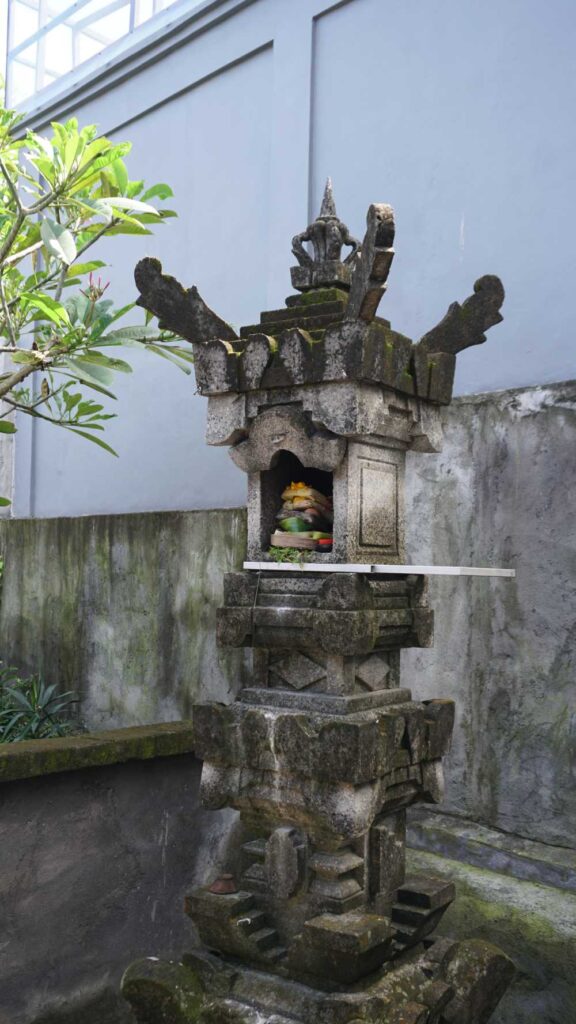
This shrine holds a unique position within the Balinese household because it does not require isolation or enclosure during funerary rites, as it functions as the spiritual centre of the household. For this reason, rituals such as bathing the deceased are performed in front of it. Positioned at the centre of the compound, it symbolises the abode of Ida Sang Hyang Surya Raditya which provides spiritual protection and ensuring that funeral rites proceed in harmony under divine guardianship.
Penunggun Karang
This low, roofless shrine functions as the spiritual guardian of the household compound and is closely associated with Kanda Pat, the four spiritual siblings believed to accompany every individual. Literally meaning the guardian of the land, Penunggun Karang is regarded as the abode of Ratu Made Jelawung, later manifested as Bhatara Dukuh Sakti, deity of boundaries, protection, and illumination for both the macrocosm (bhuana agung) and microcosm (bhuana alit). Commonly positioned near the household gate, it safeguards the compound and maintains spiritual balance.
Apit Lawang
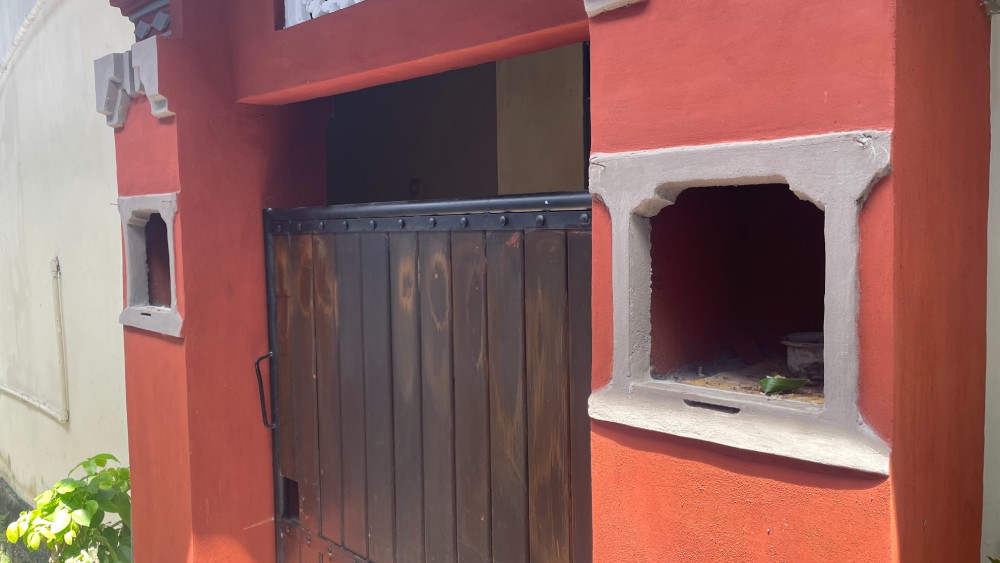
Found at the main entrance gate of a Balinese house compound, this shrine acts as a guardian of the threshold, welcoming those with good intentions while deterring negative influences. It typically appears as a paired structure positioned on either side of the entrance, often incorporating shallow recessed spaces for offerings. Serving as a spiritual companion to the candi bentar, apit lawang holds the role of the protective guardians who shield the household from harmful energies. Its placement marks a symbolic transition between outer and inner realms, reflecting the Balinese belief in the constant interaction between the spiritual and physical worlds.
Pelangkiran
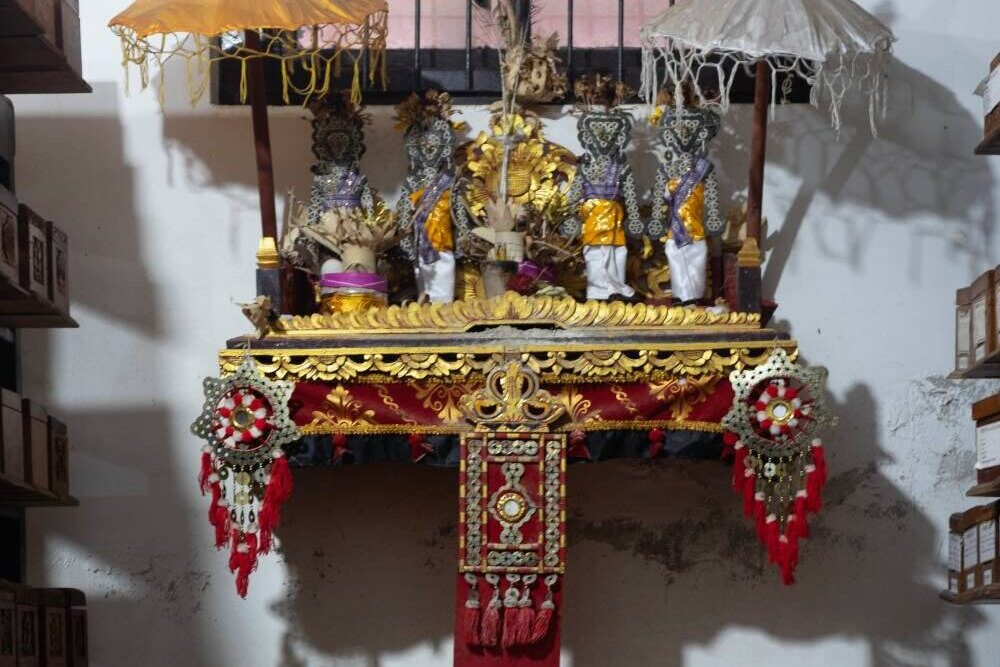
Found in several areas of the house, the most prominent of these shrines is located in the kitchen. Dedicated primarily to Bhatara Brahma, the deity associated with fire, it may also honour Dewi Saraswati, goddess of knowledge and creativity. Usually taking the form of a simple shrine mounted on the kitchen wall, it serves as a place for daily offerings such as banten saiban or jotan. These offerings express gratitude for food and the energy provided while neutralising negative forces.