


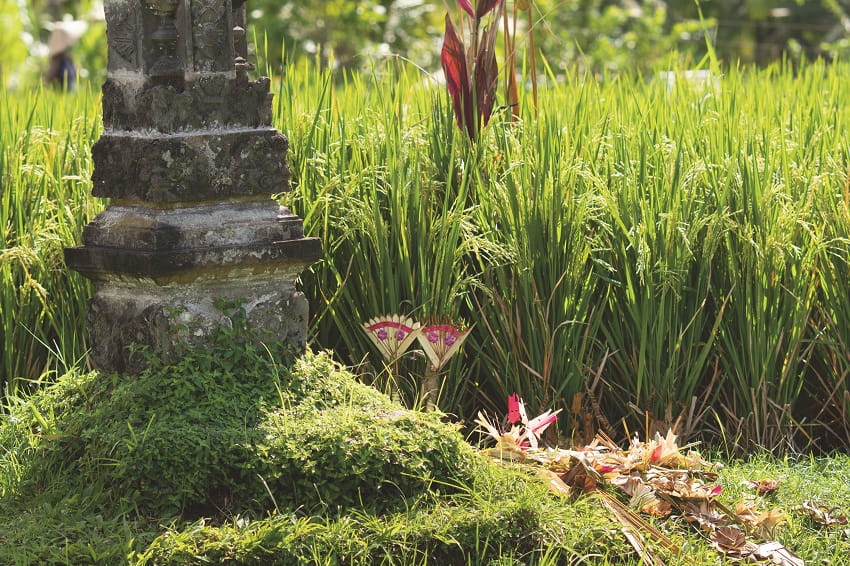
Have you ever heard the term ‘jegegne cara cili’? It means ‘as beautiful as a Cili’ and is quite the high form of compliment coming from a Balinese person, as Cili is considered a symbol of beauty. However, what is Cili, and what does it even look like?
Cili plays an important role in religious ceremonies carried out by Hindus in Bali. In rituals dedicated to Dewi Sri, particularly in the rice harvest cycle, ceremonies are performed sequentially, serving as an expression of gratitude for the blessings and prosperity granted to farmers. Cili is usually used during the Mabiyukukung ritual; this is when the rice reaches three months of age and is considered to be ‘pregnant’, an expression fitting for the goddess, as she is also known as a symbol of fertility.
Mostly made from young coconut leaves (janur), palm leaves (lontar), ground rice cakes and clay, it is sometimes coloured red, yellow, and black; resembling a female figure with a pointed face, a wide headdress, bent arms, and ears adorned with large earrings known as subeng. The waist is slender, and from the waist down to the feet, it is covered with cloth, making the legs less visible.
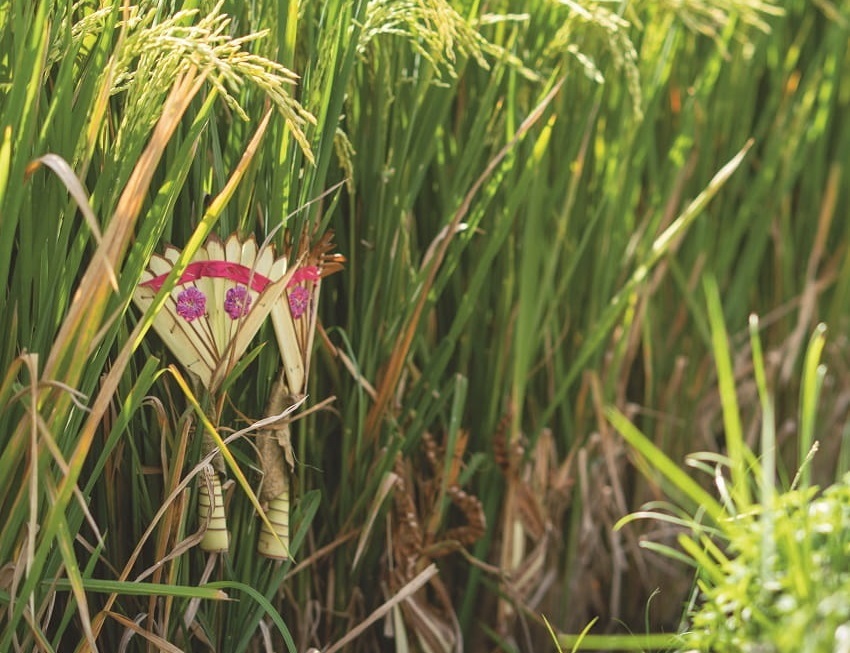
Some forms of Cili are very simple, such as the one usually found in sasap, a type of woven offering made from janur and lontar, used to purify newly made objects. The most complete form appears in a lamak offering. The oldest known form, housed in the Bali Museum, is made of fired clay and was found at Pura Belanjong in Sanur. It resembles Majapahit-era terracotta sculptures.
Beyond ritual, the Cili motif is widely used in Balinese culture. Examples are found in textiles, especially in Balinese endek, where her elongated, elegant form often appears in patterns. Traditional and modern artisans frequently carve and paint Cili figures. The style is highly decorative, with long limbs, intricate headdresses, and flowing lines.
Ultimately, Cili reflects how Balinese art is inseparable from religion and daily life. Her recurring presence shows how themes of fertility and beauty shape artistic expression across generations.