



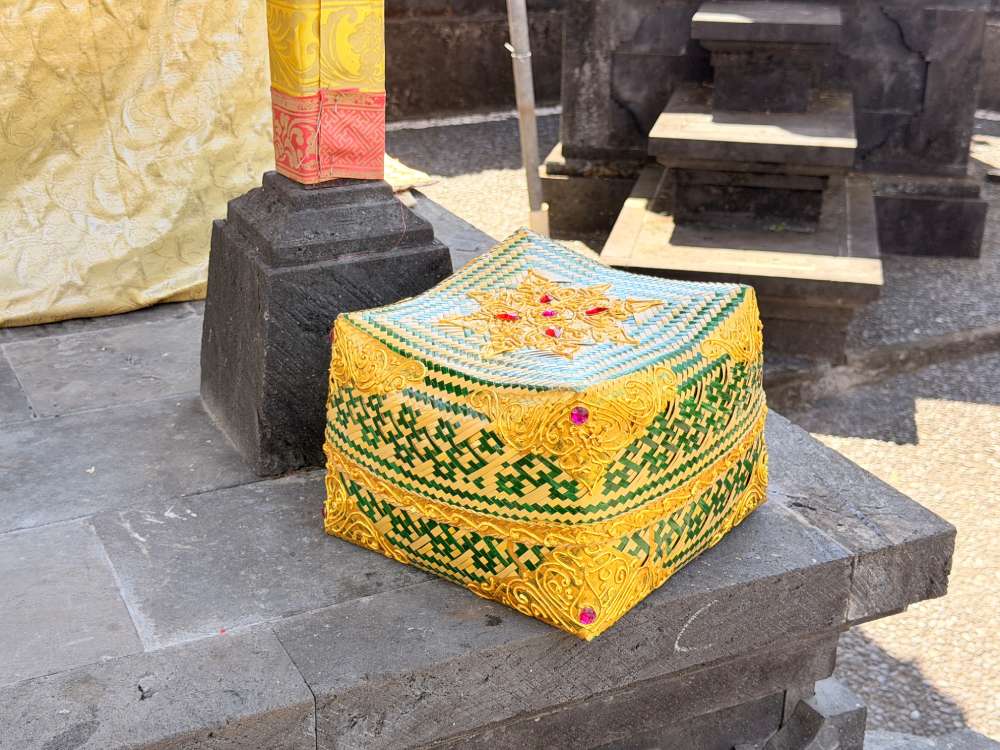
Everybody knows that many Balinese ceremonies require a large number of offerings, including canang, kwangen, fruits, and much more. To make carrying these offerings easier, Balinese people often use a woven bamboo vessel known as a keben and it is a familiar sight at temples and religious ceremonies across the island. But why is this particular vessel chosen over others? The answer lies in the philosophy behind it, which is reflected in its very name.
The word keben is believed to derive from the phrase engkebin, meaning “to conceal” or “to hide”. A keben comes with a fitted lid, which serves to hide its contents from others. The reason behind this is quite simple: when someone intends to present a modest yadnya (offering), they may sometimes face comments or criticism from others with greater means who are able to present more elaborate offerings. On the other hand, those bringing simpler offerings may feel self-conscious when comparing their contributions with those of wealthier members of the community.
However, by using a keben, others will not know whether the fruits inside are humble local bananas or imported varieties, local citrus fruits or Mandarin oranges. Sing ada nak nawang — no one will know. In the end, worship can be undertaken with a peaceful mind. After all, the primary requirement for prayer and temple worship is to possess a pure and sincere heart.
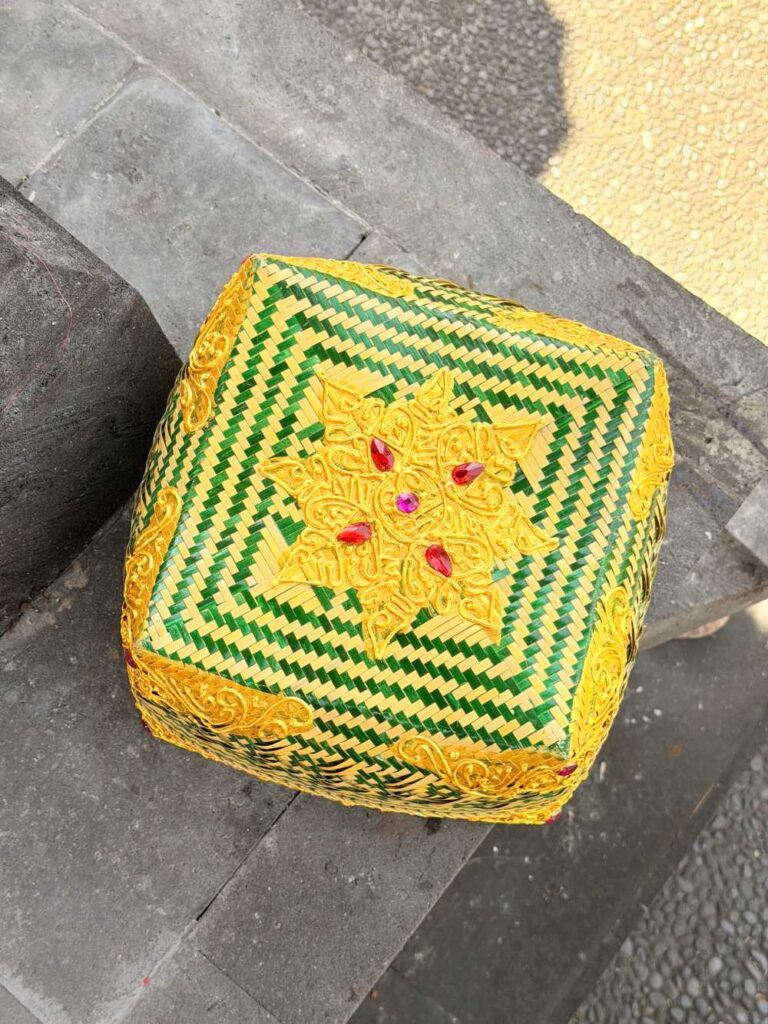
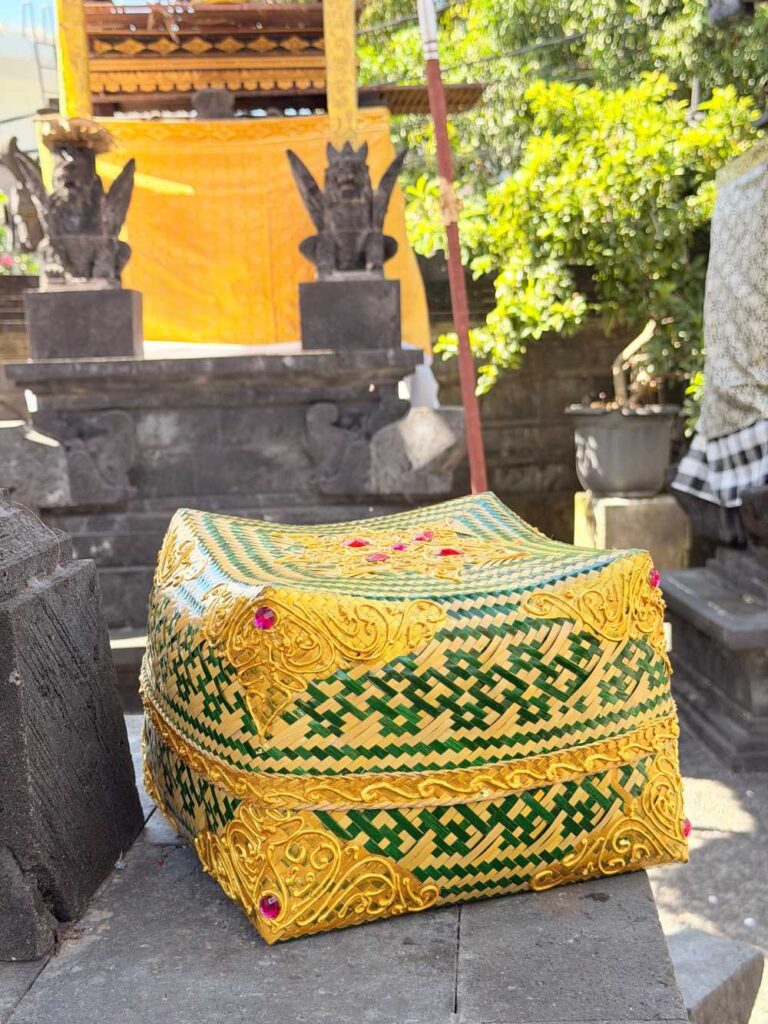
Keben is made from thin strips of high-quality bamboo woven tightly together. Although the bamboo strips are thin and flexible, when woven correctly they create a remarkably sturdy container capable of holding the weight of offerings. Many people mistakenly confuse a keben with a sokasi. While both can be used to carry offerings, the main distinction between the two is the lid. A keben has a fitted lid, whereas a sokasi does not have a lid.
Nowadays, continual innovation and creativity among artisans have led to a wide variety of decorative motifs and sizes for keben. These include contemporary Wayang Kamasan-inspired designs, traditional matahari (sun) motifs, and many others, often incorporating vibrant colours and sometimes even sequins.
Despite these aesthetic developments, the keben continues to serve its original purpose: to conceal the offerings inside, allowing worshippers to focus on the sincerity of their devotion rather than the size or value of their offerings.