


BY BRUCE W. CARPENTER
In this, the final part in a four-part series, the slow and simmering process finally ends with an agreement on what to name the Balinese religion reaching a conclusion.
While orientalist scholars had long before decided that the island was Hindu, the Balinese themselves would only enter the debate with the rise of the first, formally educated, Balinese intellectuals starting in 1918. While they began with great aspirations, it ended with a squabble that pitted commoners (wong jaba) against high caste intellectuals (triwongsa). This changed in 1928 when the tensions between the two had largely receded “…thanks to the combined efforts of Balinese dignitaries and Dutch officials, who did their best to define what they rightly perceived as a threat to the established order” (Picard, p.96). In short, the conservative high castes prevailed with backing from the Dutch.
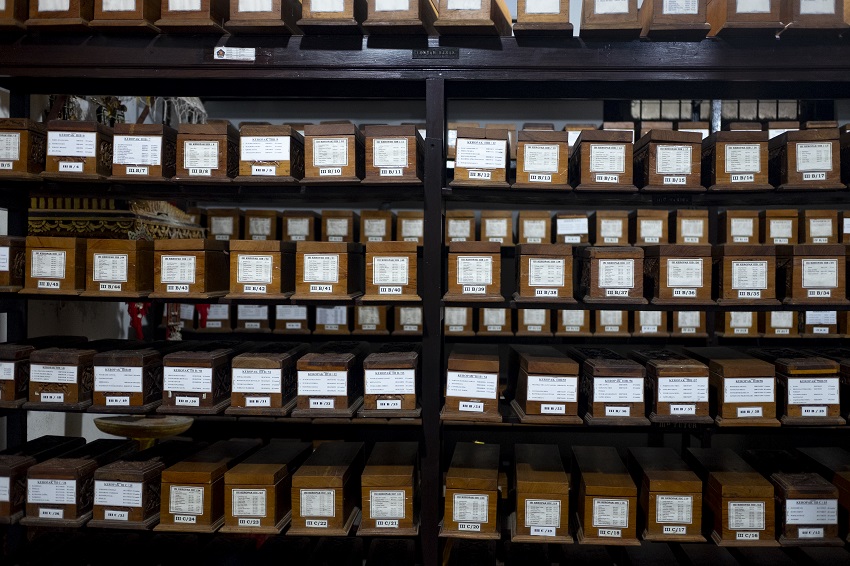
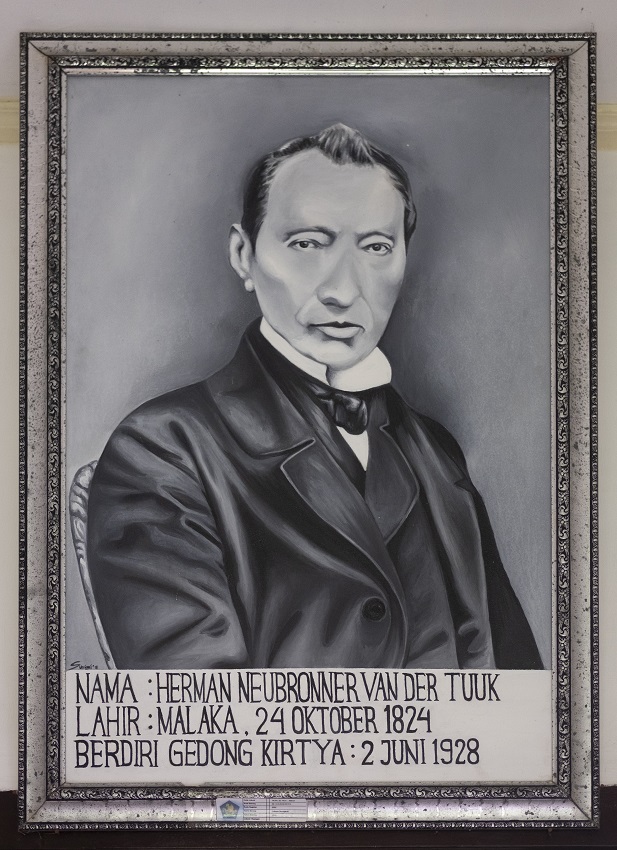
This pivot was also reinforced by the establishment of the Liefrinck-Van der Tuuk Foundation (Gedong Kirtya), also in 1928. Located in Singaraja and named after two prominent scholars, it was charged with the duty to collect, study and preserve traditional palm leaf manuscripts (lontar), an ancient repository of knowledge and literature that they believed to be in danger of being scattered and lost. Under the helm of the orientalist scholar, Roelof Goris, the foundation published a new journal, Bhāwanāgara. featuring articles about religion, culture and art that used Balinese instead of Melayu like its defunct predecessors, Bali Adnjana and Surya Kanta. While this choice was justified by the principle that the Balinese should use their own language, there was also a hidden political agenda – to curb the spread of pan-Indonesian independence movement. Another two-edged sword was to declare Bali a ‘Living Museum’. Again, clothed as a noble attempt to preserve and protect the island from destructive outside forces, nobody asked the Balinese if they wished for the lives and culture to be preserved and displayed in the form of an idyllic, zoo-like time capsule.
With the 1930s came a second generation of intellects and organisations. The most important of these was Bali Dharma Laksana, whose journal, Djatajoe (1936-1941), whose articles were in both Balinese and Melayu. Much like their predecessors, Balinese religious identity was among the chief topics. While many of this exceedingly small and completely male elite had more or less accepted the idea that they belonged to a still vaguely defined and unnamed branch of ‘Hinduism’, the general population was ignorant or oblivious to all such speculations. The biggest source of confusion among the intellectuals who were now forming groups around the island was caused by a decision of western experts to classify religion (agama), custom (adat) and culture (kebudayaan) as separate entities. While paying lip service, the Balinese were befuddled, not only because the nomenclature was alien but more so because in practice all three were part of the same whole.
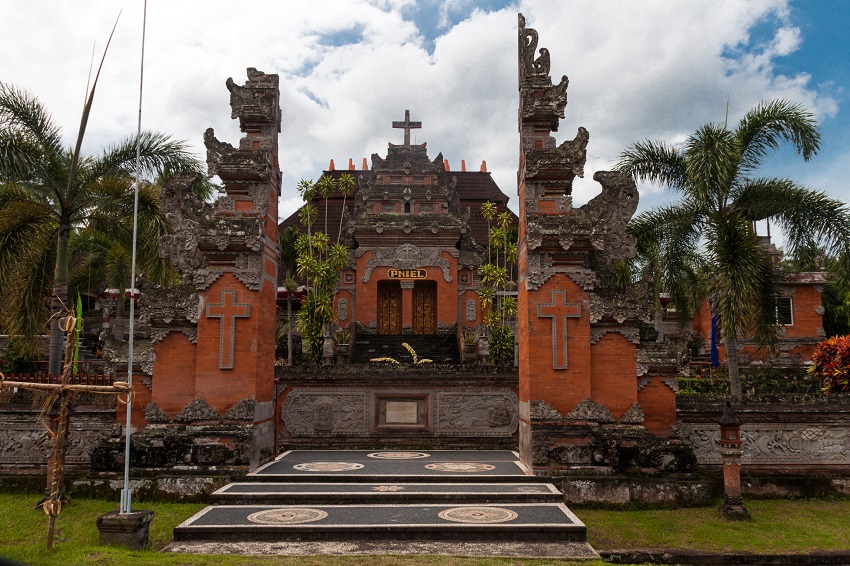
As the years passed, the intellectuals were gripped by the urgency to define and name their religion. A big catalyst was a growing fear of Islamic and Christian proselytisers. While the Dutch authorities were united in efforts to curb the spread of Islam and had banned Christian missionaries, not all agreed. A.J.L. Couvreur, a former assistant resident of Bali, used the spectre of Islamisation to promote Catholicism; the Protestants followed suit, employing the same fearful rhetoric. This charge was led by the erudite missionary, Dr. Hendrik Kraemer, who penned a series of controversial articles clothed in scholarship. These surgically detailed why the Balinese were neither Hindu nor a true religion but rather an uneven collection of rituals and ceremonies. This was by no means a new idea as mirrored in Miguel Covarrubias observation, “On the whole very few Balinese know about Hinduism, and the same hold true regarding the Hindu gods.” Even though they were equally aware of this, the Orientalist scholars Frederick Bosch and Roelof Goris, as well as Tjokorda Raka Sukawati, as prince of Ubud, mounted a fierce opposition. While Kraemer failed, permission was given to priests to administer to small existing congregations and missionary activities were strictly banned. The most prominent reminder of this is a number of oddly charming Balinese style churches.
In hindsight, it is clear that religion was only one strand in many leading to the formulation of a pan-Balinese identity or Kebalian, the title of a meticulously documented book on the subject authored by French scholar, Michel Picard. Another strand was caused by a surge in foreign visitors that opened the doors to Bali being transformed into one of the world’s most popular tourist destinations. We talk here of an eclectic and colourful array of characters that included the wealthy and famous, artists and scholars, refugees, homosexuals, misfits, lost souls, curiosity seekers and brazen opportunists, which led the Italian artist Emilio Ambron to liken them to the notorious hustlers of Capri. Lavished with exotic sobriquets, they came to experience the Last Paradise, Island of One Hundred Thousand Temples, the bare breasted women, and the ominously titillating Island of Demons and Gods. They also came with the expectation the Balinese would fulfill their fantasies. The result was a feedback loop whereby the keenly intuitive and polite Balinese driven by the desire to please, adjusted their behavior so as not to disappoint. As documented and savagely mocked by the Balinese anthropologist Gusti De Santikarma, the phenomenon lives on until today.
As often happens, the pressing religious debate was eclipsed by force majeure – the Japanese invasion, occupation, Indonesian struggle for independence and reoccupation by the Dutch, not to mention hardship and misery. It would begin again in earnest after the full recognition of the Indonesian Republic by the Dutch in 1949. The undisputed leader of the new multiethnic, multilingual and multireligious nation was its first president, Sukarno, a charismatic and complex man, who also happened to be half Balinese.
Realising that surrendering to the vocal demands of the Islamic parties to declare Islam the official creed of the republic would provoke many problems among the other faiths, he instead promulgated Pancasila (Five Principles), one of which required every citizen to believe in God Almighty (Tuan Mahaesa). Keenly aware that they were a very small group within the world’s largest Muslim nation, the Balinese soon realised they were in a perilous position. Their worst fears would come true when the pronouncements of K.H. Wahid Hasyim, the Minister of Religion, made it clear in 1950 that the Balinese religion would not be included in the list of official religions. Shocked, I Gusti Bagus Sugriwa, the representative of the Balinese government, sent a request that they be recognised on par with Islam and Christianity. In response, a delegation, headed by K.H. Masjkur, was sent to Bali with a list of questions. What is the name of the religion, its God, who is its prophet, what is the holy book of the Balinese and finally, please inform us on the purpose of its ceremonies and the theological tenets upon which the creed is founded? Denying they were polytheists, ancestor worshippers and animists, Sugriwa improvised. The religion was a form of Hinduism that was merger of Siwa-Buddha and so on and so forth. The delegation returned unconvinced. Realising the jig was up the Balinese exerted great effort to achieve consensus only to once again open the wound of the lingering schism between the conservative high castes and progressive low caste. Above all, the failure to agree on a name caused the ministry to deny multiple requests to recognise the Balinese religion.
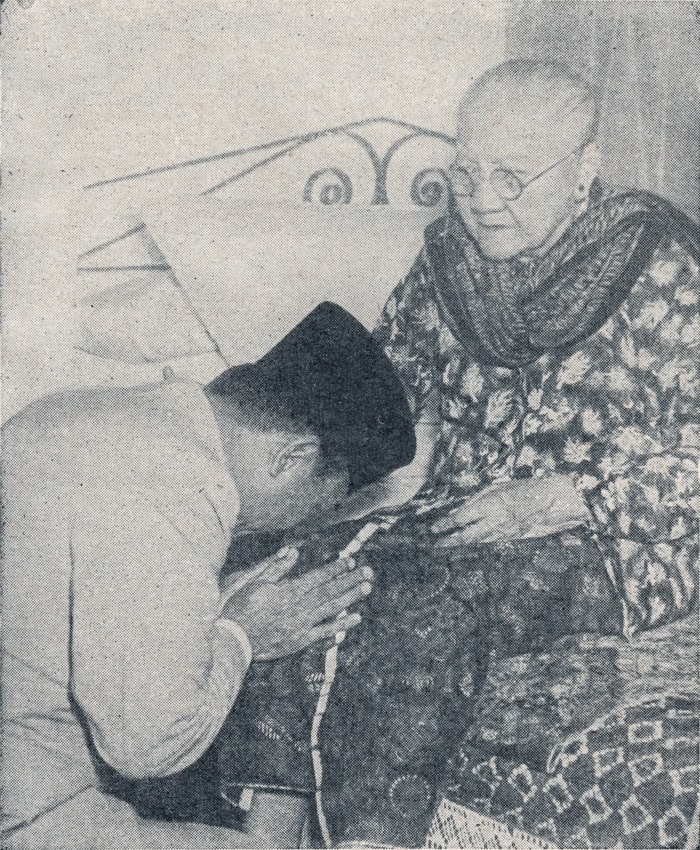
At the very least, they decided to name their high god, Sanghyang Widi Wasa, declaring that even though prayers were made to many deities and spiritual beings, these were only facets of the supreme god. Another important voice was Ida Bagus Mantra who had studied at Rabindranath Tagore’s Shantiniketan in India. So, too, Goris, who had become an Indonesian citizen provided help. Nonetheless there was no consensus on a name for their creed as the years rolled by, while the sword of Damocles, the threat that they would be designated as a lowly cult (kepercayaan), hung over their heads. A crisis developed in 1958 when the ministry of religion demanded the Balinese to disband their own religious office. Realising time had run out, all the representatives of Bali’s eight religious organisations were huddled into a room. While arms were twisted and tempers flared, they exited with an unanimous resolution to name their religion Agama Hindu Bali. Based on this they drew up a demand that was presented to President Sukarno at the presidential palace in Tampaksiring, who signaled his full support. While it had taken more than forty years, Agama Hindu Bali was officially recognised on 5 September, 1958, the same year the island became a full-fledged province which moved its capital from Singaraja to Denpasar.
So, to answer the question ‘Is Bali Hindu?’ – technically yes, as of 1958!
Bruce Carpenter’s series of four essays, titled ‘Is Bali Hindu?’ was inspired by Kebalian (2024), a book by French scholar Michel Picard. Together they tell the unique ‘formation’ story of Bali, and the many forces that played a significant part, beyond romantic clichés, in hopes readers will have a better understanding of the history of the island history and her amazing people.
All essays are available at nowbali.co.id.