


Although Bali is promoted as a cultural destination, in truth the most intriguing sites, experiences and destinations are often hidden from the main tourist trails. But, where should the true history buffs and culture enthusiasts go if they’re looking for something more compelling?
Whilst the many temples and shrines, daily offerings and tourist-centred performances of Ubud and Uluwatu certainly tantalise the senses of first-timers visitors, they provide little context or depth to the island’s deep history. For those curious to dive deeper into the past – be it residents or visitors – these megalithic and archaeological sites of Bali promise a renewed perspective on Bali’s ancient roots.
Bali’s Megalithic and Archaeological Past
Much of Bali’s ancient history is carved in stone, a remnant of the island’s megalithic period, where rock faces were fashioned into tombs and landscapes sculpted into shrines.
Prior to the arrival of the Majapahit Kingdom in 1343, Bali was ruled by the Bedahulu Kingdom. Many megalithic remnants of the island are from this period of time, a kingship that lasted between the 8th and 14th centuries. Ruling from Pejeng, a region of Gianyar northeast of current day Ubud, many of the historical sites are found between the ‘parallel rivers’ of Pakerisan and Petanu. It is along this stretch where lovers of history will find the visually stunning remains of Bali’s ancient period.
Goa Gajah
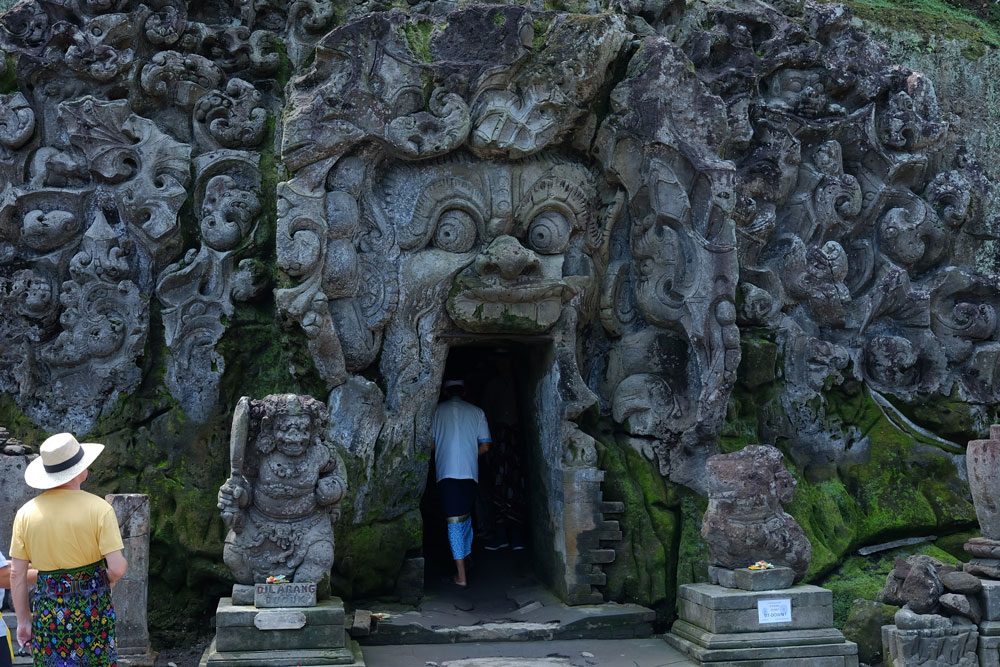
Many know of Goa Gajah (Elephant Cave), an 11th century meditation cave renowned for its intricately stone-carved entrance (likened to an elephant, hence its name). This site offers a first glimpse into Bali’s pre-Majapahit civilisation, with both Hindu and Buddhist elements scattered across the impressive complex, which also features two bathing pools. Goa Gajah is a tourist hotspot, only 10 minutes out of Ubud, so for those who have ventured the compound can skip past and explore the lesser-known sites.
Yeh Pulu
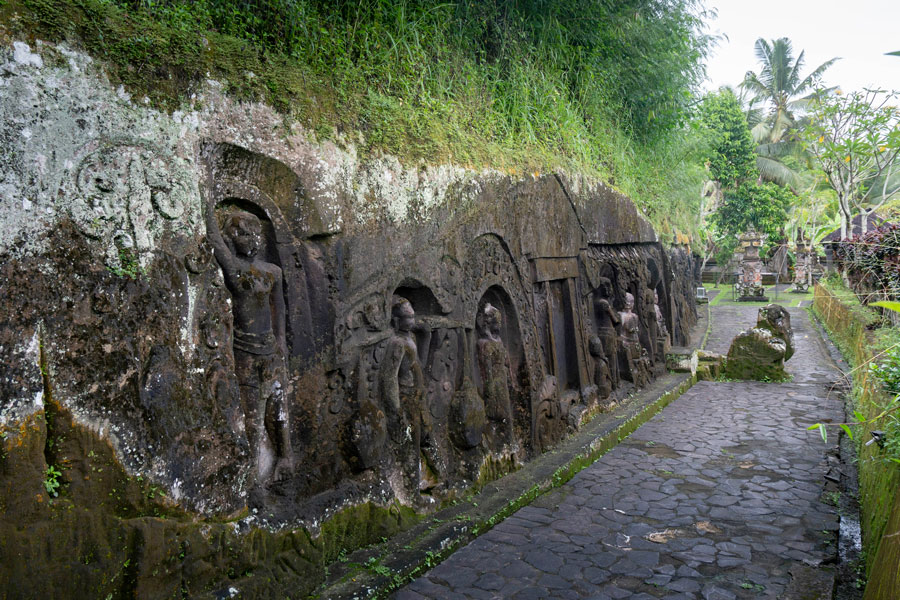
A centuries-old relief adorns Yeh Pulu, a humble but historically significant temple hidden in rural obscurity. Only a stone’s throw away from Goa Gajah, this bas relief is tucked deep in an isolated ravine, where ancient stone-cut carvings give us a peek into life in Bali from centuries ago.
The site was only rediscovered in 1925 by the punggawa of Ubud (district rulers who serve under a king), who then shared their news with the Dutch artist, W.O.J. Nieuwenkamp. Only much later, in 1929, when the area was properly excavated by the Dutch Colonial Archaeological Bureau, was the significance of Yeh Pulu revealed.
A 25-metre long and 2-metre high relief, carved deep into the riverbank walls, with clear depictions of human activity and everyday life. Running left to right (downstream), the images have a ‘wayang’ (shadow puppet) quality to them, as the figures look down the length (x-axis) of the relief. Yet, they are distinct: they are natural and lifelike, the faces and bodies rounded and in proportion. This caused much speculation on discovery — who carved this, and when?
Decades later, studies dated Yeh Pulu between the 14th and 15th centuries (outside of Bali’s Ancient Period), with the distinct style credited to ‘non-palace’ carvers, explaining the sparseness and lifelikeness of the images; thus it is believed that it was ascetics and hermits themselves who carved this lonely rock face all those centuries ago. Yeh Pulu, meaning ‘water’ and ‘container/vessel’, is reference to the holy spring pool found near the river at the end of the relief.
As for archaeological sites, Yeh Pulu is small and humble, ignites the imagination of what life might have been like here 600 years ago.
Museum Gedung Arca
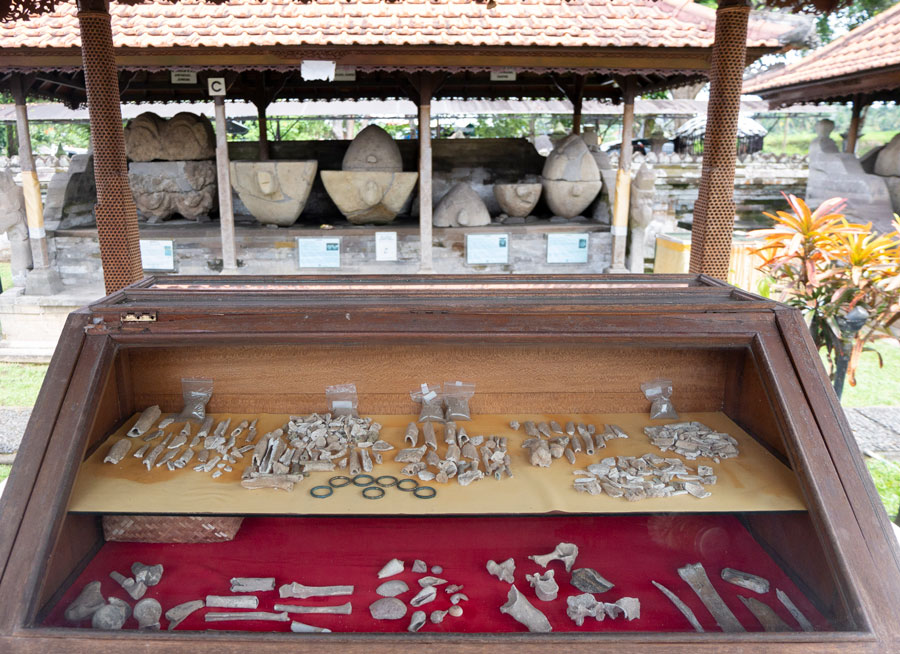
Travelling north from Yeh Pulu, offering a quick reprieve from temple-hopping, is Museum Gedung Arca – otherwise known as Bali’s archaeological museum. Interests here, again, sit outside of the Ancient Bali period and actually showcase remnants of prehistoric Bali.
Founded in the 1950s by Indonesian archaeologists, Museum Gedung Arca consists of 3,000 pieces of prehistoric relics and artefacts, with displays organised chronologically beginning during Bali’s Palaeolithic Age – yes, the the Old Stone Age! Visitors can see prehistoric tools and vessels from that time.
The most intriguing thing at the museum is its collection of more than 50 stone sarcophagi, dating back to the Neolithic Age (between 3,000 to 600 BCE) – this paints a brand new picture of Bali’s history that we have been told.
Goa Garba
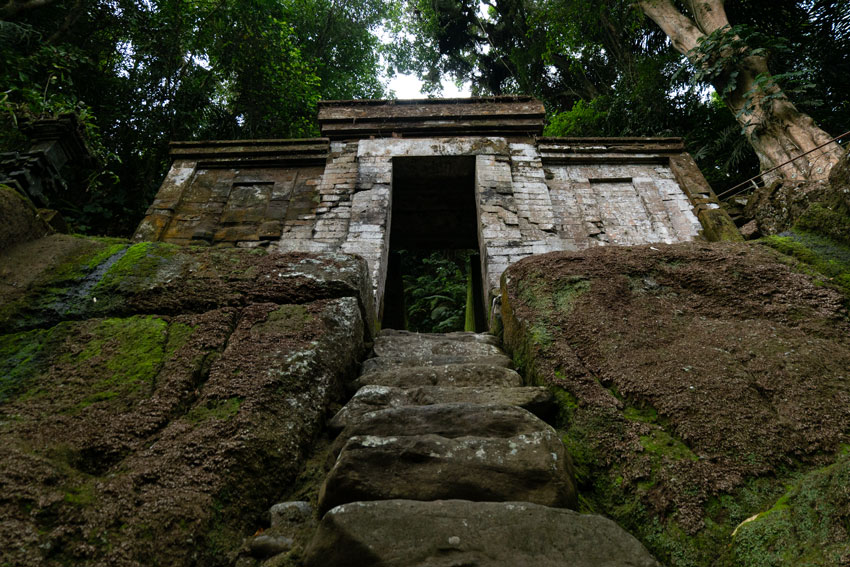
Travelling up river once again takes us to Goa Garba, a lesser-known treasure that is also buried deep in forests, skirting the flowing waters of the Pakerisan. It is a solitary place, with a blanket of tranquility shrouding this ancient site.
The main attraction here is the exceptional stone gateway, an imposing structure that stands high on a raised embankment. Giant stone steps, each at least 50cm in height, are stacked through its centre. It is monumental, towering above onlookers, as if a gateway for giants and gods.
In fact, legend has it that a famous ‘giant’ of Balinese lore, Kebo Iwa, was in tested here for his strength – it was he who laid the enormous steps through the gateway. An imprint of his giant foot is said to be on one of said stones.
Goa Garba was built around 1196 (or 1116 on the Saka calendar), during the reign of King Jayapangus. It was said to be used as a place of spiritual learning for young princes and princesses of the era. Near the central gateway are two niches carved into the stone embankment, once used for meditation, and a small hole in the ground that leads to a cave from which the site gets its name (goa meaning cave, garba meaning deep underground).
Gunung Kawi
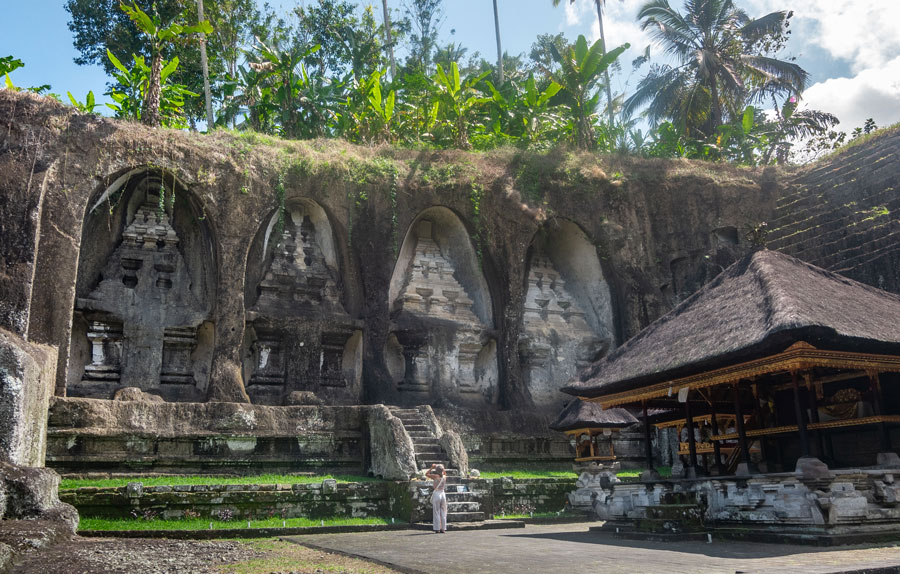
If Goa Garba’s imposing structure was humbling, then the majesty of Gunung Kawi is surely a destination worth travelling for.
Found in the Tampaksiring area 30-minutes north of Ubud – close to the more popular Tirta Empul Holy Springs – is a vast complex that sprawls generously across the bottom of the Pakerisan valley, spreading to both sides of the river.
At the heart of Gunung Kawi are ten pedharman shrines, or candi; shrines specifically dedicated to ancestors, in this case of ancient kings. These are colossal, eight-metre high structures, carved directly into the cliff-face. Five shrines stand side-by-side on the east side of the Pakerisan River, another four opposite on the west side. The final shrine stands alone on the Bukit Gundul mountainside.
The shrines are believed to have been built in 1080AD by an ancient king, Anak Wungsu, who created the shrines in dedication to his father (King Udayana of the Warmadewa Dynasty), brothers (including Airlangga, who later ruled Java) and his mother, Mahendratta, the princess of the Javanese Medang Kingdom (later reclaimed by Airlangga).
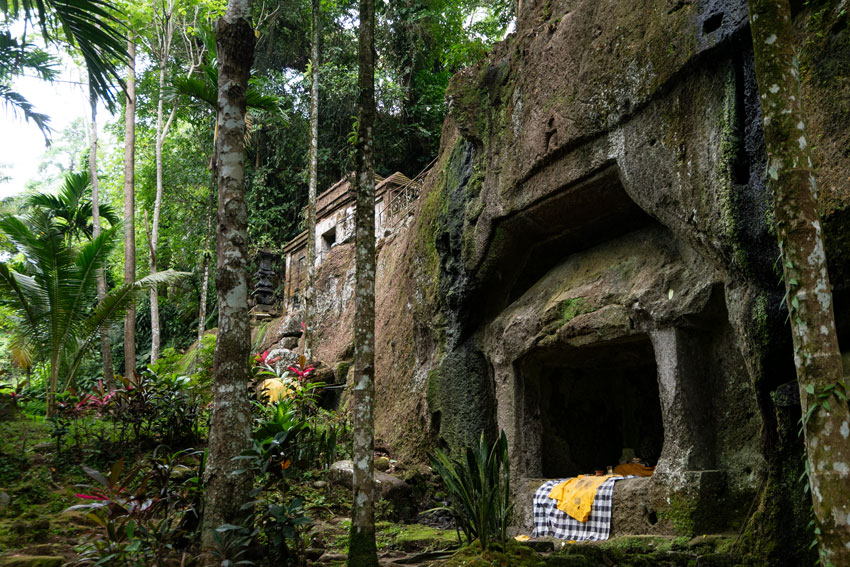
But the temple compound is generous, inviting visitors to explore the extent of the verdant valley on foot, exploring niches carved into the cliffs and a network of stone-carved meditation caves that maze into the rocky terrain.
Worthy Mentions: A couple of other cultural sites on the same stretch of river also warrant a visit. Pura Mengening, a more isolated holy spring temple where the melukat cleansing ritual is done is found just north of Gunung Kawi. South of Yeh Pulu, the lesser-known temple of Pura Kahyangan Jagat Bukit Dharma Durga Kutri promises a mystic atmosphere, a temple dedicated to Durga, ‘The Goddess of Death’, with a statue of the deity enshrined inside. It is not one of Bali’s archaeological sites, but is great site to visit for any culturally curious explorer.