


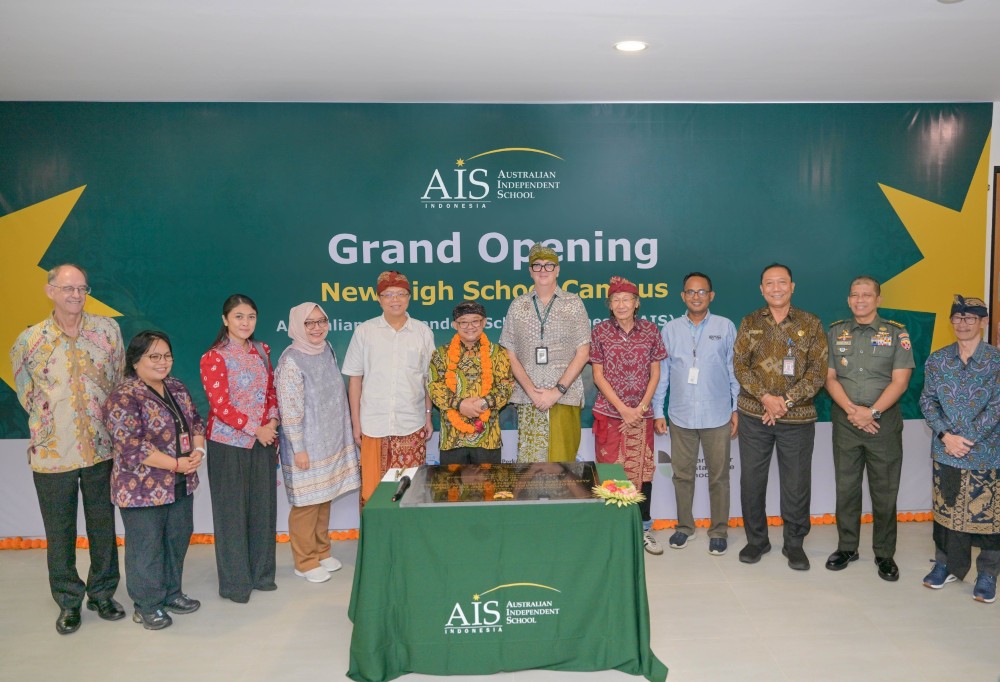
The Australian Independent School Bali (AIS Bali) has officially opened its new High School Buildings, marking a significant milestone in Bali’s education system.
The ceremony, officiated by Indonesia’s Minister of Primary and Secondary Education, Abdul Mu’ti, signals not only the completion of the school’s long-term campus vision but also a broader commitment to shaping globally minded students within Indonesia’s national education framework.
The inauguration highlighted the growing importance of SPK (Cooperative Education Unit) schools in advancing Indonesia’s aspirations for educational excellence. In his keynote speech, Minister Abdul Mu’ti emphasised that institutions like AIS Bali align closely with national priorities, particularly under the vision of President Prabowo Subianto and his “Asta Cita” pillars, focused on cultivating knowledgeable, ethical, and globally competitive citizens.
For AIS Bali Principal John Milliss, the moment represents far more than a ceremonial ribbon-cutting. “The opening of our High School 2 building this year means quite a lot,” he explained. “It’s the end of our master plan, so the school’s original design is complete, and that gives us a lot of area for growth.”
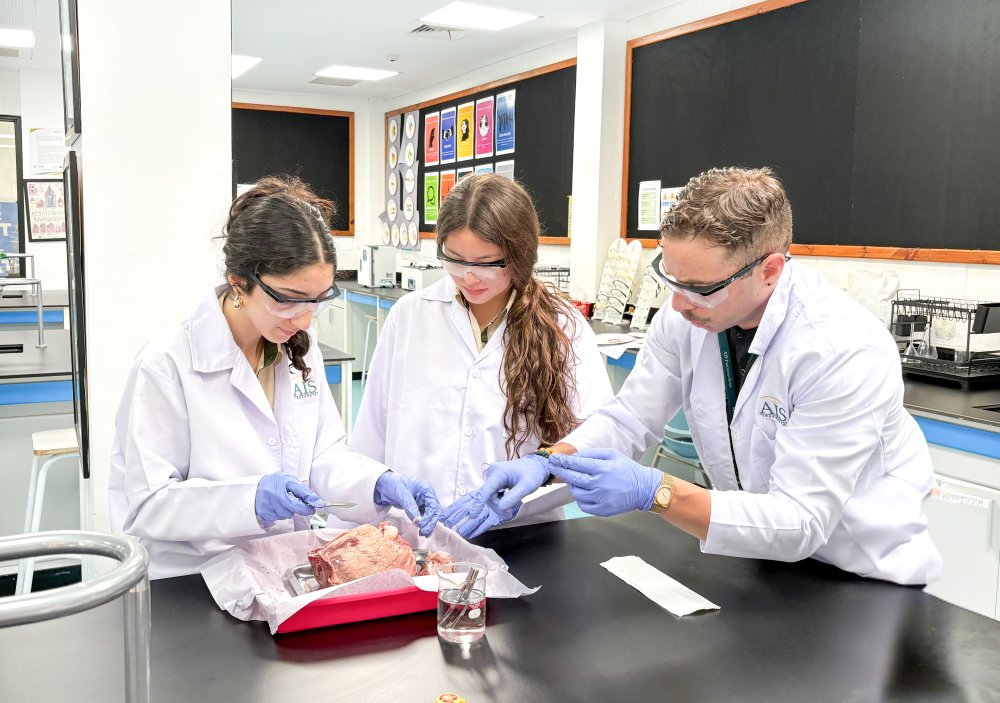
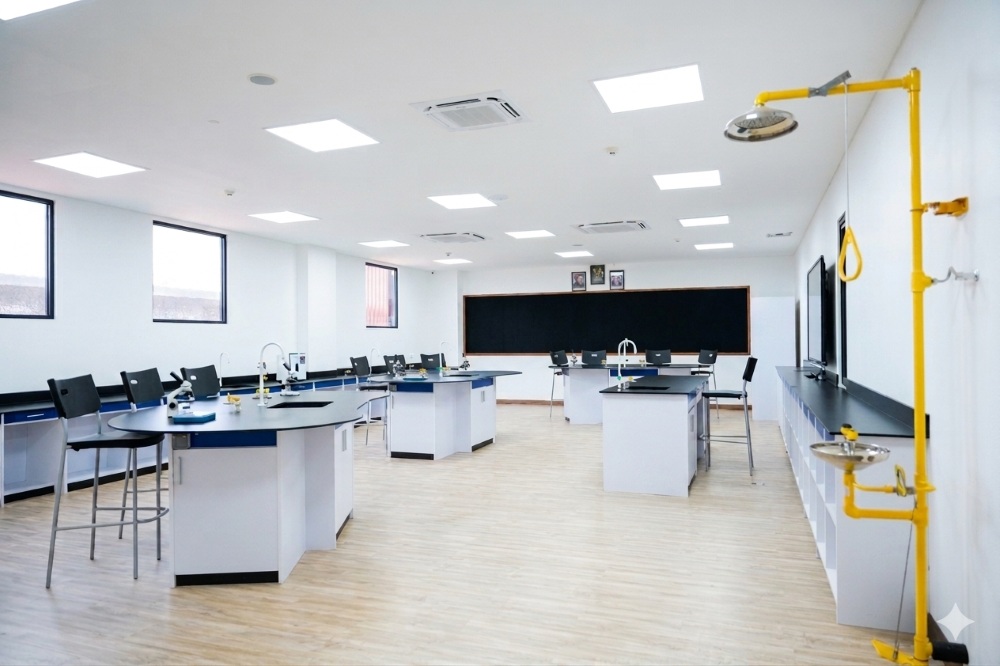
Currently home to around 340 students, the campus now has the capacity to accommodate approximately 650. But for Milliss, the impact goes beyond numbers. “It allows us to introduce a new area called STEAM (Science, Technology, Engineering, Arts, and Mathematics) with a really big focus on our innovation hub,” he said. “We’ve also added two new science labs, spacious classrooms, and a multipurpose room. It’s quite exciting.”
Designed for the Future of Learning
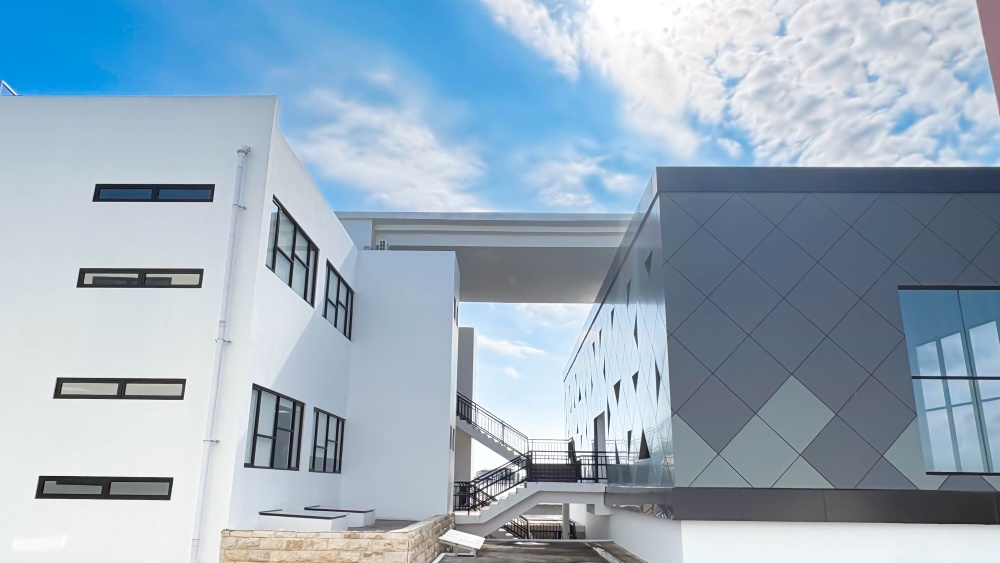
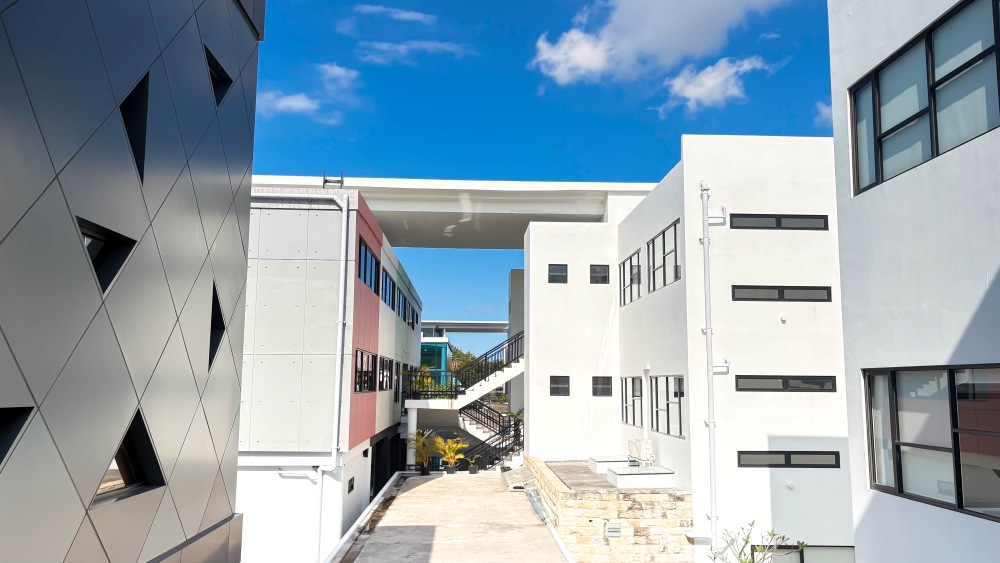
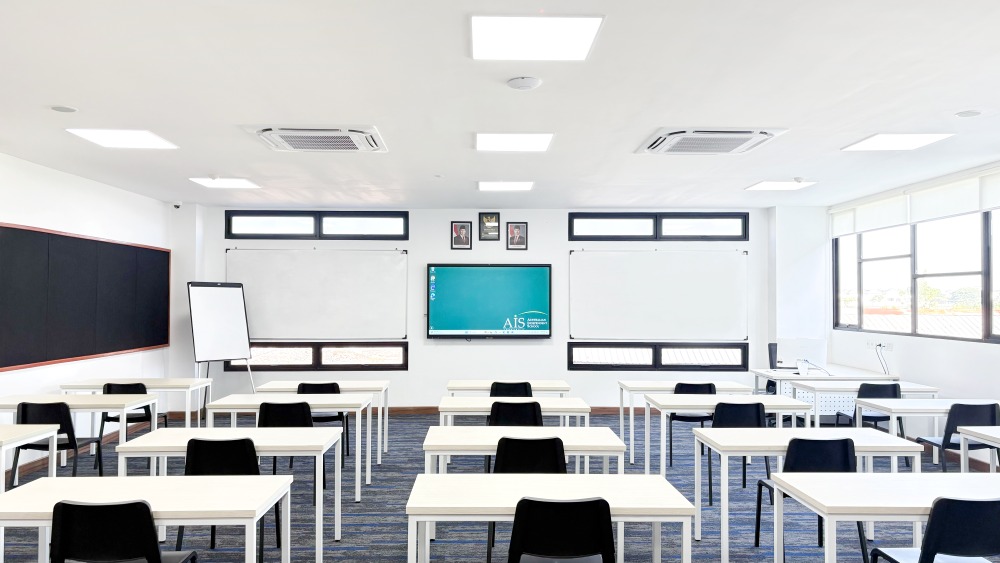
The new facilities have been purposefully designed to reflect modern teaching practices. According to Milliss, space and flexibility are central to the learning experience. “They’re bigger than most normal classes,” he noted. “We’ve allowed about 2.5 metres per student, with a maximum of 24 students per class. That creates a lot of opportunities for group work and different learning setups.”
Natural light, open layouts, and glass-panelled walls contribute to an environment that is both collaborative and transparent. “They’re designed for best practice in mind,” he said. “It’s all there to support our teachers and to support learning.” The shift from AIS Bali’s former Kerobokan campus to its current purpose-built site has already transformed classroom dynamics. “Previously, our rooms were quite small,” he reflected. “Now we have breakout areas, reading corners, quieter and noisier zones. It really complements what teachers are doing in the classroom.”
Balancing Global Standards with Local Identity
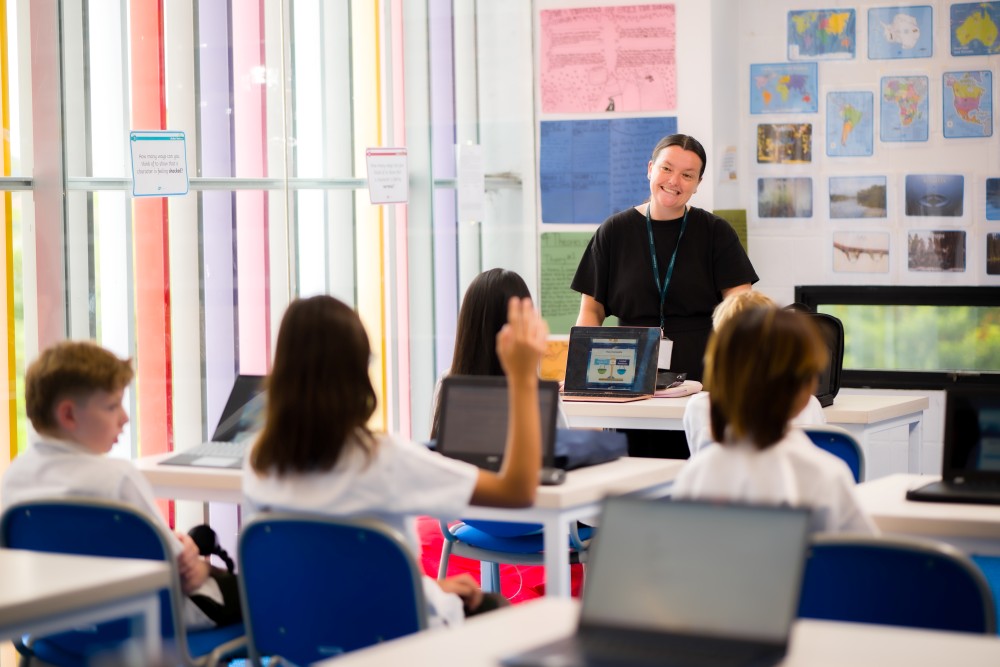
As an SPK institution, AIS Bali operates at the intersection of international and Indonesian education systems, a balance that Minister Abdul Mu’ti praised during the ceremony. The school delivers a globally recognised curriculum while adhering to national regulations and cultural expectations.
“We don’t just operate in an international bubble,” Milliss emphasised. “Indonesia is very much part of our day-to-day curriculum.” Students engage in Indonesian studies, civics, and religious education alongside international coursework, ensuring a well-rounded and culturally grounded education.
AIS Bali incorporates the Australian curriculum, the IB Diploma Programme, and Indonesia’s Merdeka curriculum. “We make sure our students understand where they’re living and the culture that they live in,” Milliss said. “There’s a lot of comparing of how things operate internationally and what it looks like locally here in Bali.” This approach fosters not only academic achievement but also global citizenship. “We’re developing students to be confident, capable, and globally aware,” he added. “They learn from a diverse environment, different cultures, different nationalities, and that’s incredibly valuable.”
Preparing Students for an Evolving World

In a rapidly evolving world, the new facilities are designed to equip students not only with fixed knowledge but also with adaptable skills. “What environment will our three-year-olds graduate into? We don’t know,” Milliss admitted. “So, what we need to do is facilitate the skills they’ll need: creativity, collaboration, and the ability to use technology.”
The school’s growing focus on the STEAM programme and innovation reflects this philosophy. “We’re moving into robotics and really looking at how we can develop an innovation mindset,” he said. “How can students solve real-world problems? That’s where education is heading.”
Partnerships also play a critical role. AIS Bali collaborates with Indonesian schools, organisations, and authorities to stay aligned with evolving standards. “We have MOUs with local schools across all levels,” Milliss explained. “We’ve worked with orphanages, helping their students to become computer-literate using our computers here. It’s about giving back as well as learning.”
Contributing to Indonesia’s Future Vision
The opening of the new campus also ties into Indonesia’s long-term national goals, particularly the vision of “Indonesia Emas 2045” – a prosperous, innovative, and globally competitive nation. “Hopefully, within our community, we may have a future President or a future Minister of Education,” Milliss said. “Our aim is to develop students who can contribute wherever they are in the world.”
He pointed to AIS Bali alumni already making an impact in their respective communities. “Many of our graduates are leaders in their communities, making amazing change,” he said. “That’s what we’re striving for, students who are capable, confident, and ready to lead.”
A Campus Built for Growth and Community
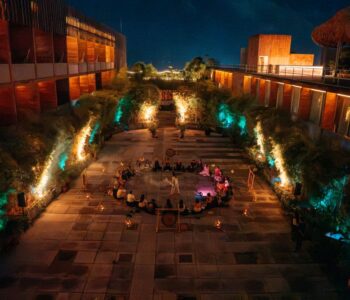
Beyond academics, the new High School Buildings enhance the overall student experience. Expanded facilities, including a large cafeteria, library, and multipurpose spaces, offer students more room to learn, collaborate, and grow. “It gives everyone more space to breathe,” Milliss said. “We’re very lucky to have such a spacious, natural campus with incredible views. Land is valuable here, and not many schools have this kind of environment.”
With student numbers steadily increasing since the pandemic, the timing of the expansion is ideal. “Now we have the buildings to accommodate that growth,” he noted. We’re very excited about what’s ahead.”
As AIS Bali enters this new chapter, the completion of its campus marks not an endpoint, but a beginning, one defined by innovation, collaboration, and a commitment to shaping the next generation of global citizens.
For more information, please contact +62 361 845 2000 or visit ais-indonesia.com/ais-bali
AIS Bali
Jl. Imam Bonjol No. 458A, Denpasar, Bali
+62 361 845 2000
@ais.school.bali
ais-indonesia.com/ais-bali