


In Bali, life is marked by ceremony. From birth to death, a Balinese Hindu passes through a series of manusa yadnya, rites of passage, that guide the individual through the stages of existence. The first of which are the many rites that take a newborn baby through childhood, ending with a tooth filing ceremony (metatah).
The next big rite, and the true step into adulthood, is marriage. In Bali, this is more than just a union of two loved ones, it is an entire process – known as pawiwahan – that brings the pair into adulthood, and sees the merging of families, lineages, and communities.
A New Stage in Life
In Bali Hinduism there are four specific stages to life, known as the Catur Asrama. These include: Brahmacari, student life, where one’s goal is to learn and acquire knowledge; Grihasta, household life, when an individual gets married and assumes the responsibility of raising children and building a stable household; Wanaprasta, retired life, where you pass the household on to the next generation and begin spiritual learnings and liberation; and finally, Sanyasin, renounced life, where you release any material attachments and focus on achieving enlightenment through a simple and peaceful life.
In this journey, the pawiwahan marks the beginning of the ‘household stage’ (grihasta) and is therefore considered a rite of passage. It is here that one takes on the dharma of family and society: to continue the lineage, to honour the ancestors, and to participate fully in community life. It is only after marriage that a Balinese man gains full rights and obligations in the banjar, the local community council – through marriage he not only takes a wife but steps into full adulthood in the eyes of society, and is responsible for, and has a voice in, his community.
Families, Compounds, and Castes
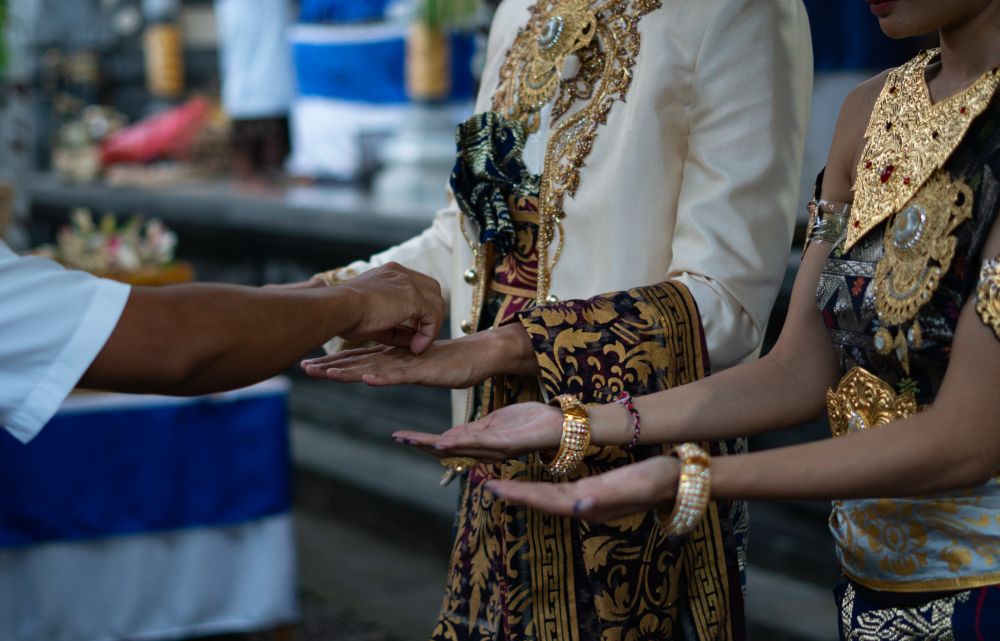
Balinese weddings also formalise bonds that extend beyond the couple. Traditionally, a bride moves into her husband’s family compound, joining his lineage and ancestral temple. This shift of allegiance is ritually marked in prayers to both families’ ancestors: a farewell to one, a welcome to another.
In the rare case of a nyentana marriage, a groom will join the bride’s family to continue her ancestral line – this happens if a Balinese man is willing to give up his own line and to join his wife’s. A nyentana marriage is typical if a non-Balinese man decides to convert to Hinduism, and thus joins his wife’s family compound; in such a case, all non-Balinese Hindus must undergo a condensed version of the coming-of-age rites, including the tooth filing ceremony.
Caste and social status still influence marriage practices in Bali. When a woman marries into a higher caste, she takes on the title Jero. If she marries into a lower caste, she undergoes nyerod, symbolically descending into her husband’s caste, which alters her right to worship in her family’s temple. Though caste is less rigid today, it still remains a factor that Balinese consider when choosing a spouse.
The Procession of Rituals
A Balinese wedding unfolds over a series of elaborate stages, each rich with symbolism. Many things must take place before the day of the wedding itself. First of all, the groom’s family must formally seek the blessing of the bride’s parents, the stage known as mesedek. It is normally during this time, or soon after, that the couple’s families must consult with the Balinese priest or elder to find an auspicious date on the Balinese calendar for the wedding. During these auspicious dates, called Dewasa Ayu, one will notice many Balinese weddings taking place simultaneously across the island.
Then the bride-to-be must bid farewell to her family compound and her ancestors through a ceremony called mepamit, which literally means to take leave, before being ceremonially escorted to the groom’s family home (memadik).
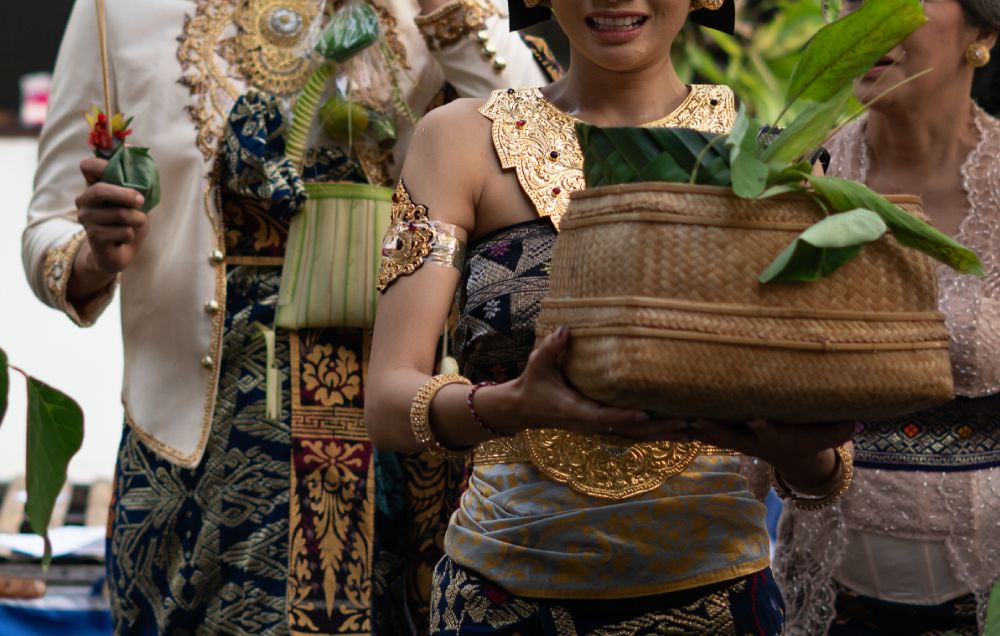
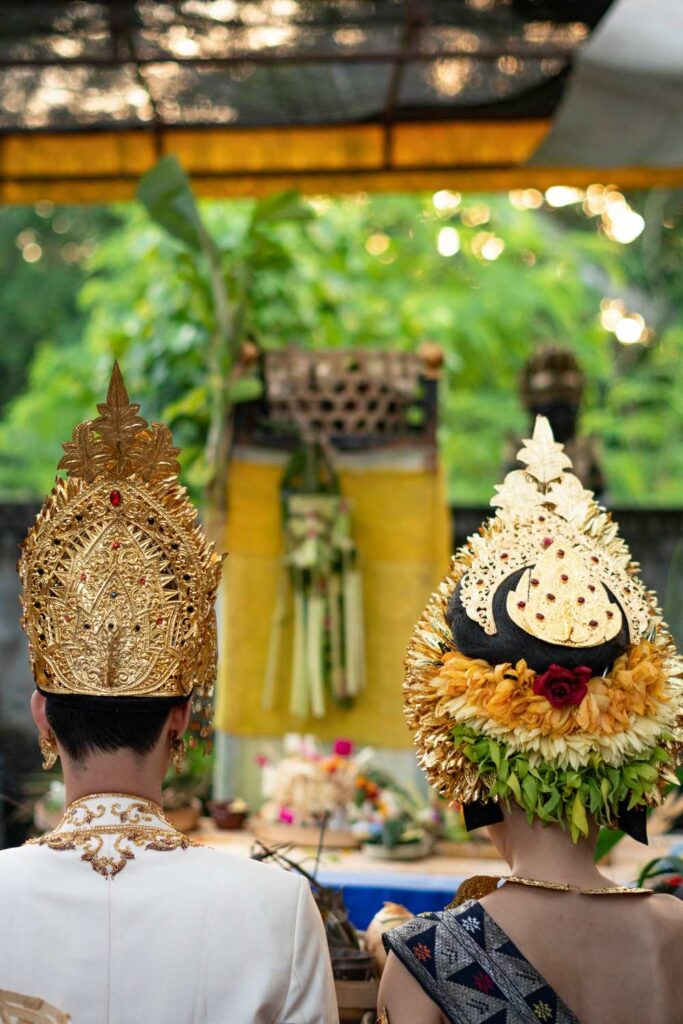
Finally, the main marriage ceremony takes place with the mesakapan – a sacred bonding of the two masculine and feminine principles (purusa and pradana) into a harmonious union, witnessed by gods, ancestors and the community. Donning the payas agung formal attire, the bride and groom are dressed like royalty from top to toe. Both will wear the gelungan payas agung crown, with golden jewellery from the subeng earrings and gelang arm bands and bracelets. The bride is wrapped in beautiful prada gold-printed kamben, the groom in his sarong and suit, with the addition of handsome keris dagger on his waist. They are transformed into king and queen for their special day.
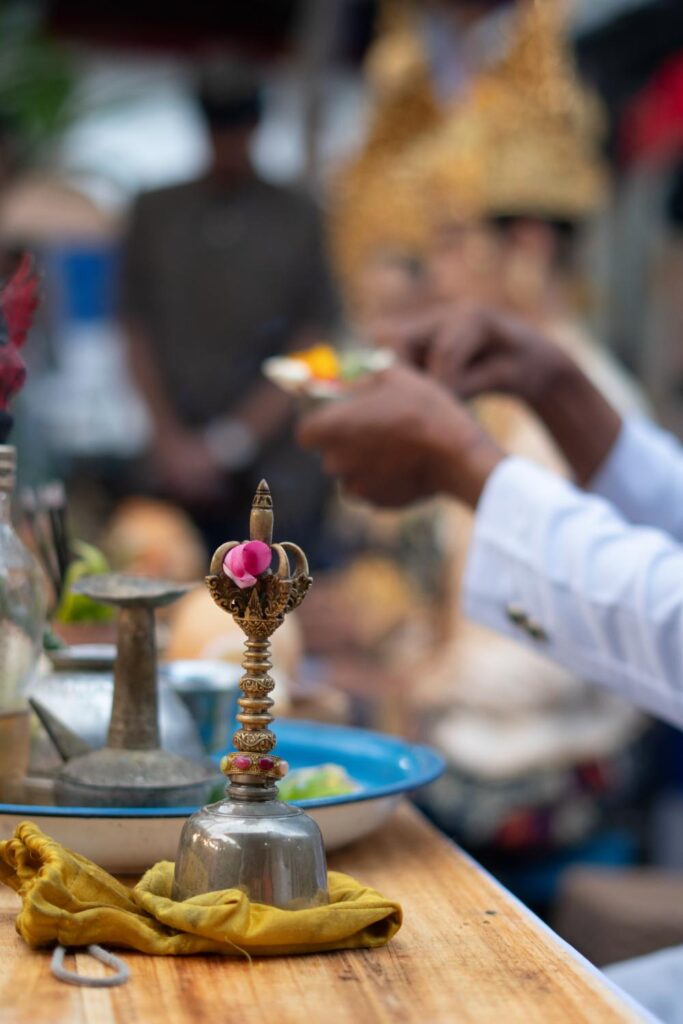
The main wedding ceremony is busy with family and community members as they come together to witness but also assist in the long list of unique rituals – many are playful and symbolic, done collectively to cleanse the betrothed (mekala-kala), and bless them with a prosperous future.
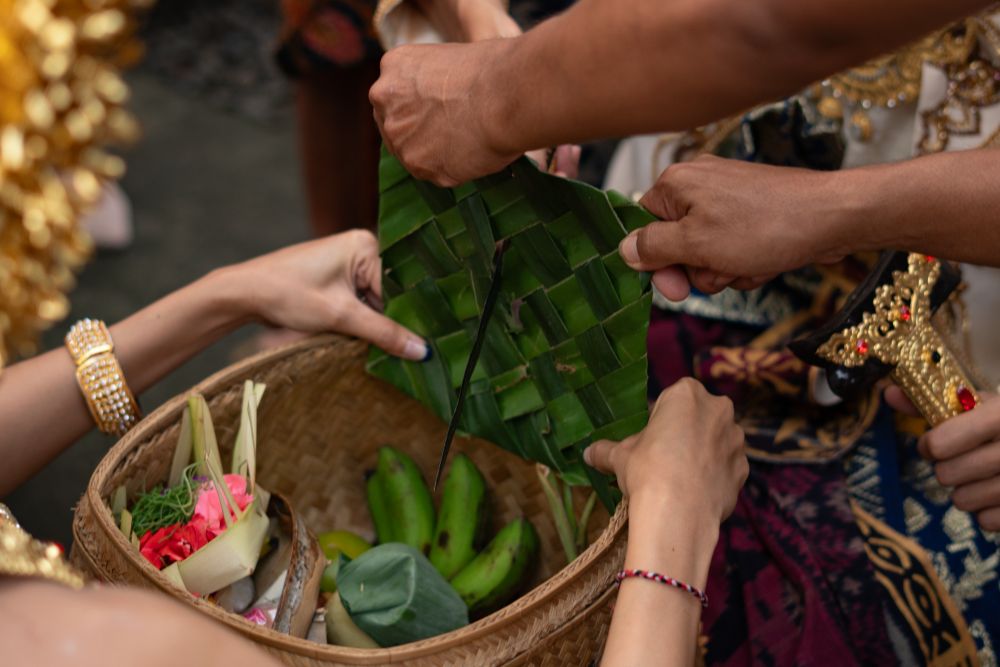
It begins with the kala sepetan ritual, where the bride and groom must simultaneously touch their feet on a specific wedding offering (banten) three times to cleanse them of their impurities. This is followed by dagang-dagangan, or literally ‘trading’, where the couple must stage a market visit with the groom ‘purchasing’ an item from the bride, this symbolises prosperity and a future filled with fortune. Then the more obvious symbolism is found during the tusuk tikeh ritual, where the bride holds up a woven pandan-leaf mat, and the groom must pierce it several times with his keris dagger – the union of lingga and yoni elements. Finally, the couple will cut a thread that connects two branches of the dapdap tree, signifying the end of their youth and their entry into total adulthood.
The final process in the pawiwahan wedding process is the mewidhi widana, prayers at the groom’s family shrine to introduce this new member of the family to the ancestors and ask for their blessings. After this the bride becomes an official member of the household, both physically and spiritually.
The Balinese wedding process is a culmination of the unique cultural aspects found on the island, weaving the religion, customs, community altogether into this special moment. It is not a private affair but a social one, demanding the involvement of family, neighbours, and the banjar alike. Offerings are prepared, ceremonies performed, and the ancestors invoked to sanctify this union not just in the visible sekala world, but in the unseen niskala realm as well.
Marriage in Bali, is a symbolic ritual of family, tradition and society, with the pawiwahan celebrating not just love and the union of two, but a continuation of the ever-important cycle of life and reincarnation that is the cornerstone of Bali’s manusa yadnya rituals.