


Coconuts are ubiquitous across Bali, not just as part of the island’s landscapes, but also in everyday life. Known as the ‘Fruit of Life’, the coconut is cherished for its nourishment and versatility, enjoyed as a drink, or shredded and milked into local dishes; but the coconut also plays an important role in Balinese ceremonies.
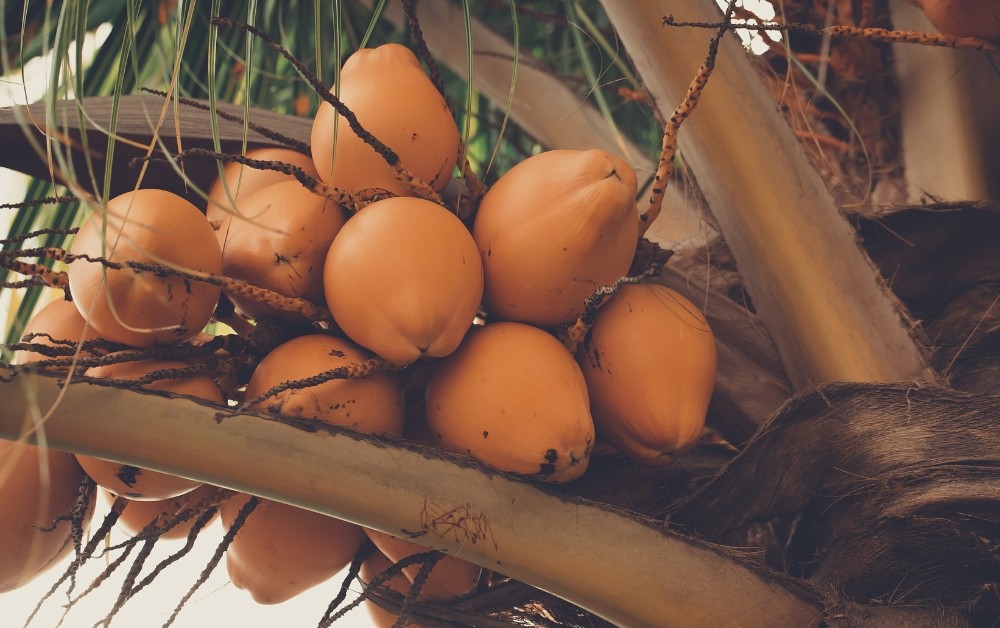
One of the types of coconuts commonly used in ceremonies is the bungkak nyuh gading, named after its appearance: bungkak being young coconut and gading referring to its yellowish-orange colour. These are sought out specifically for their waters, known locally as air langit, or heavenly water. Sealed tight within the fruit, position high above the ground, these waters untouched by the outside world are thus considered pure.
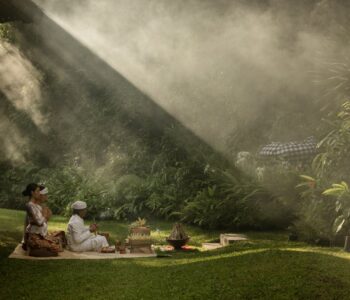
One of the use cases for bungkak nyuh gading in rituals is as a pralina. Meaning to perish, or pass away in Sanskrit, pralina reflects the Hindu belief in the separation of the soul (atman) from the physical body and in this sense, the coconut serves as an anchor. For example, during the mepandes or tooth-filing ceremony, the bungkak nyuh gading is used to hold saliva and tooth fragments. This practice is intended to ensure that the individual undergoing the ritual remains ‘connected’ to the place where the coconut is later buried.

Bungkak nyuh gading is also used in purification, symbolising the ‘return of elements to their essence.’ For instance, during the ngaben cremation ritual, the water within the coconut is used to cleanse the deceased’s remains by placing the leftover bones after cremation inside the coconut filled with water, before it is released to the sea or river. This act ensures the removal of negative energies before the remains are carried away by water, symbolising the reunion of the soul with Ida Sang Hyang Widhi Wasa (Almighty God).
The waters of the bungkak nyuh gading are used for melukat cleansing rituals, and are also important for herbal remedies as prescribed by the lontar usada traditional health manuscripts. It is considered both a tangible (sekala) and intangible (niskala) form of medicine and plays crucial roles in rituals of life, death, purification, and healing.