


In the realm of early twentieth-century art, few figures blend mysticism, adventure, and cross-cultural curiosity as seamlessly as Tyra Kleen. Kleen pursued a path that took her far beyond the conventions of her time, charting her own course through art, travel, and spiritual exploration. Her journey led her to Java and Bali, where she became fascinated by the ancient practice of mudras — symbolic hand gestures integral to Hindu and Buddhist rituals. In this article, Sake Santema of Indies Gallery showcases a selection of Tyra Kleen’s authentic 1930s lithograph prints, accompanied by a brief history of this remarkable Art Deco adventurer.
Tyra Kleen – Early Life
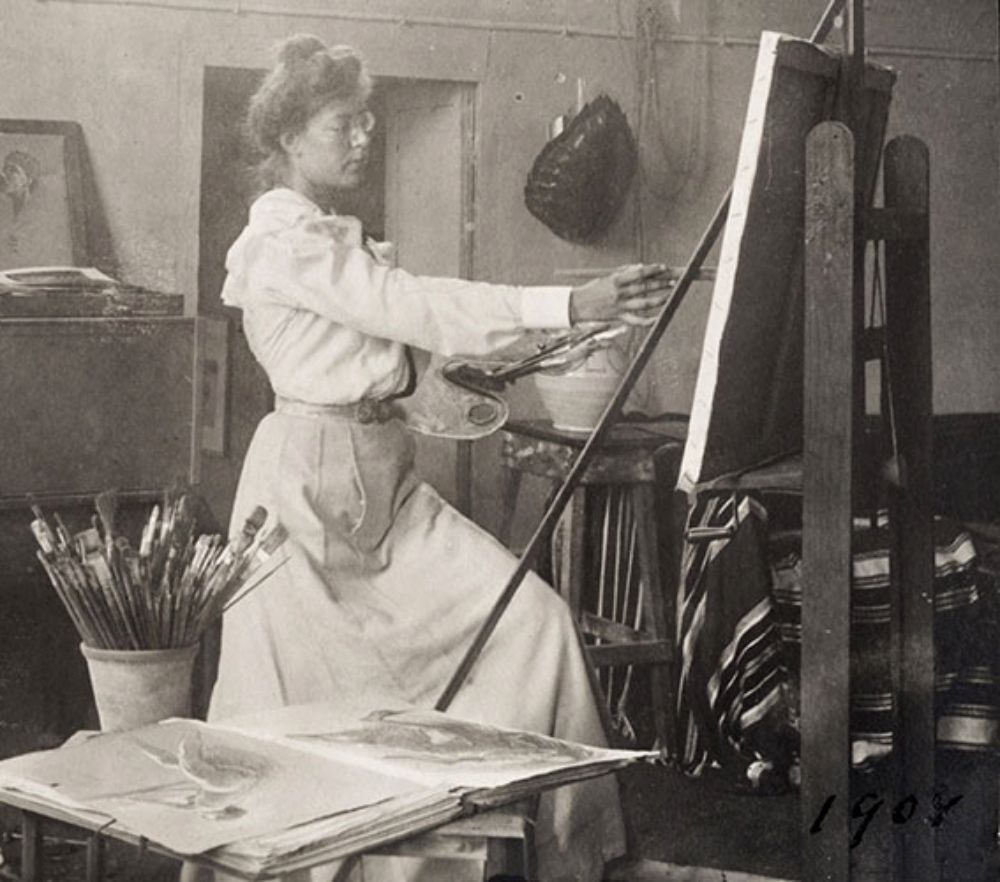
Born in 1874 in Stockholm, Tyra Kleen was born into a wealthy, turn-of-the-century aristocratic family, and used her position to pursue personal freedom and express spiritual themes in art. Kleen often felt like an outsider, disconnected from her social surroundings. Between 1892 and 1897, Kleen studied at some of the best art studios in Germany and France, focusing on drawing, etching, and lithography. Through her art and travels, Kleen carved a unique path, challenging societal norms. She never had children and saw marriage, social structure, and religion as prisons. Kleen learned to disguise herself as a man, wore bloomers, rode a bicycle, and travelled internationally alone, using her privilege to create opportunities unheard of for women at the time. She was also active as a writer, theosophist and involved in women’s rights issues.
Kleen’s Arrival in Java and Bali
Kleen’s extensive travels took her to India and Ceylon in 1910. In 1919, she travelled to Java on a Swedish cargo ship, where she became fascinated with traditional dance and saw it as the highest form of art. In Solo (Surakarta, Java), Kleen worked on an anthropological study on the ritual court dances, even participating in dance lessons herself.
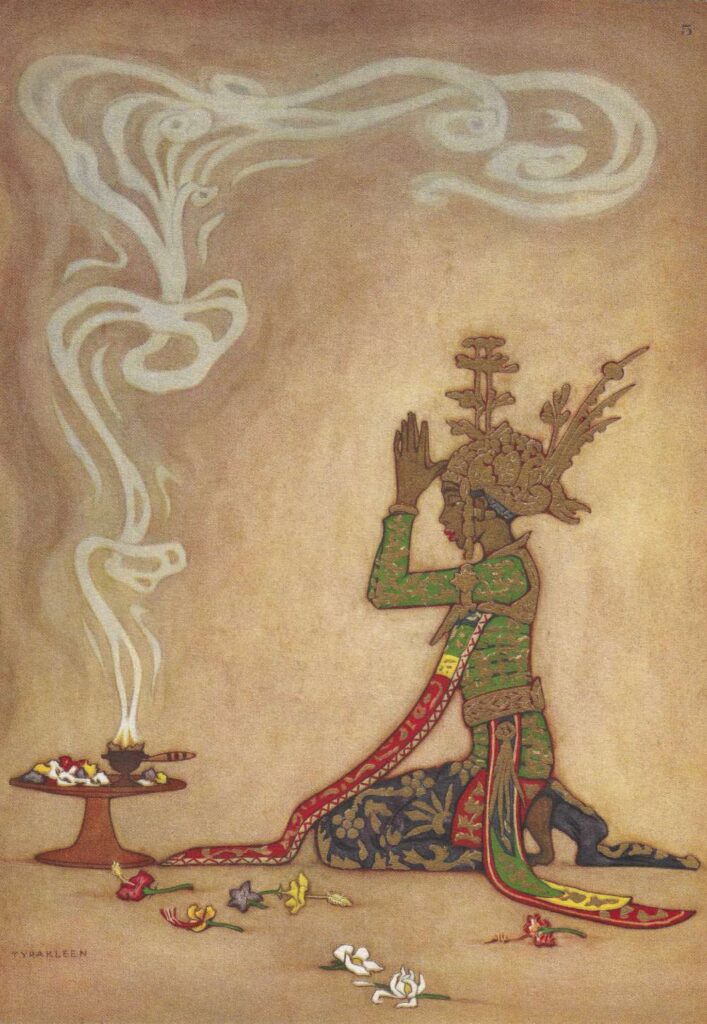
When she arrived in Bali in 1920, she started a new project on the mudras, or ritual hand poses, of the Balinese Hindu priests with the assistance of the Raja (King) of Karangasem, whom she had met in Solo the year before. Kleen’s artistic process typically involved working from life, meticulously sketching dancers, monks, and temple sculptures to capture the intricate positioning of fingers and hands accurately. However, her expectation that subjects would sit still for long periods for paintings proved challenging with the Balinese royal dancers. They found it tiresome to repeat sequences and gestures multiple times, leading many to eventually stop attending her studio sessions.
Undeterred, Kleen sought assistance from local priests, who agreed to model the postures for her. But when she compared their demonstrations to her own observations, she discovered that the priests had intentionally misperformed the mudras. This was reportedly an effort to protect the sacred aspects of their culture from outsiders, a move that both tested Kleen’s resolve and deepened her understanding of the complexities surrounding Balinese cultural traditions.
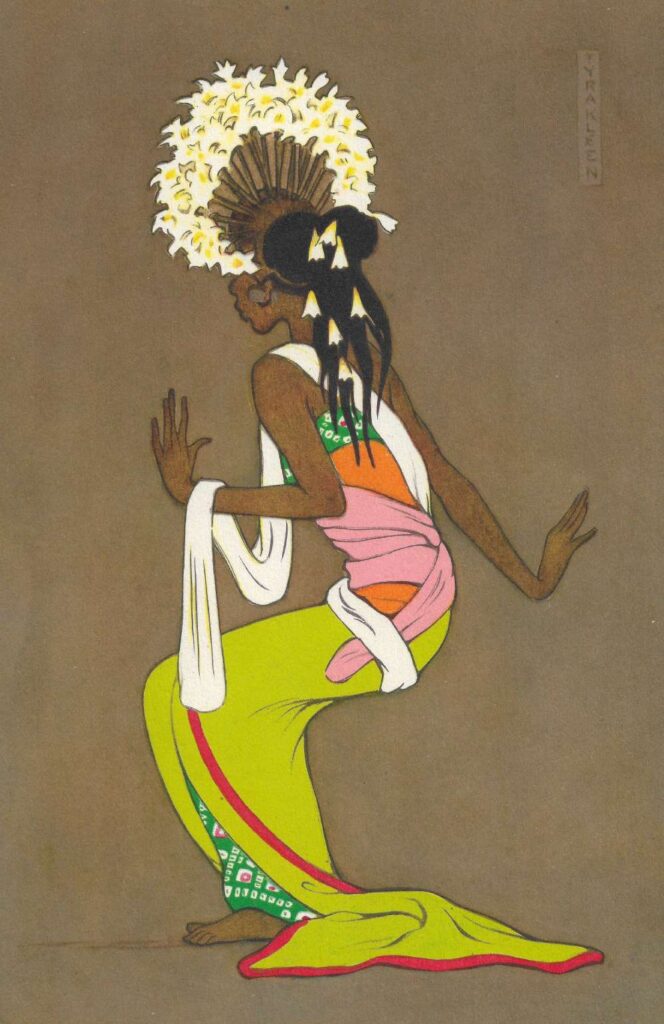
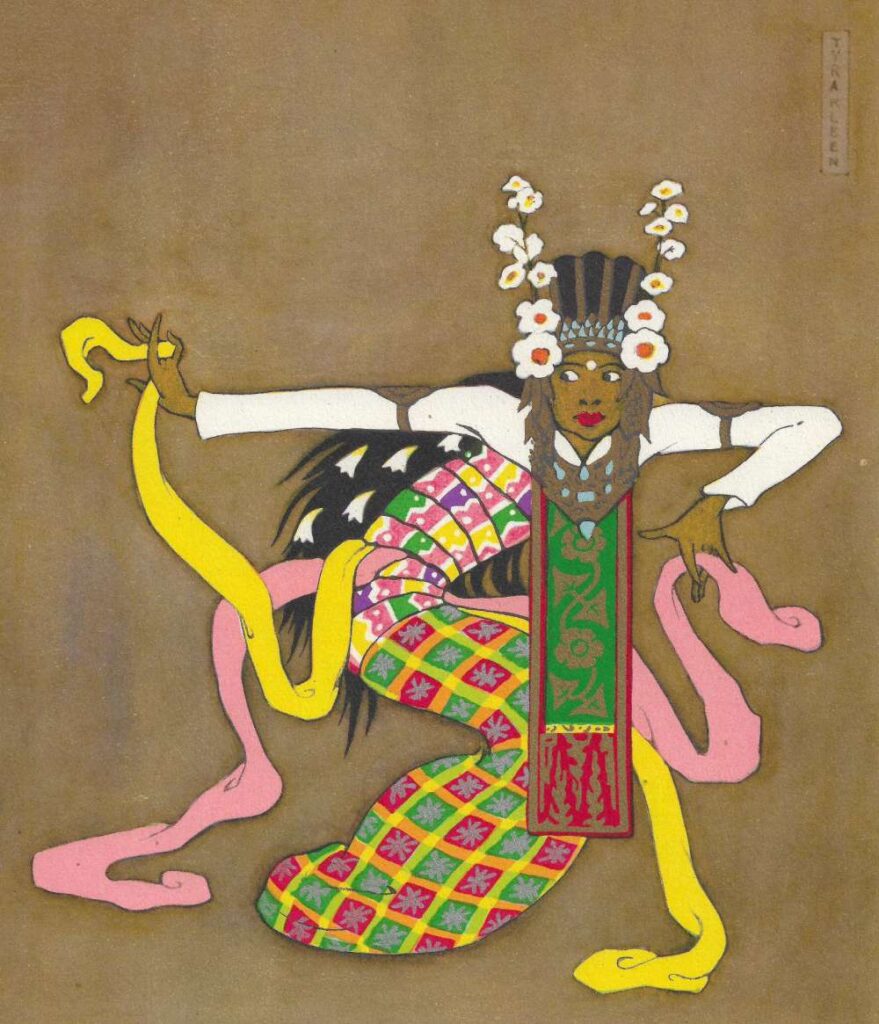
Through her connections, Kleen received a unique opportunity to stay in a village in Sidemen, arranged by a Balinese king. Here she was able to observe and study the traditional dances, an experience that would become the foundation of her most renowned work, “Temple Dances of Bali” (1936), a stunning portfolio of lithographs that beautifully captures the essence of Balinese dance and mudra. Limited to 300 copies, the portfolio combines Kleen’s meticulous drawings with insightful explanations of each gesture’s meaning and context.
Mudras: The Silent Language of the Hands
At the heart of Kleen’s artistic and scholarly pursuits lay a fascination with mudras, the stylised hand gestures that weave a rich tapestry through Hindu and Buddhist dance and ritual. Each mudra is a physical embodiment of mantra – empowered sounds that transcend spoken language – with its own name and symbolic resonance.
Kleen was captivated by the notion that such simple, elegant gestures could hold such profound meaning, and she devoted years to documenting and interpreting these sacred movements. Until Kleen’s groundbreaking study, the West had little understanding of the ceremonial use of ritual hand gestures, ubiquitous in Hindu, Buddhist, and Tantric art.
The origins of these mudras are complex, with Tantric Hindu influences likely arriving in Indonesia via Saka clan workers migrating to Java in the first century BCE. As Islam became the dominant religion Java in the late 15th century, this led to the displacement of high-caste Buddhist and Hindu priests, who fled to Bali, where their descendants continue to preserve these ancient traditions to this day.
The Enduring Legacy of Tyra Kleen
Tyra Kleen’s study on mudras earned her international recognition, showcased in exhibitions and publications. Her unique art-deco style not only influenced local Balinese artists but also contributed to Bali’s exotic image as “the last paradise”. Upon her passing in 1951, Kleen left her collections to the Swedish House of Nobility, on the condition that they remain sealed for 50 years. The archive was finally opened to the public in 2001, revealing a treasure trove of paintings, lithographs, and diaries that offered a glimpse into her remarkable life and artistic journey. Kleen’s diaries and letters paint a picture of a complex, ambitious, and fiercely independent individual, driven by a passion for her work and a refusal to be defined by societal expectations. Through her art and legacy, Tyra Kleen continues to inspire, inviting us to appreciate the subtle power of the silent language of the hands.
The prints in this article are available for purchase through Indies Gallery, while high-quality reprints can be found at Old East Indies.
Indies Gallery & Old East Indies
Jl. Gambuh No.17, Denpasar, Bali
indiesgallery.com
oldeastindies.com