




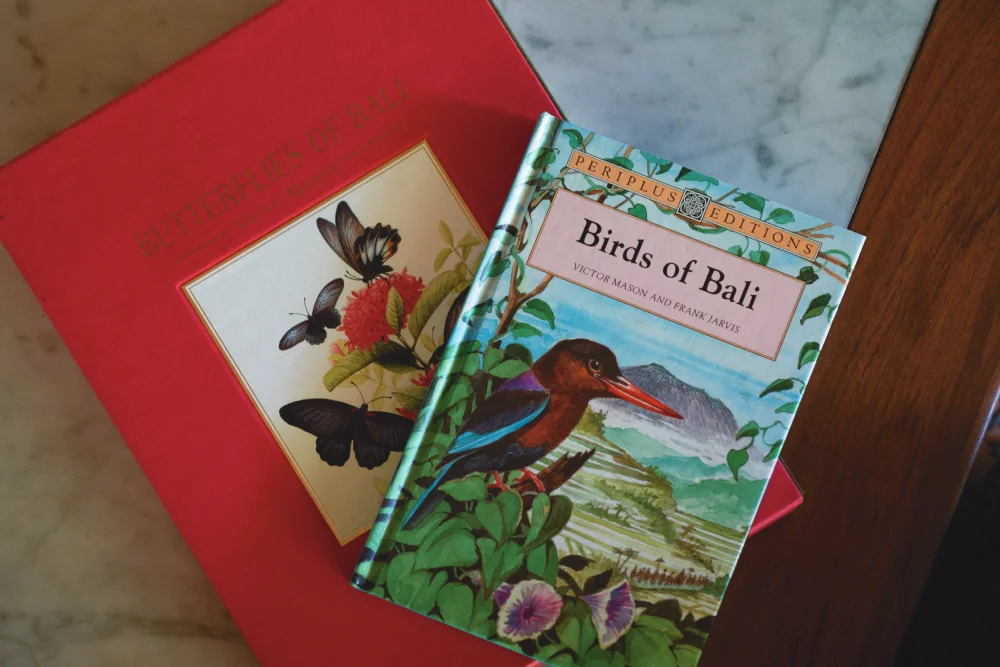
I have had a copy of Victor Mason’s ‘Birds of Bali’ book for a few years: a charming, watercolour-illustrated compendium of the island’s fabulous variety of avian inhabitants.
“Of the 300 or so species of birds reported to visit or live in Bali, probably rather less than 100 are likely to be encountered by the casual observer, which is roughly the number described and illustrated in this little book,” writes the author, an Englishman who had called Ubud his home since 1974.
Birds of Bali was first published in 1989, and Victor Mason’s passion for birds progressed beyond the pages with the founding of the Bali Bird Walk in 1992 – a walking tour through the verdant fringes of Ubud, spotting birds, butterflies and botanical beauties. Though Victor Mason sadly passed away in 2022, the bird walks continue to this day, run by Balinese bird enthusiast Wayan Sumadi, who was out in the field with Victor on the very first bird walk – and is thus a consummate pro when it comes to birdwatching in Bali!
Su, as she is better known, asks us to gather at the famous Ubud eatery, Murni’s Warung, at 9am sharp. Her enthusiastic energy can rouse even the heaviest cases of non-early risers, handing out binoculars as she warmly welcomes.
Bali Bird Walks sees a whole spectrum of participants, from professional ornithologists to backyard birdwatchers, and tourists simply searching for a unique way to explore Ubud’s natural surroundings. But experience matters not, as Su guides each and every eye into the trees and skies.
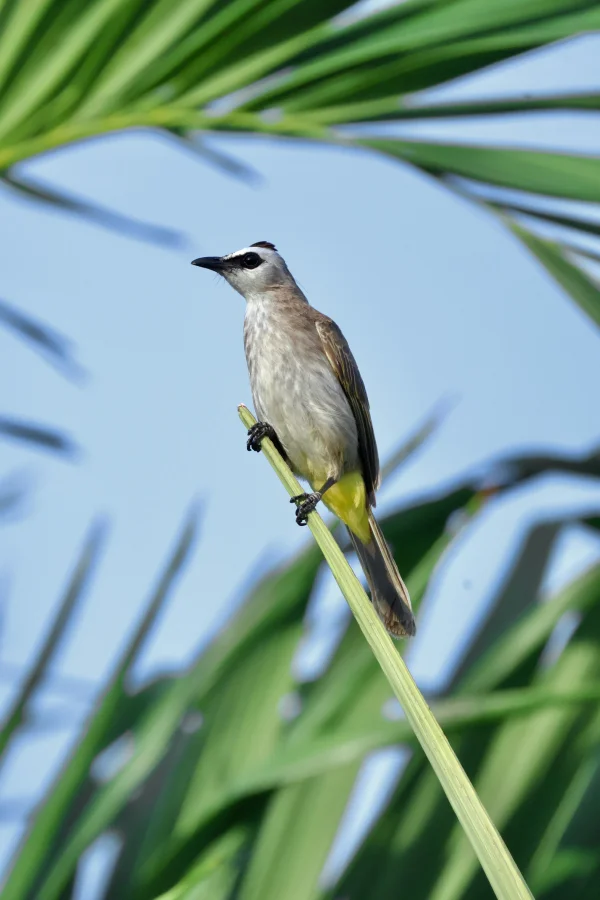
“Quick, everyone gather here!” She beckons, corralling the group into the parking area. “You see in the trees there, Golden-headed Cisticola. Ahh you hear that? Yellow-bellied Bulbul… in Bali, they are the first ones to sing in the morning.” The walk had not even begun, but the morning birdlife was thronging around the Campuhan Bridge, above the sacred confluence of the Wos River.
A five-minute drive takes us to the walk’s start point on the backside of Penestanan – a beautiful pocket of countryside sandwiched between two of Ubud’s busiest roads, a sylvan oasis maintained by the local subak, or the rice farming community, ensconced by valleys and local vegetation.
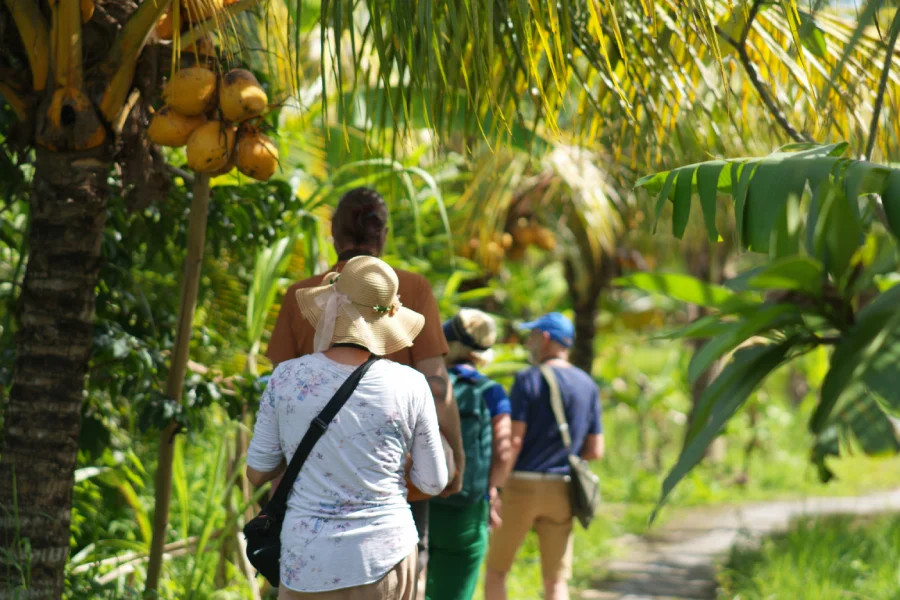
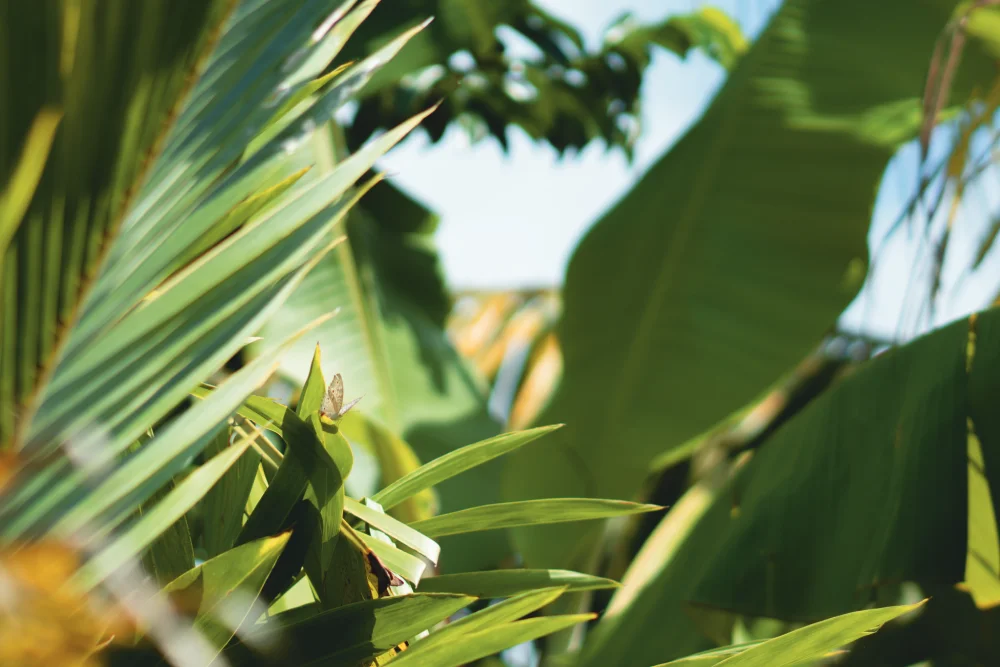

The walk is easy-going, following the established farmers’ paths that meander through the rice fields, by trickling streams, or under the shade of mighty banyans. These shifting surroundings promise a variety of wildlife to spot, an activity that quickly incites a lot of excitement in the group, stirred by Su’s infectious enthusiasm.
“There! A Cave Swiflet! Look how its keeps flapping its wings, that’s not a swallow – they glide. There! That’s a White Nest Swallow – oh you won’t catch a photo, too fast!”
It’s almost as if Su’s senses are heightened during the walk: she can spot a juvenile Javan Sparrow from 30-metres away, or identify the shrills of a Kingfisher even if its nowhere in sight. If she spots something mid-sentence she’ll break off to bring it to the group’s attention, ensuring that no opportunity is lost to spot as many bird species as possible.
When scanning the landscape, one might think that the birds flitting between paddy stalks are the same species. However, through the scope of the binoculars, the distinctions become clear: the unique characteristics of each species are visible, allowing us to pinpoint specific species.
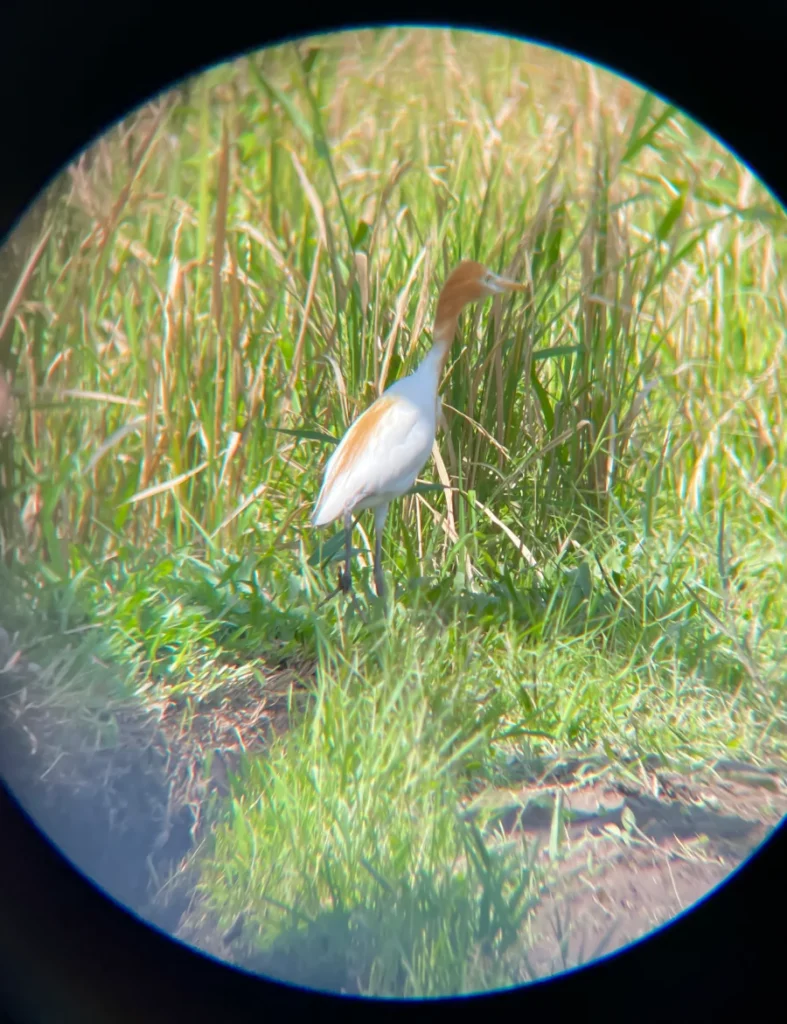
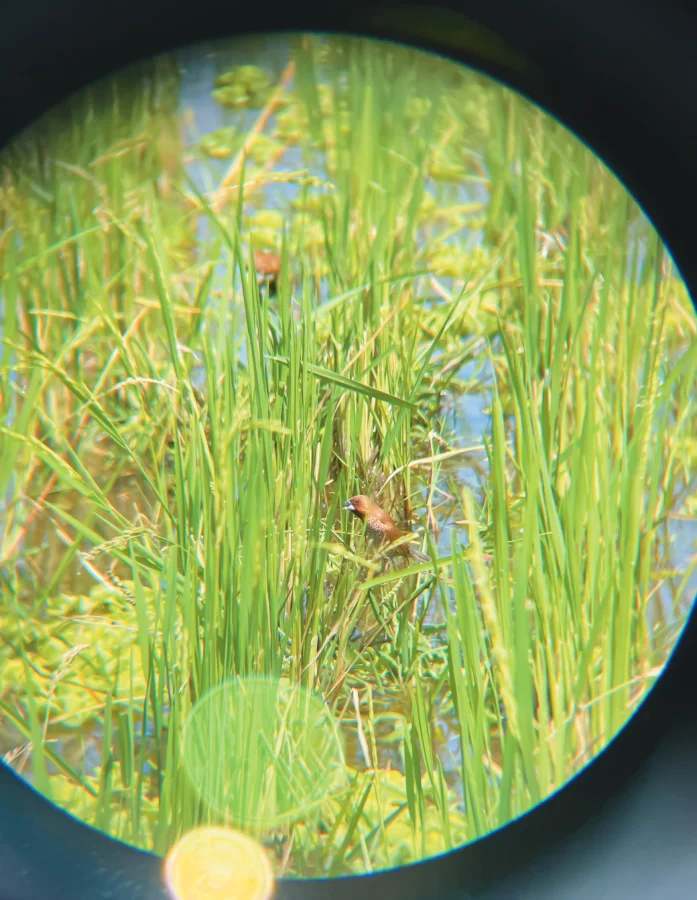
We learned to identify the many munia species, be it the Scaly-breasted Munia, a common grassland songbird, its whiteish breast etched with overlapping crescents of brown; or the Javan Munia, the rice farmers rival, with its dark feathered bibs. Not to be confused with the all-black, yellow-eyed Javan Myna, of course! Yes, when seen through a different lens, the sights we might have once considered banal or mundane suddenly become fascinating.
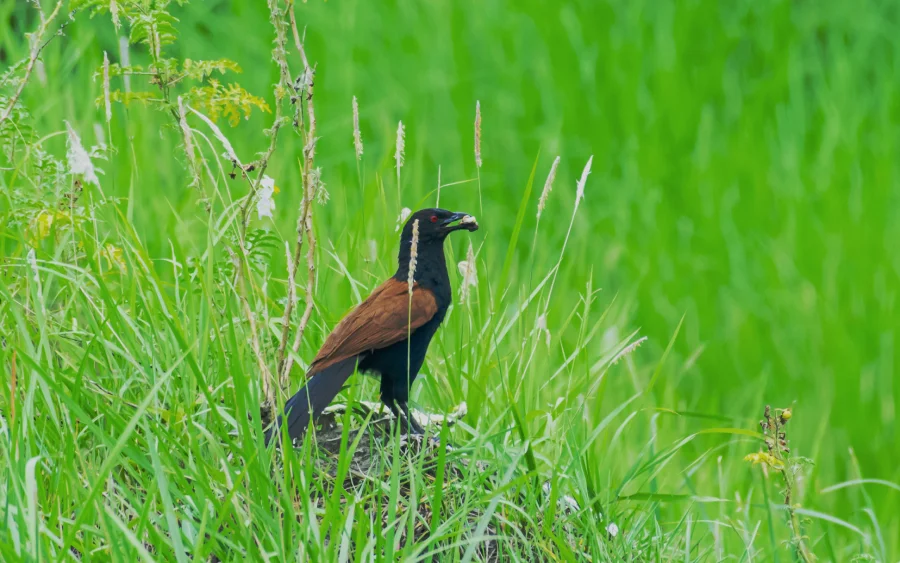
Now, that is not to say one will not come across some of Bali’s more spectacular bird species. Our group was fortunate to have three sightings of the dazzling Javan Kingfisher, its rich blue feathers and striking red beak contrasting brilliantly against the dark greens of the river vegetation that skirt the edges of the farmlands – their preferred habitat. A pair of Lesser Coucals popped out briefly from the bush, and the impressive swoop of a Greater Coucal surprised the resting birdwatchers. An Ornate Sunbird, darting in and out of her nest high above the ground, also graced us with her presence.
“Have a lovely life!” Su would continuously say to the birds after we had spotted them, grateful for their appearance.
We would stop to watch the egrets and herons hunt for dragonflies, watching their unique ‘head wiggles’ before striking to confuse their prey. They are a common sight in Bali’s rice fields, but taking a moment to watch and observe them patiently, with full awareness, is certainly a rarity.
Su is an Penestanan local, and knows the surroundings like the back of her hand. Beyond the birds, she pointed out butterfly species (they have fantastic names: The Great Mormon, The Palm King, The Giant Crow), tree squirrels (not the usual Plantain Squirrel), and Ubud’s abundant variety of medicinal plants, roots and spices growing in the wild.
What differentiates a birdwatching walk from a regular stroll through the countryside is your full awareness of the environment – a walk with purpose, searching, scanning and identifying. With the right guide, the surroundings come to life: when we are taught to discern between the birds, butterflies and blooms, nature seems more bountiful than ever.
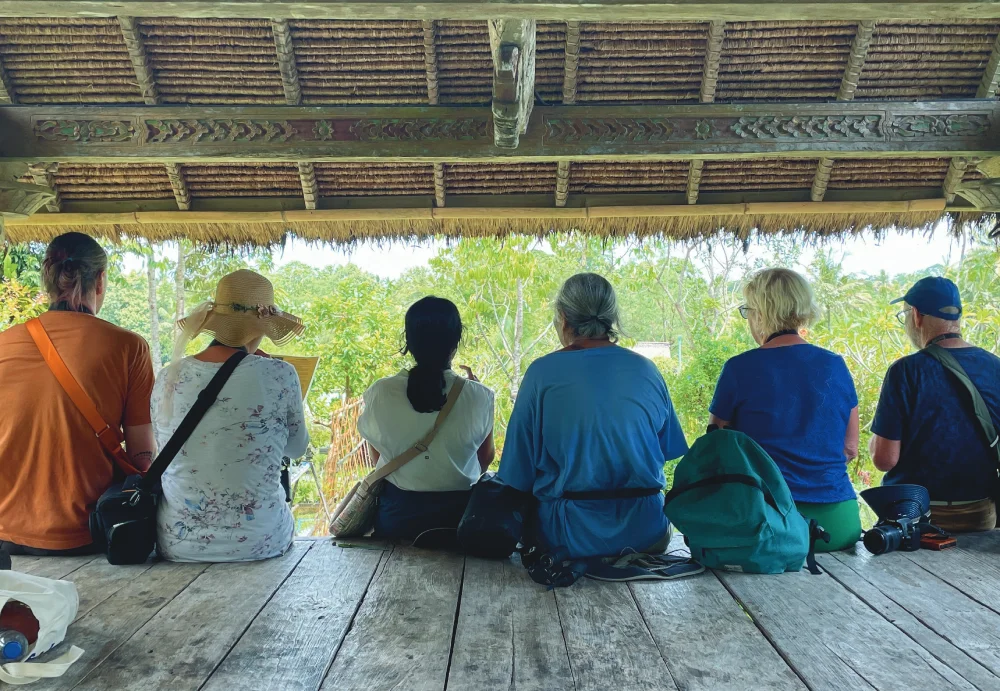
With around 22 species spotted, we wound our way back to Murni’s Warung for an Indonesian lunch and refreshments. Sun soaked and satisfied with the day’s findings.
Ah, but Victor Mason said there were around 100 commonly spotted birds in Bali –– what about the Bali Starling, the Rainbow Lorikeet, the Ashy Drongo, the Chestnut-breasted Malkoha? I suppose the birds of Bali beckon for another round of exploration, not only in the Ubud countryside, but also to distant avian havens like Batukaru and West Bali National Park. Nonetheless, Bali Bird Walk is the perfect place to start, with the high-spirited Su to show you the way.
Walks are available on Mondays, Tuesdays, Fridays and Saturdays, starting at 9am from Murni’s Warung. Booking in advance is required. The roughly 5km walk is leisurely and suitable for all ages, finishing just after midday. 10% of the walk’s proceeds go to Bali Bird Club, a bird conservation fund founded by Victor Mason.
For bookings:
+62 81 239 13801 (WA)
balibirdwalk.com