


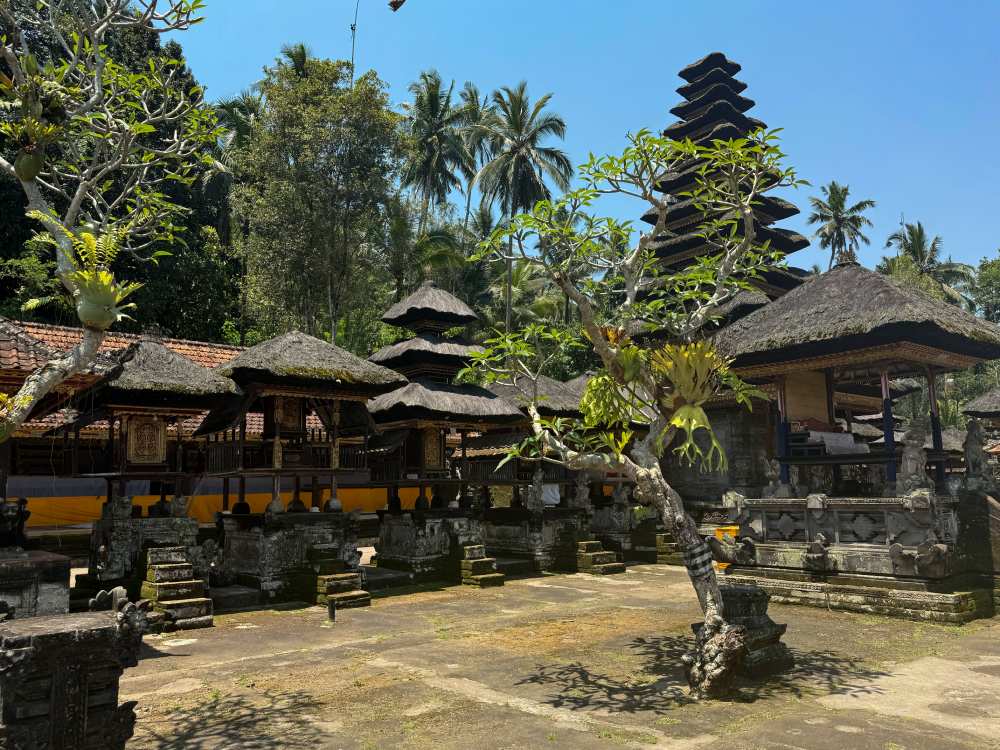
Long before Bali became a unified province, the island was ruled by kings and queens. Traces of that regal past persist in the many puri and temples scattered across the land. One of the prominent temples from that era that still stands today is Pura Kehen in Bangli, where ancient kings and nobles once took their sacred oaths before the gods.
The origins of Pura Kehen are known from the discovery of three copper inscriptions (prasasti), in which the name Kehen is also found. It is believed to have originated from the word keren, meaning “place of fire”, and is also thought to derive from Hyang Api or Hyang Kehen, the deities originally worshipped here. Over time, this act of devotion evolved to align with the Balinese Hindu belief in the Trimurti, or the three principal deities: Brahma, Vishnu, and Shiva.
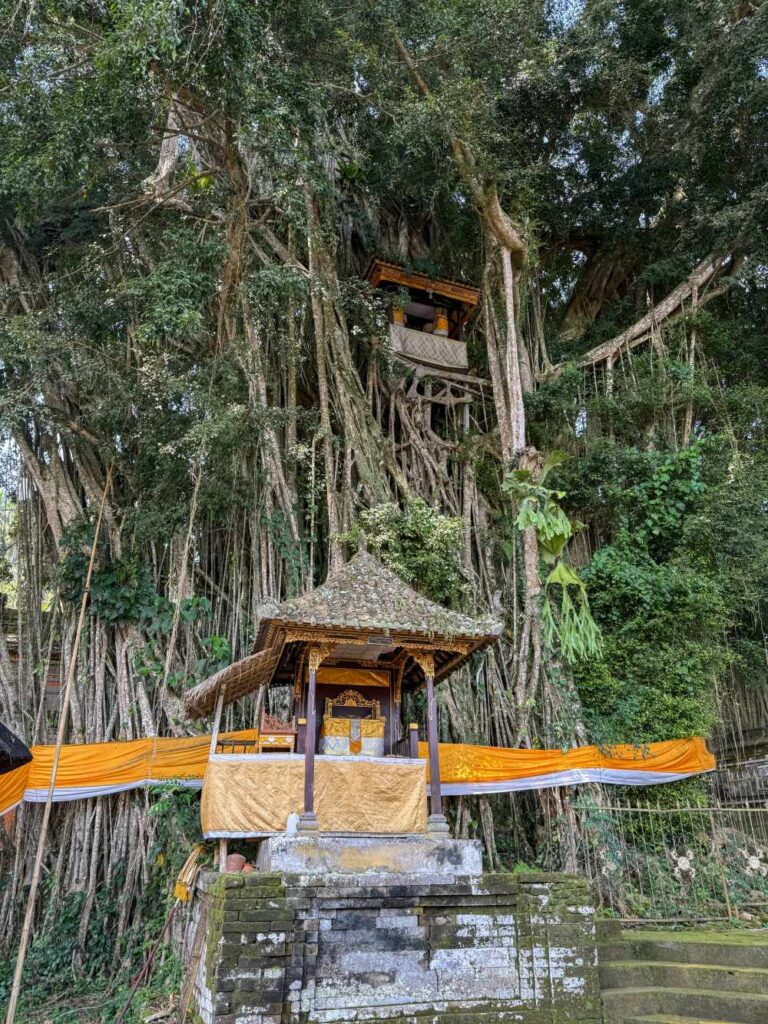
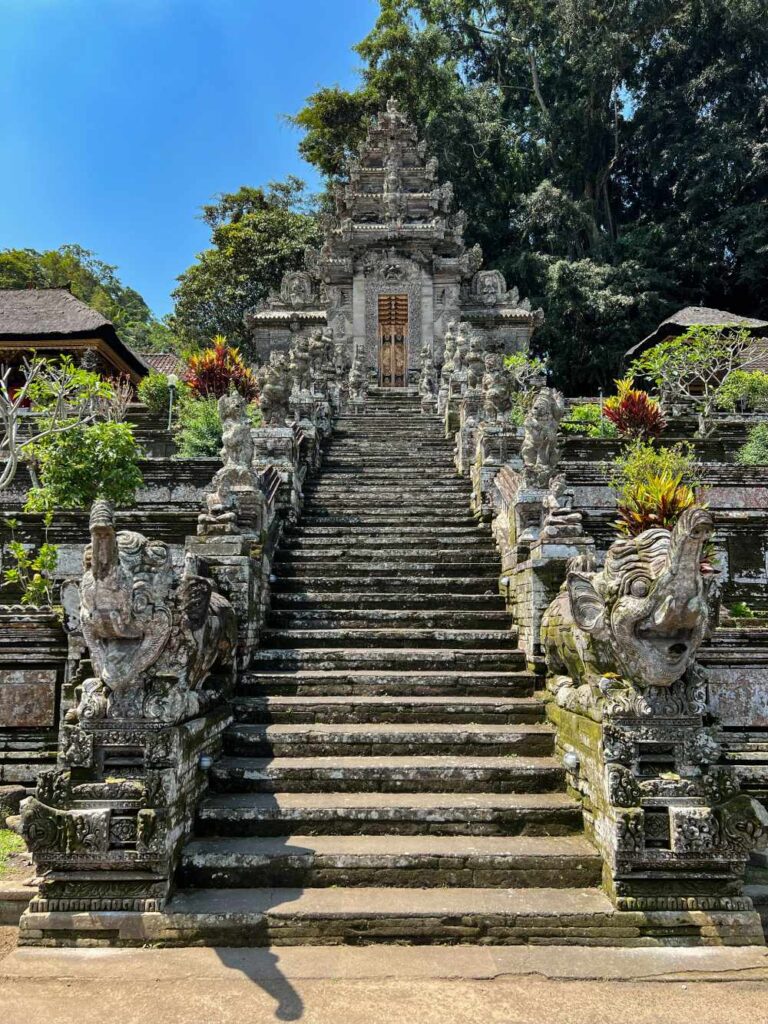
In terms of architecture, the temple possesses the usual tri mandala structure. What differentiates this temple from others is the lack of a candi bentar (split gate) at its entrance. Instead, it features a kori agung (ornate gateway). The temple also has a unique bale kulkul (traditional wooden slit drum), placed on top of a centuries-old banyan tree. In the past, it was said that this kulkul had no staircase, so the jro mangku or temple priest who wished to sound it had to climb the banyan’s roots. It is also believed that if one of the tree’s branches ever falls, it signifies that a grubug, or disaster, is imminent.
In the olden days, Pura Kehen was said to be a place for taking oaths. This is supported by the presence of a vessel entwined by four serpentine dragons, known as the Bejana Sarpantaka. The vessel serves as a container for Tirta Sarpantaka, the holy water of oath, which is offered to those taking part in the ceremony. Anyone who defied the oaths they made would face dire consequences cast upon them by Hyang Api.
Today, the temple is a famous tourist attraction in Bangli. The temple’s upkeep is taken care of by the traditional banjar communities, who usually take turns holding a mepeed procession during temple ceremonies. Moreover, each desa adat, or customary village, typically presents sacred dances such as Baris Dadap, Baris Perasi, Baris Gowak, Rejang, and Pendet.