


A guided journey to experience a melukat cleansing ritual in one of Bali’s more secluded purification sites.
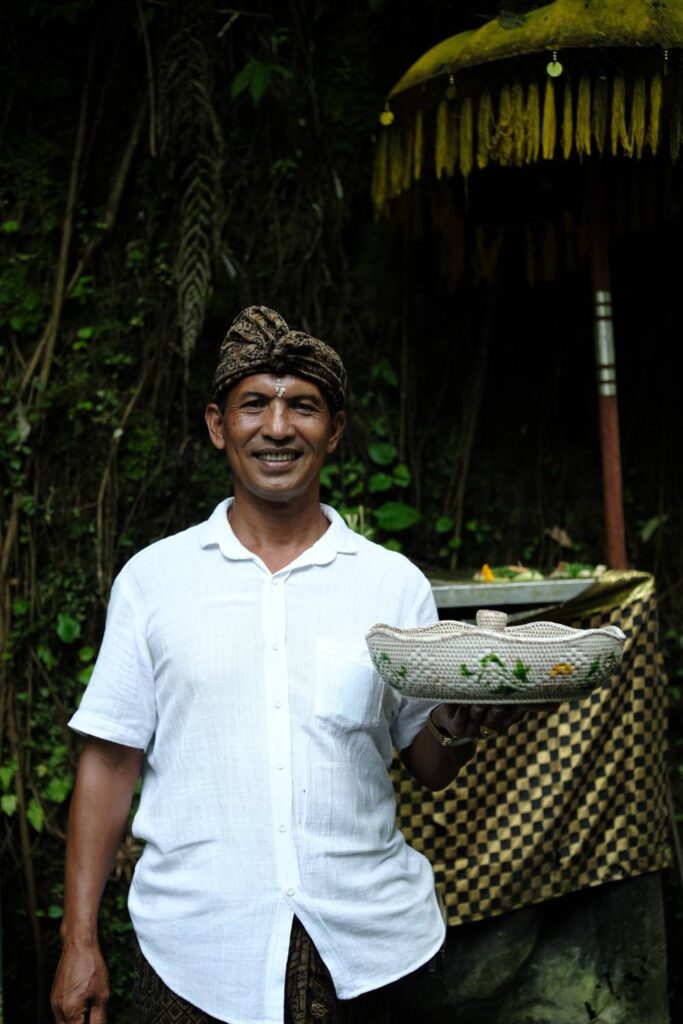
Ida Bagus Ketut Dharma meets us in the parking area, a broad courtyard space shaded under the sprawling branches of a towering pule tree. Om Swastyastu, he greets us, welcome to Sebatu Village.
Only a handful of visitors and worshipping Balinese are present, despite the fact that Sebatu is only 5km from the popular Ceking rice terraces, Tegallalang, just north of Ubud. But the calm suited the setting, the village streets were clean and uncommercial, with just a few shops lining the street and no clamouring crowds.
With a basket of offerings in hand, Jero Ida leads us to get our sarongs and sashes before we make our way down into the river valley. As we walk, he shares some history with us, explaining that the revered Hindu priest from Java, Rsi Markandaya, was believed to have come through Sebatu on his travels and opened a holy water spring to heal those in the village that were struck by sudden illness. This was the origin story of Pura Gunung Kawi Sebatu, five minutes away, a long-established holy spring temple where many continue to go for their melukat purifications. But this was not our destination, ours lay deeper in the valley, where the waters run free: the cleansing waterfall at Pesiraman Dalam Pingit Sebatu.
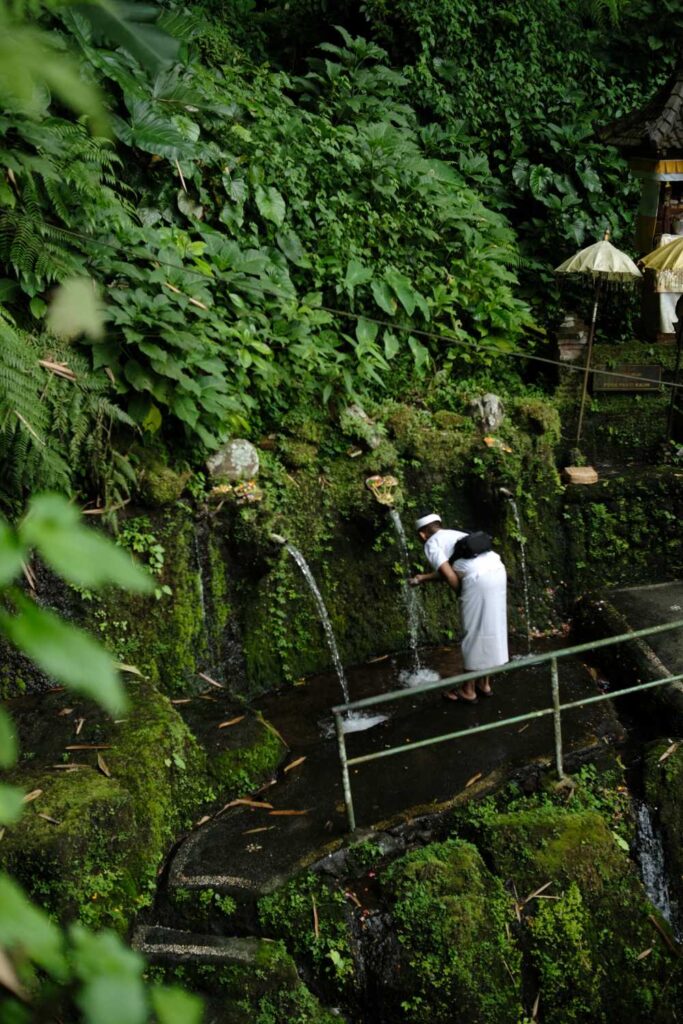
A stairway makes the walk down easy, but Jero Ida remembers when he first came here many years ago and it was a trek through jungle and steep, muddy slopes. But ‘modern’ infrastructure doesn’t take away from the surroundings, as the sun pierces through the treeline above and light shimmers on the valley walls. As historical as holy spring temples might be, being immersed in such a natural setting invokes a different feeling altogether.
Half way down we come to a first blessing site. “Here we ask for permission to enter, and clear our thoughts, mind and body before we head further down,” says Jero Ida, who took up the mantle of priest of his home village, Keliki, where he conducts the rites of passage ceremonies (manusa yadnya) for the entire community. “Not many people do this anymore, but remove your sandals as we meditate. It connects us to both above and below, Pertiwi.” He leads the offerings and prayers before inviting us to wash three times – face, head, body – in the three fountains spouting fresh mountain waters.
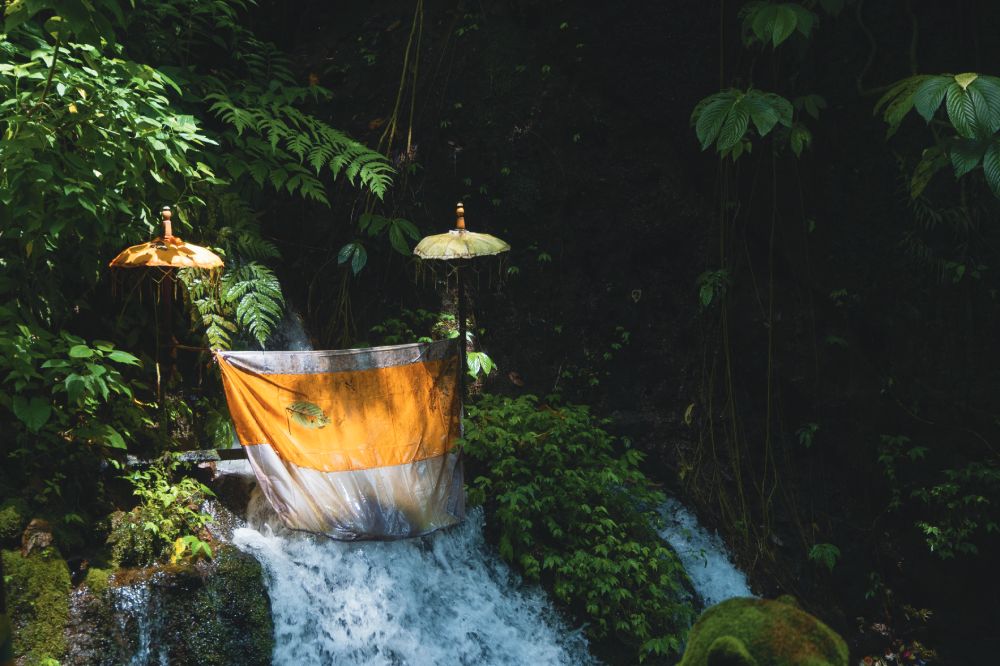
Close to the valley floor, prayers are done at one more place of worship where the shrines and statues are engulfed in moss, with vegetation beginning to sprout from roofs. Despite feeling like a land lost in time, written village history states this purification site was found as recently in 2007. It was completely by accident: a visitor decided to hike down to the river and bathe under the small waterfall, when suddenly the waters turned murky around him and he panicked. Hearing of this, the village elders investigated and during a ceremony on Tumpek Landep, it was confirmed that two deities – Dewi Uma and Dewi Gangga – resided in this holy location. Since then, the surrounding Balinese community would pray, place offerings and bathe in the waters for cleansing.
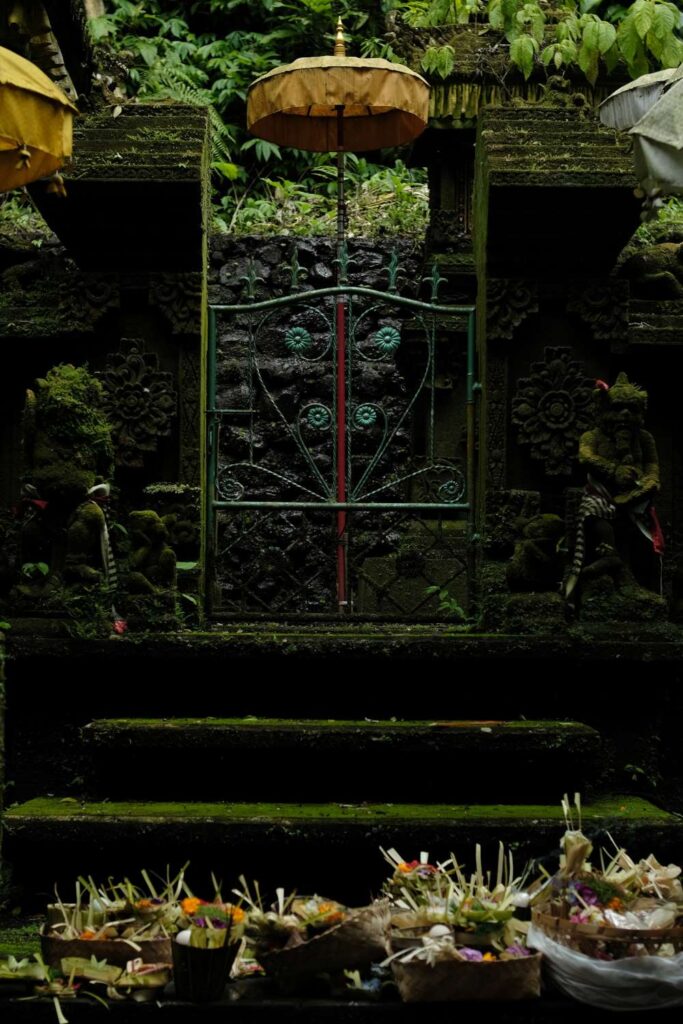
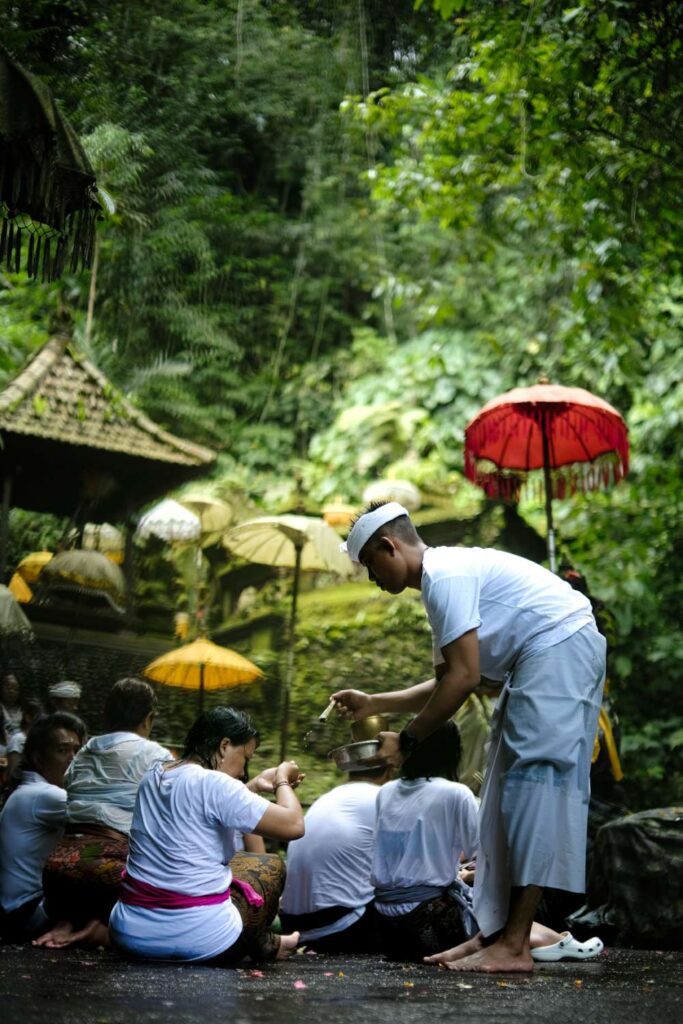
At this second place of worship, Jero Ida asks us to hold a stick of incense as he prays and meditates beside us. When he finishes he looks over and is relieved all of them are still alight. “If the incense goes off by itself, it’s considered a bad omen – or a sign that the person is dealing with something very difficult. I have not witnessed it often, but when I have, each person admits that there is trouble they are dealing with,” he explains. All the better that they were at a site for purification…
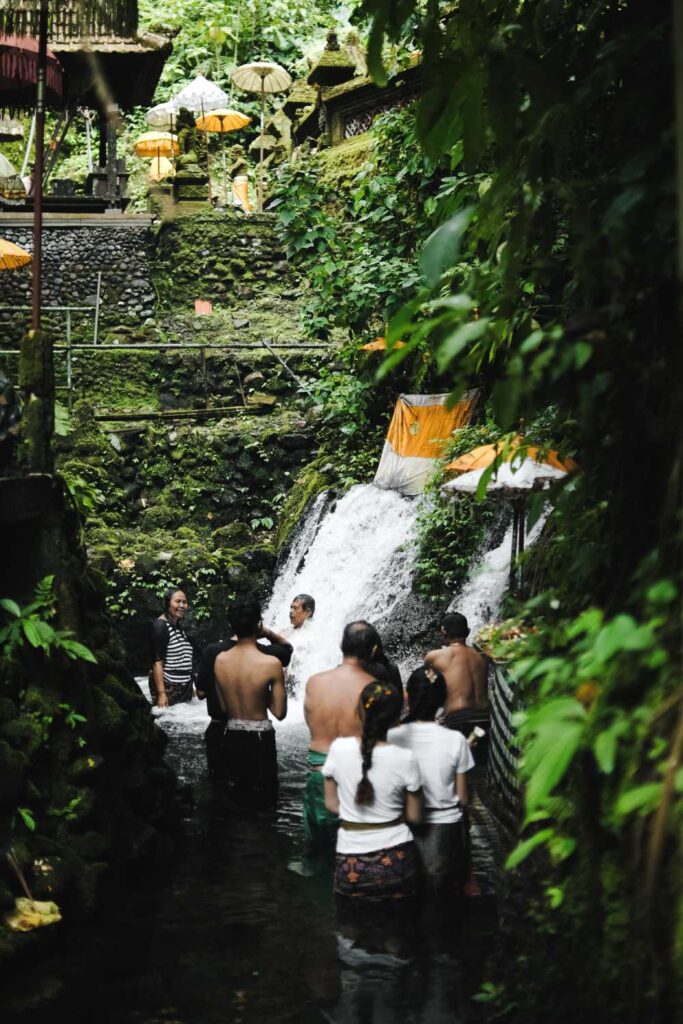
Finally, we reach the revered waterfall. Visitors and pilgrims enter from downstream, wading through the crystal-clear, waist-high waters of the gentle river, lining up for our turn to have our impurities washed away. There’s no denying just how picturesque the moment is, peering back up towards the path we had taken, the overgrowth merges with temples, shrines and walkways to this final destination, glimmers of sun spotlight patches of the greenery. A serene blend of nature and culture.
At the small waterfall, only a few metres high or so, once again we must wash three times. The force of the water is strong, but its cool flow hugs hard against your body as you immerse yourself in its current, closing your eyes, sinking into the moment. Whatever your beliefs are, it’s an objectively invigorating experience, in a setting you won’t soon forget.
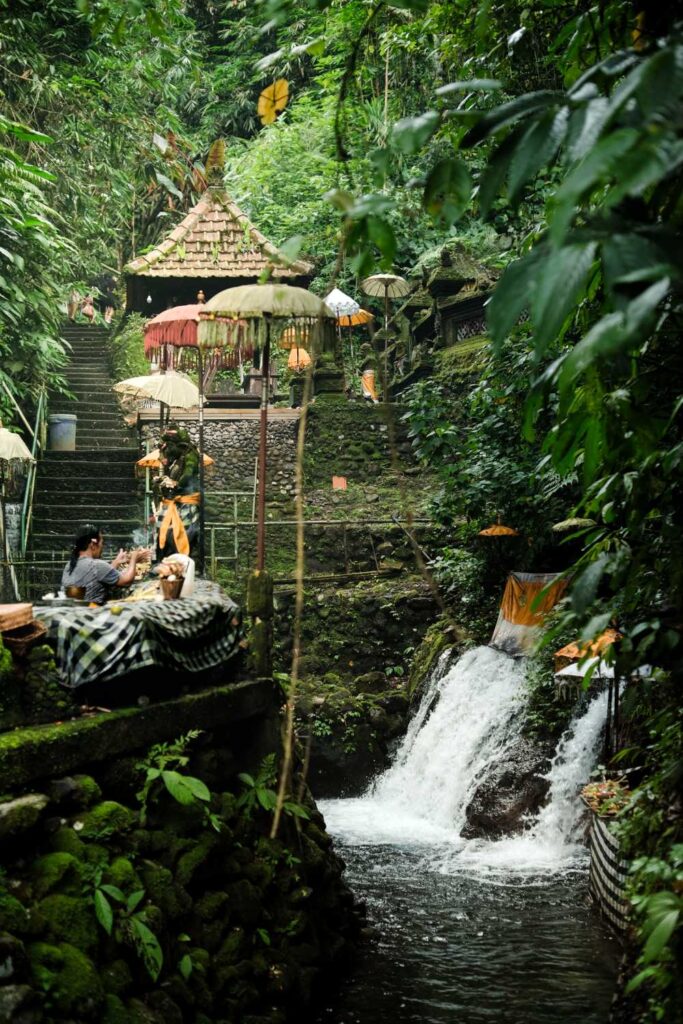
As we dry off and take in the scenery, Jero Ida shares some of his own ties to Sebatu. He said he too found this place by accident, in search of holy water to help his ill father, and a series of mysterious events led him here, and cured his father as well. It’s a story best told by him, but it was clear he holds a genuine awe and appreciation for the place. His father’s wasn’t the only miracle he had witnessed either, as he regales us with his encounters of those blessed with both physical and spiritual healings across a decade or so.
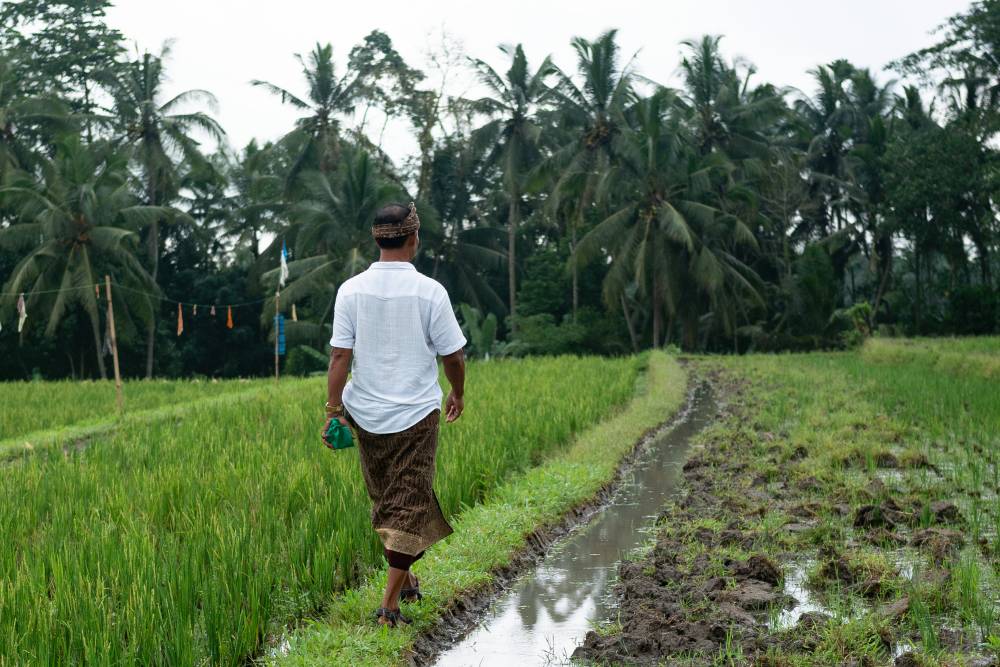
What a morning it had been, but the day continues. We take the car with Jero Ida back to Keliki Village, where he takes us on a walking tour around the verdurous countryside. As we leisurely stroll through temples, rice fields and farms, he explains ceremonies and rites of passage in depth, and shares his extraordinary knowledge of local medicinal plants. Traditional eye drops squeezed from flower stems, leaves to help with gout, other leaves used for natural shampoo, and much more. Time in the countryside gets far more engaging when you’re on the search for particular plants.
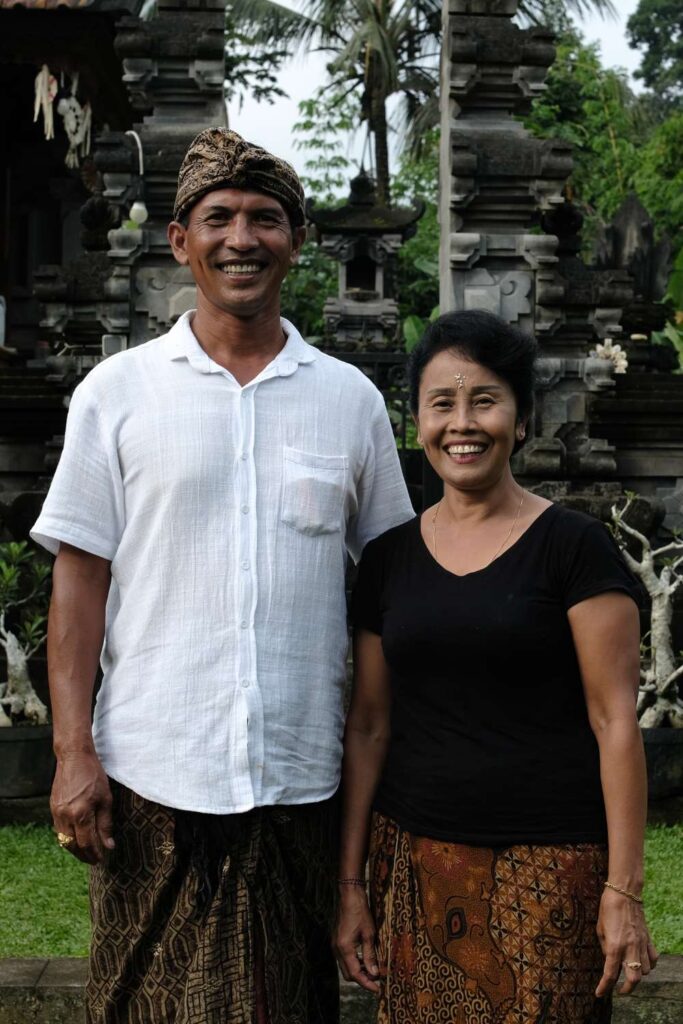
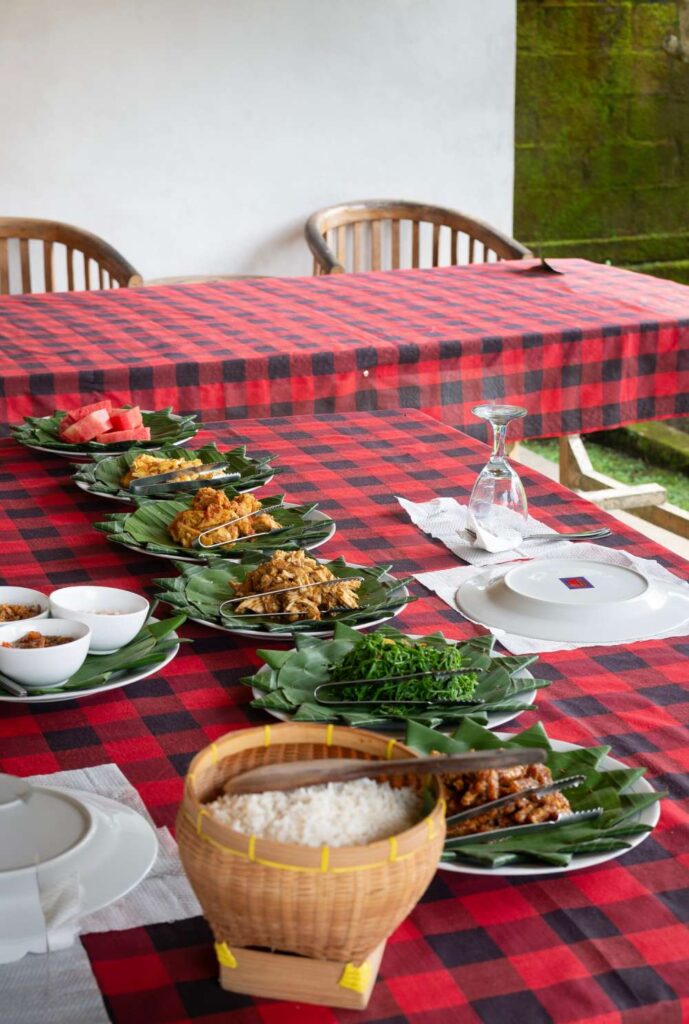
Keliki, also a village north of Ubud, is better known for its art, with the distinct ‘miniature paintings’ being the signature Keliki style. Jero Ida, on top of being a priest, botanist and guide, is also a Keliki painter and he invites us back to his home and painting studio. Here in his humble backyard, transformed into a beautiful garden farm, his wife Ibu Ayu serves a delicious spread of traditional Balinese dishes, cooked with vegetables she had picked that morning from their garden. Over hot food and hot coffee, we talk and discuss Keliki, painting, life as a priest, changes in Bali – and close the day feeling blessed not only through the melukat, but by new knowledge and genuine connection.
Some may cringe at the thought of taking a tour – including myself, as a resident in Bali for over a decade – but Jero Ida’s personal approach made it feel like spending the day with a knowledgeable friend. A day I would surely repeat again.
If you’re interested in joining a guided melukat experience at Sebatu (Pesiraman Dalem Pingit), or are enticed by going on an insightful nature walk around Keliki, consider doing so with Jero Ida,
through: balinaturetreks.weebly.com