


A blindfolded “fractured” skull is engulfed in flames, with both halves distinguished by text. ‘This Is All I Know’ is a confession of frustration and hopelessness in a vibrant pop-meets-street-art style. Painted by Balinese-German artist Gede Austana, it is an emotional response to the racial discrimination he often endures, and was a highlight of the 2024 exhibition Stigma Vol.3, by the newly established art activism collective, Stigma Bali.
In September 2025, Austana presented ‘Kembali Pulang – Homecoming,’ his premiere Indonesian solo exhibition in Bali, in which he exhibited over 50 small and large-scale works on canvas, paper, and skateboard decks. It was a celebration of his homecoming in 2022, with diverse narratives that described the alienation and confusion of his mixed heritage. Initially raised in Bali, he was abruptly uprooted from his culture as an infant to live in Australia for four decades before his eventual return to his island home.
Gede Austana was born in 1976. He was removed to Australia in the 1980s, and his life took many turns, shaping an unconventional story of survival. Detached from Bali for so long, his knowledge of culture, ceremony, prayer, and mantra was lost. Beginning his art studies at an early age, he learned many styles and techniques over decades. He is now emerging into the fine and visual arts world after a long career as a commercial creative, designer and image maker, with works exhibited in Australia, Indonesia and the US.
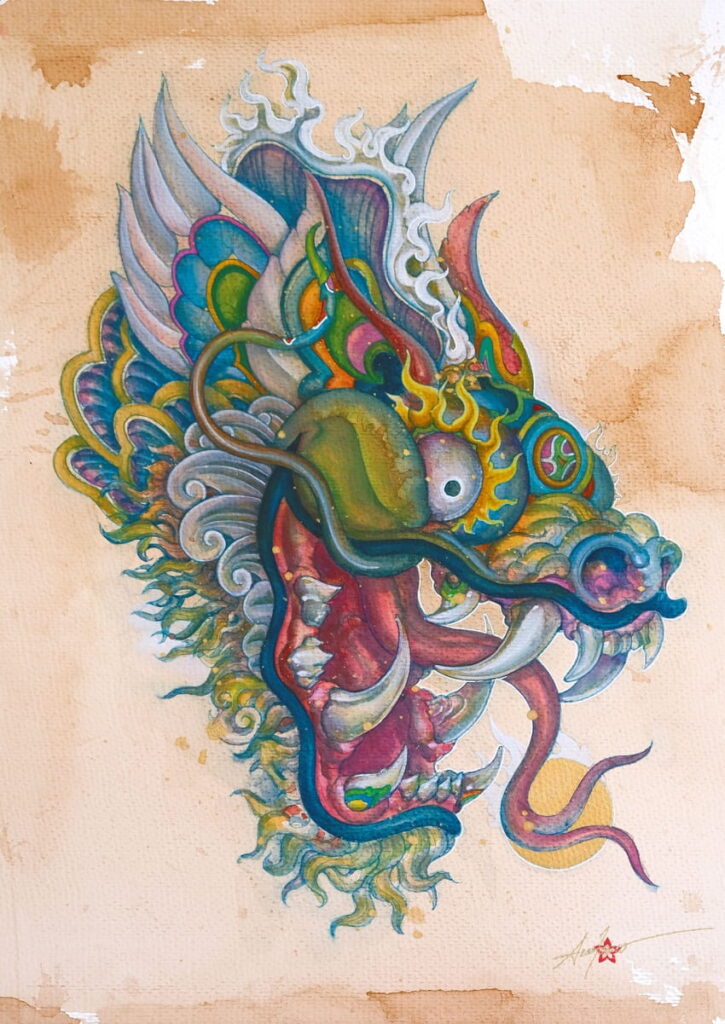
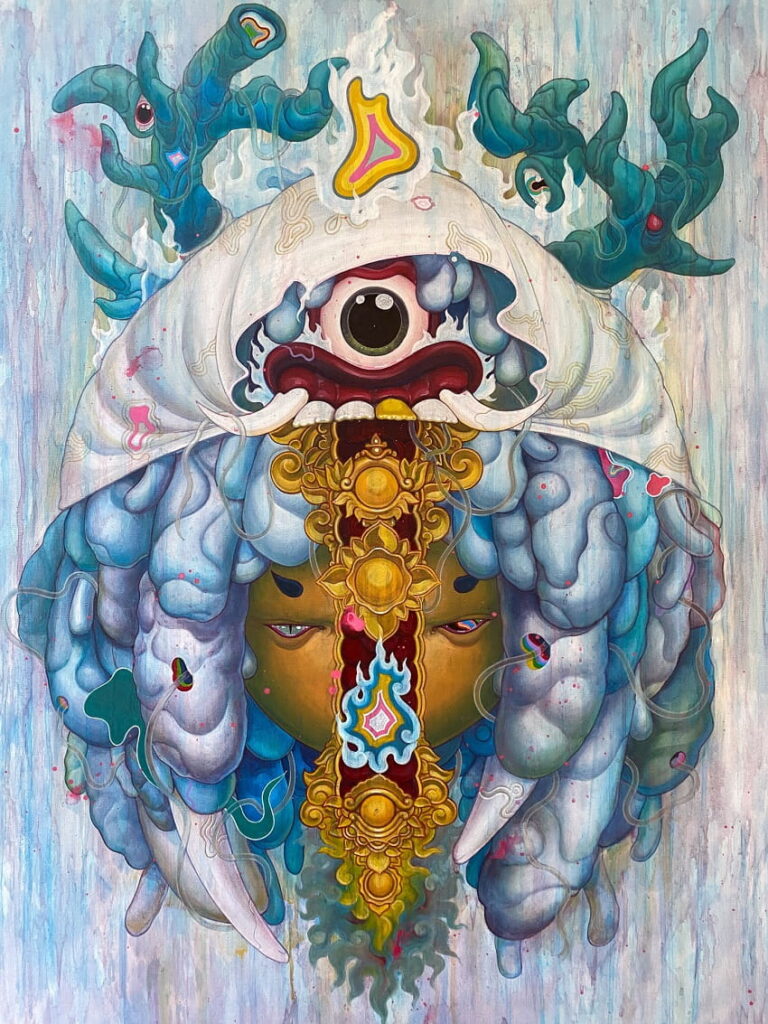
Gede Austana’s Artistic Adaptation
The work of Gede Austana is categorised by a dynamic cross-cultural fusion of styles. As an avid student of the traditional Batuan Style, he merges old Balinese techniques with his refined modern skills founded in graffiti, pop art, surrealism, digital and comic art. Energised by a potent colour, his paintings are among some of the most exciting recent contributions to the ever-evolving sphere of Balinese contemporary art.
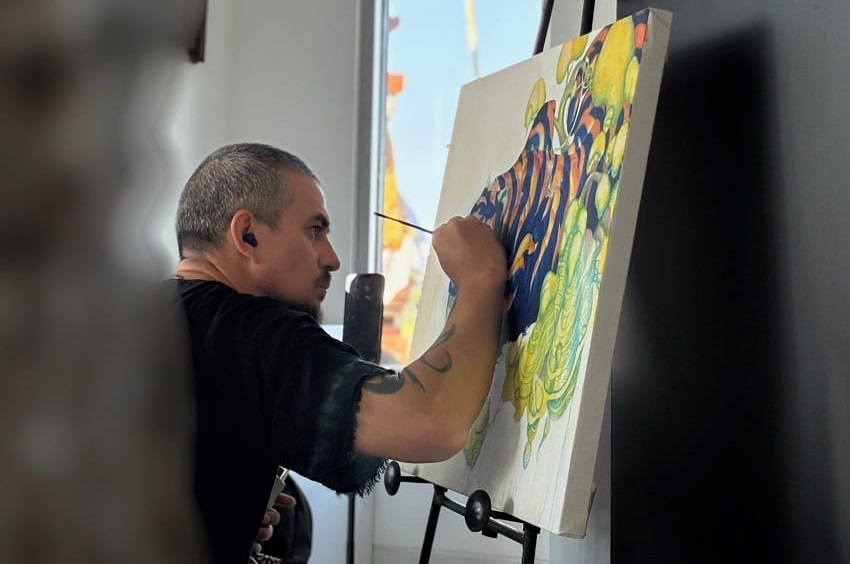
‘Natural Mystic’, Austana’s most recent solo exhibition, opened 24 June and closed 14 July 2026 at the Kalpataru Art Space, Sanur Art Hub, Bali. He presented the second installation of his ‘Tea Series,’ a collection of Chinese ink and watercolour paintings on tea-stained paper along with one acrylic painting on canvas. During the exhibition period, he hosted live painting sessions, allowing visitors to witness his creative process and interact with the artist.
The ‘Tea Series’ first emerged in Sydney during the 2020-2022 lockdown, signifying a pivotal conceptual shift in Austana’s art. Faced with limited resources, he crafted tea-stained paper and challenged himself to revive sketches and ideas once considered futile.
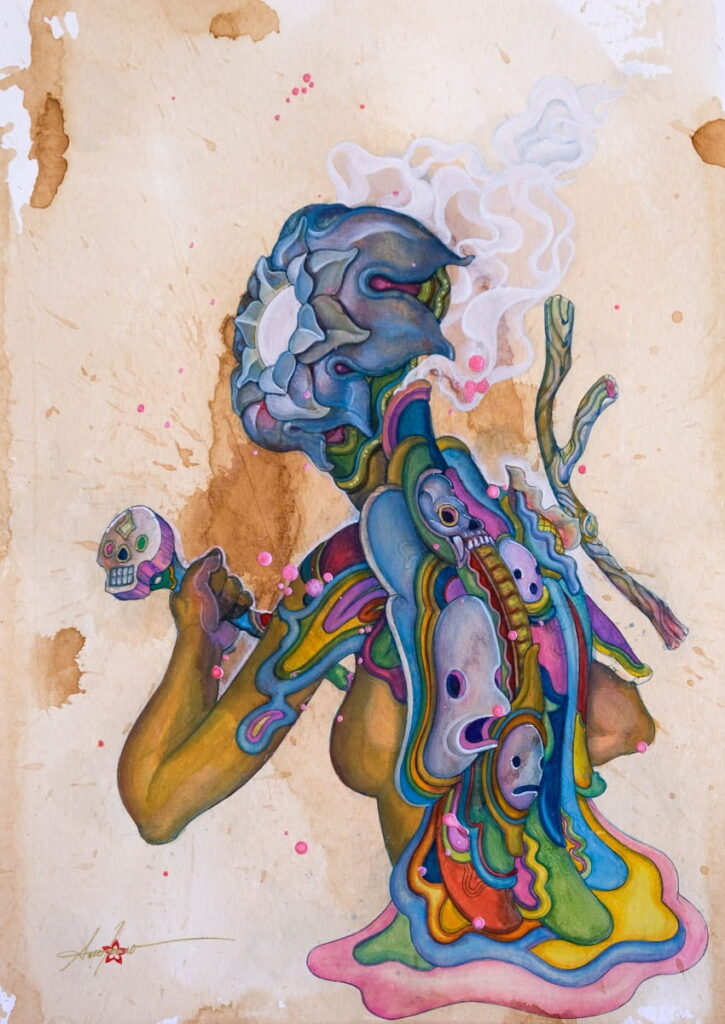
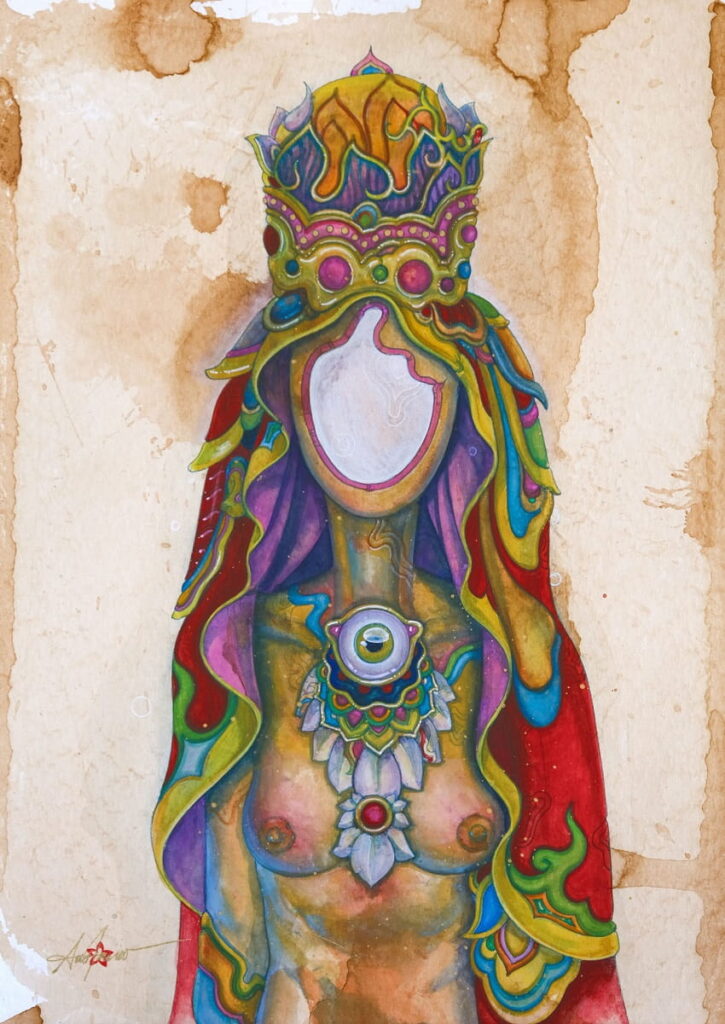
Austana’s personal narrative reads like a gripping novel where dualistic forces fuel turbulent episodes and encounters with personal demons are rife. Spirit prevails, overcoming the darker angels of the human psyche. Layered fantastic figurative compositions merge an array of ideas: personal, social and global issues, as well as diasporic conflicts of home, family, community, and culture. The triumph of human resilience and fortitude over adversity provides powerful thematic inspiration and creative drive for his compelling art.
“The original series of 15 ink and watercolour works reflects the random and uncertain atmosphere of the time and the fragility of my existence,” Austana states in the exhibition catalogue.
Small format works do, in rare instances, speak louder than large-scale works – depending on the artist’s ability. Watercolour is an unforgiving and potentially unruly medium, offering the artist zero margin for error. The medium’s subtlety and sensitivity translate a unique beauty onto paper, gifting the artist with arguably the most lauded artistic expression of all. Human emotions fire burning desire, transmuting ideas and energy into works with a detectable, almost tangible force. Austana’s compositions remain as fresh and lively as the day they were conceived. His recipe is cooking – the outcome is WOW.
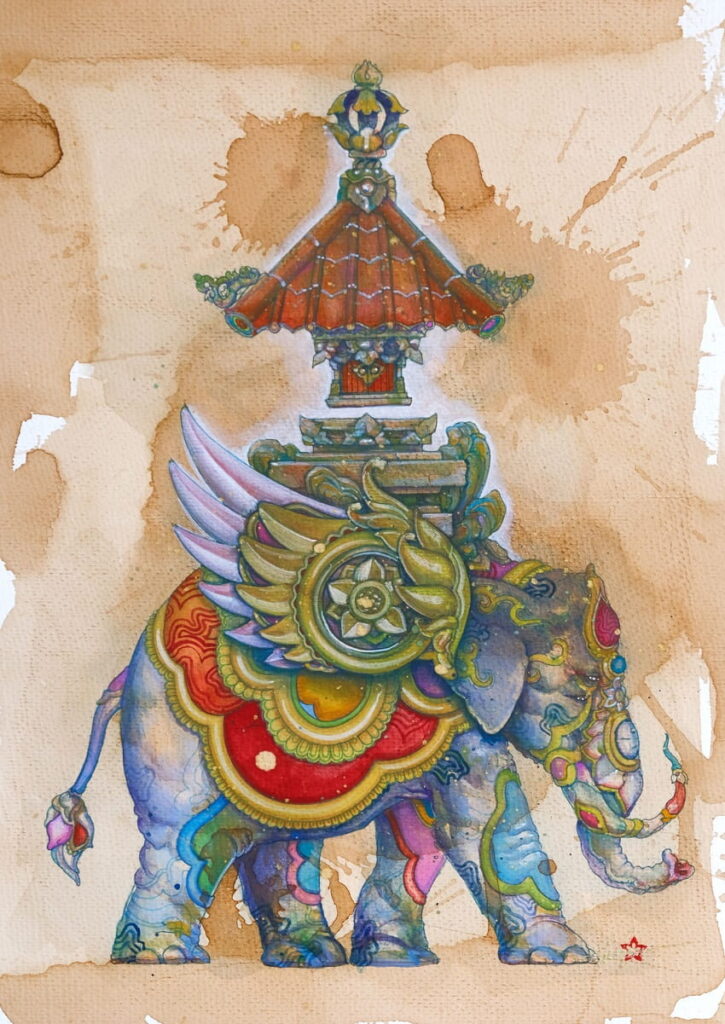
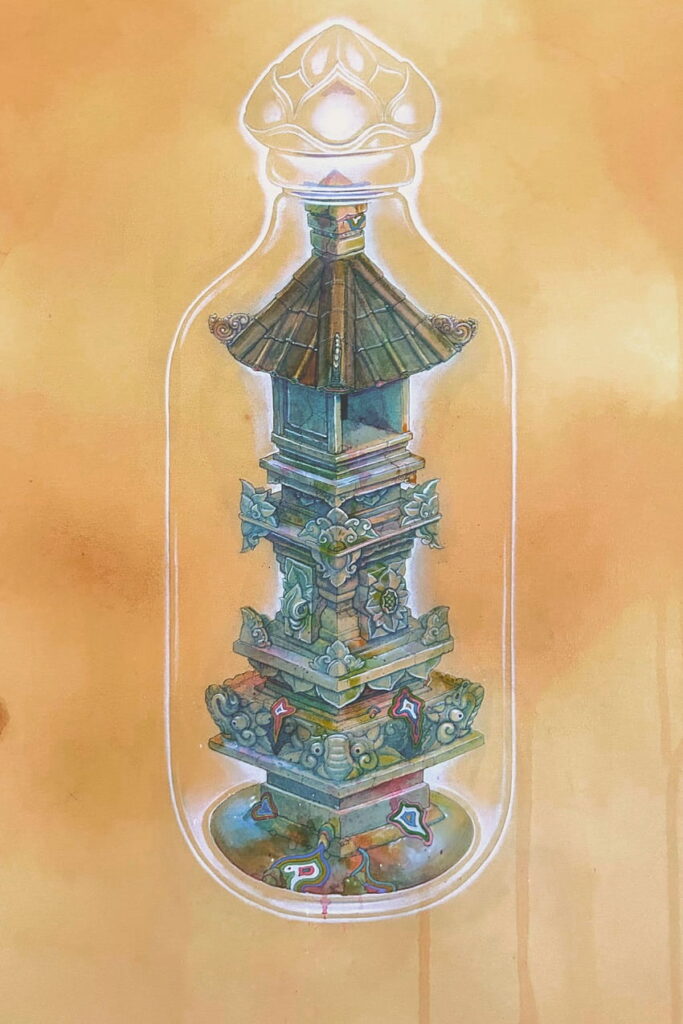
The technical process begins with random patterns of the tea, distinct from piece to piece, forming the compositional backdrops. Fine ink lines create form and structure with the power to stand alone in their presence and poetic allure. Watercolour layers are then applied. Visual tension is added by reducing his palette to minimal contrasting colours or by carefully positioning juxtaposing hues to heighten the aesthetic drama. A key to his process is remaining present, accepting the unexpected. This, however, is gifted through dedication and years of persistence.
“I give my art as offering to the ancestors, a mantra for further blessings and to atone for the errors of my past.”
Shimmering gilded fields, gold is the colour of the divine. Faint milky washes, transparent, some drift like ambient, atmospheric incense smoke. The works resonate with an aura that merges the Balinese worlds of the sekala and niskala (the visible & invisible), inviting the audience into vibrant contemplative mindscapes that float in time and space, restrained by a layer of glass in a snapshot of universal creation.
“Imagination is the bridge through which we can perceive and participate in the more-than-human world.” – Gabriela Gutierrez.
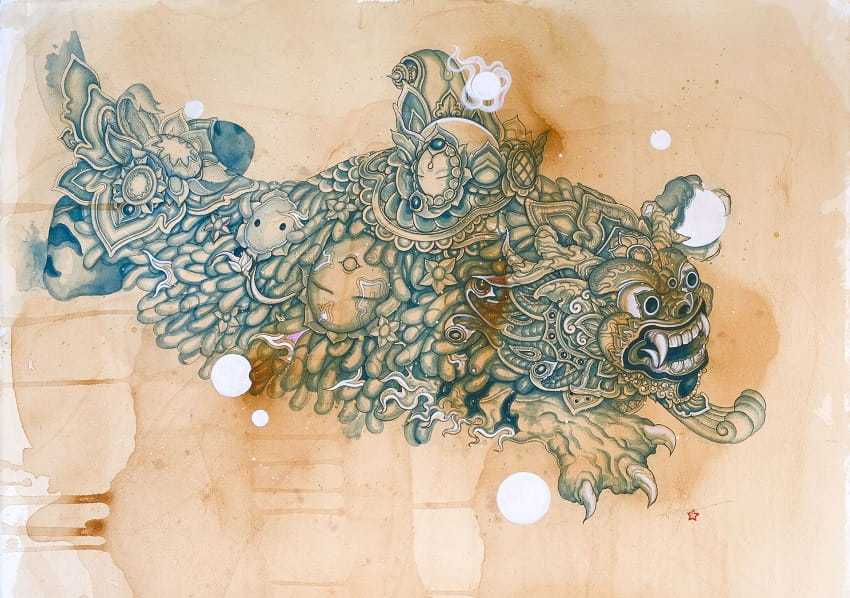
“Every exhibition has been a huge learning experience. This was no exception, greeting the people who came to the opening, watching them interact with the works and having many conversations,” Gede Austana told NOW!Bali magazine. “Today is the last day of the exhibition, so I came to begin removing the works. Instead, I sat for a few hours, sharing some arak and talking with well-known Sanur artist activist and Kala Kalpataru Art Space founder, Wayan Apel Hendrawan about art and what it means to be an artist in Bali.”
“Over the last year, I have been blessed to meet and get to know some truly amazing artists and human beings. I am starting to feel a community of artists around me and a growing acceptance for my practice. For someone who has spent most of their life removed from my home, this acceptance is impactful, greater than most could imagine.”
“I don’t know what the future will bring, but I see possibilities on the horizon.”
Follow the artist on Instagram: @iamgede