


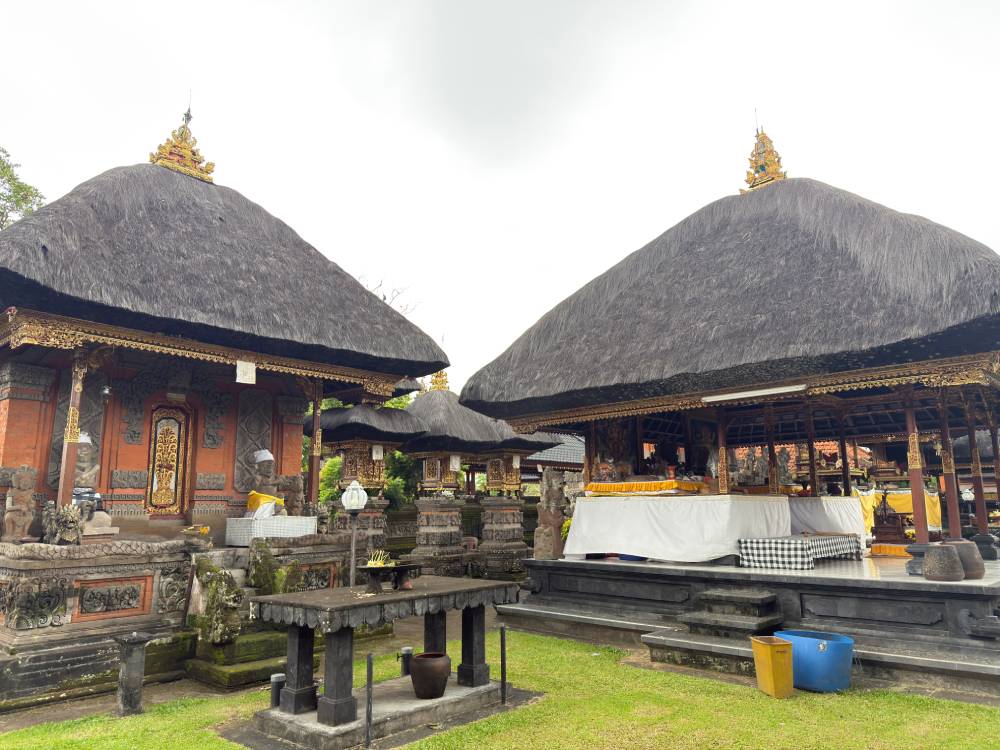
Bali is known for its temples, so many to the extent where the island is known as The Island of a Thousand Temples. Among them are the Kahyangan Tiga temples, which exist in every desa adat (customary village) in Bali. The concept of Kahyangan Tiga emerged from the idea that every customary village should have three principal temples serving as the centre of religious activity and to worship the Trimurti.
The term Kahyangan Tiga literally means “three sacred places”. This is comprised of a Pura Desa (Village Temple), dedicated to the worship of Dewa Brahma in His function as the creator of the universe; a Pura Puseh (Central Temple), dedicated to Dewa Wisnu in His function as the preserver; and Pura Dalem (‘Death Temple’), the dedicated to Dewa Siwa in His function as the dissolver of the universe, often alongside his consort, Goddess Durga.
As an element of parahyangan within the philosophy of Tri Hita Karana, the placement of Kahyangan Tiga is traditionally arranged with the Pura Desa built at the centre of a village, the Pura Puseh located towards the northern part of the village – or technically kaja, the mountainward direction – whilst the Pura Dalem is typically situated towards the south or south-west, symbolically facing the sea (kelod) and often near the cemetery (setra or sema). Kahyangan Tiga may consist of three separate temples, however, in some villages, Pura Desa and Pura Puseh are combined into a single complex, while the Pura Dalem always remains separate.
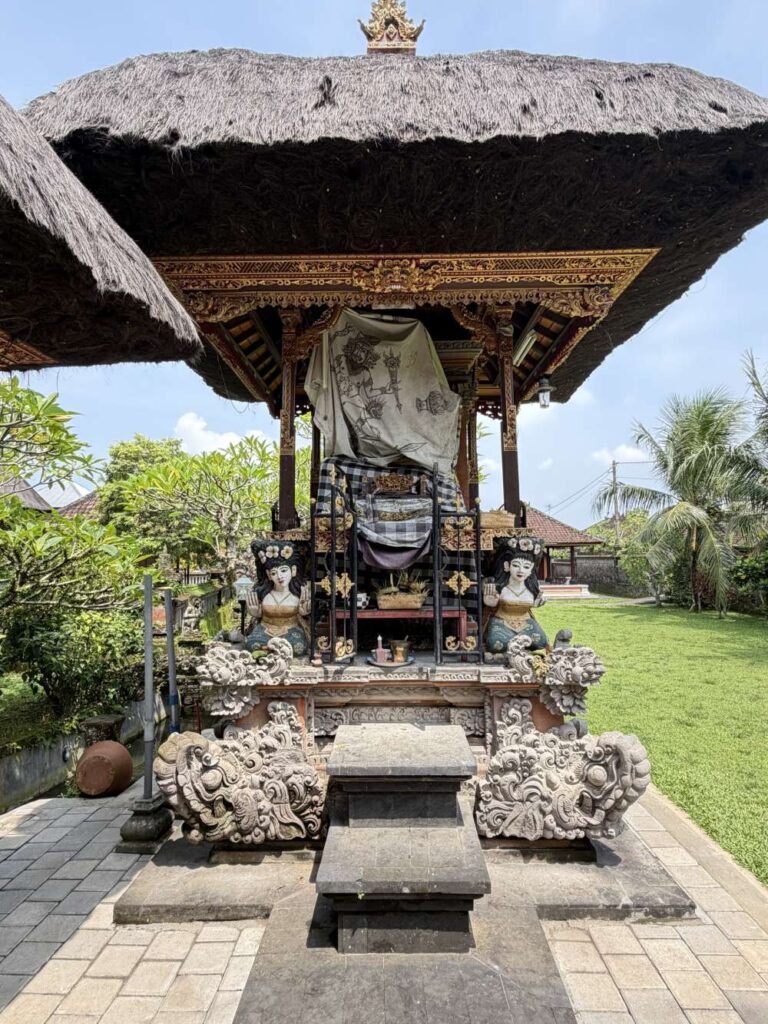
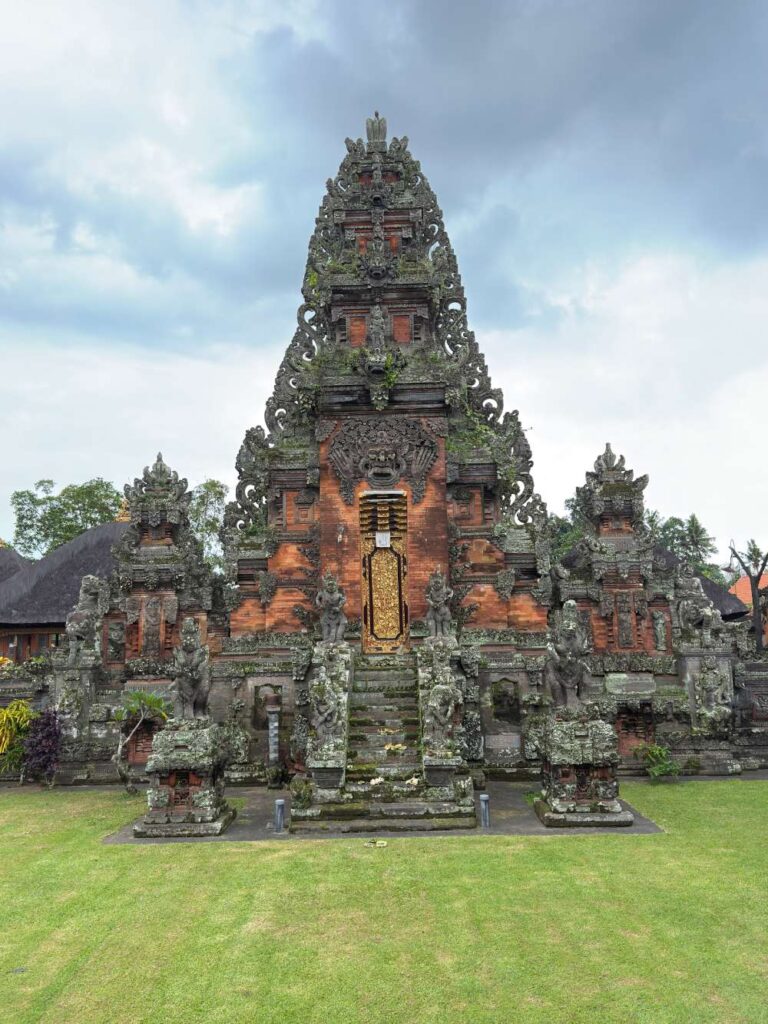
The concept of Kahyangan Tiga emerged during the reign of King Udayana Warmadewa and his consort, Queen Gunapriya Dharmapatni (also known as Mahendradatta). Prior to this, during the Ancient Bali Era — that is, the period before the arrival of the Majapahit Empire — the island’s population was divided into nine sects, each with its own istadewata, or principal deity. The King and Queen perceived this as a potential source of conflict and instability among their people and therefore proactively sought to bridge these divisions.
Later, King Udayana appointed Mpu Kuturan to organise a religious assembly of spiritual leaders in Bali. The gathering was held at Pura Gunung Goak, later known as Pura Samuan Tiga. The outcome of this assembly was a resolution that every customary village should establish the Kahyangan Tiga as sacred spaces dedicated to the worship of the Trimurti, i.e. the three principle deities Brahma, Wisnu and Siwa, as manifestations of Ida Sang Hyang Widhi Wasa (the Almighty God).
Through Mpu Kuturan’s approach, thoughts and efforts, the various sects were successfully unified and it is a unity that continues to this day. This is evident in the continued existence and function of Kahyan gan Tiga in every customary village across Bali.