


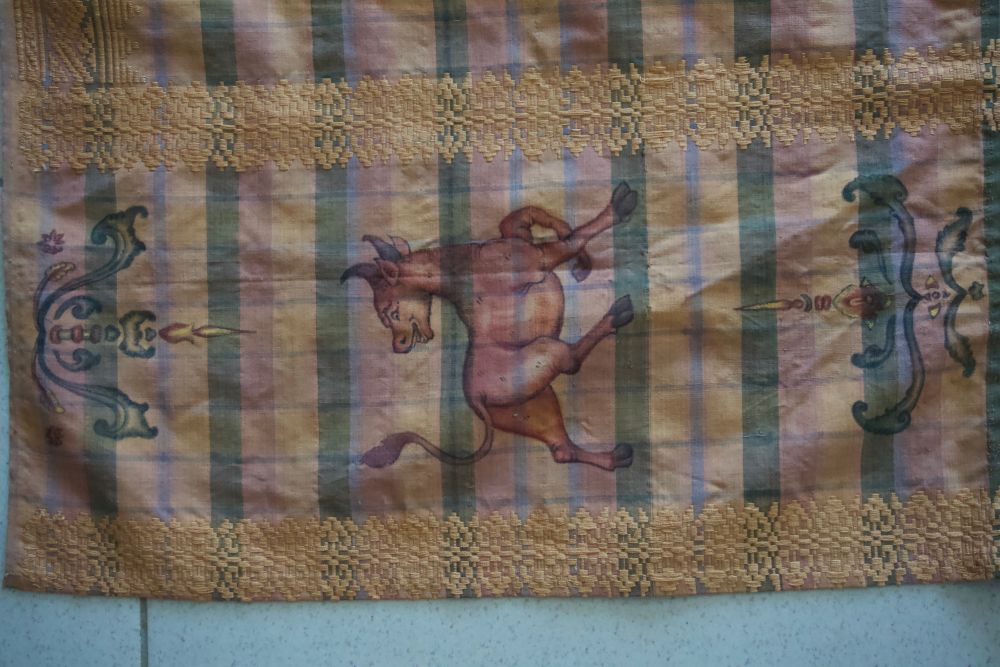
Ida Ayu Ngurah Puriani had just graduated from university, with a bachelors in education, when she found herself exploring villages in Karangasem on her Honda Supra. She was on a mission to find woven cloth.
At that time, the young Ida Ayu did not know what bebali textiles were. Three foreigners had asked her about it and she couldn’t answer them. “I had to ask around from house-to-house, weavers-to-weavers, learning from one lontar manuscript to another.” She eventually understood that these were the cloth used in Bali’s life cycle ceremonies, Bebali was just one of its names.
Ida Ayu is a joyful soul. She takes risks, she makes time, she learns relentlessly, but she makes sure that she always has some fun in the things she does. “I had a lot of time in the world before I became a full-time teacher”, she reminisces on her early days exploring textiles. Growing up in Sidemen, Ida Ayu’s first encounter with tenun weaving was in her elementary days by nyaluk-nyalukin. “My first piece of clothing is a plain belt that I wove when I was 9. It was my mother who taught me how to weave on a cag-cag loom.”
Weaving has always been a part of her life, but it never crossed her mind to be a weaver. So, she took the chance to study in Singaraja to be a teacher on religion. Upon her return to Sidemen, Ida Ayu started working part-time at a school when an opportunity to assist bebali researchers fell upon her. The chance arrived quietly, almost as if it had been waiting for her all along. What began as a curiosity turned into a calling. Her contribution plays a role in a pivotal book on the subject, ‘Textiles of Bali’, written by Urs Ramseryers, Brigitta Huaser-Schaublin and Marie-Lousise Nabholz-Kartaschoff.
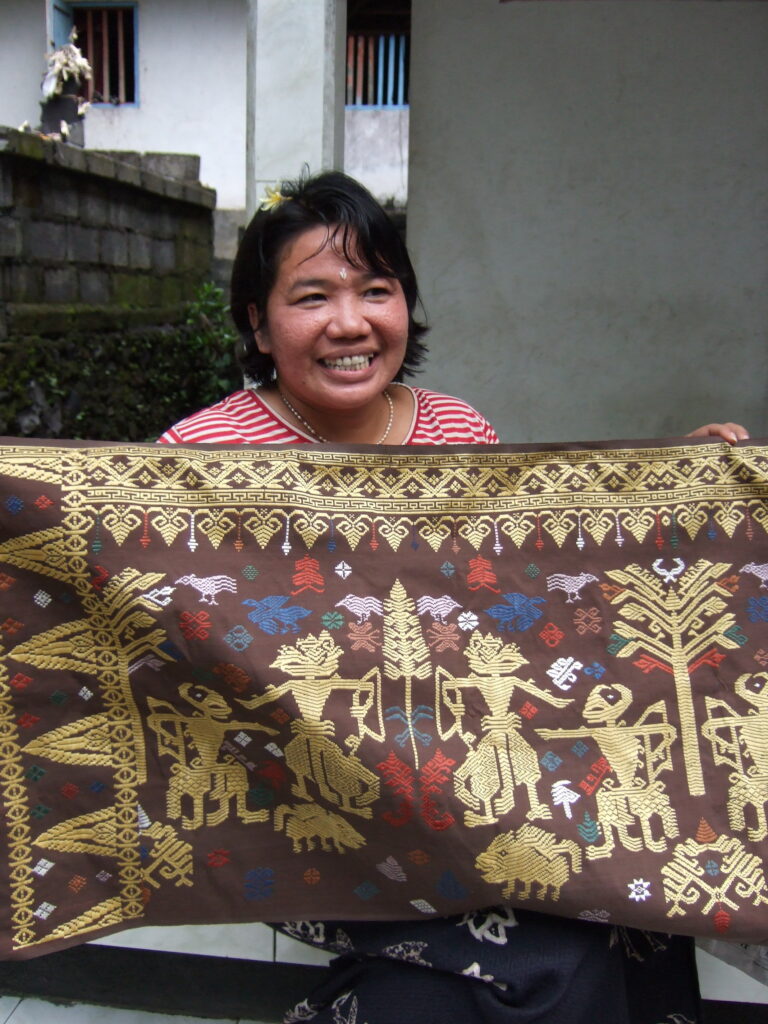
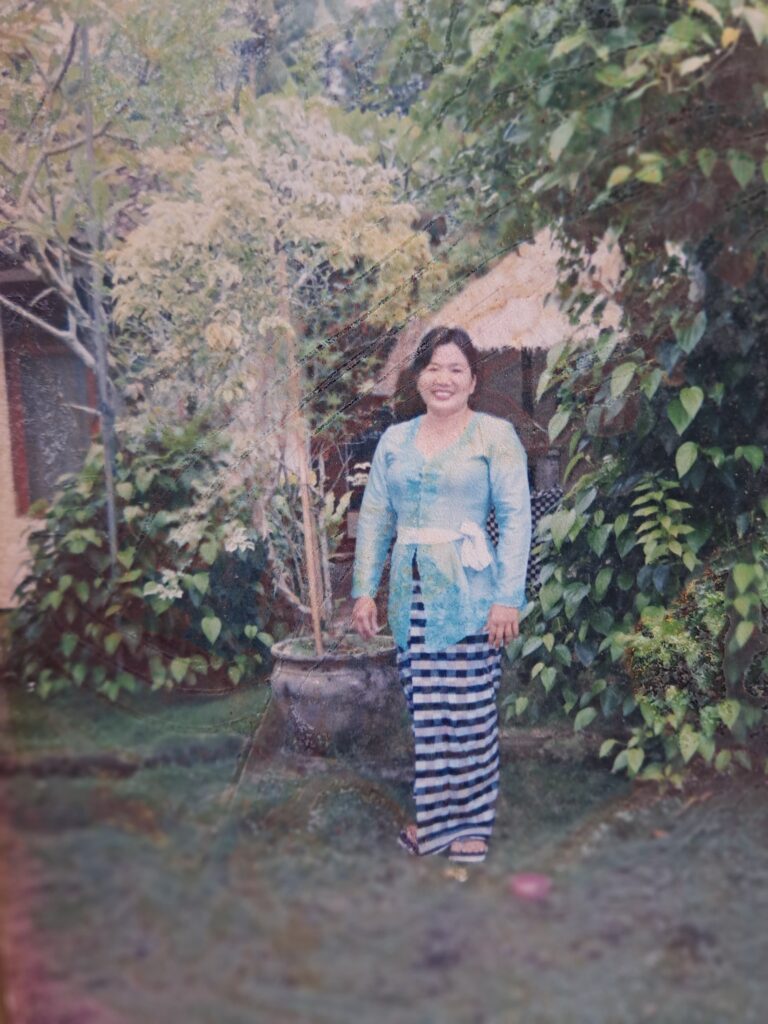
As she continued her search, she began to understand that learning about woven cloth meant learning about everything surrounding them; the rituals, the understandings, and eventually, the materials themselves; including the plants used to dye the threads. Her curiosity for dyes led her away from the loom, enticing her to explore jungles, riversides and coastlines in search of nature’s own colours.
To her, these exploratory trips never felt like work. She always described them as a kind of melali—a small, meaningful escape. n“My students loved it too. They would ask me about a field trip, so I would book a bemo van and go for a melali with them. Once we gathered enough plants, we went back to school and experimented with what we found.”
As her knowledge grew, so did her sense of responsibility. She began to notice that fewer young people were interested in weaving as hospitality work was seen as something more promising. So while she was teaching religion at school, she found ways to bring weaving back into the lives of younger generations through extracurricular activities. She opened that option to become weavers themselves, or at least have knowledge of their traditional artistic roots.
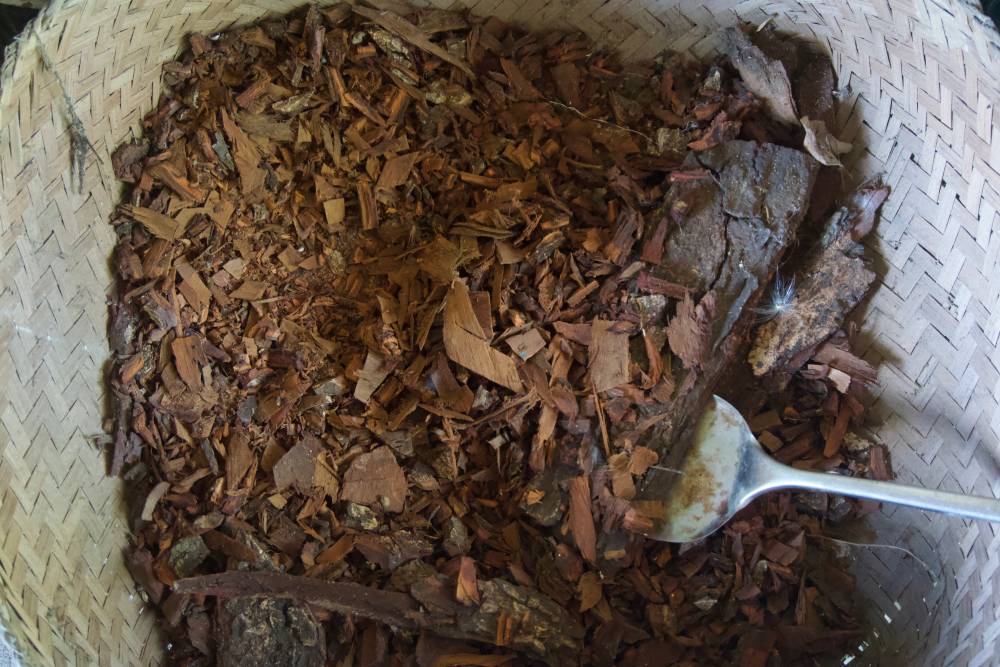
At the same time, Ida Ayu continued to deepen her work outside of school. She began collaborating with local weavers, bridging together natural dyes and Sidemen’s lifelong expertise in weaving. Around this time, she met a painter from Sukawati, Ida Bagus Made Adnyana, who became her husband. After she got married, she opened up a studio called Tuhu Batu in Batuan, Sukawati, where she moved her natural dye “kitchen” all the way from Sidemen. The wood stove and wooden racks with woven baskets full of secang wood, morinda roots, and other dye plants.
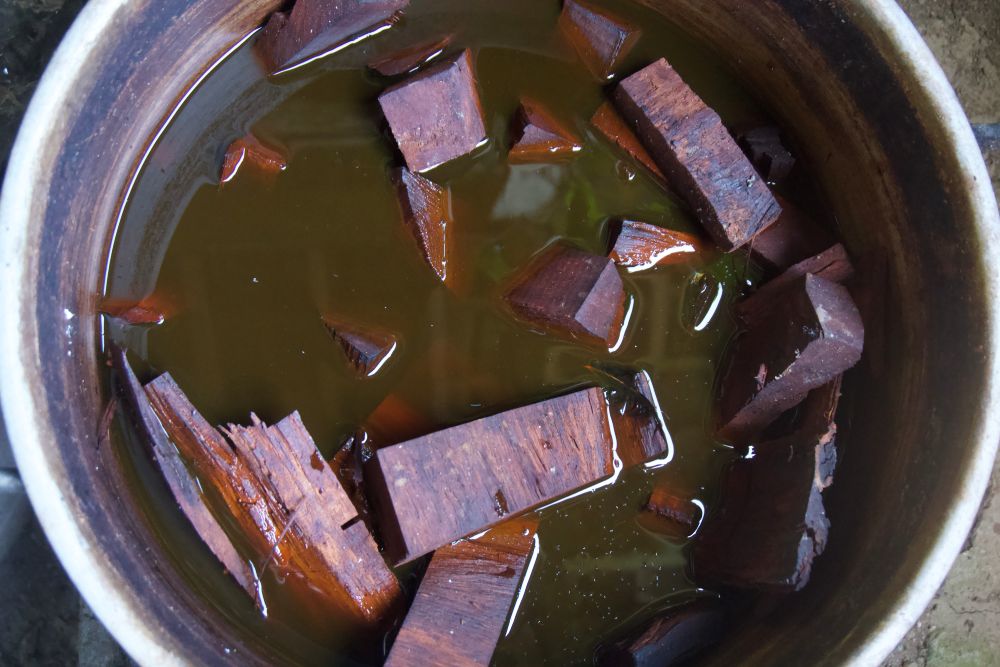
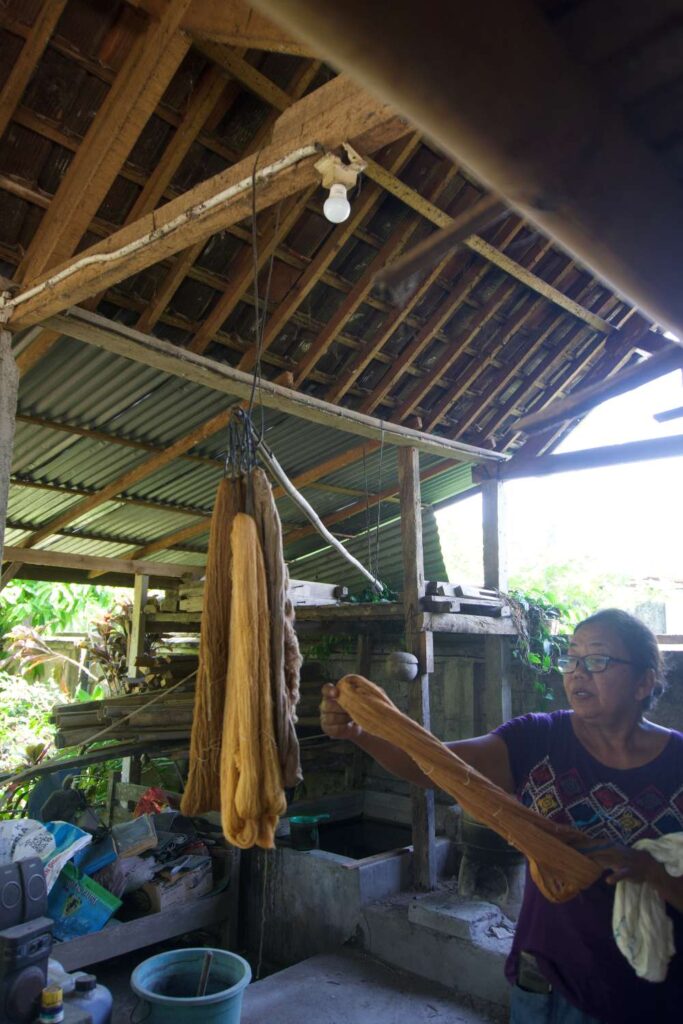
Meanwhile, her study on textiles and natural dyes continued, resulting in a book, The Meaning and Use of Bebali Textiles in Bali Hindu Ceremonies.I asked her how she managed juggling her role as an educator, a researcher, a writer, and a business owner. “As you dig deeper, you learn more, and you are keen to share more. Through this, I wrote what people and the earth had taught me. The books that I wrote is a part of ngayah”, said Bu Dayu, explaining that it ngayah is one’s service beyond oneself, be it the community, ancestors, or God.
“Why is it ngayah?”, I asked.
“Because as Bali is changing… fields are becoming hotels, getting plants like wild tarum indigo is becoming more difficult. So, writing about how a piece of cloth actually connects us to where we live, how we live our lives as Balinese, I consider this part of my service.”
In many ways, Ida Ayu’s journey came full circle. What began as a search for understanding had grown into a life dedicated to learning, sharing, and sustaining. Whether she was cruising on her motorbike through villages, foraging by the beach, or teaching students after school, she carried the same spirit with her for more than 30 years. Her journey brought her connections with people who share the same love as her, such as other weaving initiatives, art galleries, and artists like Cok Sawitri and Tjok Istri Ratna Cora.
Through it all, she never lost her sense of melali. Even in the busiest moments, she found ways to pause and enjoy. Because for her, it was a way of learning and exploring.
“What’s your best finding so far?”, my curiosity kicked in.
She smiled. “Friends. The people with whom I can share my love and curiosity.”
FOOT NOTES:
Nyaluk-nyalukin: coba-coba/trial and error?
Cag-cag: a backstrap loom
Melali: an escape, literally means “to forget”
Ngayah: a communal service offered to the community or temple.