


What social mechanisms are in place that ensure the constant regeneration of Balinese culture and tradition through the generations? And what changes and challenges await do these face in Bali’s changing world?
It is easy to be in awe of the living culture here in Bali. It is vivid and dynamic, but more than anything it is quite tangible and visible, it seeps into the smallest aspects of everyday life.
Whilst we bask in the culture taking place around us, appreciation is perhaps better directed towards the ability for this culture to be passed down from generation to generation. This is no small feat, and indeed is surely a weight of responsibility that each following generation must shoulder, as they scramble to learn from their predecessors and simultaneously ensure that they are passing this knowledge down to their successors.
Understanding the complexities of Balinese culture might help to give context to the gravity of this task.
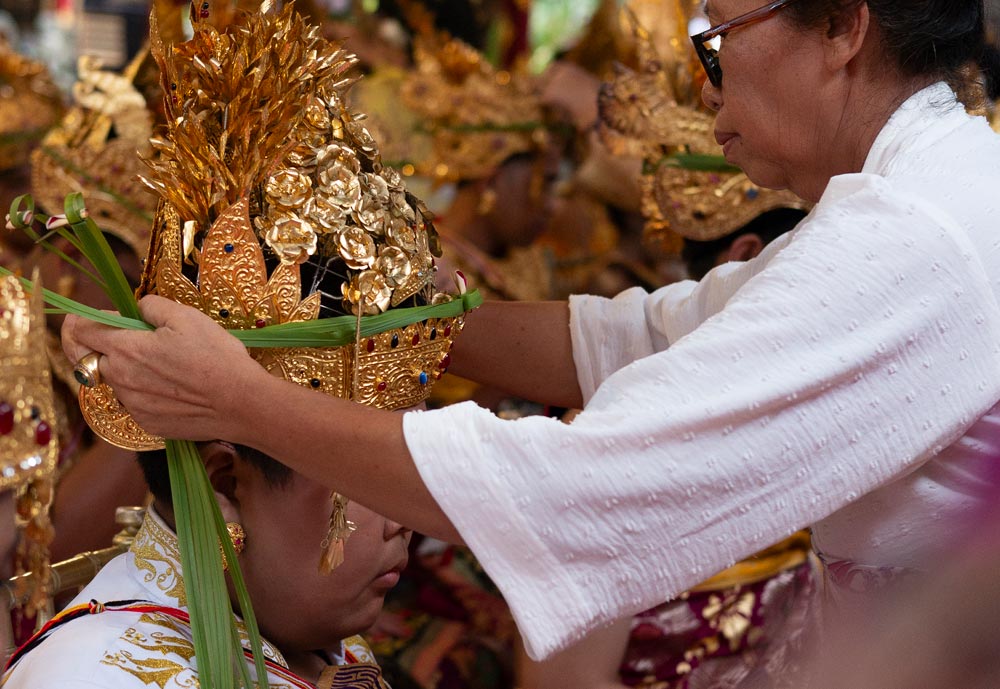
Even before a baby has left its mother’s womb, it has been subject to ceremony. This sparks the beginning of a life filled with ceremony, and not just those concerning oneself, those of the manusa yadnya rites of passage, but also those concerning one’s community and environment, the ancestors and gods, both the seen and the unseen worlds, sekala and niskala.
Each of these ceremonies will have its own requirements: what offerings are required on the day? Where must the holy water be collected from prior to the day? Even selecting the date requires knowledge of the pawukon calendar. The list goes on.

These are only the ritual aspects of Balinese culture: dance, music, art and crafts and food are also integral components. Odalan ceremonies must have their rejang dances, the great bade cremation towers must be built, the pork satays prepared as offering to the gods, the priests’ genta bells expertly smithed, the rerajahan ink drawings placed atop beds and bodies, penjor bamboopoles decorated and erected come Galungan. A whole network of skills and industries dedicated to ritual must be kept alive.
As such, ensuring the constant regeneration of traditional arts and crafts is not simply a cultural indulgence, nor a creative endeavour, but rather a religious necessity as important as the prayers and offerings themselves.
So, the question is, how has this immense culture so successfully perpetuated through the generations? What are the social mechanisms that ensure each next generation of Balinese are learning the necessities of their culture – and are these strong enough to bolster against the modern evolutions of life on the island?
The Lived Experience


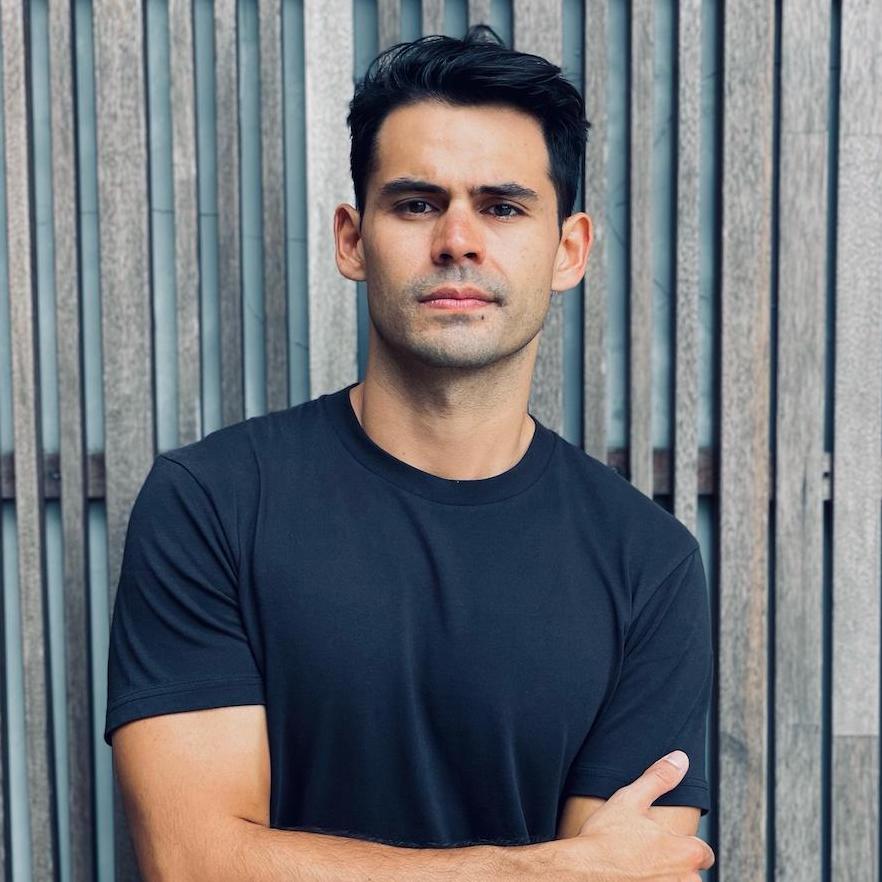
“When I was little, my father would bring me along to all the traditional activities and ceremonial preparations. I would be so bored, and wonder why am I even here?” Reminisces Kadek Suprapta Meranggi (Deck Sotto), one of Sanur’s renowned kite makers, a role through which he has become somewhat of a cultural mentor to young Balinese.
“As an adult, where I have to partake in and manage these cultural responsibilities myself, only now do I appreciate him exposing me to everything, as I have an understanding their function.”
Without a doubt, young Balinese will learn a lot via ‘osmosis’ with their environment, being present and simply absorbing what their elders are doing, just like Deck Sotto. For many generations there has been a culture of simply ‘doing’ without needing to fully understand, to repeat the actions of one’s mother or father, and ensure these actions are continued in their absence. Removing the need to convince every generation ‘why’ has helped to simplify the adoption of necessary practices – it simply needs to be done! And more often than not, it is.
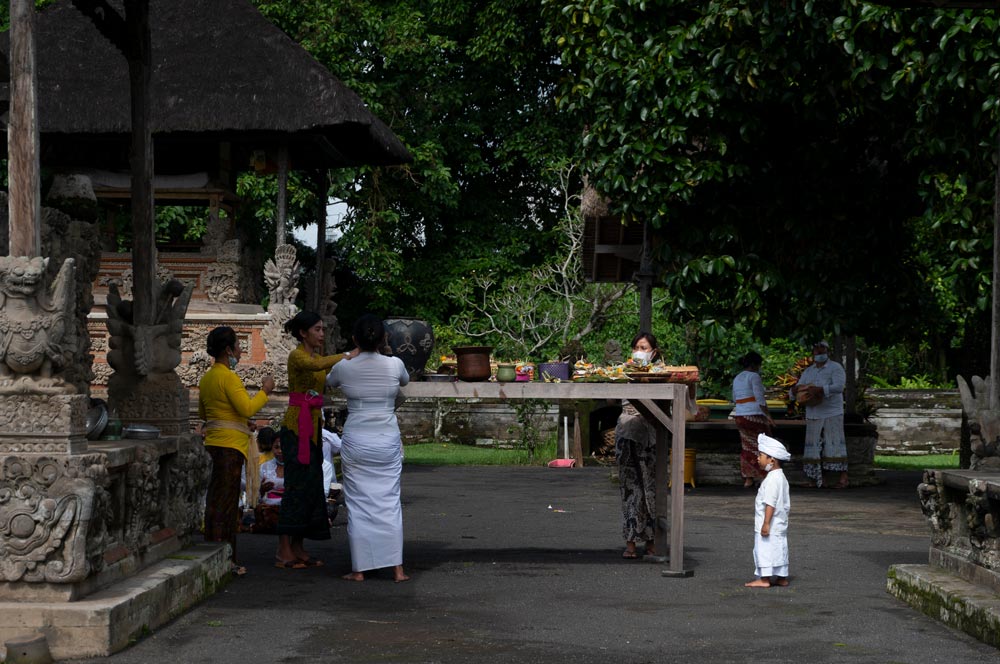
Whilst tourists come to Bali and join a canang sari (Balinese offering) workshop, no such thing exists outside of the visitor experience. The Balinese learn by doing, and being disconnected to these formative experiences can leave one somewhat in limbo. The family of a Balinese friend lived abroad for almost a decade, and upon returning to the island noticed how foreign ceremonial life was to them. Balinese weddings and cremations became daunting and disorienting processes; having not been to any for so long, the minor details were lost to them. Luckily, ceremonies require the assistance of many people, and as always, Bali’s ingrained communal nature helped to ease these processes through.
The Banjar
“The banjar operates like an extended family. The nature of some ceremonies in Bali means they are impossible to be done only by your immediate family, you often need the banjar to help you,” explains Deck Sotto, who often speaks out in protection of Balinese customs and traditions.
The banjar is the neighbourhood community and every Balinese family will be a part of one, and often extended families will be part of the same banjar too. It is the central hub through which group activities and decisions are organised and made, from dealing with local disagreements to preparing for ceremonies. As such, this central community is also where young Balinese will develop some of their cultural understandings and practices.
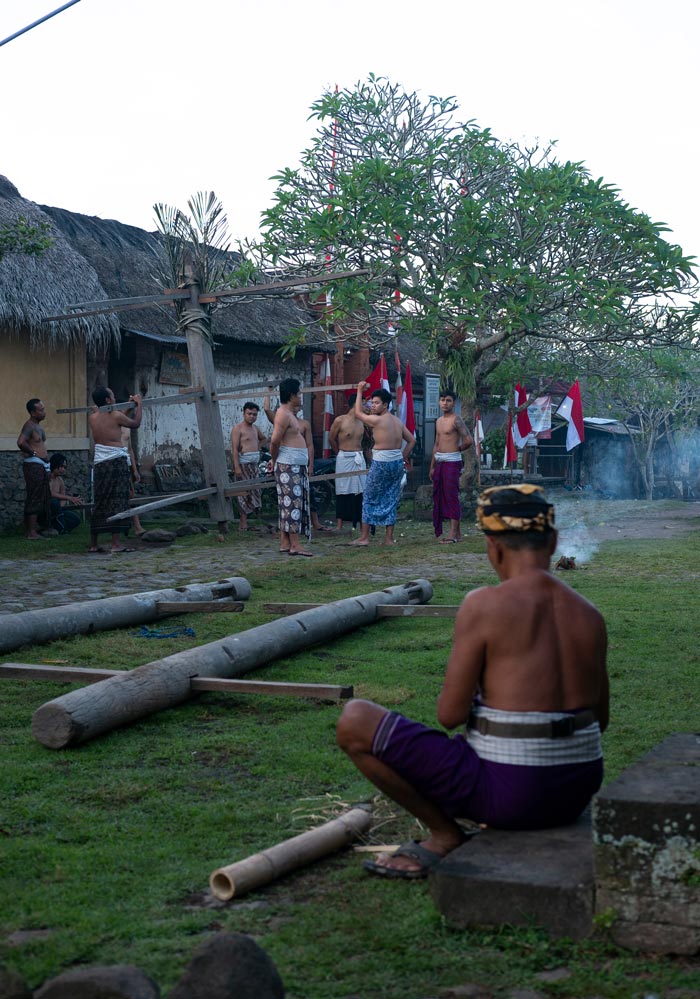

The banjar operates on a culture of gotong royong, or mutual assistance, with the entire community volunteering their time for banjar-related events, including group ceremonies. These can be preparing the variety of offerings, normally done by the women’s group (pembinaan kesejahteraan keluarga, or PKK); as for the men, weaving palm leaves into kelangsah sheets for the temple or communally preparing the ceremonial food (mabat). Everyone has their part to play when it comes to group ceremonies, like a melasti cleansingor a temple’s odalan. The next generation must be prepared to take on this task.
This is done through the banjar’s official youth group, known as the seke teruna teruni (STT). Children to young adults will be part of the STT, through which they join necessary cultural activities like gamelan orchestra rehearsals and Balinese dance lessons, both of which are necessary during ceremonies. “Minimum, the girls must know how to dance the rejang. At least!” Kadek adds.
The STT is the hub for other youth activities, like kite-making, a traditional past-time in Bali with banjar-level regional competitions taking place annually. The creation of the famous ogoh-ogoh demon effigies is another product of the youth group, where the members must not only research the best character for their effigy (rooted in Hindu scripture or Balinese mythology), but then design, build and finally parade it on the eve of Nyepi, Bali’s Day of Silence, with everyone involved, from the gamelan players, to the ogoh-ogoh bearers.
Whilst the kite competitions and ogoh-ogoh parades are a more modern introduction, they have become successful tools in keeping certain traditions alive, and keeping young Balinese excited to partake. The same goes for the annual Bali Arts Festival, in which troupes will compete in the name of their local banjar or sanggar (art group). These competitions also allow young Balinese to evolve each art form, keeping it fresh and relevant for their generation.
“The banjar is actually the pillar of culture in Bali,” says Deck Sotto “I believe that if the banjar is gone, Bali would no longer exist in the way it has always existed.”
Legacies and Obligations
Perhaps the most rudimentary method of all cultural transmission is the passing on of legacies from parent to child, especially in the case of traditional artisans (sangging), evident through the village-specific industries found across Bali. The silver smiths of Celuk, the traditional Kamasan painters in Klungkung, the wood carvers of Mas to the gong makers of Tihingan village, to name a few. These industries have continued for generations, thanks mostly to this direct handing down of skills, tools and knowledge.

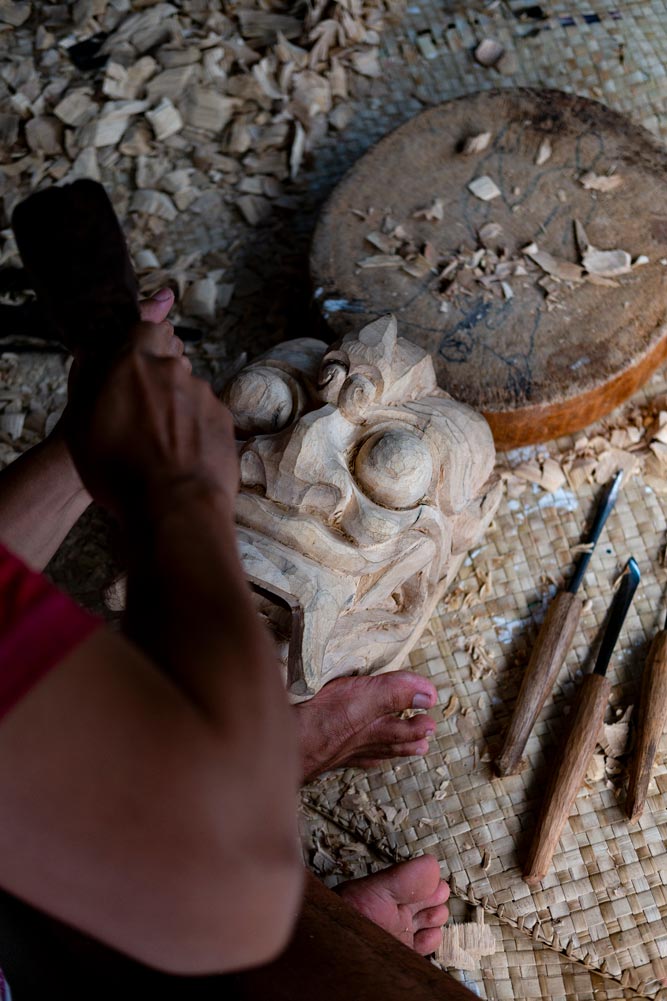
The same goes for specific schools of painting, such as Ubud, Keliki and Batuan. These too are village-specific, where a son may have grown up surrounded by art, watching and learning from not only their father and grandfather, but their surrounding community as well. In these cases, local sanggar (art groups) will help to develop and hone skills.
Of course, these legacies are slowly dwindling as young generations no longer wish to be tied to the occupations their parents were born into, and instead search for more modern career prospects. Something their parents will likely encourage as well – after all, the arts are not as lucrative as they once were here in Bali, when tourism was heavily focused on the arts and culture.
So, there may indeed be a regeneration challenge in Bali’s future after all, and the current generation of adults have a much harder job than any of their predecessors.
Going back to the banjar, Kadek adds: “A good banjar will not be too stiff or traditional with their methods. We cannot force people into old fashioned ways, times have changed.” He shares examples of banjar communications moving to WhatsApp groups, easing the burden of constantly meeting in the village hall. Or youth members organising mobile gaming competitions to raise money for their ogoh-ogoh. As long as the purpose is net positive, the methods can evolve and adapt.
This is a new perspective, one that overturns the previous of approach of ‘doing without needing to understand’. Kadek believes the ‘why’ is now more important than ever.
“In my opinion, to preserve culture into the future the most important thing we, the adults, can do is plant within the youth a real love and appreciation for their own culture. We must instil this value in them now, so that it sticks with them forever. In 25, 50 years, we don’t know what the world is going to look like, but if we inspire a deep-rooted appreciation for culture in them, they will always find a way to keep it alive.”