


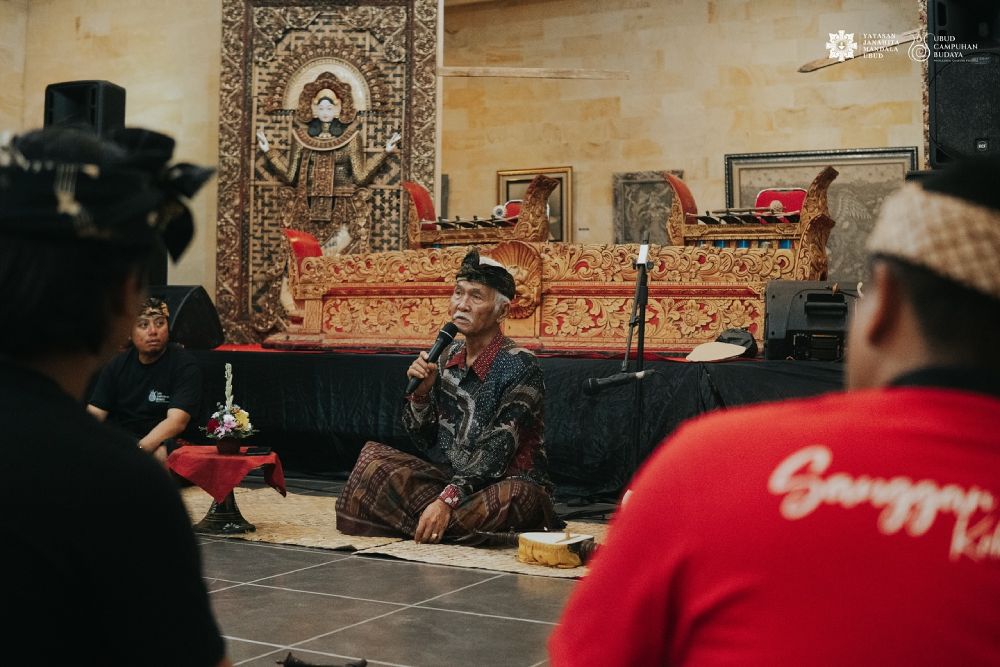
Janahita Mandala was born from a deep reverence for Balinese knowledge systems and a longing to create space for meaningful cultural dialogue. This community-focused foundation was created as a ‘centre of harmony’ – a mission rooted in its very name: jana meaning humanity, hita meaning wellbeing, and mandala referring to the central point of the village.
The seeds of Janahita Mandala were planted back in 2017, when Tjokorda Gde Agung Ichiro Sukawati (member of the Ubud Royal Family) helped to organise Ubud Royal Weekend, which included discussions over development in Ubud. What surfaced out of these discussions was actually a shared desire for Balinese traditional knowledge. Thus began the first rembugan (discussion) in July 2020, focused on lessons from selected lontar, palm-leaf manuscripts that for centuries have recorded the island’s history, knowledge and wisdom.
As these discussions evolved and gatherings grew, the need for a more structured space became clear, and so ‘Yayasan Janahita Mandala’ was officially established as a non-profit foundation in Ubud, December 2020. Since then, it has remained dedicated to fostering local wisdom, holding space for dialogue, and reconnecting Balinese communities with their cultural roots.
The Living Lontar
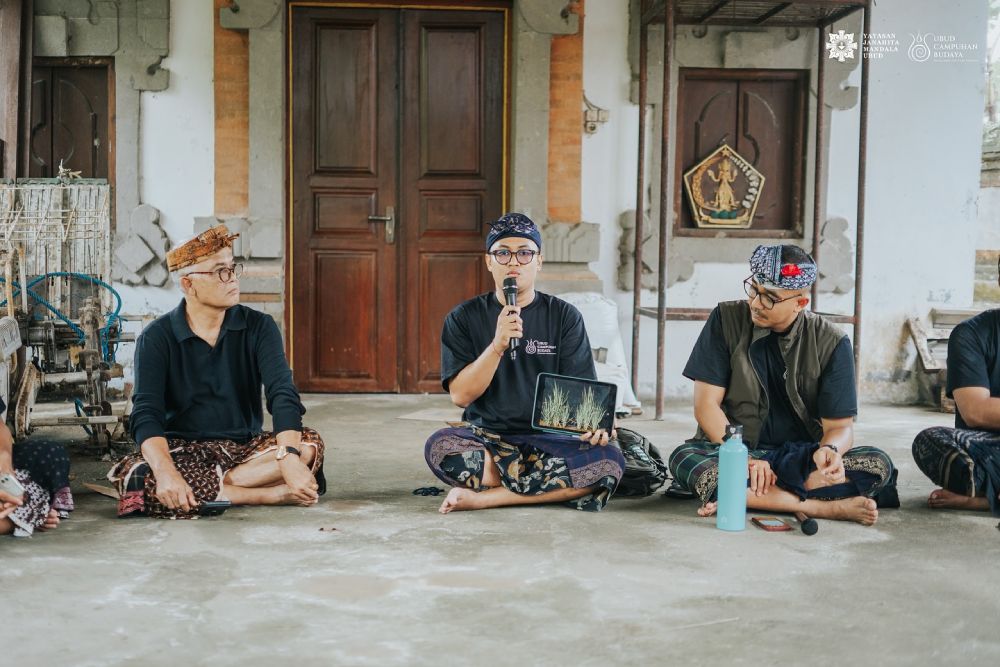
One of the ways Janahita Mandala nurtures Balinese knowledge is through lontar conservation. Recognising the fragility and importance of these palm-leaf manuscripts, the foundation offers free services to families across Bali, going from one household to another to help clean, care for, and preserve their lontar.
However, preservation alone is not enough. One of the tentets of the foundation is that these manuscripts should be lived and understood, not just stored on a shelf. The foundation advocates for families to sit and read the lontar together, to discuss their contents and bring this timeless knowledge back into the everyday.
“The implementation of knowledge is what keeps a culture alive”, says Cokorda Gde Bayu Putra, one of the Co-Founders of Yayasan Janahita Mandala. Knowledge is like a river; it must flow. Without implementing the knowledge into every part of everyday life, the knowledge is stagnant, blocked like a dam. Through these sessions, lontar becomes a bridge—connecting generations, reviving memory, and making traditional wisdom part of the present once again.
The Village is The School
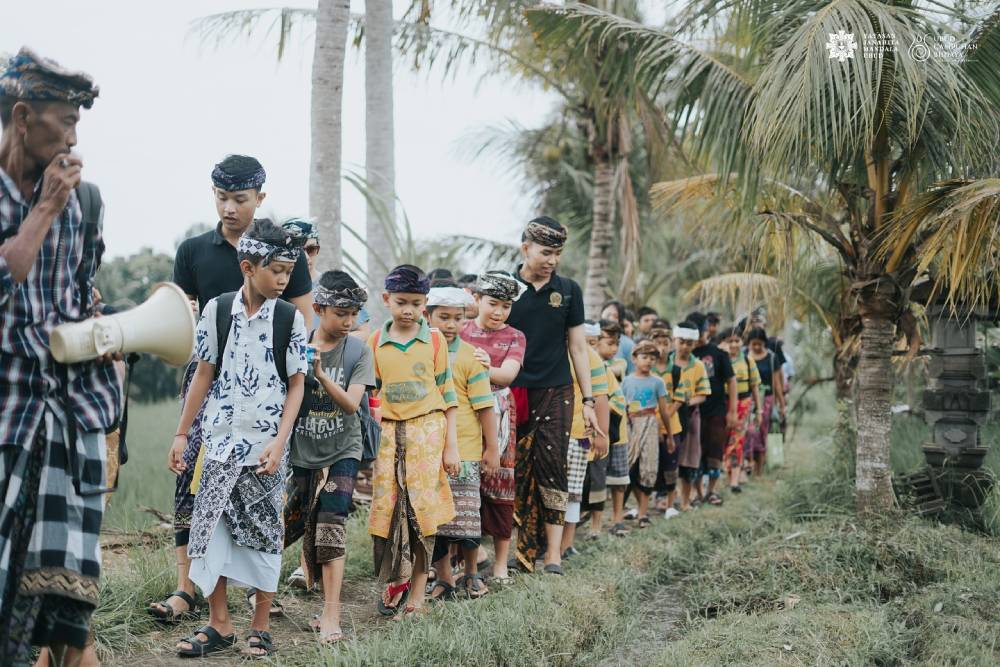
At the heart of Janahita Mandala’s vision is the belief that education begins in the village, not just in the formal sense, but through everyday life, storytelling, rituals, and relationships with the land and community.
If the village is the first classroom, then lontar serves as the textbooks of life. These manuscripts hold a vast spectrum of knowledge: from agricultural practices, romantic relationships, family dynamics, to negotiation strategies and traditional medicine. Lontar are more than historical records; they are guides to navigating life with wisdom and balance. While they were written in the past, the insights are timeless, they are foundations which can be adapted, reflected up and evolved for the present.
Janahita Mandala sees its role as nurturing this inherited knowledge, making it accessible and relevant to current and future generations. By holding space for dialogue, education, and critical engagement, the foundation seeks to honour the past not as a static truth, but as a dynamic source of insight—one that helps shape a more thoughtful, grounded, and culturally connected future. In doing so, Janahita Mandala keeps the village at the centre of lifelong learning.
The Programs of Janahita Mandala
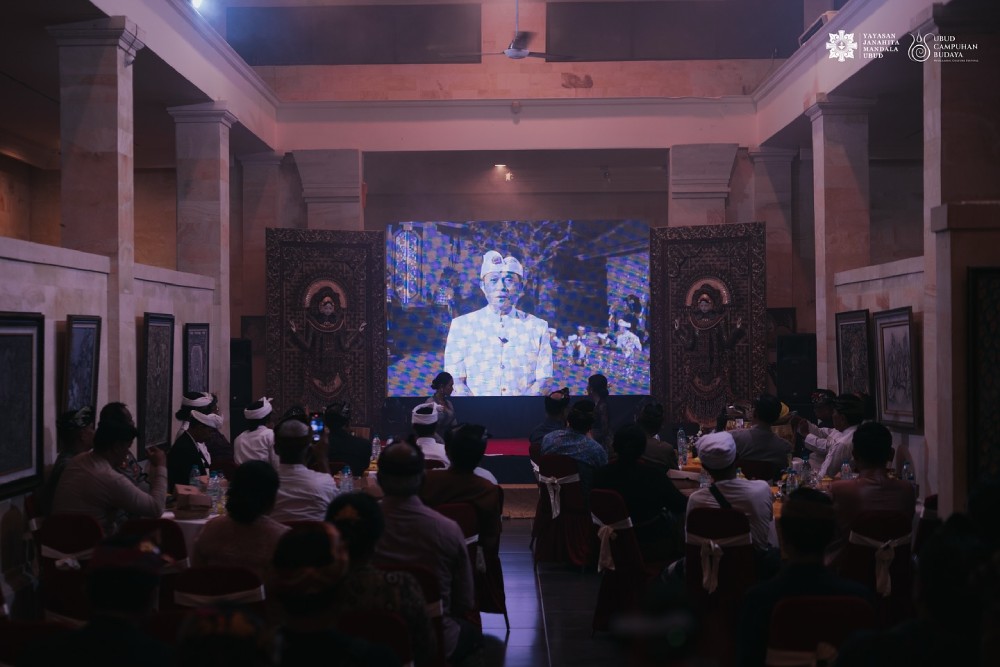
The jana (human) component of the foundation is certainly a focus, with programs catering to different groups, from men, women to children. A dedicated Wadhu Wakya (Women’s Talk) program provides a safe space for the women in the community to engage in discussion on society, economy, businesses and education within the Balinese context.
Then there is Reka Jana, a children’s program aiming to bolster the foundation’s vision for intergenerational wisdom, starting from an early age. Reka Jana, which means “creating humans,” introduces children to local wisdom through engaging and age-appropriate activities. These include dongeng (traditional storytelling), exploration of Balinese language, and hands-on experiences like foraging local plants to learn about their uses in daily life, ritual, and healing. By encouraging curiosity and connection to their surroundings, Reka Jana helps children grow with a sense of rootedness, identity, and care for their culture. Through play, stories, and nature, the program plants the seeds of cultural continuity to ensure that Balinese knowledge is not just remembered, but lived and carried forward by future generations.
Another key program is Macandetan, which centres on traditional Balinese music and songs. For Janahita Mandala, discussing the development of music is just as important as composing or performing it. Through Macandetan, the foundation explores the evolution of gamelan and its creative possibilities to seek not only to preserve it but also to expand its relevance in today’s world. These programs reflect Janahita Mandala’s commitment to living knowledge, shared growth, and inclusive cultural dialogue.
Future Archives: A Guide for Generations
Whilst the past knowledge of the lontars provide useful insights for today, the foundation has recognised that the current generation may well be a vital resource for future generations. As such, documentation has become an important duty for the Janahita Mandala community – the recording of today, for the readers of tomorrow.
Every speaker invited to a rembugan is encouraged to write down their reflections, thoughts, or insights. These written pieces are then collected and prepared into books, capturing a wide spectrum of Balinese perspective, opinion and wisdom. To date, the foundation has published nine books—five on Sarasastra (Balinese literature and philosophy), three on Mecandetan (a traditional form of musical storytelling), and one biography.
Beyond being a form of historical archiving, documentation like this serves as a critical tool for continuity, reflection, and transmission of knowledge. The conversations that take place; whether they are between elders and youth, scholars and practitioners, or community members and custodians of tradition, carry rich insights and may serve generations to come. In an age when oral traditions face increasing threats of erosion, capturing these discussions ensures that valuable perspectives are not lost to time.
Yayasan Janahita Mandala
Jl. Suweta No.6, Ubud
+62 813-5365-335
@janahitamandala