



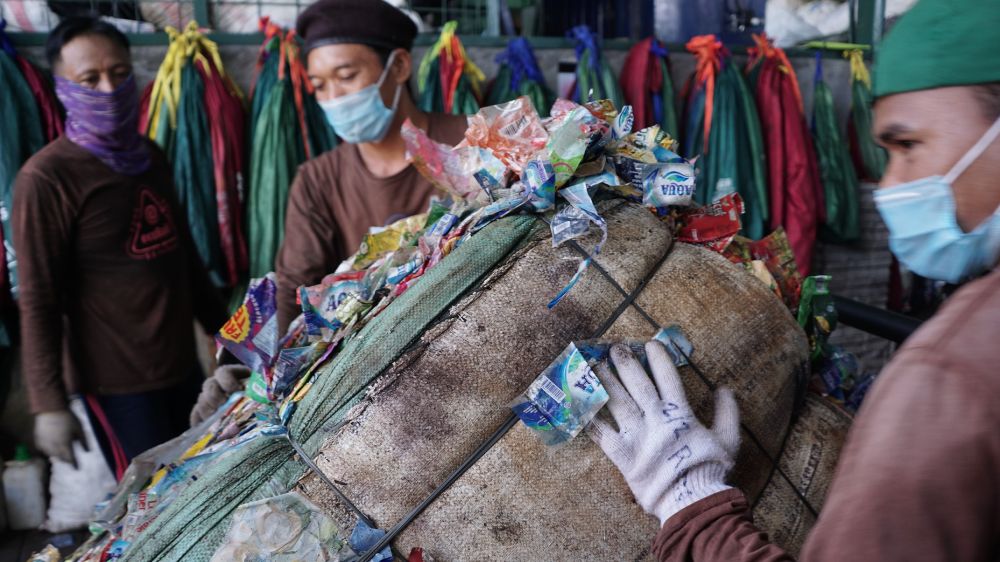
With Bali’s Suwung Landfill scheduled to close at the end of December 2025 (pending decision), this is the perfect opportunity for households and businesses in Bali to adopt better waste disposal practices, if they haven’t done so already.
January and February see the peak of the rainy season, and with it, the consequences of poor waste management often washes back up on the island’s shores. So, we encourage our Bali friends – be it residents or businesses – to be the change they wish to see in the world by working with the great environmental organisations that are available here on the island.
Recycle with ecoBali
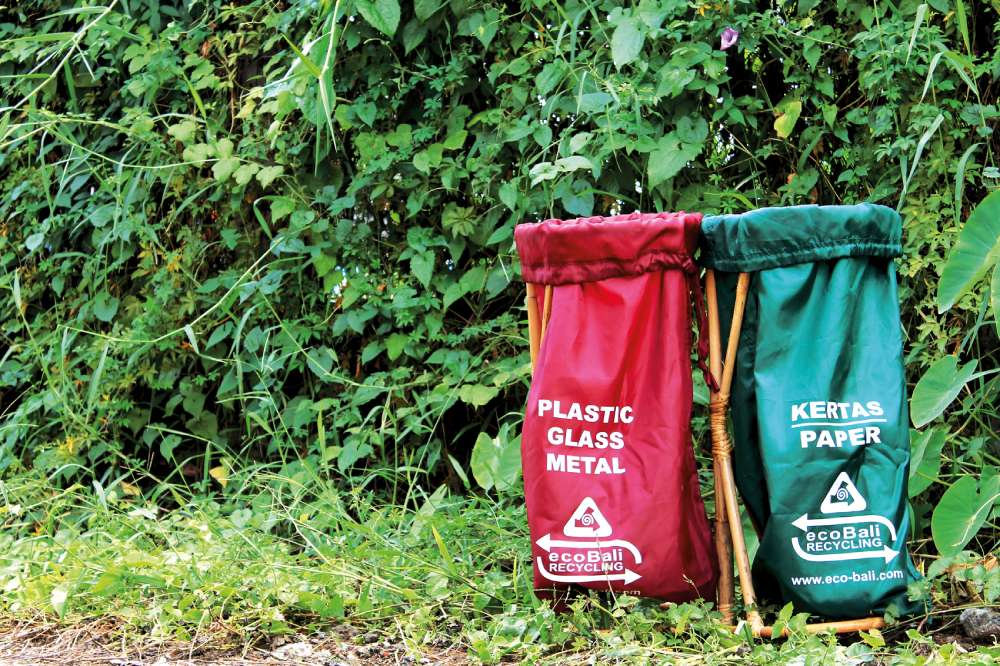
Established in 2006, ecoBali was founded to provide responsible waste management in Bali. This private enterprise offers waste separation, collection and recycling to Bali homes and businesses, promising a service that is efficient, ethical and effective.
ecoBali aims to make their service as simple as possible for their customers, providing two separate bins and a regular pick up schedule. Their main service focuses on inorganic waste – glass, plastic, metal, paper – which still requires waste separation on site, and for households or colleagues to adopt good disposal practices. After collection, the waste is brought to one of ecoBali’s three material recovery facilities in Dalung, Tibubeneng and Kerobokan, where through further sorting they achieve a high rate of material recovery (85-90%). Once recovered, the different materials are sent to respective partner recycling factories.
Run by husband-and-wife duo, Paola Cannucciari and Ketut Mertaadi, ecoBali also offers composting systems, event waste management, consultation for businesses, as well as education and training sessions. On a community level, they also empower banjars by developing shared Waste Banks for collective use.
@ecobalirecycle | eco-bali.com
Compost with Urban Biologist

Since August 2025, South Bali’s Suwung landfill has stopped accepting any organic waste, prompting homes and businesses to take the first best step to improving waste repurposing: separating their ‘wet’ (organic) and ‘dry’ waste (inorganic) waste. This is important for two reasons, firstly it doesn’t contaminate inorganic waste, which would make it unrecyclable; and secondly, it decreases methane emissions at waste sites.
But how do households manage their organic waste? A really simple and effective service is Urban Compost (by Urban Biologist). They will provide you with a simple bucket in which you throw your food scraps, coffee grains, etc, which is then collected every week and replaced with a clean bucket for the next week. The organic waste is brought to their central facility where they will turn the waste into high quality compost through natural, aerobic processes. Customers are also given their own compost every few months which can be used in their own garden.
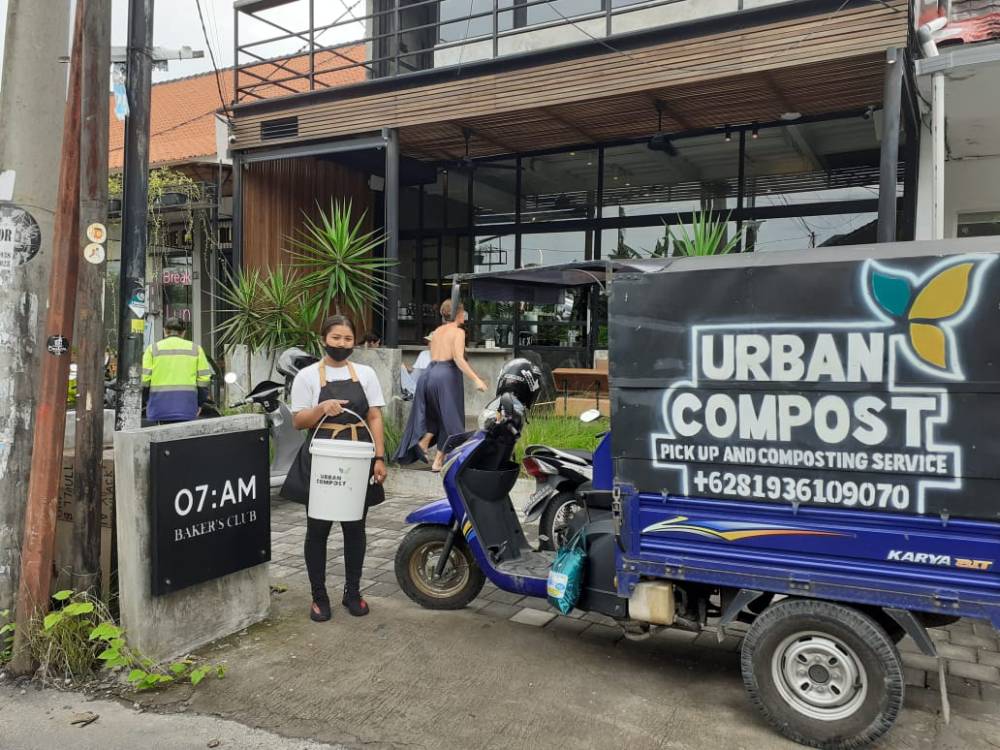
Urban Compost is available in over 80 village areas across South Bali, from Uluwatu to Tabanan, and have diverted 1,990 tons of organic waste from going to the landfill since they began.
Dispose of Cooking Oil with Noovoleum
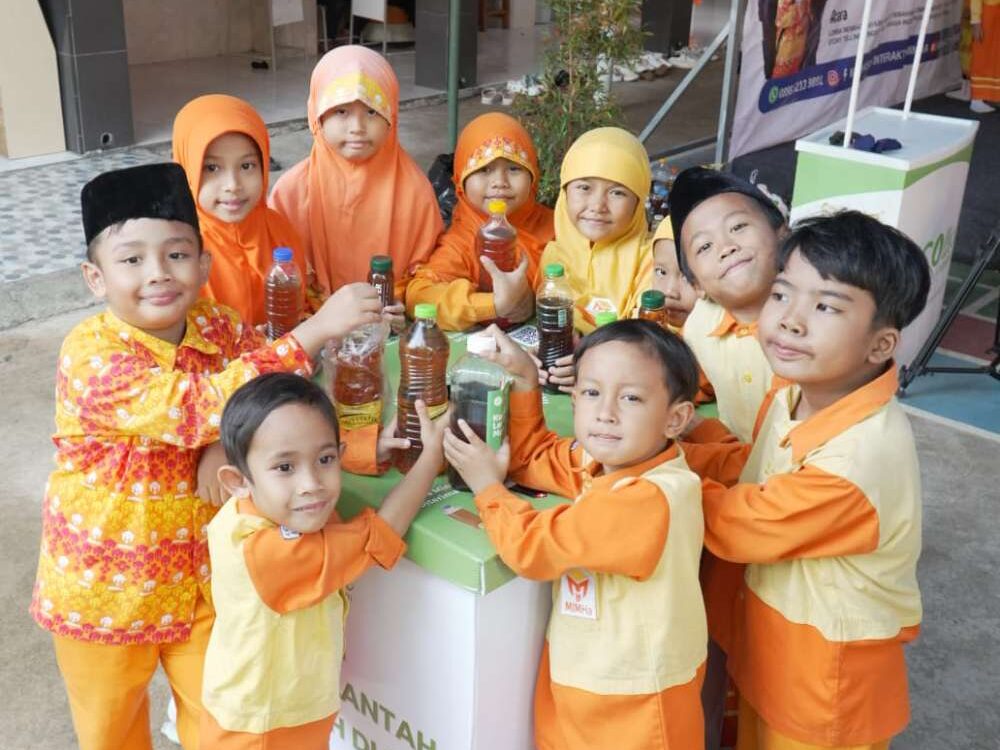
Used cooking oil (UCO) has long been one of the more challenging items to dispose of sustainably. Jakarta-born environmental startup, Noovoleum, now offers a highly-effective solution for this problem through its tech-based collection network found across Indonesia.
The company operates a management and collection of UCO through two methods: a pick-up service and public collection machines which are now available in Bali, Java and Sumatra. These ‘UCOllect Boxes’ are digitised machines which measure the quantity of UCO being deposited, and also rewards those depositing their oil with digital currency based on market value, incentivising its use. The boxes are distributed in convenient locations, including selected convenience stores, petrol stations, village offices and more.
Once collected by Noovoleum, the UCO is processed to make fuels, specifically Sustainable Aviation Fuel (SAF) and renewable diesel. Essentially, the oils are given a productive second life through creating non-fossil-fuel-derived fuels.
Noovoleum already has 100,000 users on its App, campaigning for more public participation in this win-win solution to used cooking oil. To organise pick-ups or to locate the closest UCOllect Box in Bali, simply download their application and sign up (UCOllect by noovoleum).
Rapid Composting with Shiva Industries (Business-Level Solution)
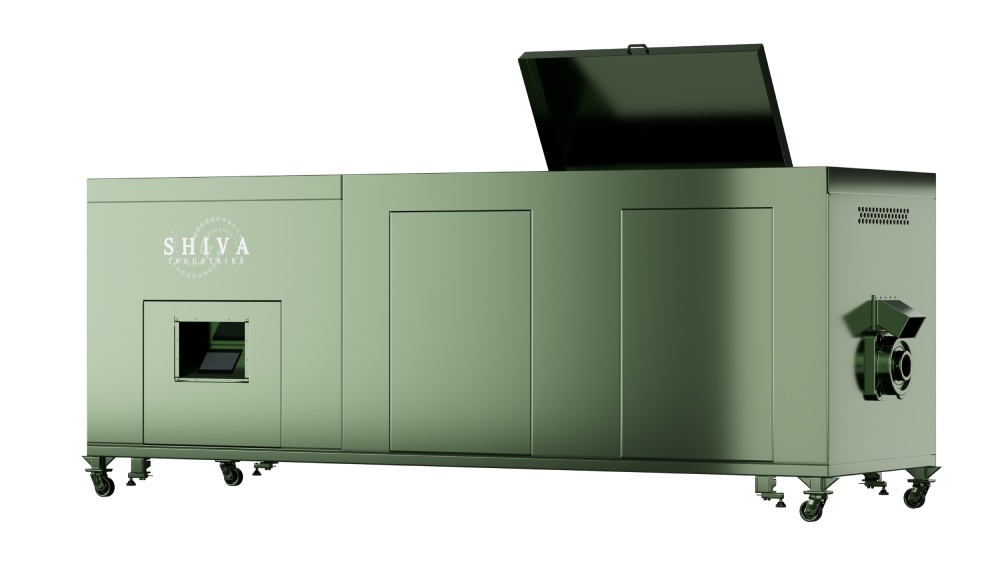
A state-of-the-art innovation created and developed right here in Bali, Shiva Industries presents their proprietary organic waste bio-digestion technology. Shiva’s proprietary machines have the ability to process organic waste into compost material in just 24 hours.
It may sound like science fiction, and that’s because this is revolutionary technology, developed by Bali-based Australian Founder, Tobias Wilson. The ‘onsite rapid composter’ uses a combination of proprietary microbes, mechanical aeration and a 24-hour digestion cycle to accelerate natural composting processes – what comes out the other end is a pH-neutral, carbon rich digestate; a highly nutritious fertiliser.
The machines are ‘plug-and-play,’ meaning users simply have to put their organic waste on one end and collect their compost after 24 hours on the other. Whilst natural composting has its place, Shiva Industries’ machines are both more time- and land-efficient. The rapid composter can process between 300 to 2,000 kilograms of organic waste in a single day, depending on machine size, making it ideal for larger scale needs, from commercial compounds to resorts and even industry. A five-star resort in Nusa Dua and a factory in Java are already taking full advantage of this speedy composting tech.
Shiva Industries has come at a right time, appeasing large-scale needs of the island’s food and organic waste management, alongside the ongoing efforts of domestic composting services in Bali. A fabulous option for restaurants, hospitality and other larger businesses on the island, and indeed across Indonesia.
@shivaindustries.id | shivaindustries.tech