


What happens when international designers are given an opportunity to meet and be inspired by Bali’s traditional crafts and artisans? Since 2022, CushCush Gallery have been facilitating this exact creative cultural exchange, with some fabulous results.
Two curious stools stand in the corner of a showroom. Covered entirely with tightly-wrapped fibres, attached to the top of the stool like a bob wig, the materials used are somewhat familiar… One is white, soft and ephemeral, the other a handsome black, coarse and dark. For the Balinese, these materials will be instantly recognisable: the fine white fibres shredded from parasok (pandan) leaves, used for the hair of the Rangda witch costume; and the spiky ijuk fibres of the aren palm tree, commonly used for shrine roofing, as well as the majestic mane of the giant Barong puppet.
Whilst the materials used may be common on the island, their application into this contemporary furniture design is novel. This was an interpretation by visiting French designer Pierre Charrié, who together with CushCush developed the ‘Niskala: Forms of the Unseen’ collection. Other pieces included a dining table inspired by traditional Batuan paintings; and hanging screen dividers fashioned out of cow hide, inspired by the wayang shadow puppet theatre.
“We are experimenting. We are trying to find new perspectives on how to use these materials,” says Jindee Chua, Co-Founder of CushCush Gallery, an art and design non-profit that facilitates the Artist Designer in Residence (ADIR) program.


Jindee and partner Suriawati Qiu are designers who moved to Bali over twenty years ago, drawn to the island’s culture and specifically an appreciation for the traditional crafts and use of natural materials. Since 2002, they have been exploring ways of bridging traditional artisanship and contemporary design through their studio design workshop, CushCush.
Inspired by young Indonesian creatives hungry to learn and explore artistic fields beyond formal education, the pair started a social initiative centred on shared learning and artistic exploration. This became CushCush Gallery, which – since its official establishment in 2016 as a non-profit – has facilitated countless children’s creative programs, design community events, art exhibitions and cultural exchange opportunities.
One of their most pivotal exhibitions was ‘Colors of Bali’, a fascinating deep-dive into the natural pigments and colouring processes used in traditional crafts like textile dyeing, mask painting, Kamasan painting and wayang puppets. The exhibition was the result of a research project lasting over a year, conducted during the pandemic ––it is this writer’s favourite exhibition to date.
“There were many concerns from the artists and artisans we met during the research for Colors of Bali,” says Suriawati, noting their worries about craft regeneration. “So, after the exhibition, the book and the short film we produced, Jindee and I thought about how we could continue to engage with these traditional creatives but through the lens of design.”
This was how the ADIR Program came to life in 2022. “We think design is one of the tools through which traditional arts and crafts can evolve – to see the possibilities of how these kinds of crafts can be used in modern applications.”
Many of the crafts and artisanal skills remain integral components of ceremony or community needs, be it mask carvers, gamelan smiths, or even the ubiquitous skill of palm leaf-weaving. Where Suriawati and Jindee see the potential for growth is in the commercial side, where so far these ‘arts’ are sold to tourists as cheap souvenirs, which far from represent the real value of their skills, and dilutes the perception of the discipline itself.
“Their skills need to be brought to a higher level of appreciation. Abroad this kind of impressive handiwork is respected, they are given titles of masters of their discipline,” says Jindee, reflecting on the reverence given to Japanese craftsmen, or the demand for sophisticated ateliers in Europe. Sophisticated design products can create new perceptions and value. This may help to increase the interest among new generations too.
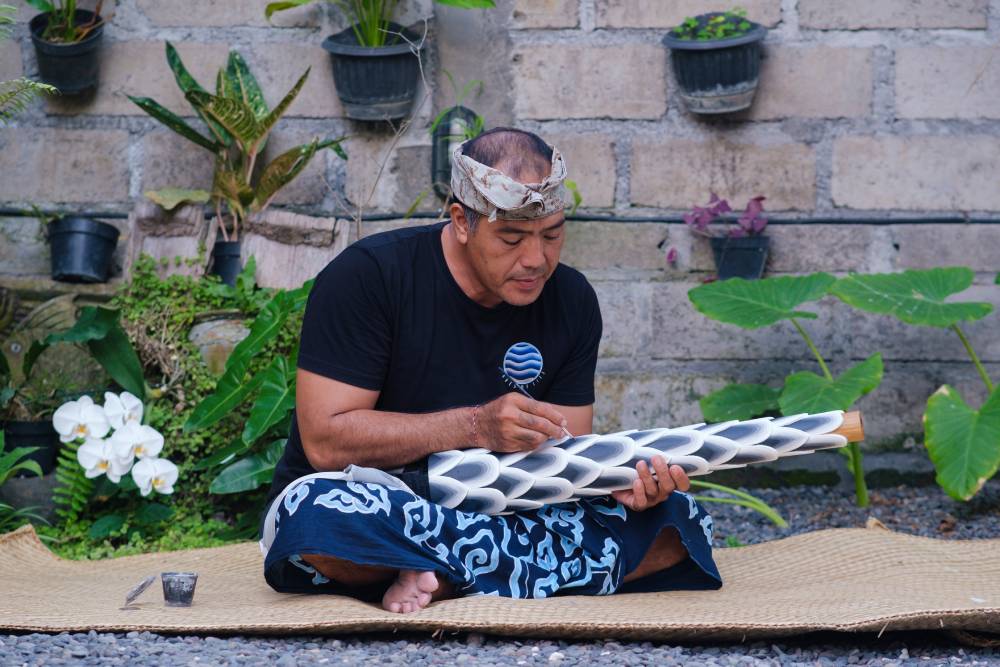

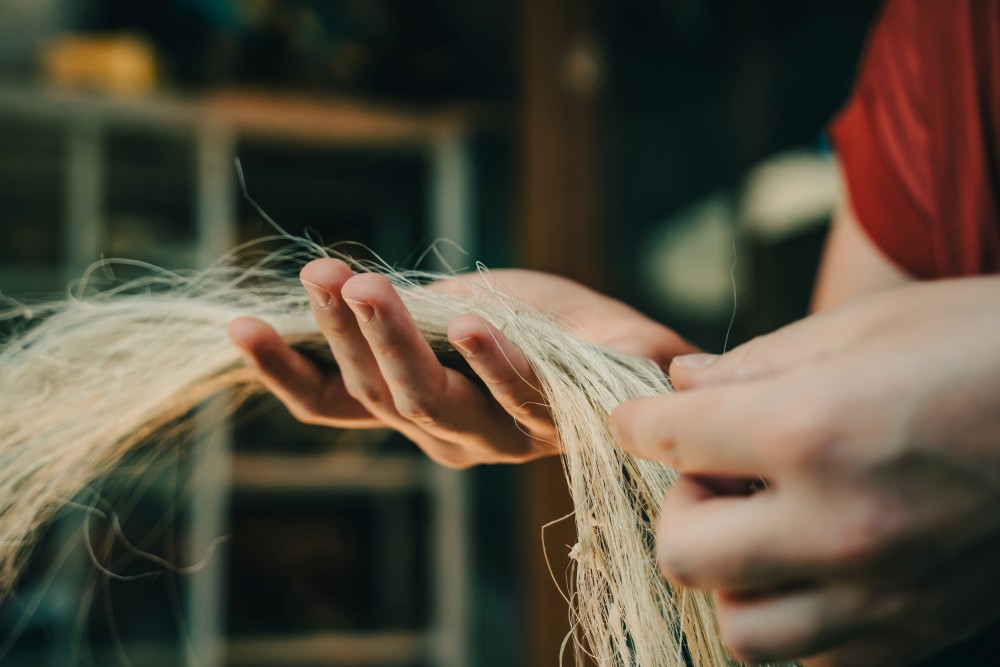
The ADIR Program is immersive and intense, with four weeks of non-stop touring and learning in Bali, and a week in Java. At the end of it all, the residents are required to design a collection – furniture, home decor, physical artistic pieces – to be developed and manufactured together with CushCush and selected artisans.
The program focuses on developing ‘Collectible Design’ products, producing a total of 12 pieces and four artist proof copies, making them bespoke and limited edition. This genre of furniture and homeware is considered the crossover between art and design, where details like material, story, process are paid much attention buy buyers and enthusiasts, offering the best audience for Bali’s artisanship.
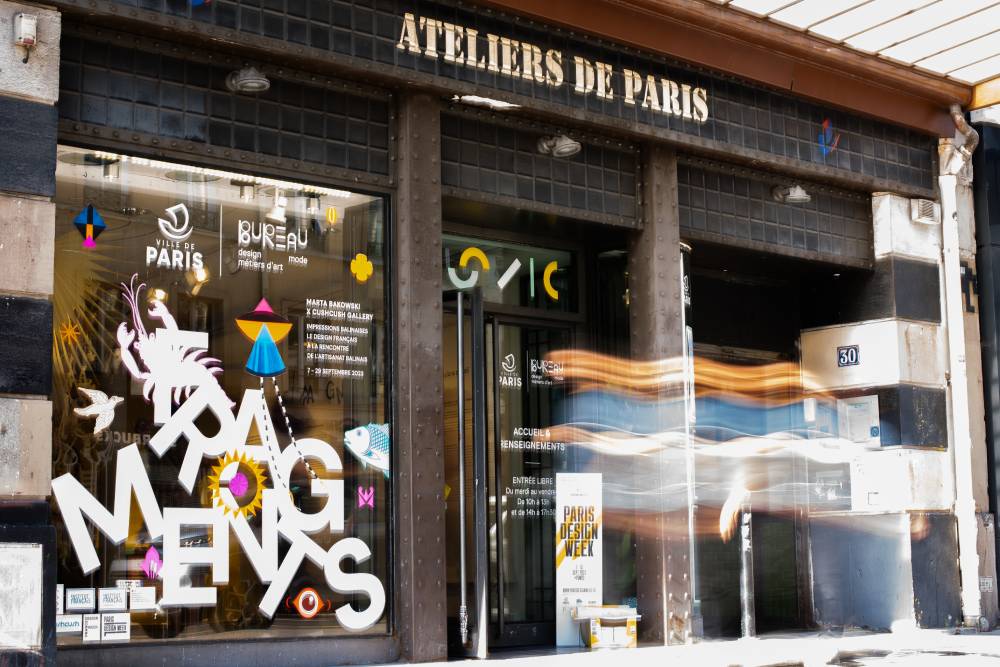
CushCush Gallery works together with international cultural institutions based in Indonesia, including the Japan Foundation Jakarta and with Institut Français Indonesia (IFI) – not incidentally, two countries that honour their artisans. The ADIR Program specifically, which started in 2022, has been supported by IFI, which has been a strategic partnership. IFI has helped to open doors internationally, facilitating a showcase during Paris Design Week. Here, the pieces are ambassadors of the artisans and advocates for cultural exchange. “ADIR is about engagement, it’s about bringing cultures together,” explains Suriawati.
There is a very authentic and natural ‘quid pro quo’ dynamic through these programs: everyone is learning. The residents are given in-depth insight into Balinese culture, everyday life, ceremonies, arts, materials, techniques. Importantly, through their engagements, they are giving back too.
In 2024, Sarasa Yoshioka, a master textile dyer from Japan, joined a residency program supported by the Japan Foundation Jakarta called ‘Colors of Japan’. Not only was she brought to witness the weavers and dyers of Tenganan, Sidemen and Batuan villages, Yoshioka was asked to demonstrate her skills through a workshop for the Balinese artisans. “It’s difficult, and rare, for the traditional crafts people in Bali to go abroad to learn. By bringing artisans from abroad to Bali, this learning opportunity comes to them,” Suriawati adds.
The fifth week of the ADIR program is spent on a roadshow across Java’s major cities, where residents must share their learnings with design students, professionals and enthusiasts. Suriawati reflects: “One of the local interior design students was actually in awe at what Marta (our first resident) views as rich resources here in Indonesia. Sometimes it takes a different lens to see the richness around us.”
The most pivotal aspect of the exchange is broadening the artisans’ perspectives on how their skills can be applied differently. In some cases, artisans have been creating the same shapes, motifs, applications for decades – and whilst they have masted their particular form, repetition can box them in and it can be difficult to carve beyond the deep grooves they are used to. External impetus can be the catalyst for innovation, to get them onto fresh wood and explore new grain.
In the last three editions of the residency program, all the designers worked with artisans that they connected to. Marta Bakowski’s collection ‘Fragments: Impressions of Bali’ enlisted mask maker Cokorda Raka Sedana’s expertise to carve wooden accoutrements to her series of cabinets; and Pierre Charrié, responsible for the ‘hair’ stools, invited artist Made Griyawan to embellish a dining table with iconic Batuan gradients. 2024 residents Clémence Plumelet and Geoffrey Pascal of Marcel Poulain Studio, whose works are currently in process, have challenged traditional songket weavers with a brand-new, contemporary motif.
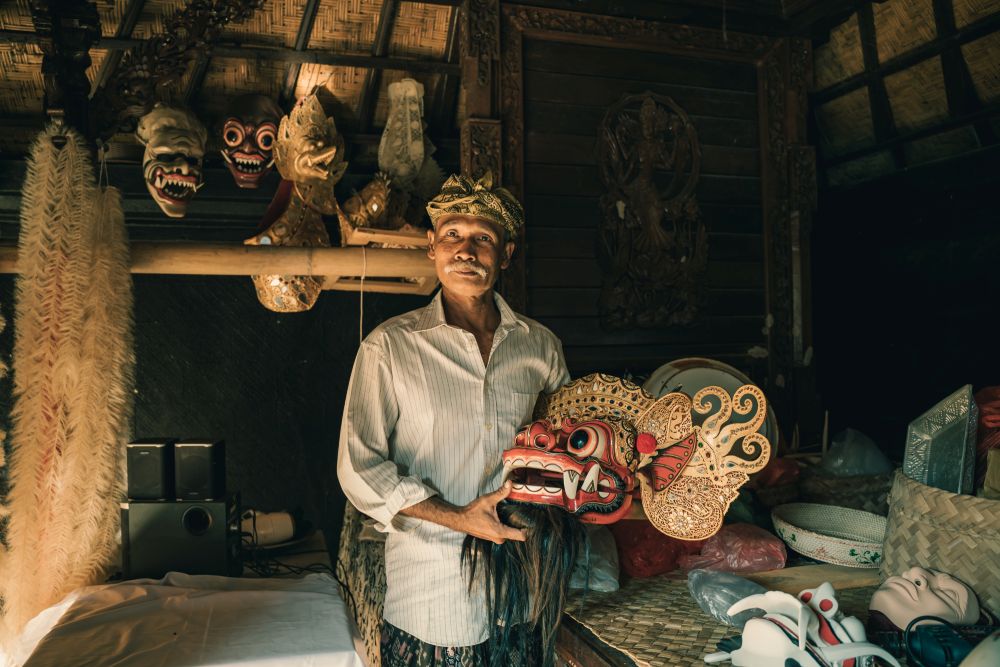
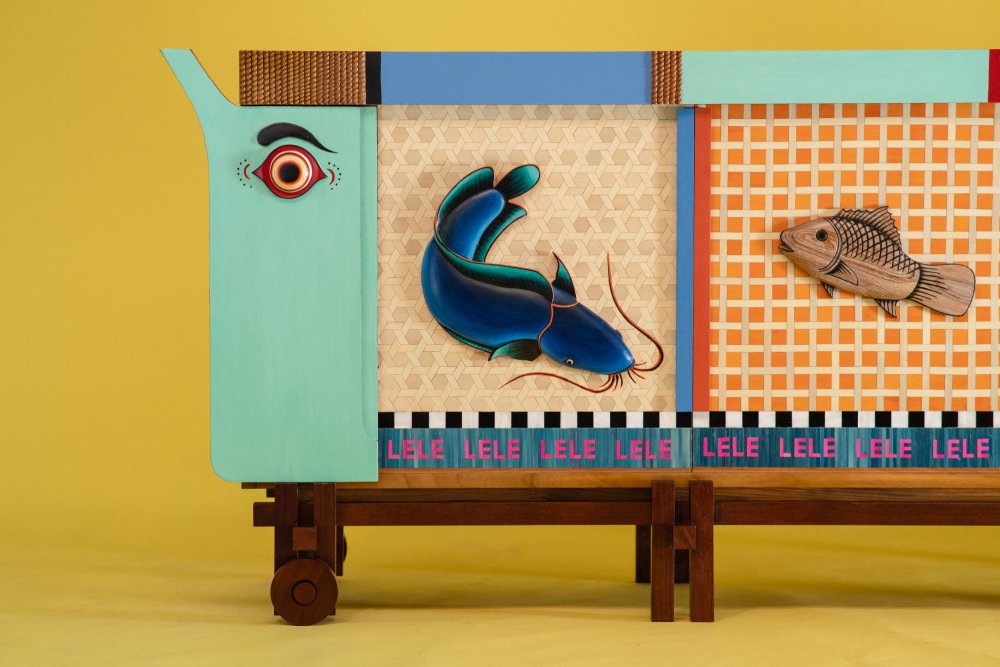
The ADIR Program has many great ‘cultural exchange’ touchpoints: the residents absorbing life and landscape in Bali, new applications of skills and materials into this high design, the sharing of knowledge with artisans and students – and finally the showcasing of Bali-inspired and incorporated pieces on an international stage. But whilst the program is proving successful, systemic changes remain at a small scale.
Outside of ADIR, CushCush Gallery hosts programs focused at local knowledge sharing amongst Indonesian designers and artists, but a pivotal evolution would require large institutions to mobilise. ISI Denpasar (Indonesian Institute of Arts) only started their Product Design course three years ago, so it is early years, but more parties must be part of this movement to elevate or celebrate the local crafts.
Jindee adds that if Bali shifted its focus away from tourism, this could help to develop new potentials for artisans: rather than simply creating handicrafts for a tourist market, these skills could be developed and sought after by industries at a higher level and for better value. Think of the French ‘Métiers d’Art’ ateliers sought after by luxury fashion brands – what could Bali’s version of this be?
The goal is not to replace tradition, but rather open new opportunities by elevating the commercial side of each artisan’s work. “Many of them are careful not to disrespect traditions,” says Jindee. “They separate what is considered their art, and what is considered their service.” These evolutions and innovations offer a place for these skills to remain relevant in contemporary markets, to ensure this artisanship is given its deserved for generations to come.
To find out more about ADIR and CushCush Gallery:
@cushcushgallery_bali | cushcushgallery.com