


At Warung di Kebun, rare culinary traditions are both served and preserved in the heart of Denpasar.
Few plants have had such a long and directly symbiotic relationship with humankind as the coconut. With famously numerous qualities as a source of natural materials, and fruit that offers sterile, nutrient-rich water in a convenient, hard-wearing container, it’s not surprising that many cultures have revered it as a so-called ‘tree of life’ since ancient times. Maritime Southeast Asia is generally considered one of the original centres of coconut cultivation , with early Austronesian seafarers credited with the spread of the species throughout the archipelago and beyond. Thousands of years on, countless different cultural groups across the broader Nusantara region , including Indonesia, Malaysia and the Philippines, remain united by their dependence on the species and its many uses.
No one knows quite when coconut oil extraction was first discovered in Southeast Asia, but historians believe it was the main edible oil used by people in the region throughout recorded history (Johari, K. 2021). Bali shares this culinary legacy, with coconut oil still being produced on a small scale in family homes with a zero-waste approach, even listed in Slow Food’s ‘Ark of Taste’ as an integral piece of local food heritage. Traditionally used only in moderation, this nutritious ingredient is one of the key building blocks of heritage local flavours, and published experts on the subject continue to insist that “the best Balinese food is always cooked with homemade coconut oil.” However, as with other forms of industrialisation, the growth of the large-scale seed oil industry over the last century, including in Indonesia , is threatening to change all this, replacing natural, locally-available fats with cheaper, factory-made alternatives, steadily alienating us from our food sovereignty, heritage and security (Arif, A. 2025).
Sometimes it is the smallest things – those that slip unnoticed through the cracks in the process of ‘development’ – that are most missed when they are gone. This was what founder and co-owner of Warung di Kebun, Made Yudha Wiradhi (Madek), found on moving from his native Negara to Denpasar, where he realised that both his beloved hometown dish of lontong serapah and its key ingredient were almost impossible to buy. The ingredient in question, known in Balinese as tlengis (elsewhere, blondo, galendo, tahi/cirik minyak, etc.), is the semi-solid residue left behind in the traditional local coconut oil extraction process, nandusin. Once a frugal everyday foodstuff in Balinese homes, this sweet, proteinaceous by-product enriched vegetable dishes like jukut roroban, or was cooked in banana leaves as the main ingredient of pesan tlengis.
As the practice of nandusin has declined, however, so too has the availability of tlengis, to the point that most younger-generation Balinese are unfamiliar with the stuff, while the older generations remember it fondly as a taste of simpler times. It was this very sense of loss and nostalgia that set Madek and his wife, Made Sri Yuliartini (a native of Singaraja), on the path to opening a restaurant that preserves and expands on their culinary heritage, starting with restoring nandusin to its rightful place as a cornerstone of the cuisine.
Pulling off the roaring highway of Jalan Hayam Wuruk and into the leaf-dappled shade of the appropriately named Warung di Kebun, you already start to feel drawn into the slower-paced, more homely approach that Sri and Madek have cultivated since they started the business in 2018. They and their small team of staff take no shortcuts, making all their bumbu from scratch, with fresh ingredients bought from the market every day, grinding most of their sambel and other spiced dressings by hand. Madek insisted from the beginning that they design the restaurant and its menu around the paon; a traditional style of the kitchen that was once the beating heart of all Balinese households. This means much of the cooking is done over wood-fired stoves, infusing the atmosphere of the warungan d, more importantly, anything cooked over it with the timeless aroma of the désa. Visitors who brave the smoke and heat to peek into the open-sided kitchen might even get to witness the age-old rite of nandusin.
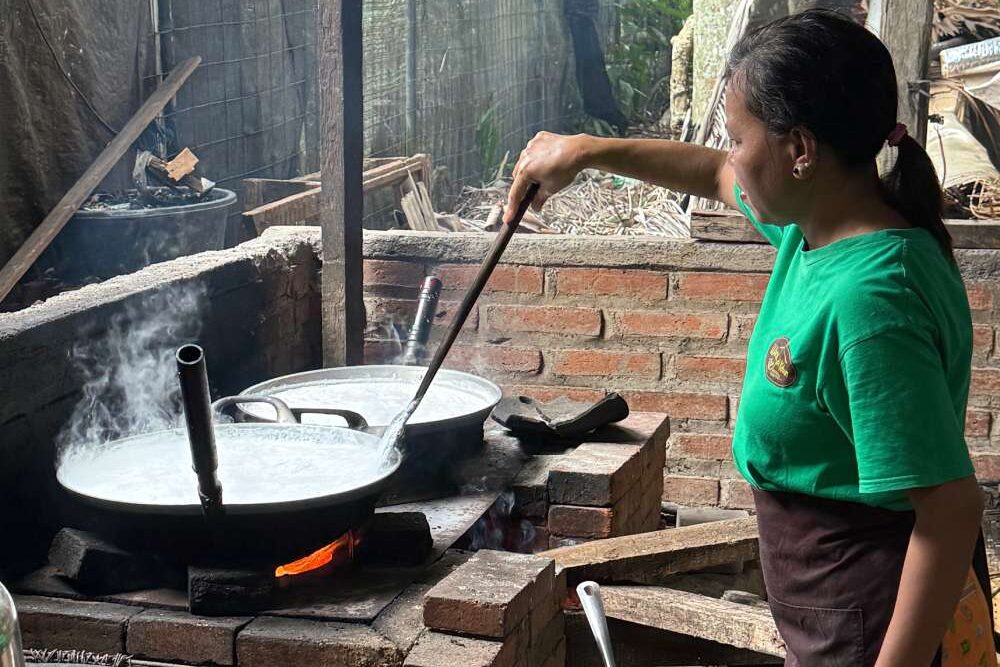
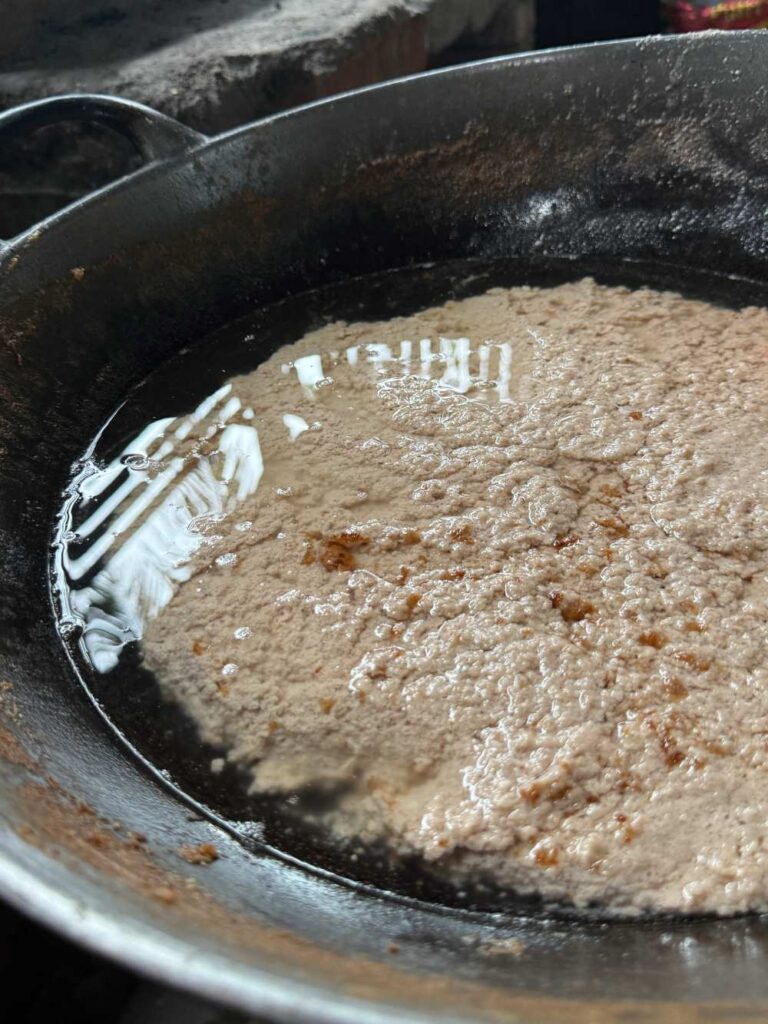
At Warung di Kebun, they make their own pure coconut oil on-site (the only restaurant Madek knows in Denpasar to do so), every two days. It begins at 10am, when a bag of about twenty freshly-grated mature coconuts arrives from the market, and is promptly squeezed by hand (bejek in Balinese) to extract the ‘milk’ (santan). This is then poured into two large woks and brought to the boil over the wood stove. Now begins the most daunting step, as the santan has to be boiled for around four hours, with one or other of the team constantly tending the fires and stirring the liquid to prevent it from burning as it reduces down. Steadily, the layer of oil floating on the surface deepens, the santan below darkening from off-white to a light beige and thickening to the consistency of custard. The oil produced in this time-honoured way, tandusan, is clear with just the slightest gold tint, and an incredibly sweet, lightly toasted coconut aroma that lingers on the palate; the delicious foundation of Sri & Madek’s cooking. Some producers would cook the liquid down further before separating, till the santan has reduced to fudgy brown crumbs, to maximise oil yield. At Warung di Kebun, however, tandusan is considered just half of the story.
Their other star ingredient is obtained once the oil is skimmed off and the curds left behind are strained of any remaining water in a cloth-lined basket. This is the voluptuously creamy tlengis that forms the body of the sauce for lontong serapah, the Jembrana speciality of Madek’s childhood. Brimming with at least six kinds of local vegetable, harmonised with a delicate balance of rich, spiced and sweet flavours, Sri learnt to make from the few remaining hawkers still making the dish there (now even fewer, she tells me). Another favourite is their plecing tlengis; an old-school Karangasem preparation of vegetables dressed in a freshly-pestled sauce resembling that of the more ubiquitous tomato-based seasoning from Lombok, but with the addition of tlengis, its natural coconut sweetness cushioning the chilli heat while adding a third layer of umami to the already potent duo of tomato and terasi. Brightened with a squeeze of aromatic lemo (small makrut lime), it’s a truly addictive combination.
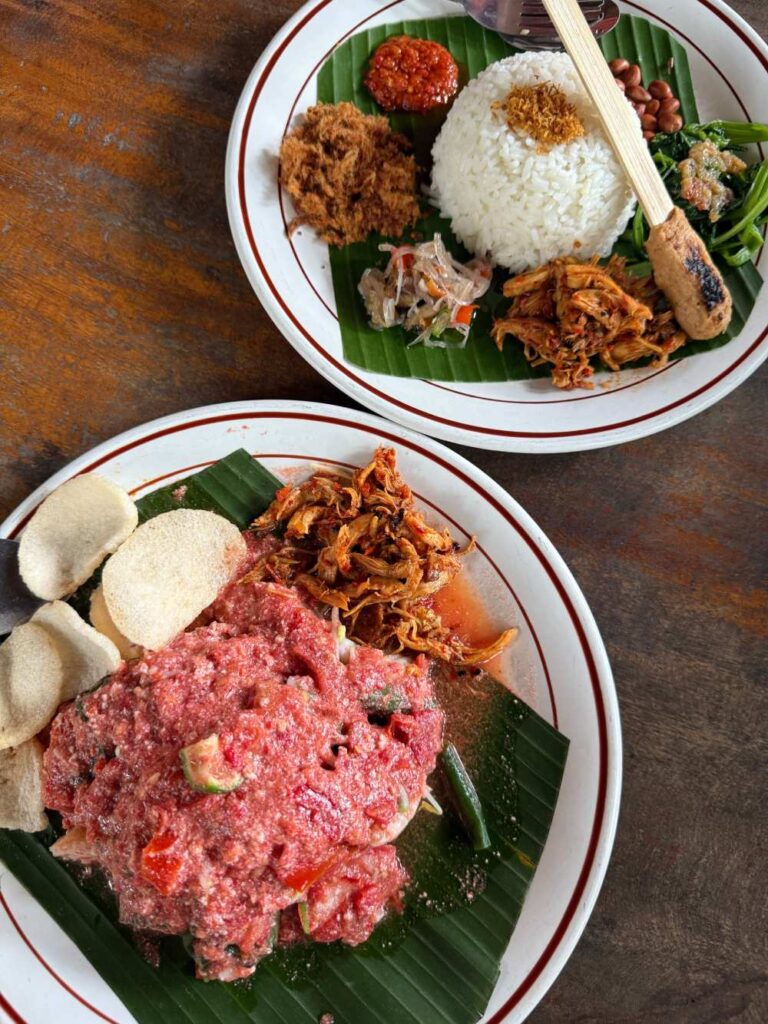
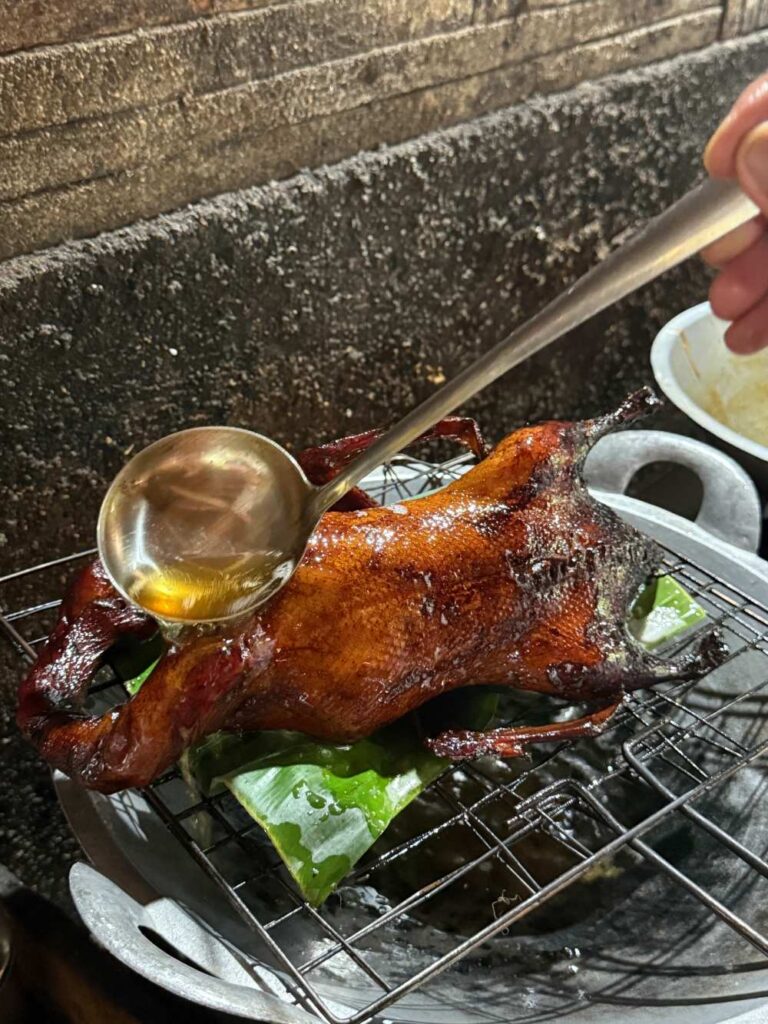
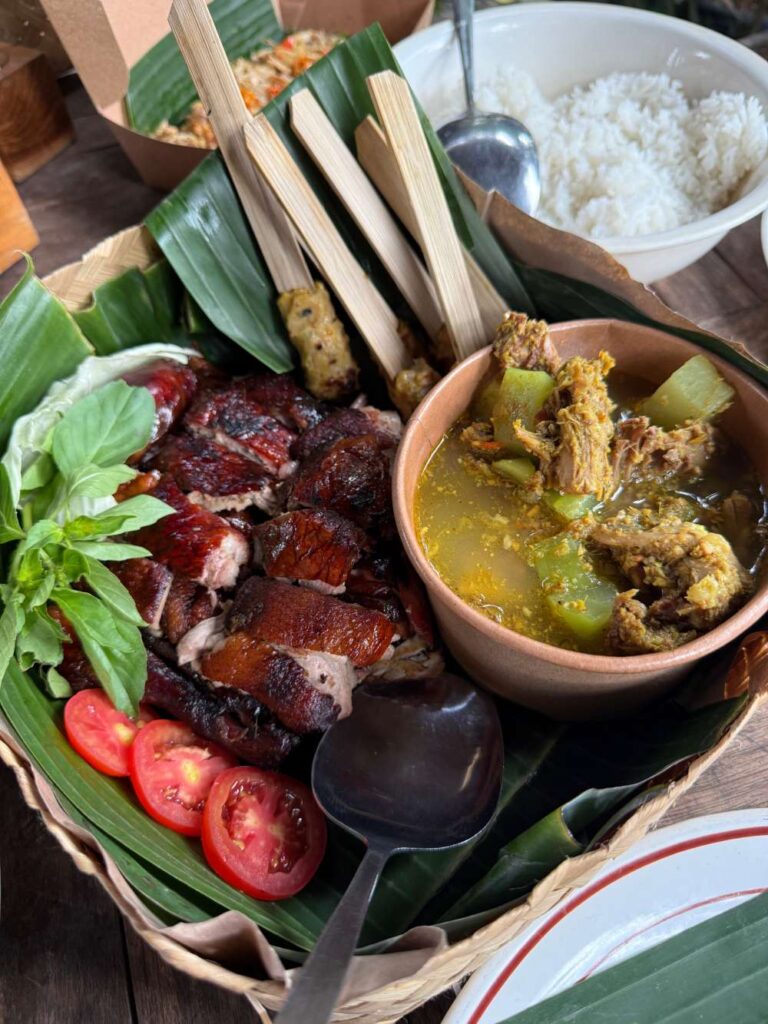
While honouring these and other increasingly rare regional specialities, Madek and Sri aren’t afraid of innovation either, and working with the same fundamental techniques and high quality ingredients for some eight years now has given them plenty of time to experiment. Many of the novelties are found on their preorder-only menu, like Sri’s own interpretation of serosop; a traditional soup of slow-grilled chicken in soup that she tweaks by using their tlengis in place of fresh santan for a thicker, richer broth. Meanwhile, Madek says it was during the slow hours of the COVID-19 pandemic that he developed perhaps their most spectacular item, taking inspiration from Chinese methods of roasting and serving duck, one of his favourite meats. He calls his creation ‘bebek bajang’ (bumbu asap rajang); a complete multi-dish meal produced from various parts of a whole bird, which they initially prepare with a complex series of pre-seasonings and spiced stuffing before smoking it for a total of six hours, basting with ladlefuls of hot tandusan for a beautiful lacquered skin to finish. It’s an intricate recipe that you won’t find anywhere else on the island, and yet could sit comfortably alongside more canonical Balinese dishes like betutu or be guling.
At Warung di Kebun, Sri and Madek have found their way of both preserving a cuisine and keeping it alive and growing, not via flashy ‘trend’ foods or random fusion mashups, but by allowing room for new ideas and influences while remaining firmly rooted in the tastes and techniques that tie their cooking to the environment and their ancestors. The appeal of the food is unquestionable; friends of Balinese and foreign origin alike cite it as one of their favourite Denpasar restaurants, and demand for both dine-in and takeaway orders continue to grow. With such labour- and time-intensive preparations, it seems unlikely that heritage ingredients such as tandusan will ever be able to compete with industrial production for convenience. Still, Madek and Sri remain hopeful that younger generations will continue to uphold these local culinary traditions , their restaurant a testament to what we stand to lose if the taste of tlengis is allowed to slip through the cracks for good.
If you’re curious to taste these increasingly rare flavours and techniques, please visit Warung di Kebun in Denpasar. IG: @warungdikebun
Sources & Further Reading
• ‘The Food of the Singapore Malays: Gastronomic Travels through the Archipelago’, Khir Johari, 2021 (@dialoguesbykhir)
• Traditional Balinese Coconut Oil, Ark of Taste (fondazioneslowfood.com)
• ‘Gastrokolonialisme, dari Hawaii ke Indonesia’, Ahmad Arif, 2025 (kompas.id)
• Kerthyasa, M. & Yasa, W.K. (2022) Paon: Real Balinese Cooking