


Outshined by the hype of new regions, these dining venues are helping to bring a fresh face and new flavours to Bali’s original tourist hotspot.
Those who’ve spent time in Bali will remember when everything revolved around Kuta. Days unfolded on the wide sweep of Kuta Beach; nights spilled onto Jalan Legian. For better or worse, this was where the Bintang singlet lifestyle was born, and where Bali first branded itself as a haven for surfers and party seekers.
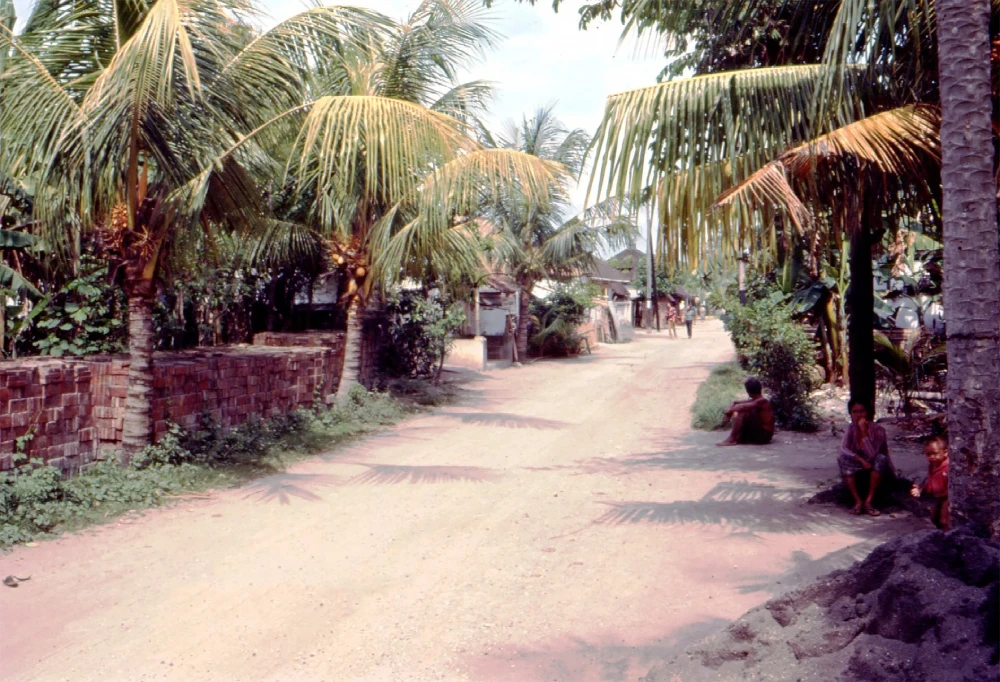
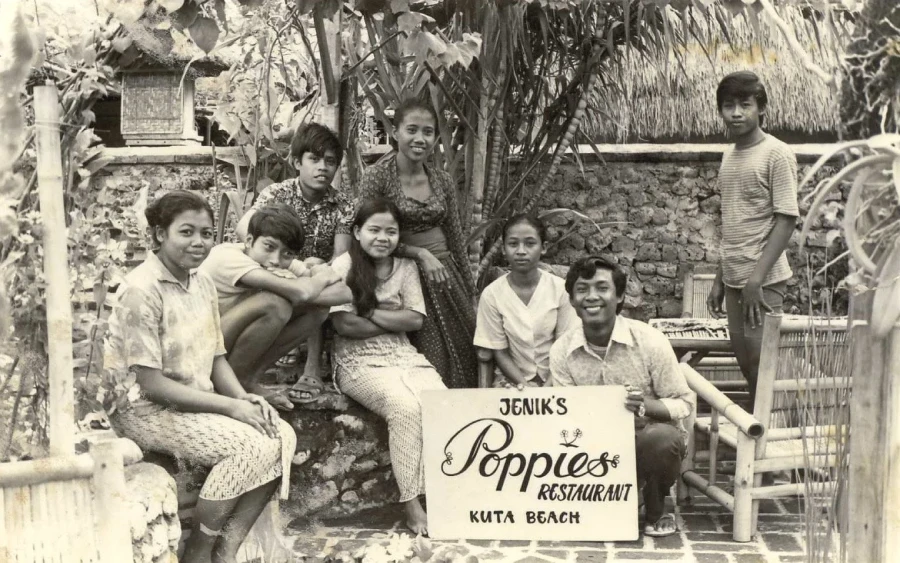
Kuta’s rise wasn’t masterplanned. While Nusa Dua was being shaped as an ‘official’ tourist enclave, Kuta grew organically – built by locals and long-stayers who shaped coconut groves into losmen, warungs and beachside hangouts. A few endure today, like Made’s Warung (1969) and Poppies (1973, previously Jenik’s Warung). By the 1980s, the pubs and discotheques arrived, Paddy’s and the Sari Club became rites of party passage. Institutions were built, fortunes were made!
The 1990s shifted everything again. Global surf brands planted their flags. Hard Rock Café opened in 1993. Major resorts followed, alongside Waterbom Bali, ushering in a family-holiday era that helped to balance the after-dark excess. Kuta evolved from lo-fi refuge to full-scale tourist hub.
As is often the case with tourism, destinations become the victims of their own success, and Kuta learned this very quickly. Rapid development overshadowed the very reason Kuta became popular in the first place – indeed a pattern we see elsewhere in Bali. Inevitably, this saw both businesses and visitors searching for new pastures, beginning the westward developments: Legian, Seminyak, Canggu and beyond.
Yet, despite two bombs (2002 and 2005), the growing popularity of other regions, and the pandemic, Kuta continues to thrive. The area still has a buzz and, with a little love and attention, has the potential to draw crowds back to its streets.
Same Place, New Face
The talk is always about the ‘cool new area’, the never-ending chase for ‘untouched and uncrowded’ areas to, ironically, inhabit and develop. But what these places will never have is Kuta’s history. Bali’s surf culture was born here, institutions were built here: there’s an undeniable romance about Kuta that is irreplaceable and nostalgia still runs thick through the backroads of Poppies Lane.
“Opening in Kuta was about going back to the roots of Bali surf culture. When I first moved to Bali I lived in the Legian area so Kuta was a bit of a homecoming,” shares Jordan Kendel, Co-Founder of BGS (Bali General Store). Founded in 2013 with partner Komang, BGS is a lifestyle brand built on surf supplies and high-quality coffee, garnering a strong community with multiple venues across Bali: Dreamland, Canggu, Uluwatu, Ubud, and eventually they opened BGS Kuta in 2024.
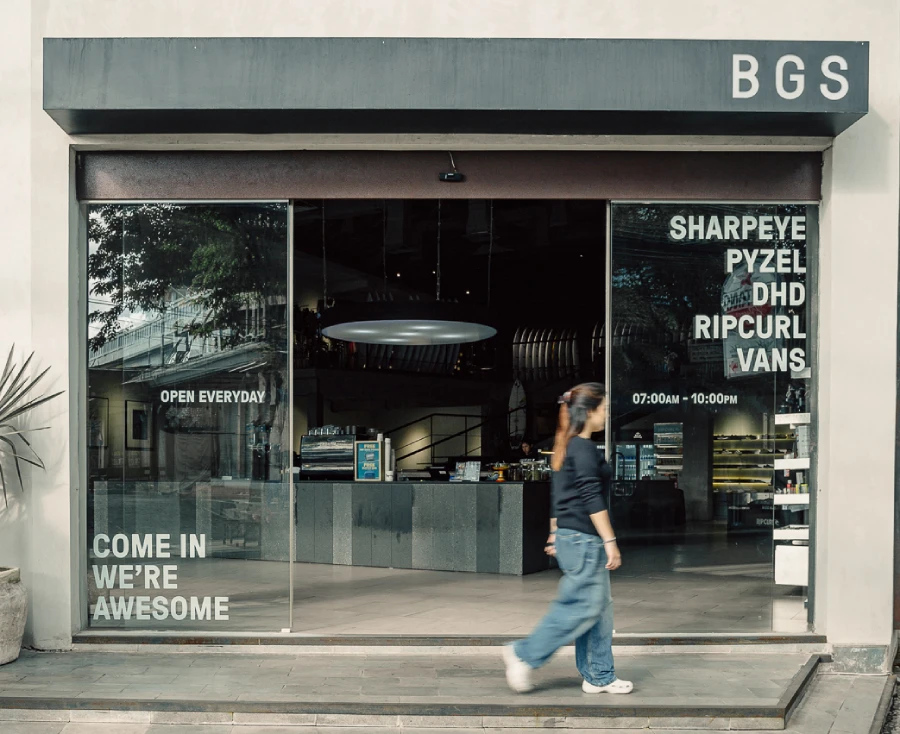
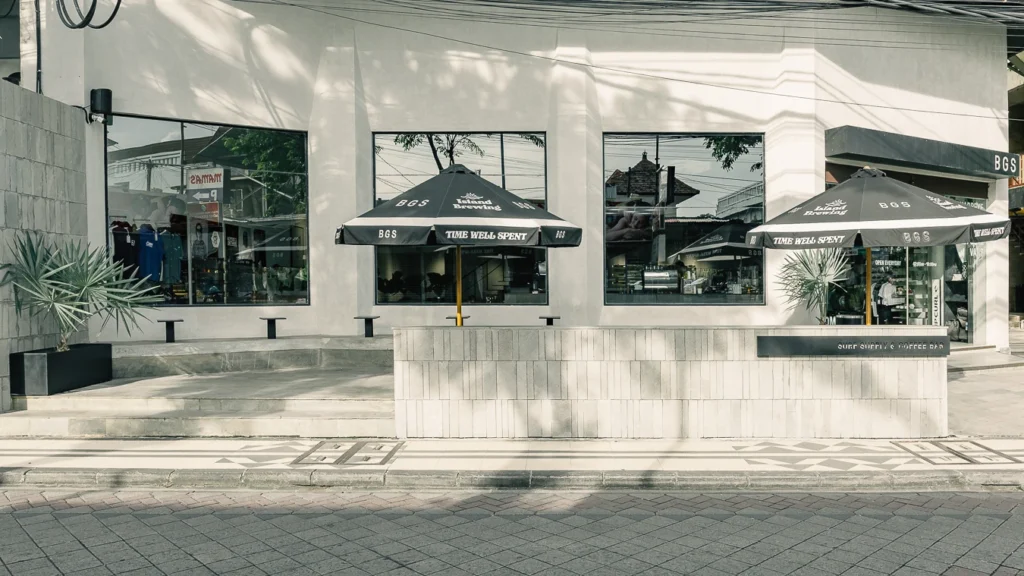
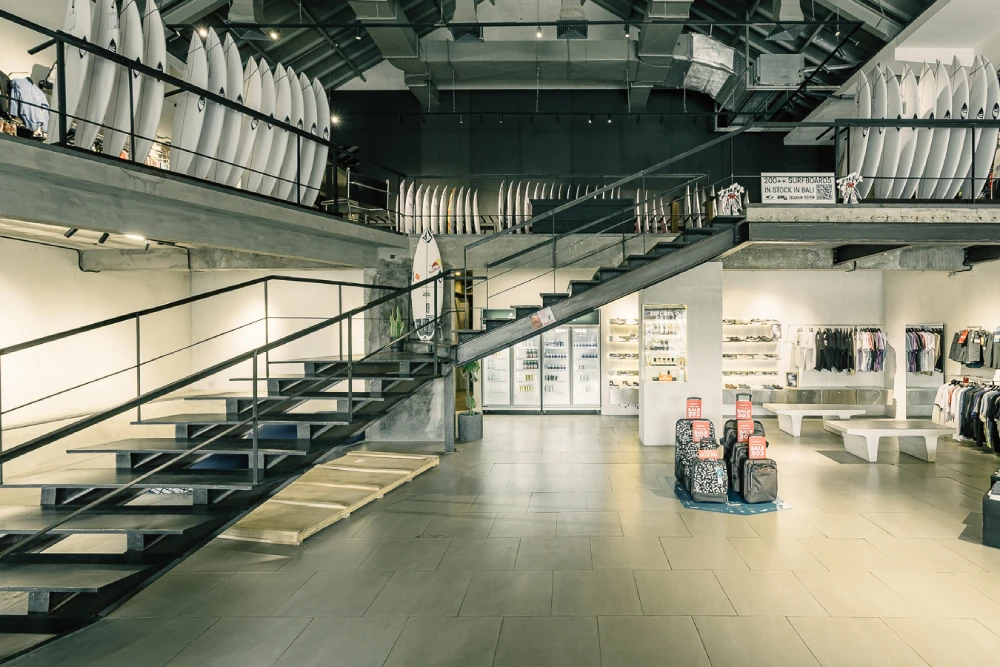
Photo courtesy of BGS Bali
For Jordan and Komang, big surfers themselves, Kuta had an emotional pull: “Again it was about the location! This was once the Rip Curl shop, and was huge and sitting empty. I loved the street front visibility, proximity to the beach and skate park, as well as the surf history baked into the building,” adds Jordan.
On the one-way stretch of Jalan Legian, the outlet is hard to miss with its visually-striking brutalist façade and very contemporary surf-and-skate-inspired interior. Clean, stripped back and stylish, its stands out like a well-polished thumb amongst the row of usual shophouses that line the bustling street. The founders say they get a diverse crowd through the doors, from classic ‘surf core’ clientele, to families on vacation, as well as residents (local and expat) pleased to have a ‘cool’ spot, with top-notch brewed beans in the neighbourhood.
There’s isn’t a more apt metaphor for what Kuta needs than a young, homegrown surf brand to take up the mantle from an old Rip Curl store. It’s not replacement, it’s refreshment.
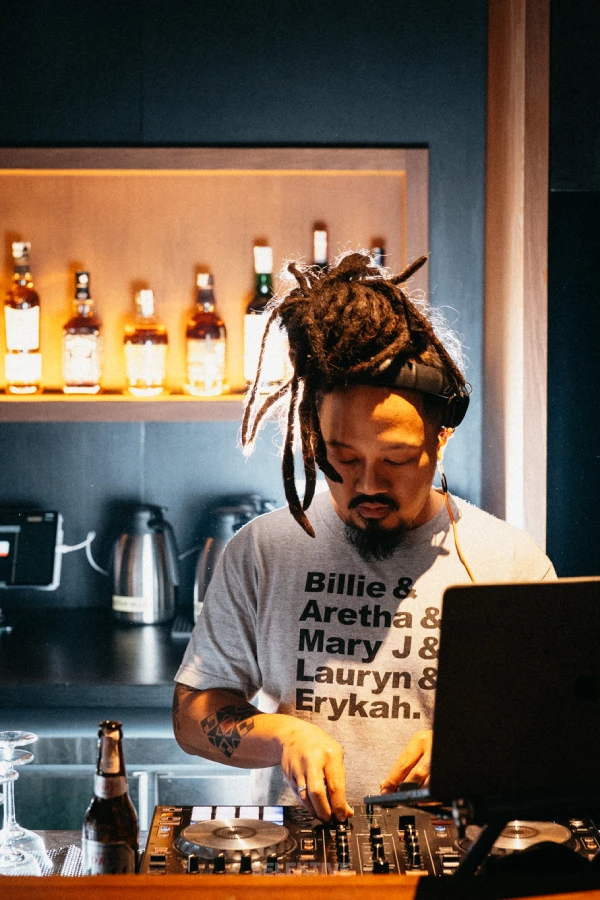
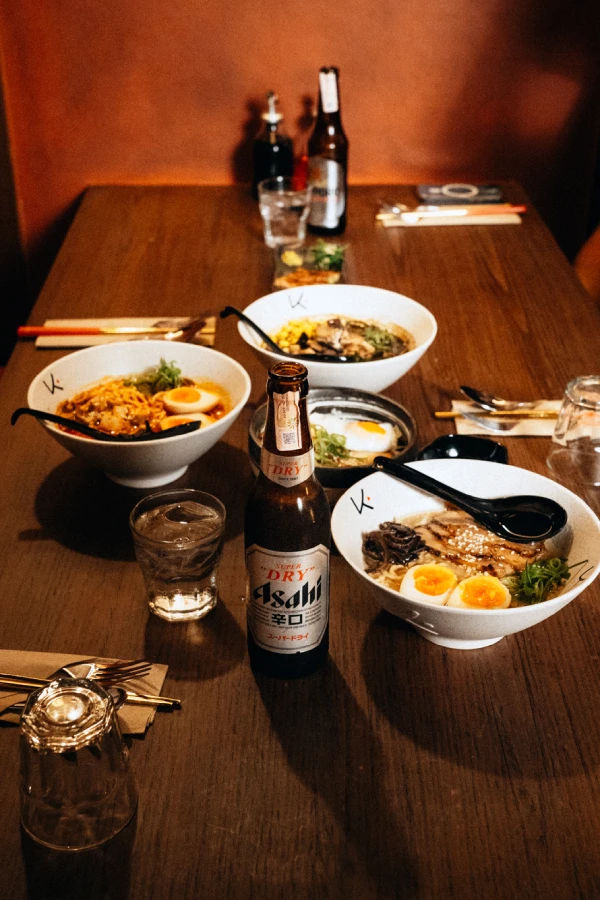
Directly across the road, another business owner also made the brave decision to branch out into Kuta. Punang Adiprana opened his fourth venue of Kenji Ramen, a popular Japanese izakaya, in Kuta back in 2025.
“We opened here because a lot of our existing customers asked us to set up shop in the area. Actually, Kuta also brings me back to my youth,” reminisces the young restaurateur, who grew up in Jakarta.
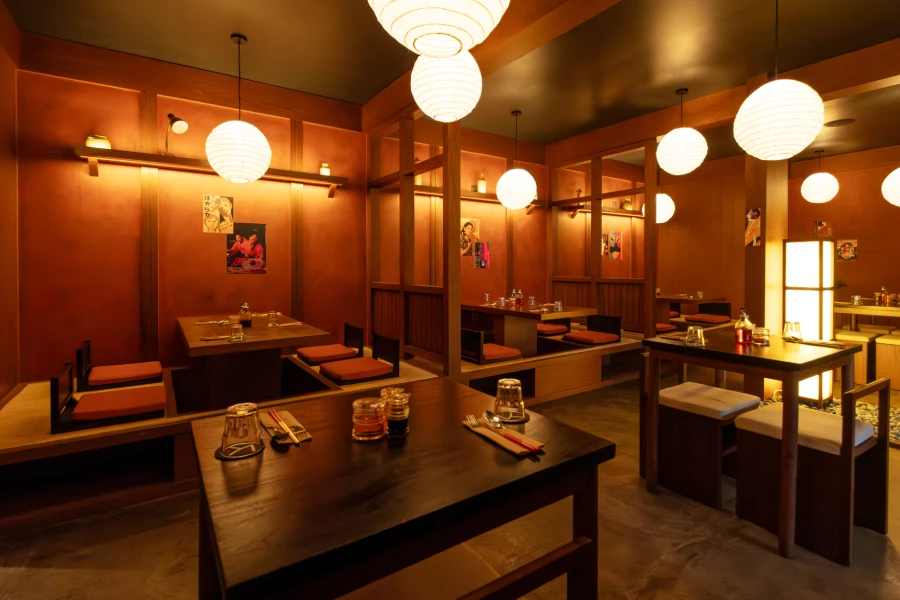
Photos courtesy of Kenji Ramen Bali
From an unassuming storefront, a very chic but authentic ramen experience awaits inside, complete with kitchen-viewing single seaters for those there in for a quick slurp, to tatami-style tables and a fully-stocked bar space, complete with cold Asahi beers and premium cocktails. Punang’s partner brings 15 years of Japanese cooking experience, with 24-hour-cooked ramen broths and delicious yakitori skewers.
With much of Jalan Legian’s food and beverage offerings dominated by more general local eateries, Punang saw a gap for a more cuisine-focused dining establishment in the area. This has proven successful in other areas of Bali, where a healthy variety of smaller restaurants and cafés have helped to create an ‘eat street’ experience. However, he fears they may be a little early to the game in Kuta, and laments a few more modern establishments are still needed to make the region more attractive.
“If I could choose my neighbours, I’d love to have more contemporary café brands, like Yardbird, single-cuisine restaurants, or modern streetwear and skate brands to bring in a fresh shopping demographic,” says Punang, who sees the potential of a Kuta revival. Just down the road, popular Vietnamese restaurant Me Vui has become a mainstay, but these modern restos remain a minority in a street still home to an abundance of souvenir shops, or massage and tattoo parlours.
Photos courtesy of Legian Steak Project
“This area still has a majority of Australian tourists, and what do Australians love? Steaks!”
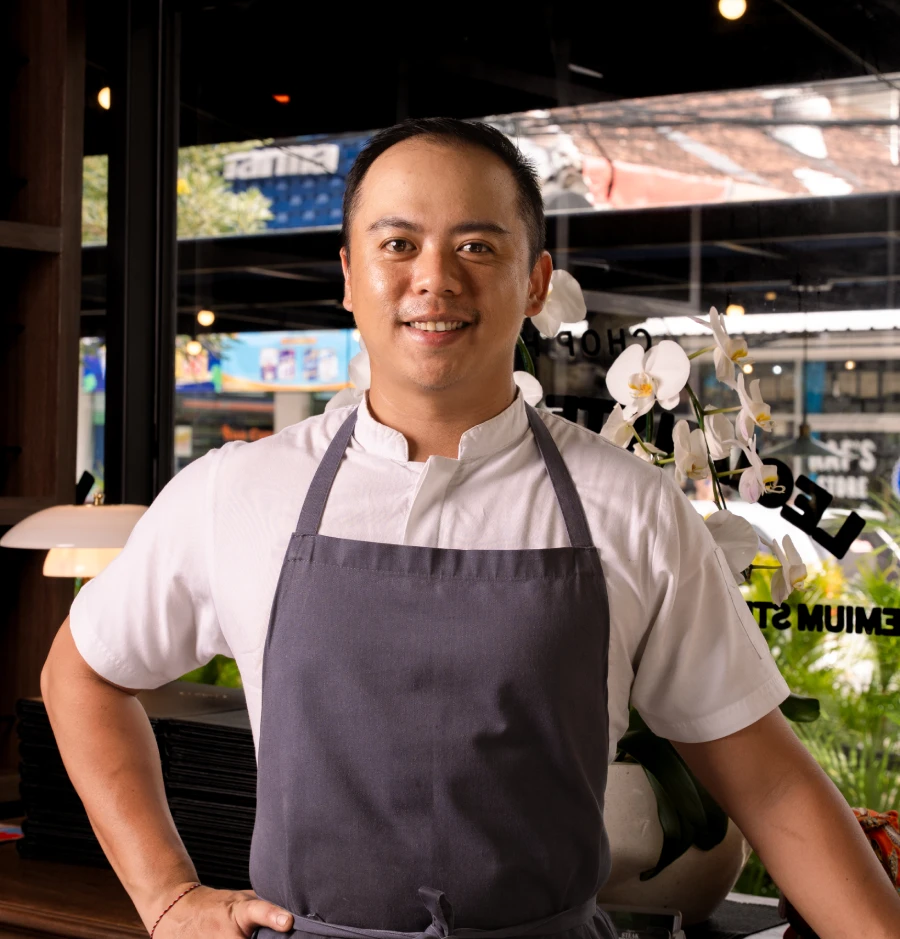
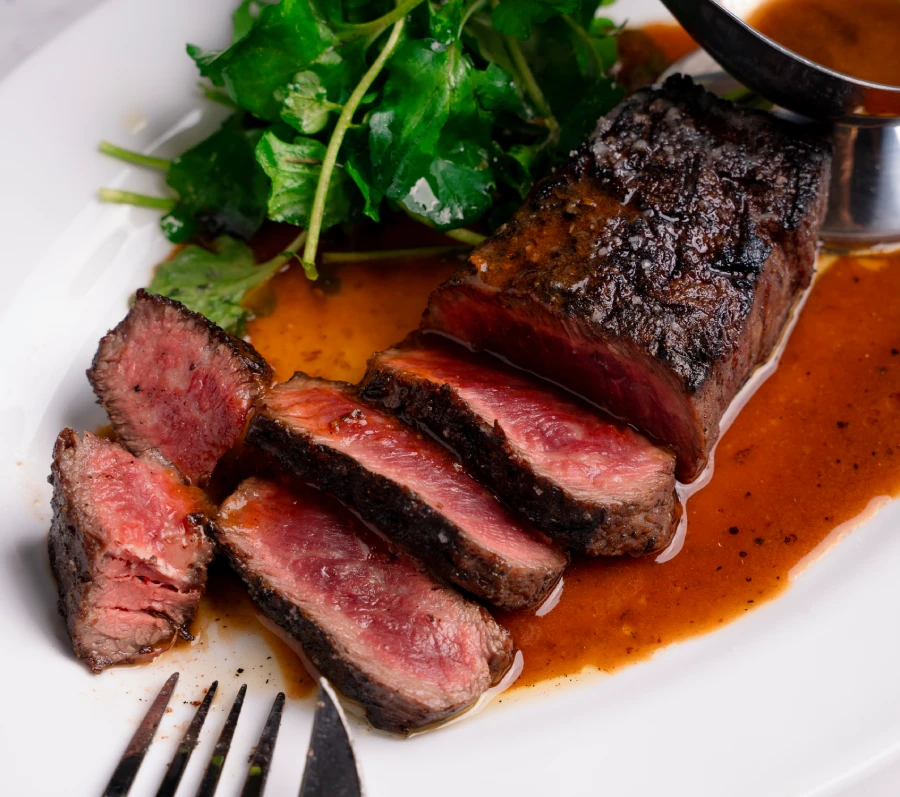
For husband-and-wife team Chef Nicholas Scorpion and Nila Devi, opening Legian Steak Project was strategic. They worked backwards: seeing a space open up in the area they thought to develop a restaurant concept for the demographic, and the answer was a sleek, cosy steakhouse. Set on the street front of Jalan Sahadewa, LSP opened in August 2025 and has welcomed a steady stream of very happy diners.
“We felt this strip was missing an upmarket standalone restaurant, because there are some affluent guests from the Pullman, Padma, Legian Beach Hotel looking for somewhere to eat out. So we positioned ourselves as smart and modern, but not ‘white table cloth’,” explains the chef.
With a fresh, mid-century interior, the steakhouse is both classy and approachable. But Chef Nicholas brings his fine dining background to deliver an excellent menu of premium steaks and starters. From fresh Sakoshi Bay oysters, to tuna carpaccio, and a whole selection of primary and specialty cuts – ribeyes to hanging tenders and flat iron steaks. LSP would hold its own in Seminyak and Canggu.
“A restaurant like ours would charge 50% higher, or more, if it opened in Seminyak or Canggu, but we understand there’s a different expectation in this region and I think we’re a really affordable, but quality restaurant,” he adds.
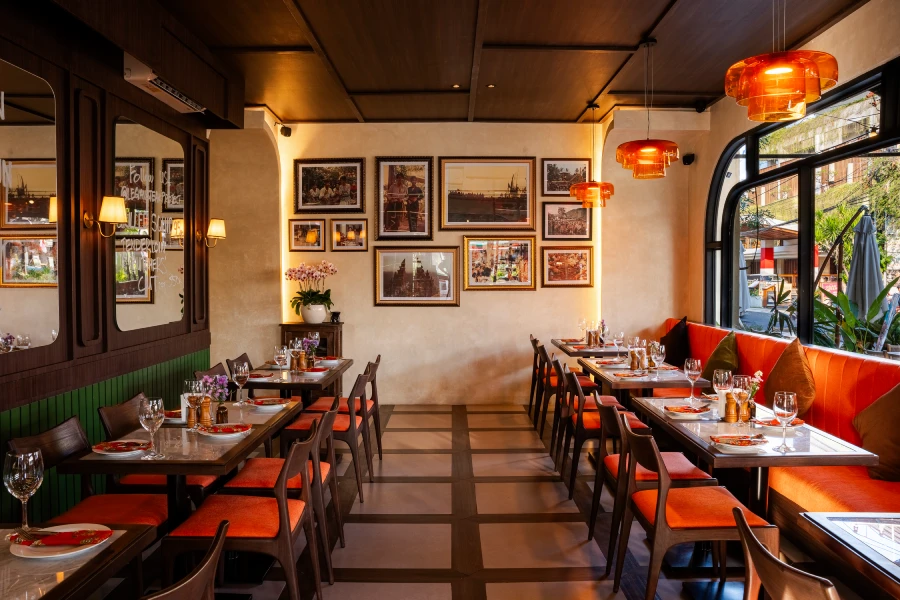
Photo courtesy of Legian Steak Project (LSP)
This was more than a business decision for Nila Devi. Her family home is just behind the restaurant, and just up the road was the plot of her family’s Kuta restaurant from the 80’s, known as Yanie’s. So by opening a restaurant, life had come full circle, bringing them back to where it all began –– old photos immortalise these memories on the restaurant walls.
The space for Legian Steak Project was made available when the local banjar decided to build a modern arcade over an old market square, complete with a spacious parking area. And perhaps this is what Kuta needs, a clean slate and available spaces to let new and small businesses recreate the ageing atmosphere.
Planning a Better Future
The rapid and sporadic developments from Kuta’s early years, mixed with large modern developments, has created a clash: the different identities of the four decades stacked upon each other, leaving the streets to feel incongruous. Imagine an urban plan that has the bigger, more formal attractions beachside – including the mall, which has kept the area thriving – complemented by a row of great independently-owned restaurants, stores and services on Jalan Legian. The alleyways between them cleaned up and filled with spaces for local brands, coffee houses, quaint restaurants or charming bars.
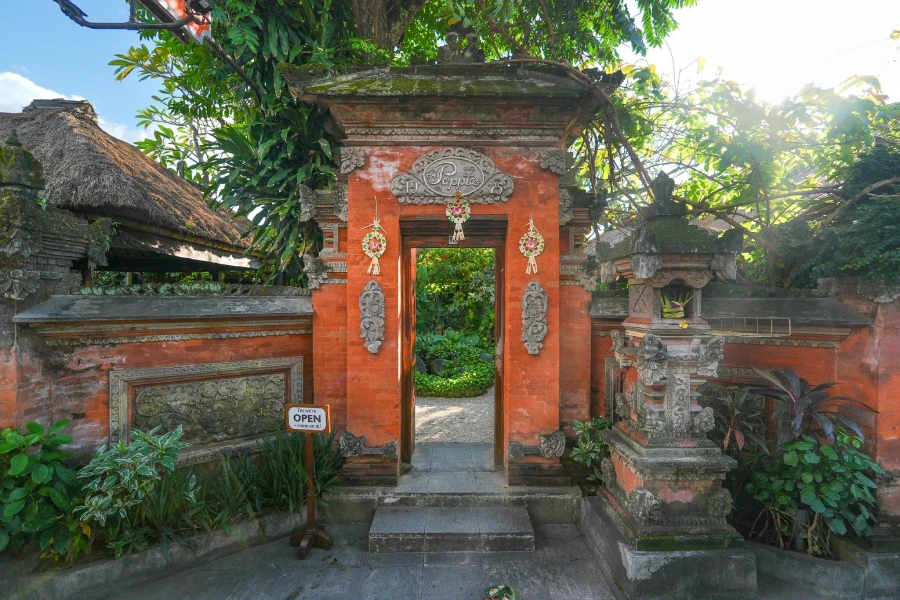
Gentrification always gets a bad wrap, but if it revitalises an ageing area I would say that’s a net positive, for both visitors and business owners alike. And that doesn’t mean history won’t have its place, institutions likes Poppies Restaurant, Kopi Pot and Made’s Warung must live side-by-side the new, displayed proudly as Kuta’s early roots, still standing to this day.
All three restaurant owners we spoke to said the same thing – the land and rental prices in Kuta are too high to invite new businesses. They encourage the local community to readjust their rental prices, curate their tenants carefully, and they’ll see the neighbourhood transform for the better. With its proximity to the airport, and a huge stretch of beachfront, a Kuta comeback would be great for Bali.
BGS Bali – @bgsbali | bgsbali.com
Kenji Ramen – @kenji.ramen
Legian Steak Project – @legiansteakproject
Poppies Bali – poppiesbali.com