


To many visitors, exploring the island’s rich culture typically means a trip to galleries and museums, where art, tradition, and history are on full display. But why should this experience be limited to these spaces when across the island, hotels and resorts have found their own ways to incorporate Bali’s artistry into their properties? Whether through antique collections, architectural details, or even displaying artworks in their spaces, here we share properties that take guests on an immersive journey where hospitality meets artistic heritage.
Sofitel Bali Nusa Dua Beach Resort
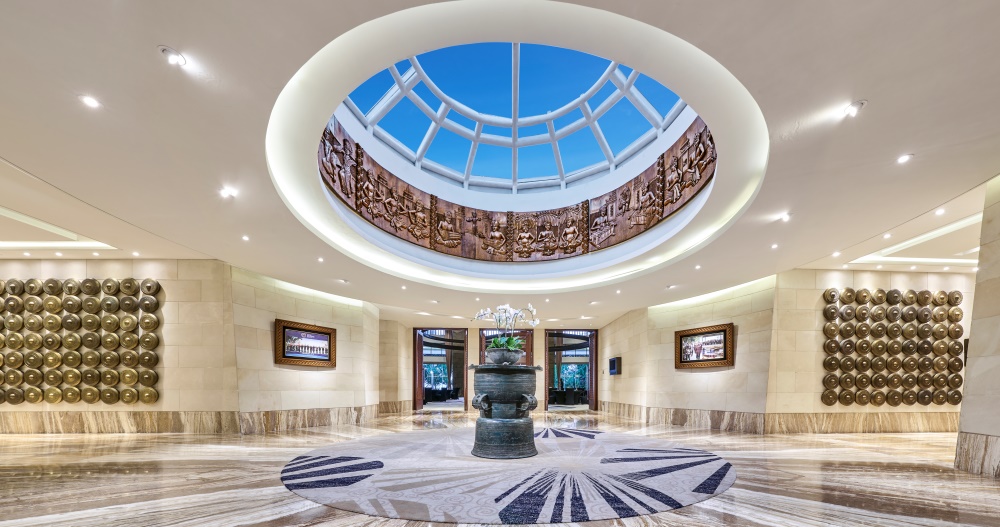
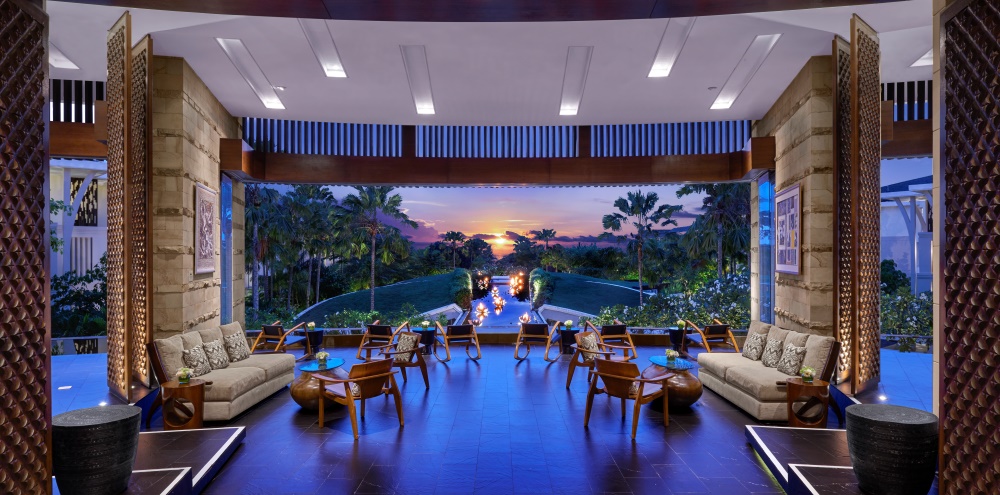
Seamlessly blending the timeless artistry of Balinese culture with the elegance of French art de vivre, Sofitel Bali Nusa Dua Beach Resort is where two worlds meet in perfect harmony. Designed by Wimberly Allison Tong & Goo (WATG), with interiors by Wilson Associates and construction by Nusa Raya Cipta, the resort strikes a captivating balance between global refinement and local tradition.
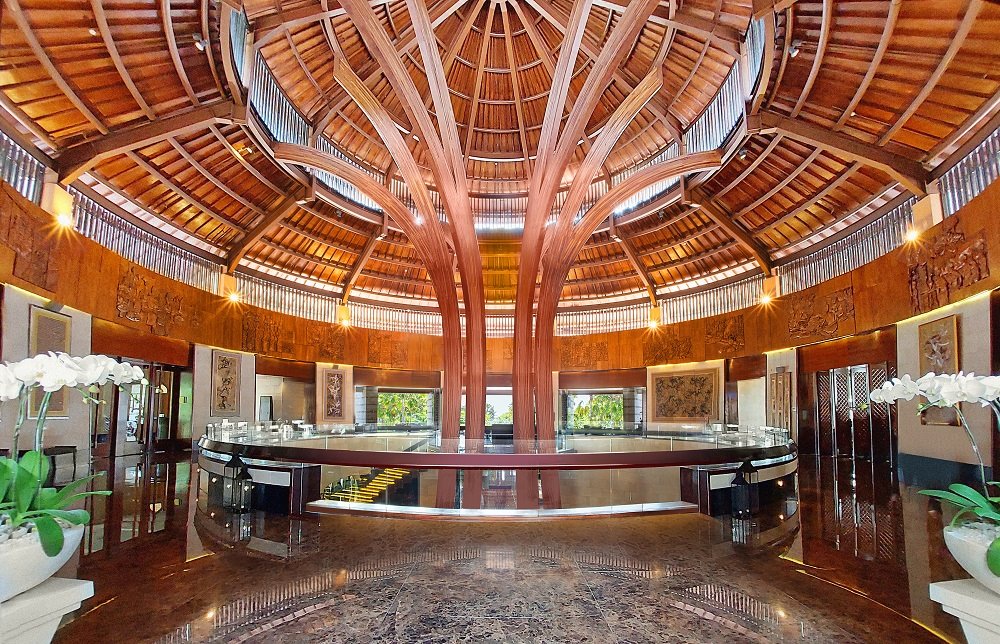
From the moment you arrive at the lobby drop-off, your eye is drawn to sweeping architectural details. As you pass through the foyer, flanked by water walls adorned with dangling bells, the space opens into a majestic lobby. Here, modern craftsmanship meets Balinese symbolism: soaring wooden pillars branch upward like a sacred tree. Inspired by the banyan tree – revered in Bali as a symbol of unity and power – the design evokes both strength and spirituality.
Five towering, twenty-metre pillars rise from the lower level, their banyan-like branches supporting the lobby’s rotunda ceiling. Crafted from glulam, an engineered wood made from layered, moisture-resistant lumber, the structure embodies both innovation and durability. The rotunda itself is adorned with intricately carved wooden panels by Yogyakarta-based artist Agus Suharyanto, depicting the trimurti in exquisite detail.
The design story continues in the Gamelan Ballroom foyer, where intricate carvings encircle the illuminated atrium, while walls embellished with traditional gongs and stone textures echo Bali’s timeless craftsmanship. From its magnificent architecture to its finely detailed interiors, the resort is a living celebration of creativity and connection – inviting guests to pause, reflect, and experience the textures of Bali’s soul woven effortlessly into French refinement.
+62 361 849 2888 | @sofitelbalinusadua | sofitelbalinusadua.com
Hotel Tugu Bali
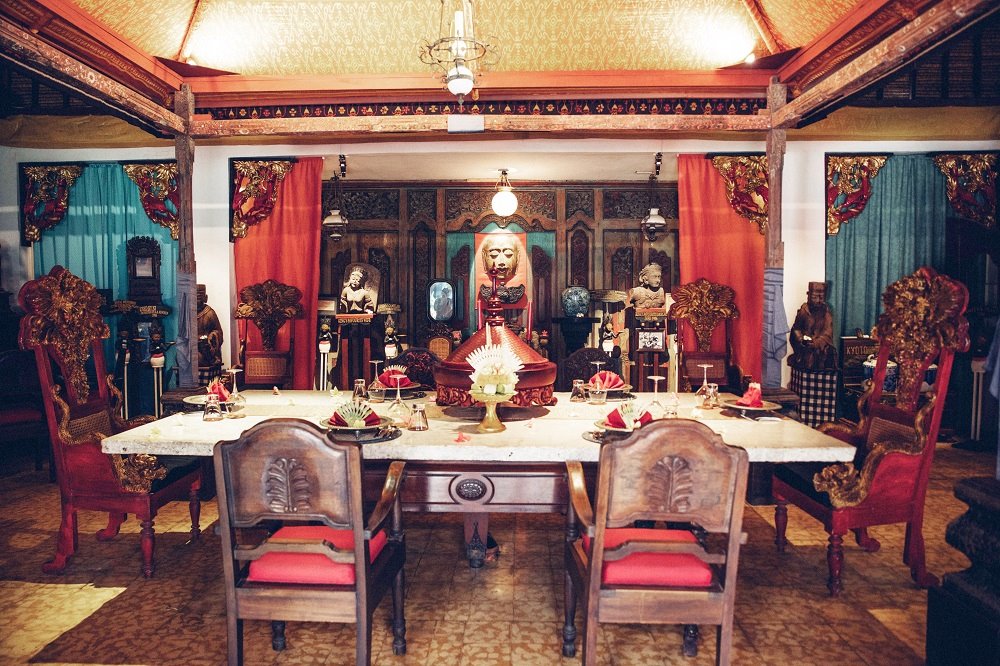
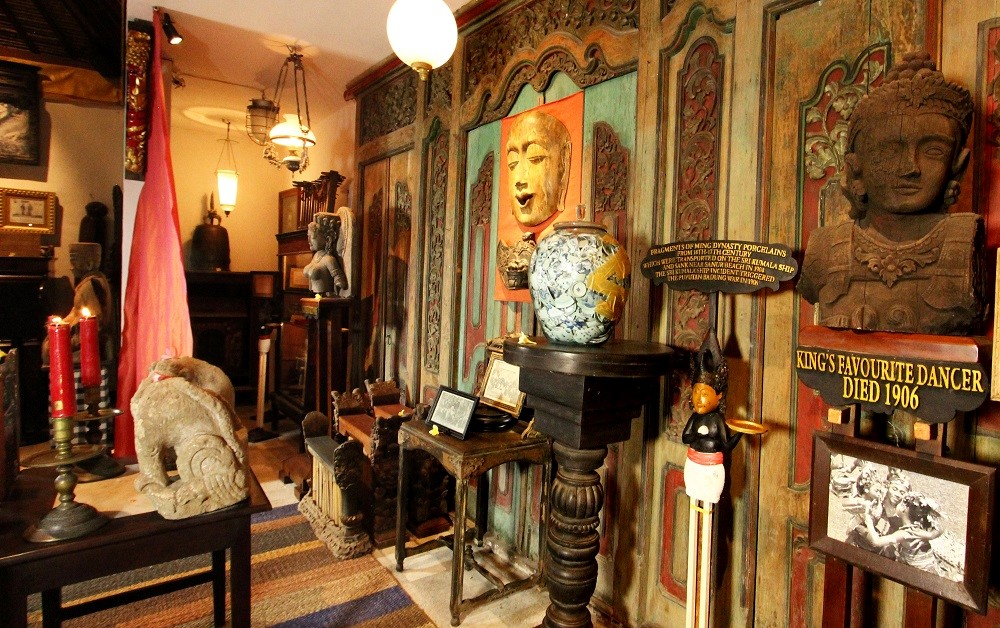
Though a hotelier, Anhar Setjadibrata is renowned in Indonesia’s art circles. His greatest passion lies in collecting antiques, particularly those with deep ties to Indonesian history. This passion began in 1979, when his work took him to remote villages across the archipelago, far from his home in East Java. From Nusa Tenggara to Kalimantan, he encountered the nation’s diverse cultures, meeting and learning from locals, and collecting antiquities and cultural relics as tokens of his journeys.
After amassing an extensive collection, he felt compelled to share these treasures with the world. In 1989, he founded Tugu Park in Malang, East Java – the first of its kind: a museum hotel. It was a whimsical establishment that did not simply display art; the hotel itself was art. Its design, accoutrements, and layout were meticulously curated, with each piece rooted in historical context. Today, Hotel Tugu Malang remains home to one of the largest collections of Javanese, Chinese, and Dutch colonial antiques in Indonesia.
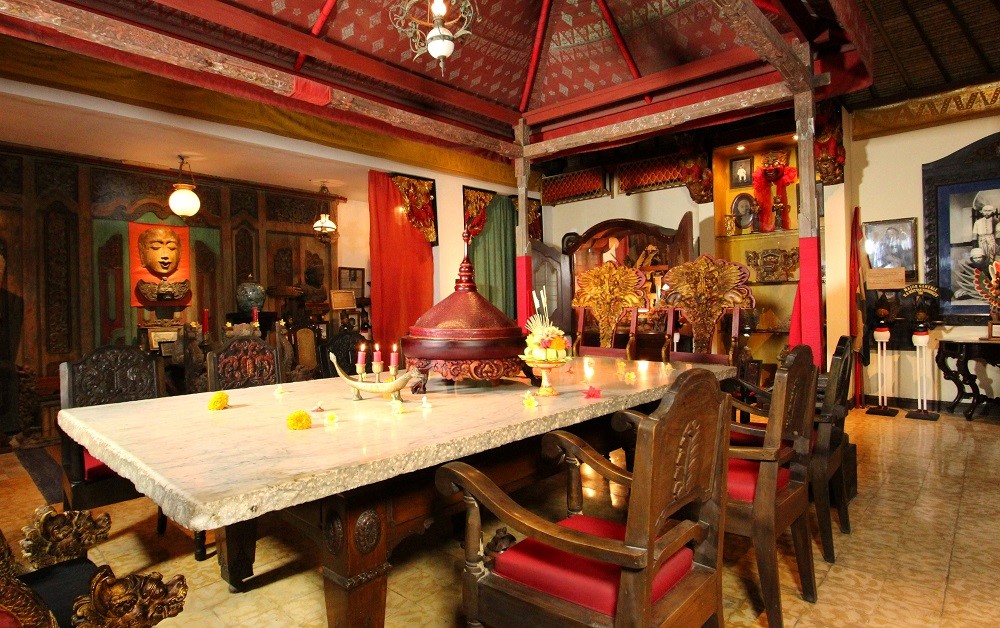
Tugu, the Indonesian word for ‘monument’, grew into a collection of properties with openings in Lombok, Blitar, and, of course, Bali. Like its predecessor, the Canggu-based Hotel Tugu Bali is also a ‘museum hotel’. Dining spaces here carry deep historical significance, such as Bale Puputan, which honours Bali’s bloody war of independence against Dutch colonisation. The royal chamber is adorned with antiques once belonging to revered Balinese royalty, some dating back to the 19th century and others directly tied to Bale Puputan. At its centre stands an immense 19th-century marble table with regal armchairs, encircled by antique statues of Balinese mythological creatures. Guests are invited to experience a taste of imperial dining reminiscent of a royal banquet from centuries past.
Another highlight is Bale Sutra, a dining room housing an 18th-century Kangxi-period temple. The collection extends further, showcasing treasures such as 12th-century guardian statues, a 150-year-old wooden well, and perhaps the most prized artefact of all, Cupu Manik, a 16th-century priest’s holy water bowl from Bali. Importantly, Hotel Tugu Bali provides background information on its many artefacts and antiques, enriching every guest’s stay with a sense of discovery and making each visit not just luxurious but also an immersive cultural journey.
+62 361 473 1701 | @hoteltugu_bali | tuguhotels.com
The Apurva Kempinski Bali
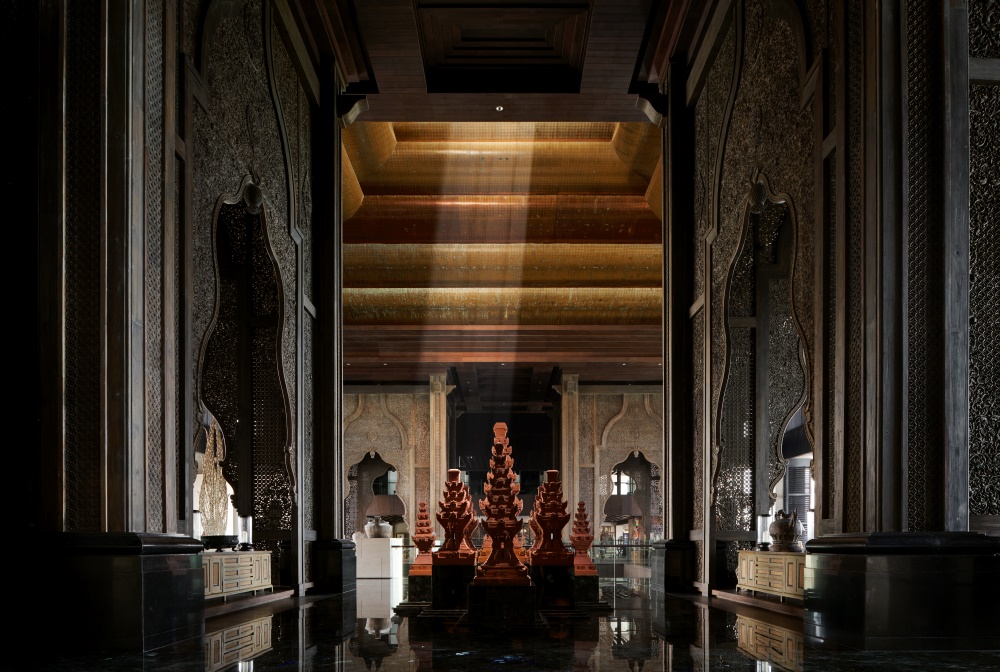
Taking a distinctive approach to honouring Indonesia’s ancient heritage, The Apurva Kempinski Bali in Nusa Dua presents a majestic display that mirrors the might and grace of the Majapahit Empire, a defining era in the nation’s cultural identity.
Tasked with capturing the grandeur of this period, architect Budiman Hendropurnomo of Denton Corker Marshall and interior designer Rudy Dodo of Trivium Design Group delved into archival texts and centuries-old literature, drawing inspiration for the resort’s breathtaking design.
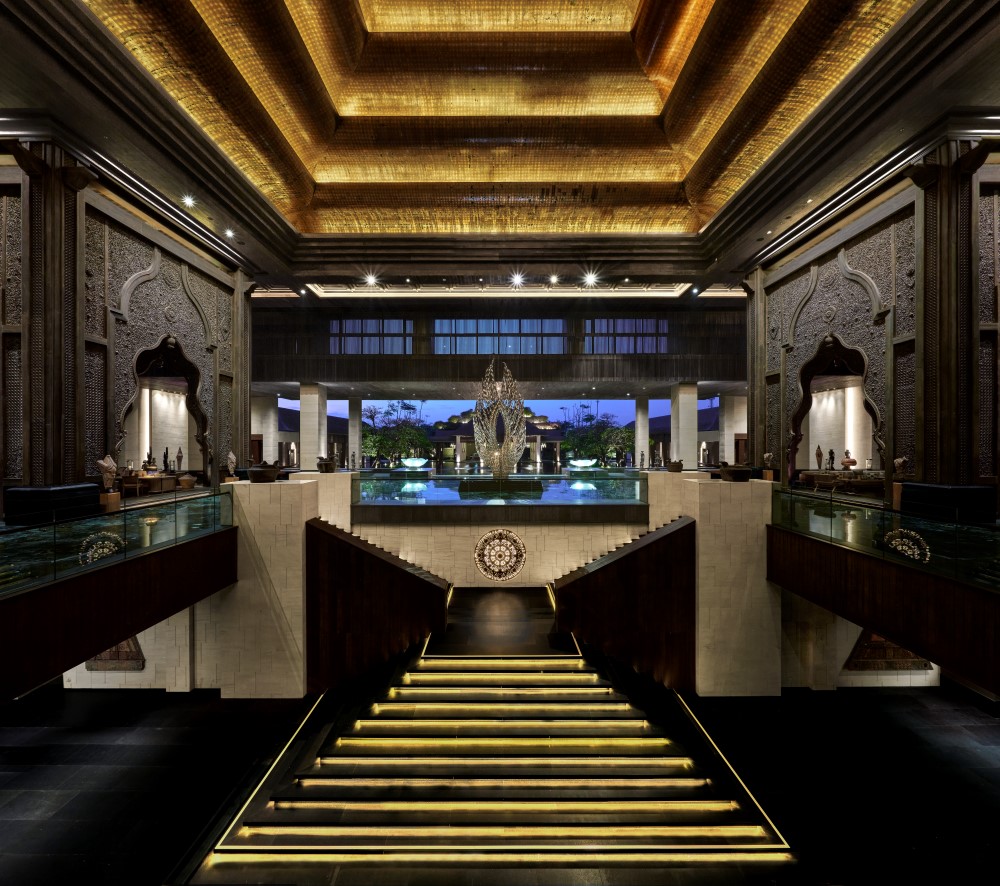
The resort’s impressive façade is best admired from the beachfront, where it rises like a palace carved into the cliffside. At its heart lies a dramatic 250-step staircase, inspired by Bali’s mother temple, Pura Besakih. On either side, tiered green roofs cascade down the hillside, complemented by flowing water features that evoke Bali’s traditional subak irrigation system. Together, these elements create the impression of a larger-than-life open-air theatre.
This sense of splendour continues inside the resort as Rudy Dodo based his interior design concept around three pillars: storytelling, tropical settings, and contemporary aesthetics. A story is certainly told in The Apurva Kempinski Bali’s magnificent lobby.
Modelled after an ancient royal pendopo, an old Javanese reception hall used for important meetings and ceremonies, the lobby is a jaw-dropping space which covers 2,000 sqm and soars 14 metres up to the tapered gold roof. Craftsmen and artisans from across the country were involved in its creation, as this was a construction of traditional architecture on a scale never done before.
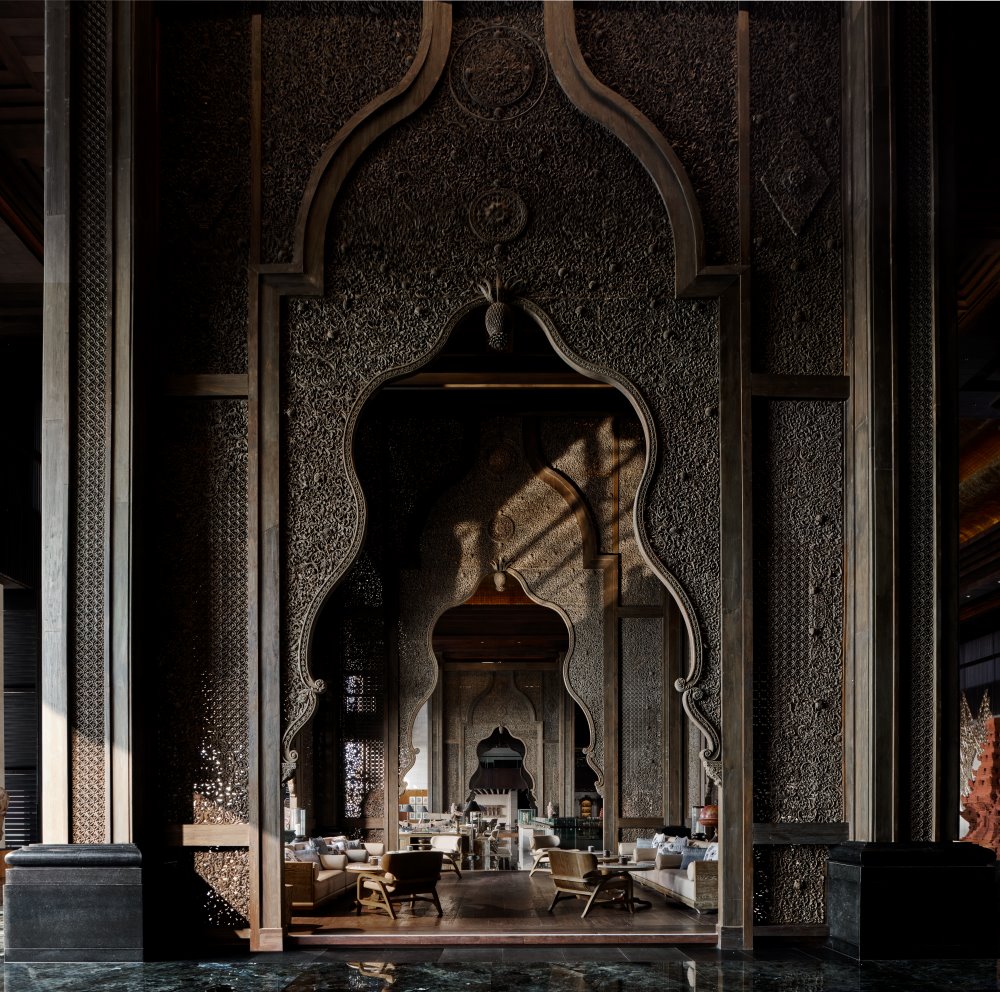
Filling this colossal space are four seating areas divided by towering hand-carved gebyok partitions, each measuring 12 by 8 metres of intricately hand-carved teak, displaying the extraordinary skill of Indonesia’s artisans.
Paying tribute to the Majapahit era as an early archipelagic kingdom, the resort also showcases a rich array of handicrafts from across the nation. Woven Sumba textiles, handmade Jepara wood carvings, and decorative art from Sulawesi, Papua and Kalimantan are displayed throughout the resort, celebrating the diverse cultural heritage of Indonesia.
+62 361 2092288 | @kempinskibali | kempinski.com/bali
Bali Beach Hotel, The Heritage Collection
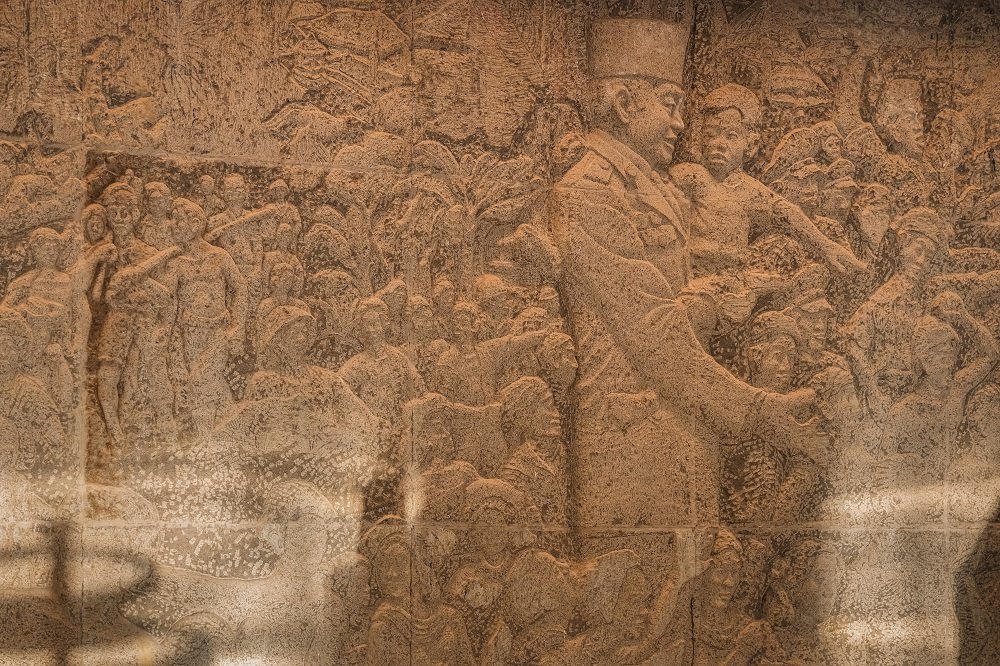
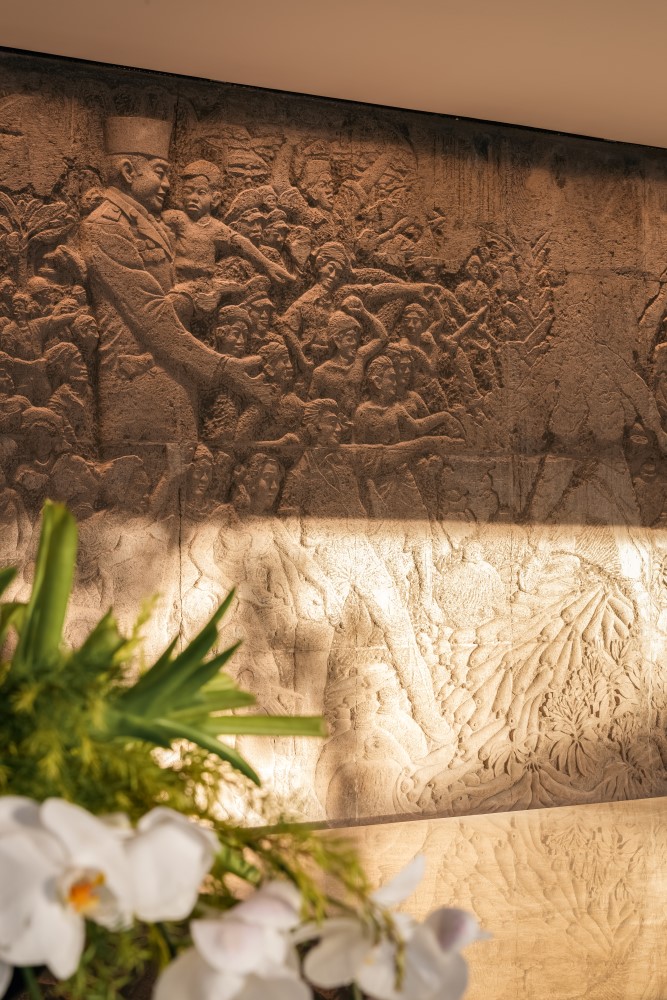
For nearly six decades, Bali Beach Hotel, The Heritage Collection, has stood proudly as a symbol of history and legacy. Even after its revival, the hotel continues to honour the visionary spirit of its founding father, Indonesia’s first president, Ir. Soekarno. Today, the iconic hotel reimagines its historic soul while passing on an enduring legacy to future generations.
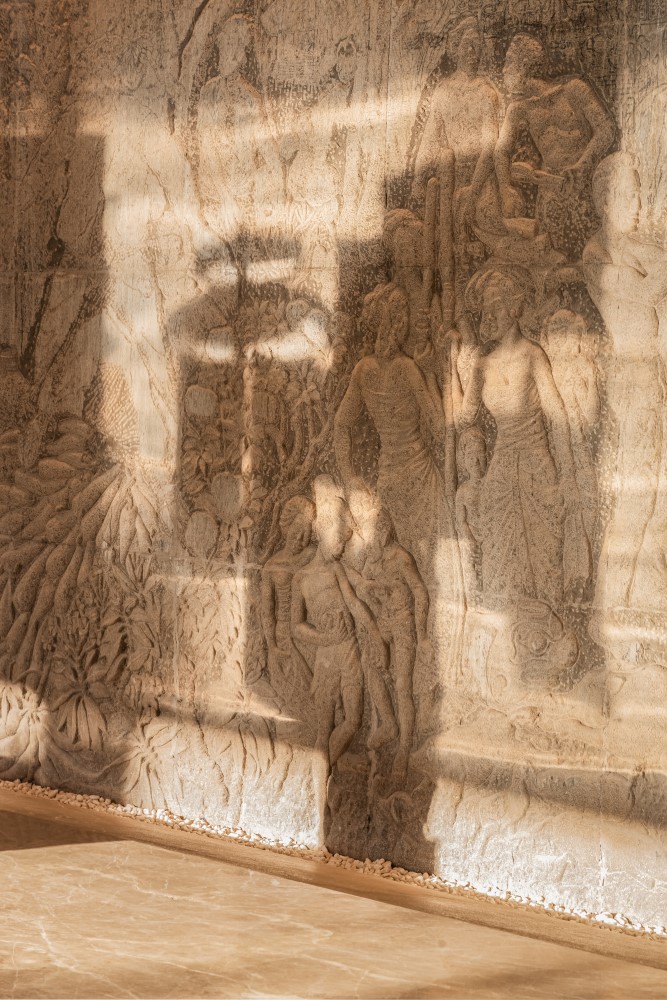
One of the hotel’s most fascinating features is a relief that channels this historical legacy through art. The monumental piece portrays daily life in Bali – farming, sculpting, fishing, and social, traditional, and cultural activities. At its centre, President Soekarno is depicted carrying a child amidst a lush natural setting. The relief is widely believed to symbolise how Soekarno, the proclaimer of Indonesia’s independence, inspired the nation’s growth in the years following independence.
Majestically displayed in the aptly named Soekarno Lounge, the relief was designed in 1965 by Indonesian realist artist Harijadi Soemadidjaja. Measuring 23.5 metres long and 3.7 metres high, it was carved from volcanic andesite stone sourced from Mount Merapi in Yogyakarta.
After the events of the 30 September 1965 Movement in Jakarta, the relief was left unfinished, with parts of the original outline still visible around it. The government of the New Order halted funding after Harijadi refused their demand to remove Soekarno’s image. Still, Harijadi continued independently, completing as much of the work as possible at his own expense.
Today, the relief endures as a powerful testament to Indonesia’s journey and the resilience of its people, serving as both a cultural treasure and a symbol of the development of Balinese tourism since the hotel’s establishment.
+62 361 201 2000 | @balibeachsanur | balibeachsanur.com
Sudamala Resort Sanur
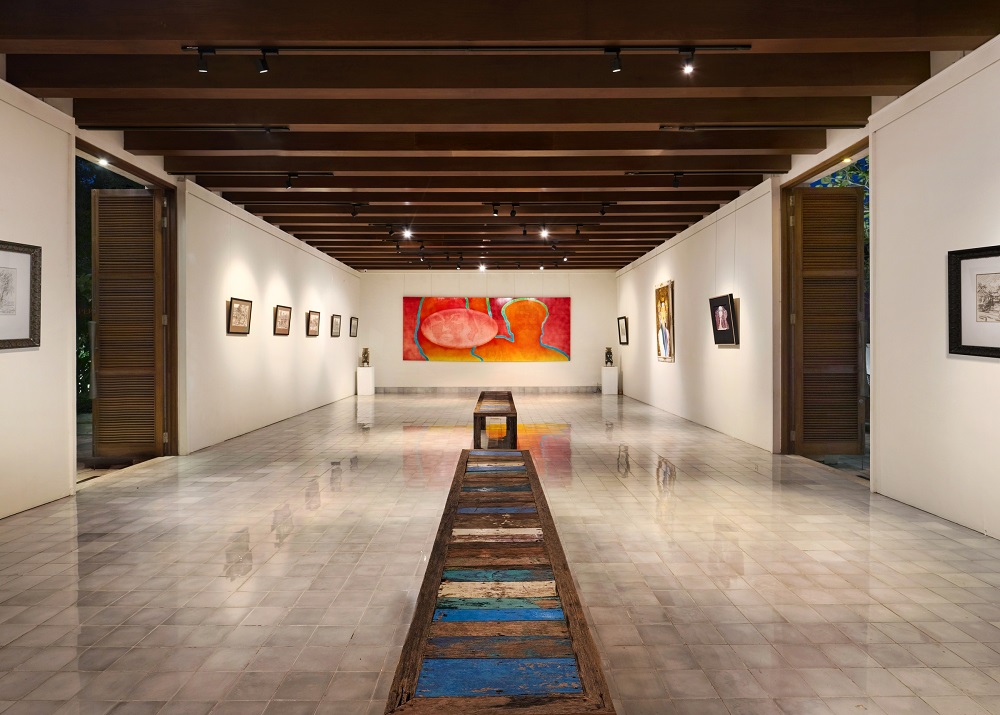
Nestled amidst the peaceful Sanur neighbourhood, art connoisseurs will find a centre for contemporary art in Bali at Sudakara ArtSpace. Standing out as a vibrant cultural landmark within Sudamala Resort, Sanur, visitors of the art gallery can expect to witness Bali’s vibrant art scene through exhibitions, artist talks, or simply exploring the gallery.
Since its inception in 2012, Sudakara ArtSpace at Sudamala Resort Sanur has become a significant hub of Indonesia’s contemporary art scene. Renowned for its eclectic exhibitions, the gallery showcases both local and international artists, blending Bali and Indonesia’s cultural heritage with global influences.
Sudakara ArtSpace provides a platform for various art forms, from paintings and sculptures to photography and other art installations, where each exhibition is carefully curated to inspire and encourage conversation, reflection and understanding. This approach has gained the gallery a dedicated following locally and internationally.
The venue is designed to connect people through art, challenge perspectives, and celebrate creativity. Over the years, the gallery has hosted numerous exceptional exhibitions, workshops, and events, further cementing its role as a hub for artistic innovation and expression. Sudakara ArtSpace also aligns with Sudamala Resorts’ commitment to cultural preservation, sustainability, and community involvement, supporting local artists and cultural projects.
Sudakara ArtSpace invites art enthusiasts to explore and discover the rich tapestry of contemporary art in Bali.
+62 361 288 555 | @sudakaraartspace | sudamalaresorts.com