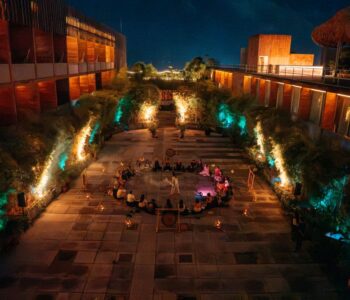



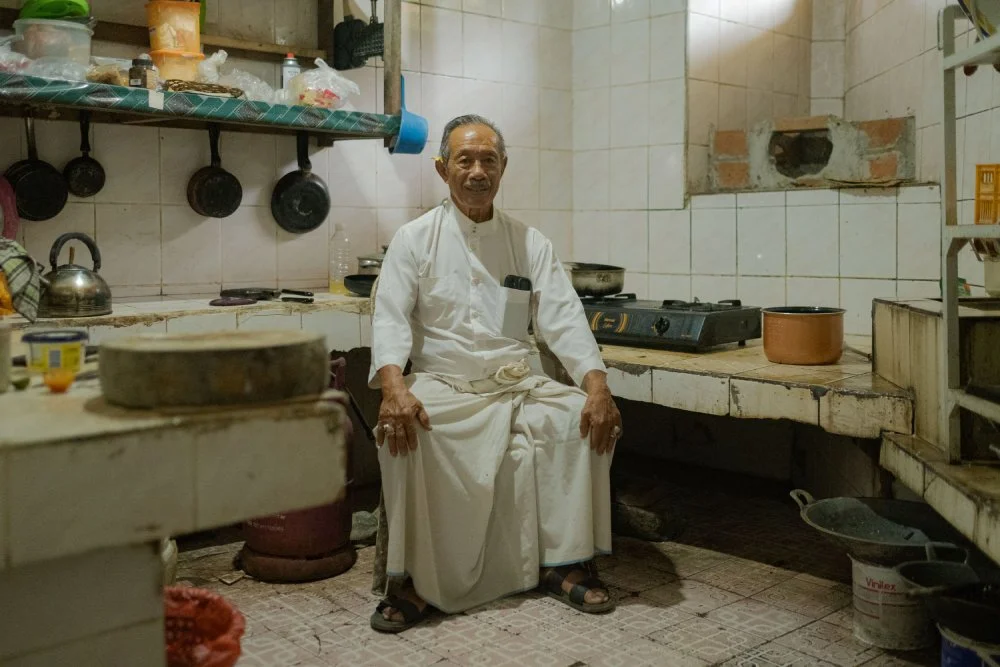
Most traditional Balinese cooking knowledge is not written down. It moves through practice, carried from elders to younger generations within families and banjar. Measurements are not recorded in grams but felt through texture, temperature, and resistance under the blade. Balance is recognised through aroma and memory. Technique is learned through repetition rather than formal instruction.
UNESCO defines it as practices communities recognise as part of their cultural identity. Balinese cuisine reflects this clearly. It is shaped by ritual, hierarchy, and collective responsibility.
I Gusti Nyoman Darta was formed within that system.
He began working at Puri Ubud as a child, not as a chef but as a parekan, a palace attendant. His routine was unglamorous: sweeping courtyards, assisting elders, preparing ingredients, attending school, returning to work. Cooking was not a career choice. It was immersion.
His training began with sound.
Nektek. The rhythm of a cleaver striking wood: “tek… tek… tek…”
The word describes the precise chopping required to prepare basa rajang, the foundational spice mixture of Balinese cuisine. Galangal, ginger, bangle (cassumunar ginger), turmeric, garlic, chili, bay leaf, lemongrass – each ingredient must be cut evenly. Size affects absorption, heat distribution, and texture. A careless cut disrupts proportion before the dish reaches fire.
Through repetition, the technique becomes embodied: muscle memory eventually replaces written measurements. The hand functions as a scale; the nose signals readiness. Consistency is achieved through a disciplined memory.
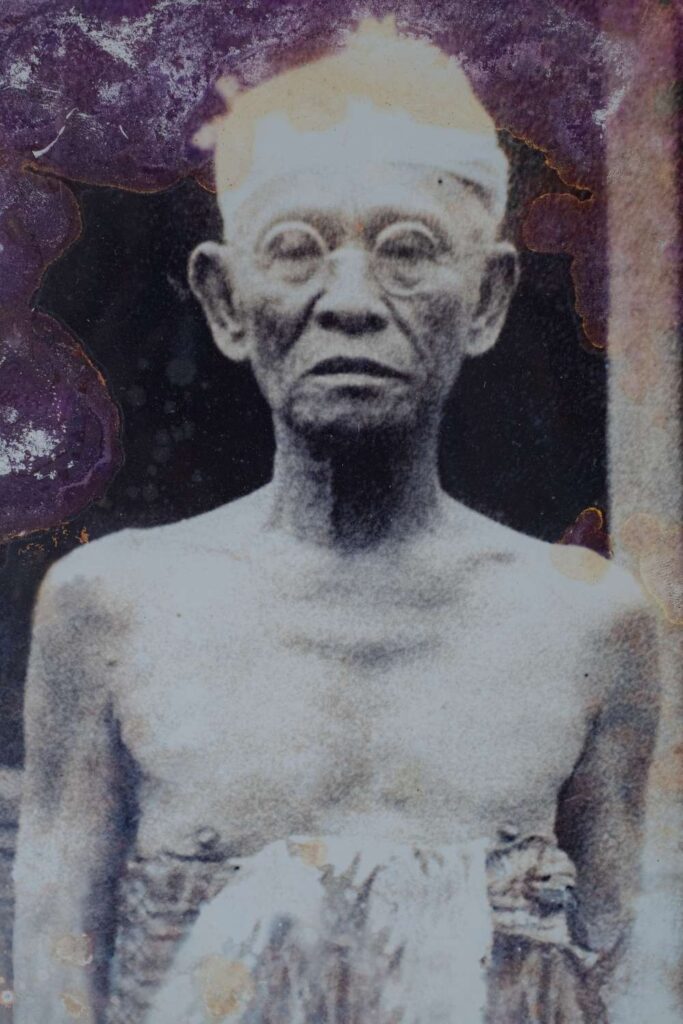
Darta was close to Cokorda Lingsir, one of the royal elders immersed in lontar manuscripts, palm leaf texts containing cosmology, ethics, and ritual codes. These were not cookbooks, yet they framed an understanding in which food could not be separated from order. Each dish carries context, and as such, preparation follows a sequence. The act of cooking part of an ingrained hierarchy.
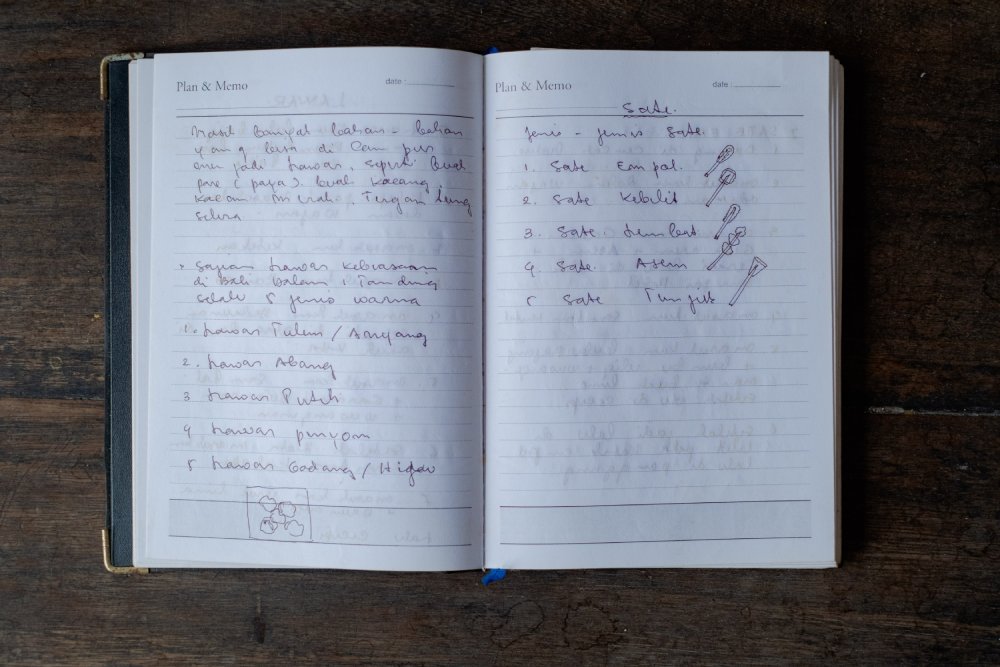
Consider katik empat likur: 24 satay skewers arranged in distinct variations: sate empol, sate kebelit, sate lembat, sate asem, sate tunjuk. Each type differs in preparation and placement. The composition shifts according to rank. A king receives a different arrangement from a priest or government official.
The memory of Cokorda Lingsir remains vivid in Darta’s recollection. He recalls watching him prepare ceramcam, a dish he favoured. Made from meat of cundang chicken, a term for a fighting rooster defeated in cockfighting. The meat was chopped and cooked with basa rajang – the finely cut galangal, ginger, turmeric, garlic, zingiber cassumunar, chili, aromatic spices, bay leaf, and lemongrass – and served as a broth.
Darta keeps handwritten notebooks among stacks of photographs and literature in his home. Written in Balinese and Indonesian, the pages record uncommon terms and reflections on culinary ethics and ceremonial practice. They are not recipe books but working documents concerned with relationships between food, hierarchy, and responsibility.
Over time, his reputation extended beyond Ubud. Culinary figures such as William Wongso recognise him as a chef, acknowledging his understanding of structure and philosophy in addition to technique.
In another circle, his name is spoken as the grandson of I Gusti Nyoman Lempad, one of Bali’s master painters.
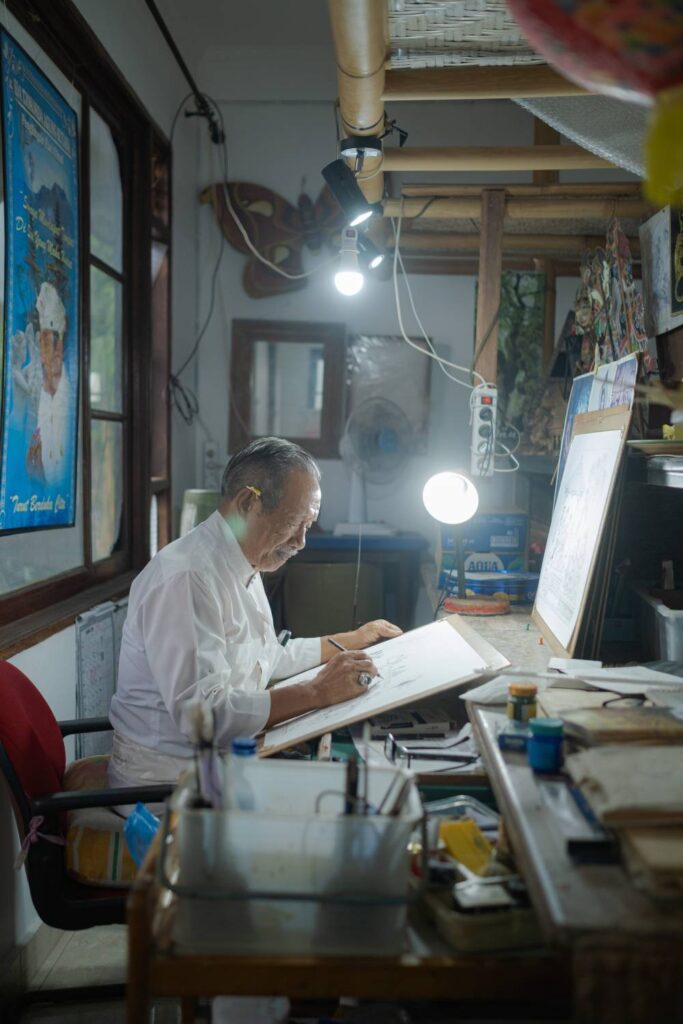
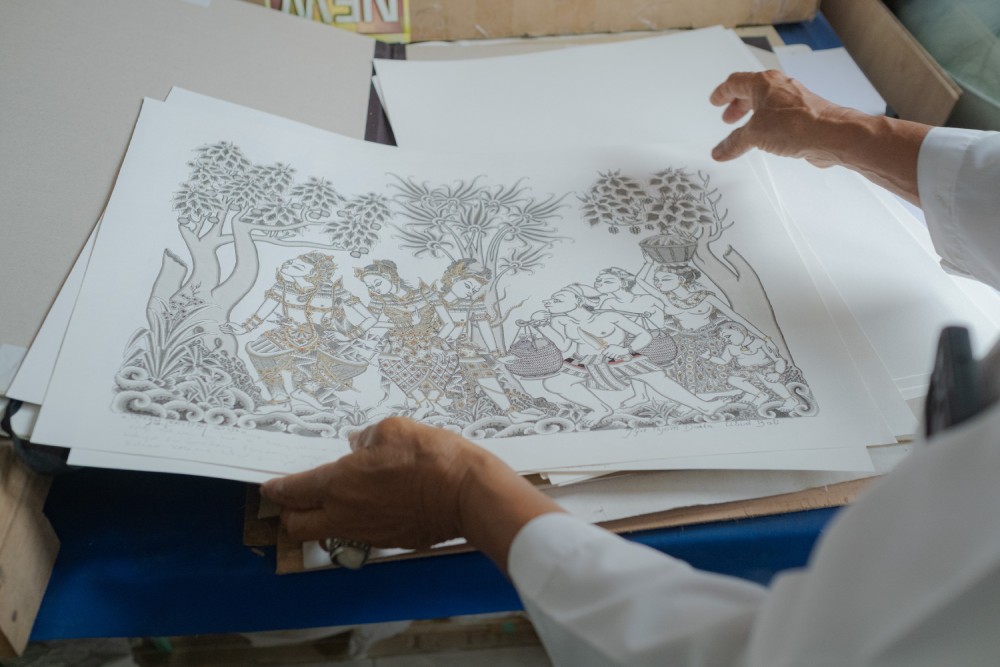
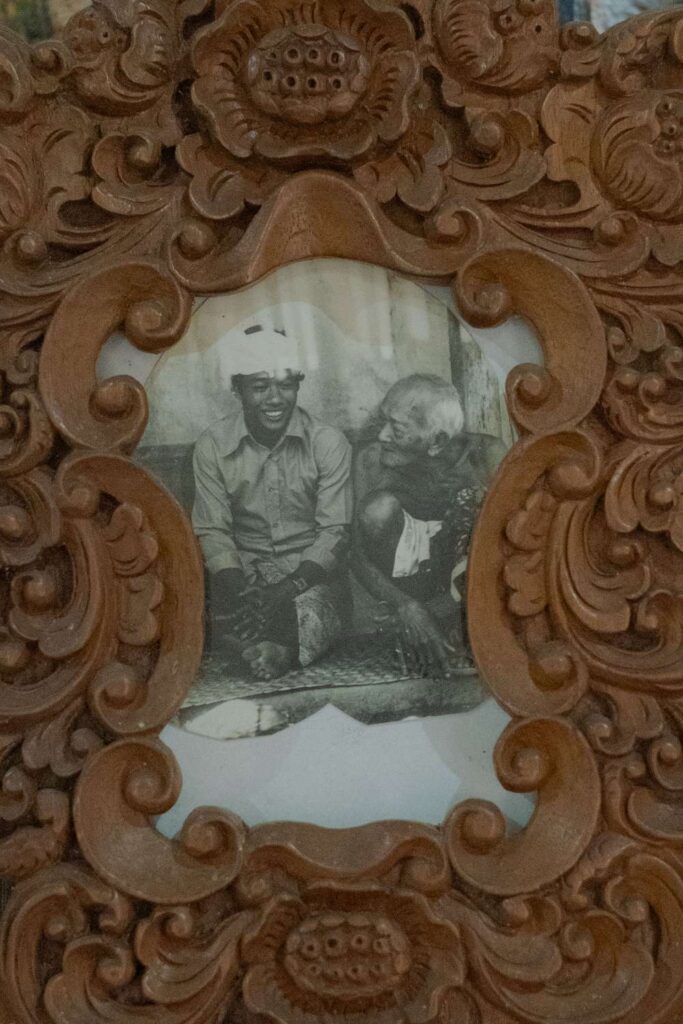
His relationship with his grandfather was shaped more by distance than apprenticeship. Denied formal study as a child, he learned through observation, and later assisting in restoring several works.
During his tooth-filing ceremony, a ritual to mark a person’s transition from adolenscence to adulthood, Lempad left him with a simple message: “Sharpen your pencil, focus your mind, and pray. You will be a great painter!” It was an indirect lesson in discipline.
For Darta, Lempad is Guru on thought and perspective that shaped his work that were rendered in classical wayang forms.
His life eventually expanded beyond kitchen and studio. In the late 1980s, he began experiencing what he describes as a recurring whisper at night, which he associates with Pura Semeru, where he once contributed architectural drawings. The message urged him to help those who came seeking assistance.
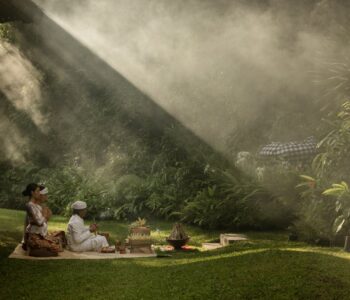
People began arriving at his home not for food, but for healing. His approach is understated. Diagnosis may involve touch or symbolic fire associated with Dewa Brahma. Prayers are spoken according to each visitor’s belief. If healing unfolds, it concludes with melukat, a purification through holy water.
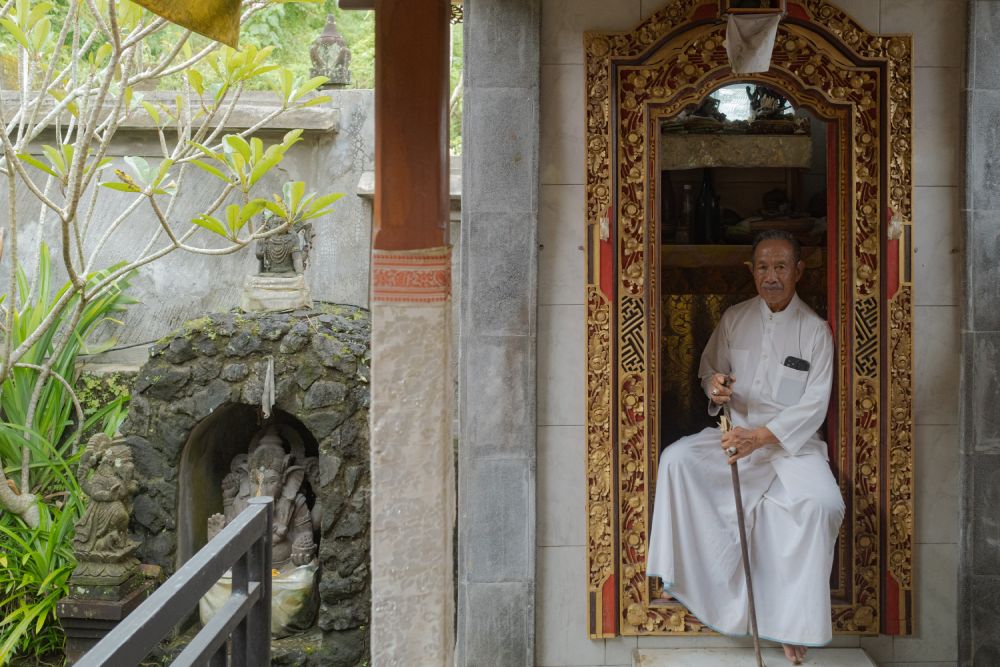
“In Ubud, people know me as a cook.”
“Foreign visitors may know me as a painter.”
“Some recognise me as a chef.”
“Others come seeking healing.”
These identities do not compete. They rotate. Each role emerges when needed. Each stabilises the others. Like the dishes he prepares, each carries context. Each follows sequence, and no role stands alone.
When it comes to food, Darta’s ceremonial lawar has become somewhat of an iconic dish of the artist-cook-healer, and soon he will invite the wider public to taste the culinary lessons that were imbued to him from his time in the puri. Darta will open a home restaurant together with his son, Agus, featuring Balinese cuisine as the main menu. They plan to begin operating in April, targeting visitors who trek along the Campuhan Ridge Walk in Ubud.