



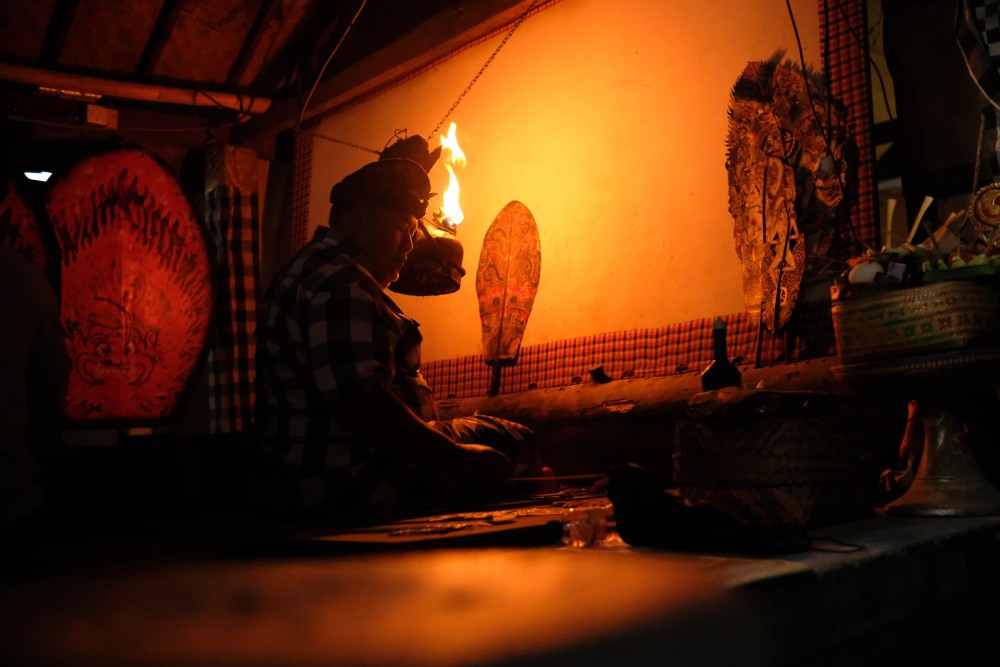
Puppet masters, known as dalang, have a revered role in Balinese society. Beyond entertainment, they remain essential to rite and ritual, and traditionally were responsible for imbuing morals to society through their storytelling. Made Sukadana shares how he has kept this art from fading.
There was an era when a trip to Bali meant immersing yourself in its performing arts. In the 1990’s countless restaurants would put up signs reading, ‘Tonight: Legong Dance,’ and the search for cultural experiences was fervent amongst visitors. “Our best days were in 1998. Hundreds of tourists could come and see our show,” recalls Made Sukadana, a Balinese dalang, a master puppeteer.
In Ubud, Made Sukadana – affectionately known as ‘Gender’ – is a primary reference for the art of puppetry. But more than just a puppet master, the cheerful figure is also a dancer and a teacher. He is part of the Kerta Art dance group (sanggar), which he founded together with his daughter-in-law, Ayu Anantha Putri, also a renowned dancer. The dance group has become a popular destination for those seeking to learn Balinese dance, and also a repository of cultural knowledge with major universities coming to find answers on how culture can remain resilient amid Bali’s rapid developments and modernisation.
Traditional puppetry and tourism are Sukadana’s territory. He is recognised as the first dalang to successfully package traditional Balinese shadow puppetry (wayang kulit) into a regular tourist attraction in Ubud. This breakthrough allowed the noble art form to remain an active part of social entertainment, even enjoyed by foreign visitors experiencing it for the very first time. His approach garnered him invitations to international festivals, including to Baikal, Russia.
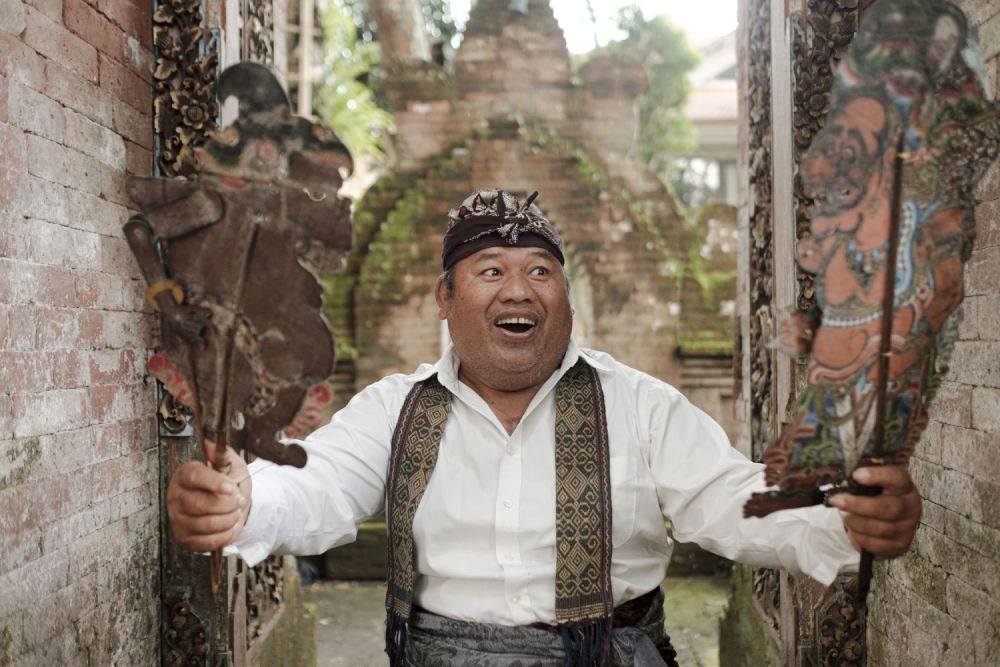
Although his grandfather was a puppet master, Made Sukadana did not inherit the art directly. In dalang families, the storytelling texts (kropak) are normally passed down as a family legacy, but not for Sukadana. His interest was sparked instead by the world of dance. Having enjoyed watching wayang since childhood, the seeds of passion began to bloom after he married and followed his wife, who was active in a dance studio. It was there he deepened his knowledge of traditional songs and sendon, which became a crucial foundation for his future path.
Sendon refers to the songs that traditionally accompany performances. In Javanese wayang kulit, sendon (or suluk) is often associated with a sinden—a female singer who voices the mood-setting songs. In Balinese wayang kulit, there are no sinden. Instead, the dalang himself sings the sendon. A Balinese dalang must be a master vocalist because he handles everything: manipulating the puppets, telling the story, voicing character dialogues, and singing the sendon.
During a Legong performance, Sukadana was singing the accompanying sendon, and someone in the audience took notice. This was not just anyone, it was one of Bali’s legendary dalangs from the village of Bona, Wayan Sija. Thus his new journey to become a dalang began.
Made Sukadana studied diligently, spending nearly every day with Dalang Sija’s, assisting him as a tututan—a dalang’s assistant who prepares the puppets. “I was his helper,” he says. It was the traditional way of learning the art, the schooling of the past.
Traditionally, the dalang held two separate but related roles. On one side, they were the social entertainment, regaling communities with folk stories and stories from the great Hindu epics; but they are also sacred performers, tasked with the performing of sacred texts tied to ceremony, especially those related to rites of passage.
“I mostly learned wayang as an art performance, not as rites,” admits the senior puppeteer. But because of his unconventional training, he saw these cultural performances differently, that they were art and could be approach creatively. Traditional wayang performances can last all night long, filled with lengthy dialogue and stretching stories – Sukadana sought to condense the art form into something more digestible.
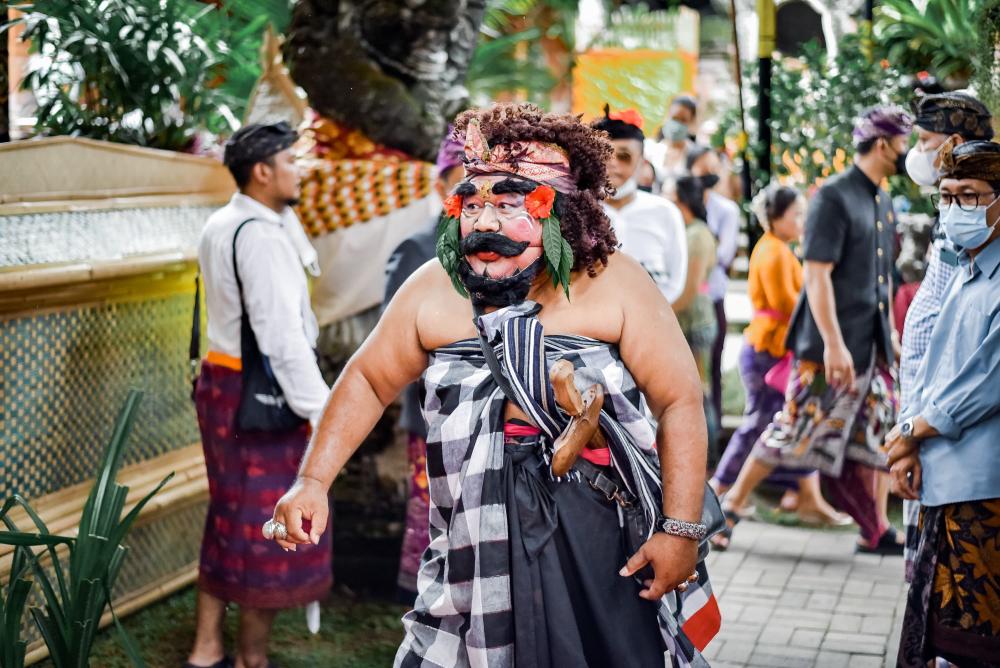
Bridging old stories and contemporary themes, Sukadana creates his own performances, in which he is the scriptwriter, director and voice actor. “There’s a plot of romance, battle scenes, humour. It’s all wrapped up in that one hour. The audience remains engaged and in full enjoyment when we finish the performance,” he explains. “The most important thing is the message and beauty are communicated.”
Despite this modern ‘packaging’, he still incorporates fundamental philosophy, but that isn’t the only way he has bent the rules. Sukdana also veers away from convention when it comes to language: traditional wayang performances would feature a heavy mixture of Old Javanese (Kawi), Old Balinese, refined Balinese and everyday Balinese. Seeking to make the art-form more accessible, and thus enjoyable, the puppet master also does performances in English.
Nevertheless, the entertainer also utilises his given talents for traditional means and ritual necessity. As mentioned, wayang performances have long been a medium for moral and spiritual messages, deeply intertwined with Balinese life. In the old days, wayang was presented at various traditional ceremonies, including when a baby first touches the ground (telu bulanan) to the seventh-month pregnancy ceremony (megedong-gedongan).
In these rituals, the wayang becomes a subtle educational tool. Through rite of passage traditions, wayang has helped enlighten families and expectant mothers. “When a woman is pregnant, she must think good thoughts. She shouldn’t be scolded, so the baby isn’t affected,” Sukadana explains. “The way to teach this is through wayang storytelling.” This is where the role of the dalang as a teacher truly shines, weaving together advice, philosophy, and humour.